

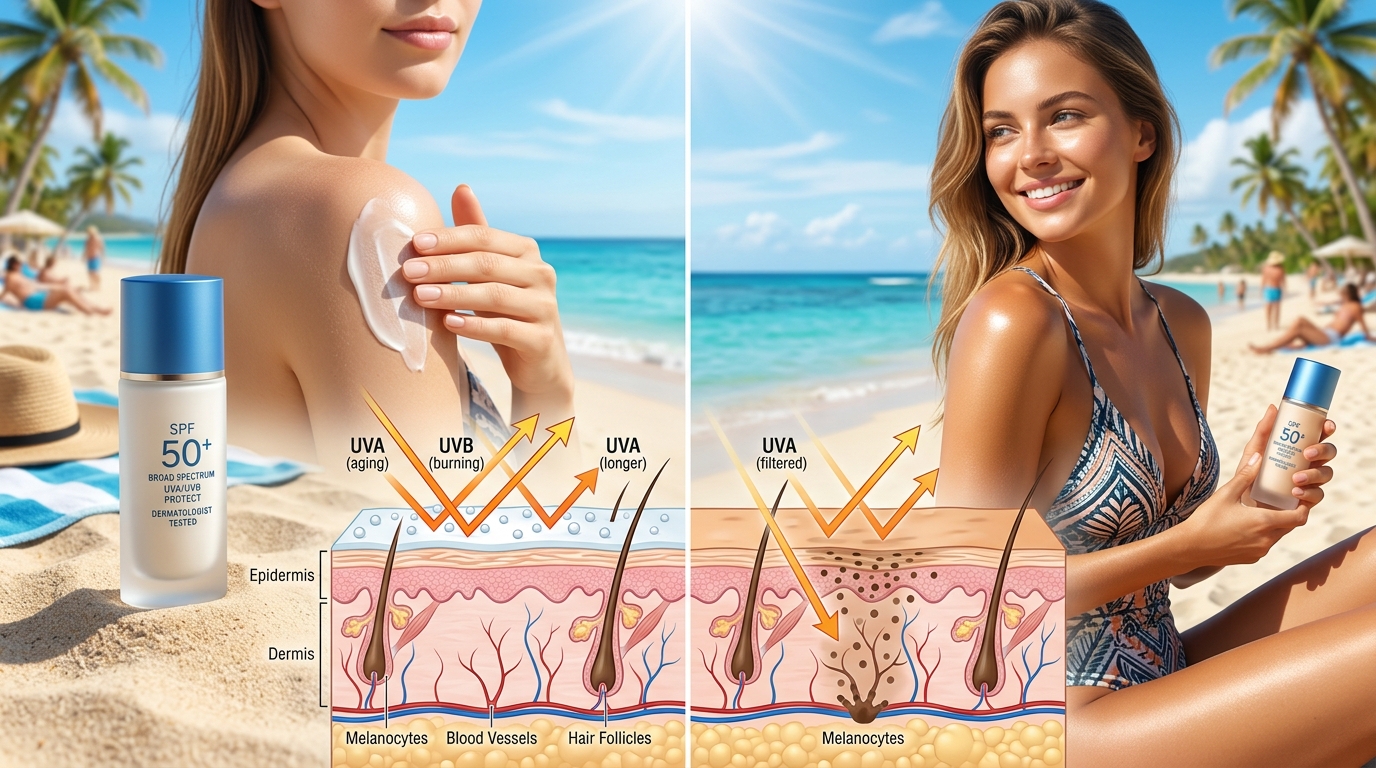
Can you still get tan with sunscreen is probably something you’ve wondered while sitting outside, noticing your skin getting a little darker even though you remembered to apply SPF. It feels confusing, right? You put on sunscreen because you’re trying to protect your skin, but then a few days later your skin tone looks different anyway. The truth is, sunscreen reduces tanning, but it does not create an invisible wall that blocks every single ray of sunlight from reaching your skin. A little bit of UV exposure can still happen, especially if you miss spots, sweat, swim, or don’t reapply often enough.
Many people think sunscreen means “no tan at all,” but skin biology is more complicated than that. Your skin is constantly reacting to sunlight, and even high SPF products only filter a portion of ultraviolet radiation. Understanding why tanning can still happen with sunscreen helps you make smarter choices about sun protection without feeling like you have to hide from daylight forever.
Can You Still Get Tan With Sunscreen?
Yes, you can still get tan with sunscreen, but the tanning process is usually slower and less intense compared to being exposed without protection. Sunscreen works by absorbing, reflecting, or scattering ultraviolet (UV) rays before they can deeply affect your skin cells.
When sunlight reaches your skin, two major types of UV rays matter:
| Type of UV Ray | Effect on Skin |
|---|---|
| UVA rays | Cause tanning, premature aging, and contribute to long-term skin damage |
| UVB rays | Mainly responsible for sunburn and plays a major role in skin cancer risk |
Most sunscreens are designed to protect against both UVA and UVB rays, especially those labeled as “broad-spectrum.” However, no sunscreen blocks 100% of UV radiation. Even SPF 100 allows a tiny amount of UVB radiation to reach your skin.
For example, SPF 30 blocks about 97% of UVB rays when applied correctly. SPF 50 blocks around 98%. That small remaining percentage may seem insignificant, but over several hours of sun exposure, those rays can still stimulate melanin production, which creates a tan.
Why Does Your Skin Tan Even When You Wear Sunscreen?
Your skin tans because it is trying to defend itself from UV radiation. When ultraviolet rays reach your skin cells, special cells called melanocytes produce more melanin, the pigment responsible for skin color.
Melanin acts like a natural shield. It absorbs some UV energy and helps reduce damage to your DNA. The darker color you see after sun exposure is basically your skin saying, “something happened here, I need more protection.”
Sunscreen lowers the amount of UV radiation reaching your skin, but it doesn’t stop every signal that tells melanocytes to produce pigment.
There are several reasons why tanning can still happen:
- You applied too little sunscreen.
- You forgot areas like ears, shoulders, feet, or the back of your neck.
- You waited too long before applying sunscreen.
- You did not reapply after swimming or sweating.
- Your sunscreen lost effectiveness over time.
- You spent many hours outside during peak sunlight.
A lot of people put sunscreen on once in the morning and assume they’re protected all day. That’s where things get a little messy because real life doesn’t work like the label in the bottle.
Does SPF Prevent Tanning Completely?
No, SPF does not completely prevent tanning. SPF measures protection mainly against UVB rays, which are the rays most closely linked with sunburn. Tanning, however, involves both UVA and UVB exposure.
A sunscreen with a high SPF can significantly reduce the amount of tanning that occurs, but some UV radiation still reaches your skin.
Here is a simple comparison:
| Sunscreen SPF | Approximate UVB Protection |
|---|---|
| SPF 15 | Blocks about 93% of UVB rays |
| SPF 30 | Blocks about 97% of UVB rays |
| SPF 50 | Blocks about 98% of UVB rays |
| SPF 100 | Blocks about 99% of UVB rays |
The difference between SPF 30 and SPF 100 may sound huge, but the actual improvement is much smaller than many people expect.
Dermatologists often recommend SPF 30 or higher because it provides strong protection while still being practical for everyday use.
Can You Get a Tan Through Sunscreen Over Time?
Yes, long-term sun exposure can gradually lead to tanning even when sunscreen is part of your routine. This happens because sunscreen effectiveness depends heavily on how you use it.
Imagine applying sunscreen perfectly at 9 a.m. and spending the entire afternoon outside. By lunchtime, some of the product may have rubbed away from touching your face, sweating, clothing friction, or normal movement.
A person who spends several hours outdoors every day may develop a tan despite using sunscreen because small amounts of UV exposure add up.
This is why outdoor workers, athletes, gardeners, and beach visitors often notice changes in their skin tone even when they use sun protection.
Does Sunscreen Allow a Healthy Tan?
Many people talk about a “healthy tan,” but medically speaking, tanning is actually a response to skin injury caused by UV radiation.
The American Academy of Dermatology explains that a tan is a sign of damage because your skin increases melanin production after UV exposure.
That does not mean every person who gets a little color from the sun will immediately experience serious problems. Skin damage happens gradually, and factors like genetics, skin type, exposure amount, and protection habits all play roles.
Still, there is no scientifically proven “safe tan” from UV rays.
If you want a darker appearance without UV exposure, options like self-tanning lotions or sprays can create color without triggering the same biological response.
Why Do Some People Tan More Easily Than Others?
Not everyone tans the same way. Your natural skin type affects how your body responds to sunlight.
People with more melanin naturally tend to tan faster and burn less easily, while people with lighter skin may burn before developing noticeable color.
A common classification system called the Fitzpatrick skin type scale describes how different skin tones react to UV exposure.
| Skin Type | Typical Response |
|---|---|
| Type I | Always burns, rarely tans |
| Type II | Burns easily, tans slightly |
| Type III | Sometimes burns, gradually tans |
| Type IV | Rarely burns, tans easily |
| Type V | Very rarely burns, tans deeply |
| Type VI | Almost never burns, naturally dark pigmentation |
Even if someone rarely burns, UV exposure can still contribute to premature aging and other skin concerns.
How To Reduce Tanning While Using Sunscreen
If your goal is preventing tanning as much as possible, sunscreen needs to be only one part of your sun protection routine.
Try these habits:
- Apply sunscreen 15 to 30 minutes before going outside.
- Use enough product. Most adults need about one ounce for full body coverage.
- Reapply every two hours when outdoors.
- Reapply immediately after swimming or heavy sweating.
- Wear sunglasses, hats, and protective clothing.
- Seek shade during the strongest sunlight hours, usually around late morning to afternoon.
A tiny amount of sunscreen spread thinly across your face might feel like enough, but it won’t provide the protection listed on the bottle. This is a common mistake people make, and honestly, it’s easy to do.
Can You Still Get Vitamin D While Wearing Sunscreen?
Some people avoid sunscreen because they worry it will completely block vitamin D production. Sunscreen can reduce vitamin D synthesis, but in everyday life, many people still receive vitamin D from incidental sun exposure.
Factors such as location, season, skin color, age, diet, and lifestyle influence vitamin D levels.
Medical professionals generally recommend getting vitamin D through a balanced approach, including food sources and supplements when needed, rather than relying on intentional unprotected sun exposure.
Sunscreen Mistakes That Can Lead To Unexpected Tanning
Even people who use sunscreen regularly make mistakes that reduce protection.
Common mistakes include:
- Using expired sunscreen.
- Applying sunscreen only once.
- Forgetting UVA protection.
- Applying makeup with SPF and assuming it replaces sunscreen.
- Using too little product.
- Skipping sunscreen on cloudy days.
Clouds can block some sunlight, but UV rays still pass through. A cloudy beach day can still leave you with a surprising tan or even a sunburn.
Final Thoughts: Can You Still Get Tan With Sunscreen?
So, can you still get tan with sunscreen? Yes, you can. Sunscreen greatly lowers UV exposure, but it does not completely eliminate every ray that reaches your skin. A tan can still develop because small amounts of UV radiation can trigger melanin production over time.
The goal of sunscreen is not necessarily to make sunlight disappear from your life. It is to reduce harmful exposure and protect your skin from unnecessary damage. Using sunscreen correctly, combining it with shade and protective clothing, and understanding how tanning actually works gives you much better control over your skin health.
A little color might seem harmless, but your skin remembers every sunny afternoon. Taking care of it today can make a noticeable difference years later.
Frequently Asked Questions
Can you get tan with SPF 50 sunscreen?
Yes, you can still tan with SPF 50 because it blocks most UVB rays but does not completely prevent all ultraviolet exposure.
How long does it take to tan with sunscreen?
Tanning time varies by skin type, sunlight intensity, and sunscreen use, but noticeable color may appear after several days.
Does sunscreen stop melanin production?
No, sunscreen reduces UV exposure but does not completely stop melanin production triggered by sunlight reaching your skin.
Can you tan through waterproof sunscreen?
Yes, waterproof sunscreen reduces protection loss during water exposure but does not completely block tanning caused by UV rays.
Is tanning with sunscreen safer than tanning without it?
Yes, sunscreen lowers UV damage compared with no protection, but tanning still indicates your skin has responded to ultraviolet exposure.