

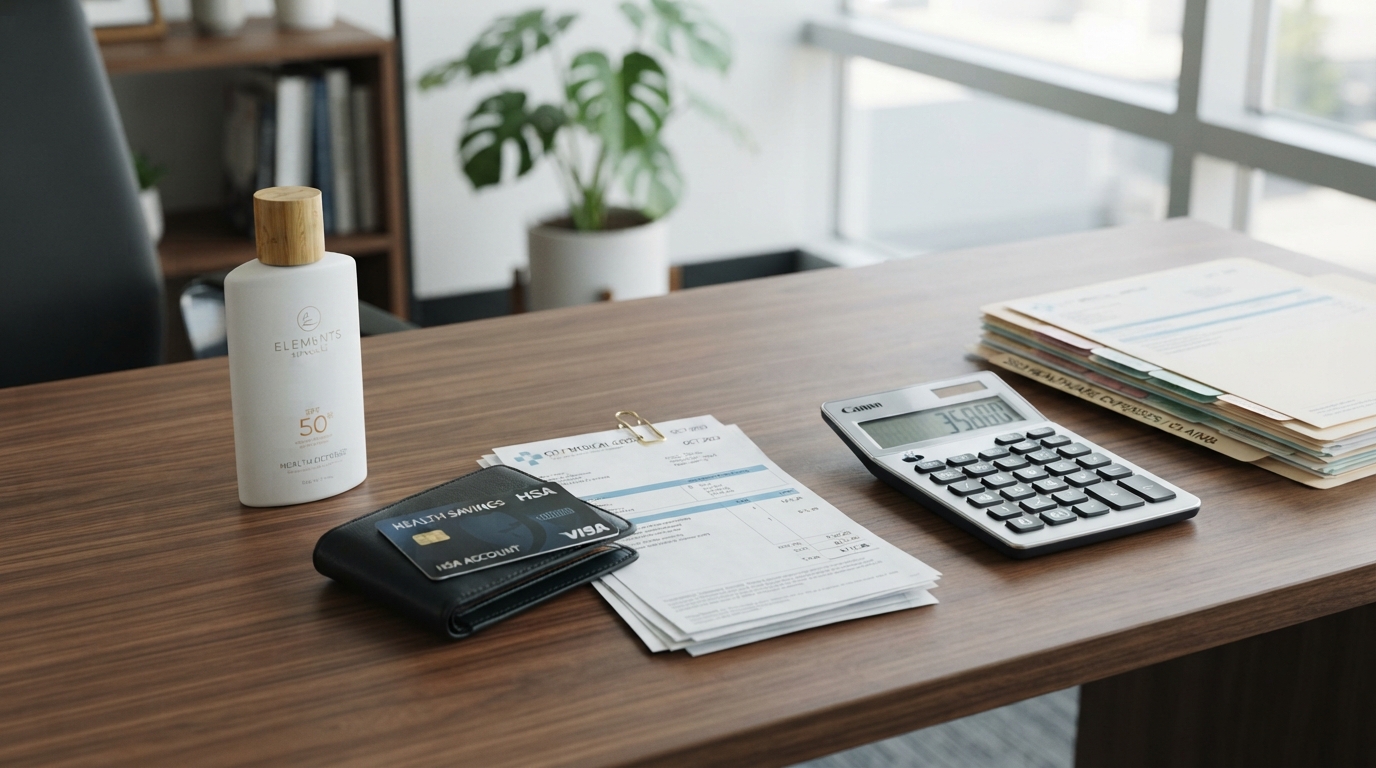
You were probably standing in a store, sunscreen in one hand and your HSA card in the other, wondering, can you use HSA for sunscreen, or is this gonna get declined for no obvious reason. It’s a surprisingly common little headache, and the answer isn’t just yes or no. There are a few twists that catch people off guard, honestly.
Health Savings Accounts, better known as HSAs, help you pay for qualified medical expenses using pre-tax money. But sunscreen sits in a funny spot because sometimes it’s considered everyday skincare, while other times it’s officially recognized as preventive healthcare. That tiny difference changes everything.
If you’ve been trying to figure out whether your favorite SPF qualifies, how the IRS treats sunscreen purchases, and what kinds of products are actually eligible, you’re in the right place. We’ll unpack the rules without drowning you in legal jargon. Some of this stuff looks complicated on paper, but once you connect the dots it sorta clicks.
Can You Use HSA for Sunscreen?
Yes, you can use HSA for sunscreen in many situations.
Thanks to changes in U.S. tax law under the CARES Act, many sunscreens now qualify as eligible HSA expenses. Specifically, sunscreen products with a Sun Protection Factor (SPF) of 15 or higher that provide broad-spectrum protection are generally considered qualified medical expenses.
That means you can often pay for eligible sunscreen directly with your HSA debit card or reimburse yourself later if you paid out of pocket.
However, not every product sitting in the sunscreen aisle qualifies.
Generally eligible products include:
- Broad-spectrum sunscreen with SPF 15 or higher
- Mineral sunscreen containing zinc oxide or titanium dioxide
- Chemical sunscreen approved by the FDA
- Sunscreen lotion
- Sunscreen spray
- Sunscreen stick
- Sunscreen designed for sensitive skin
- Sunscreen marketed for babies or children if it meets SPF requirements
Products that are primarily cosmetics rather than sun protection may not qualify.
Why Sunscreen Became an HSA-Eligible Expense
For years, sunscreen occupied an awkward gray area. People knew it prevented sunburn, yet it wasn’t always treated as a qualified medical expense.
That changed in 2020.
The Coronavirus Aid, Relief, and Economic Security (CARES) Act expanded the list of qualified medical expenses. Among several healthcare-related updates, sunscreen with SPF 15 or greater was officially recognized as an eligible expense because preventing ultraviolet (UV) damage is considered preventive healthcare.
That wasn’t just a paperwork update. Dermatologists have spent decades explaining that consistent sunscreen use reduces the risk of skin cancer and slows damage caused by ultraviolet radiation.
According to the American Academy of Dermatology, regular use of SPF 30 sunscreen can significantly reduce the risk of developing squamous cell carcinoma and melanoma while helping prevent premature skin aging.
The IRS now aligns with that preventive approach.
What Exactly Is an HSA?
A Health Savings Account is a tax-advantaged savings account available to people enrolled in a qualified High Deductible Health Plan (HDHP).
Money goes into the account before taxes.
That money can then be used to pay qualified healthcare expenses without paying federal income tax on those withdrawals.
HSAs offer three major tax advantages:
| Benefit | Explanation |
|---|---|
| Tax-free contributions | Money enters before federal taxes |
| Tax-free growth | Investments grow without annual taxation |
| Tax-free withdrawals | Qualified medical expenses aren’t taxed |
Unlike Flexible Spending Accounts (FSAs), unused HSA funds roll over every year.
You never lose your balance simply because the calendar changed. That’s one of the reasons people really like HSAs, even if they forget the password every six months.
What Makes Sunscreen Eligible?
This is where details matter.
For sunscreen to qualify, it generally needs to satisfy several conditions.
| Requirement | Usually Required |
|---|---|
| SPF rating | SPF 15 or higher |
| Broad-spectrum protection | Yes |
| FDA-approved sunscreen | Yes |
| Primary purpose | UV protection |
Notice that “primary purpose” part.
If the product mainly functions as makeup, moisturizer, or cosmetic skincare and only includes a little SPF as an extra feature, eligibility becomes less certain.
For example:
Eligible:
- SPF 30 sunscreen lotion
- SPF 50 mineral sunscreen
- SPF 70 sport sunscreen
- Baby sunscreen SPF 50
Possibly not eligible:
- Cosmetic foundation with SPF 15
- Lip gloss with SPF
- Tinted moisturizer marketed mainly as makeup
- Anti-aging cream with minimal sunscreen
The distinction isn’t always obvious, which explains why people get confused pretty fast.
Can You Buy Sunscreen With an HSA Card?
Usually, yes.
Many pharmacies, grocery stores, warehouse clubs, and online retailers automatically identify HSA-eligible products during checkout.
Sometimes you’ll even notice labels saying:
- HSA Eligible
- FSA Eligible
Those labels make life easier.
Still, payment systems aren’t perfect.
Occasionally an eligible sunscreen may trigger a decline because the store’s inventory database hasn’t categorized it correctly.
If that happens:
- Pay using another payment method.
- Save the receipt.
- Submit reimbursement through your HSA administrator if needed.
It sounds annoying, and yeah, it kinda is, but reimbursement is generally straightforward.
Can You Use an HSA for Tinted Sunscreen?
Sometimes.
Tinted sunscreen creates more confusion than almost any other sunscreen category.
If the product’s primary purpose is sun protection and it contains SPF 15 or greater with broad-spectrum coverage, it may qualify.
If it’s marketed mainly as cosmetic makeup with SPF added, it may not.
Reading product descriptions helps.
Ask yourself:
- Is this primarily sunscreen?
- Or is this primarily makeup?
That tiny wording difference can affect eligibility.
Mineral vs Chemical Sunscreen: Does It Matter?
From an HSA perspective, not really.
Both mineral and chemical sunscreens can qualify.
Mineral Sunscreens
Common ingredients include:
- Zinc oxide
- Titanium dioxide
Advantages:
- Reflect UV rays
- Often preferred for sensitive skin
- Immediate protection after application
Chemical Sunscreens
Common ingredients include:
- Avobenzone
- Octisalate
- Homosalate
- Octocrylene
Advantages:
- Lightweight feel
- Easier to blend
- Popular for sports and daily wear
The IRS focuses on sunscreen eligibility rather than ingredient type.
Can Families Use HSA Funds for Sunscreen?
Yes, in many cases.
If your HSA covers qualified family medical expenses, eligible sunscreen purchased for:
- Your spouse
- Your children
- Yourself
may qualify.
Even if your spouse has separate insurance, qualified expenses may still be eligible depending on IRS rules governing your HSA.
Families often stock several sunscreen types because kids refuse one texture while adults complain another feels greasy. Somehow every bottle disappears at the same time too.
Does Sunscreen Really Count as Preventive Healthcare?
Absolutely.
Preventive healthcare aims to reduce disease before it develops.
Sun exposure contributes to:
- Skin cancer
- Actinic keratosis
- Premature aging
- Sunburn
- Hyperpigmentation
- DNA damage
According to the Skin Cancer Foundation:
“Daily use of an SPF 15 or higher sunscreen reduces the risk of developing melanoma.”
That recommendation reflects decades of dermatology research rather than cosmetic advice.
The Centers for Disease Control and Prevention also encourages limiting UV exposure through sunscreen, protective clothing, shade, and avoiding excessive midday sun.
Common HSA Sunscreen Purchases
Here are examples that are generally eligible.
| Product Type | Usually Eligible |
|---|---|
| SPF 30 lotion | Yes |
| SPF 50 spray | Yes |
| Mineral sunscreen | Yes |
| Children’s sunscreen | Yes |
| Sport sunscreen | Yes |
| Facial sunscreen | Usually |
| Cosmetic foundation with SPF | Sometimes not |
| Lip balm with SPF | May not qualify |
Always review product labeling and your HSA administrator’s guidance if you’re uncertain.
Tips Before Buying Sunscreen With Your HSA
A few small habits can save headaches later.
- Choose SPF 15 or higher.
- Prefer broad-spectrum protection.
- Keep receipts.
- Look for HSA-eligible labels.
- Check with your HSA administrator if uncertain.
- Save product packaging for documentation if needed.
- Review annual IRS guidance because regulations can change.
These steps only take a minute but can make reimbursement much smoother.
Mistakes People Often Make
People sometimes assume every skincare product with SPF automatically qualifies.
Not quite.
Another mistake is assuming expensive sunscreen is somehow more eligible than affordable sunscreen. Price has nothing to do with IRS qualification.
Some shoppers also throw cosmetic products into the cart expecting HSA approval because the package says “contains SPF.”
That’s where things get messy.
Reading the front label isn’t enough. Product classification matters just as much.
How HSA and FSA Sunscreen Rules Compare
The good news is that sunscreen eligibility is generally similar under both Health Savings Accounts and Flexible Spending Accounts.
| Feature | HSA | FSA |
|---|---|---|
| SPF 15+ sunscreen | Usually eligible | Usually eligible |
| Broad-spectrum sunscreen | Eligible | Eligible |
| Cosmetic SPF products | May not qualify | May not qualify |
| Receipt recommended | Yes | Yes |
The biggest difference isn’t sunscreen.
It’s how the accounts work.
HSA funds roll over indefinitely, while many FSAs operate under annual “use-it-or-lose-it” rules, although some plans allow limited carryovers or grace periods.
Final Thoughts
If you’ve been asking yourself, can you use HSA for sunscreen, the answer is encouraging. Most broad-spectrum sunscreens with SPF 15 or higher qualify as eligible medical expenses under current IRS guidance, making it easier to protect both your skin and your budget.
The key is remembering that sunscreen is being recognized because it helps prevent disease, not because it’s considered beauty care. That’s an important distinction, even if it feels a bit technical at first.
Before checking out, glance at the product label, confirm the SPF rating, and keep your receipt. Those tiny steps can save unnecessary frustration later. Healthcare rules aren’t always written in plain English, but this is one area where a little knowledge goes a long way.
Can you use HSA for sunscreen purchased online?
Yes. Eligible SPF 15 or higher sunscreen bought online generally qualifies if the retailer correctly categorizes the product and you keep your purchase receipt.
Does facial sunscreen qualify for HSA reimbursement?
Usually yes. Facial sunscreen primarily intended for UV protection with SPF 15 or higher generally meets HSA eligibility requirements under current IRS guidance.
Can you buy sunscreen for children using HSA funds?
Yes. Children’s sunscreen with qualifying SPF protection is generally considered an eligible medical expense when purchased for qualified dependents covered under HSA rules.
Is sunscreen with makeup always HSA eligible?
Not always. Products marketed mainly as cosmetics may not qualify, even if they contain SPF. Their primary purpose matters more than added sun protection.
Do you need a prescription to buy sunscreen with an HSA?
No. Eligible sunscreen generally does not require a prescription, provided it meets the applicable SPF and medical expense qualification standards.