

Does spray sunscreen work when you’re rushing out the door, trying to protect your skin before a beach day, or just wondering if that quick mist actually does anything? You’re not the only one who has stood there spraying it around and thinking, “wait, did I cover everything or just make my bathroom smell like sunscreen?” Spray formulas are popular because they feel easy, lightweight, and less messy than traditional lotions, but the real question is whether they can provide the same level of protection when used correctly.
The short answer is yes, spray sunscreen can work. But there is a small catch that many people miss: the effectiveness depends heavily on how you apply it. A great SPF product can only protect your skin if enough of it reaches the surface evenly. A thin, uneven layer of spray sunscreen may leave invisible gaps where UV rays can sneak through, and honestly, that’s where many people go wrong.
Sunscreen sprays contain the same types of UV-filtering ingredients found in many lotions and creams. They are designed to absorb, scatter, or reflect ultraviolet radiation from the sun. When applied properly, they can help reduce the risk of sunburn, premature skin aging, and long-term skin damage.
How Does Spray Sunscreen Work?
Spray sunscreen works by creating a protective layer of sunscreen ingredients on your skin that helps block ultraviolet (UV) radiation. Most spray sunscreens are classified as broad-spectrum, meaning they protect against both UVA and UVB rays.
UVB rays are mainly responsible for sunburn, while UVA rays penetrate deeper into the skin and contribute to wrinkles, pigmentation, and photoaging. A broad-spectrum sunscreen helps defend against both types of damage.
Many spray sunscreens use chemical filters such as:
- Avobenzone
- Octocrylene
- Octisalate
- Homosalate
Some sprays also use mineral ingredients like:
- Zinc oxide
- Titanium dioxide
Chemical sunscreens generally absorb UV radiation and convert it into a small amount of heat, while mineral sunscreens sit on the skin and reflect or scatter UV rays.
The science behind spray sunscreen is not the problem. The challenge is application. A lotion gives you a visual clue because you can see where you rubbed it. Spray sunscreen can disappear almost instantly, making it easier to miss areas like shoulders, ears, the back of your neck, and the sides of your face.
Is Spray Sunscreen as Effective as Lotion Sunscreen?
When applied correctly, spray sunscreen can provide protection comparable to lotion sunscreen. The SPF rating on the bottle applies to both forms when they are tested under laboratory conditions using the required amount.
The problem is that most people do not apply enough spray sunscreen in real-life situations.
The American Academy of Dermatology recommends using enough sunscreen to cover all exposed skin. For the entire body, this is generally about one ounce, which is roughly enough to fill a shot glass.
With spray sunscreen, people often use fewer sprays than needed because the product feels like it covers more area than it actually does.
A comparison looks like this:
| Sunscreen Type | Advantages | Common Problems |
|---|---|---|
| Spray sunscreen | Quick, lightweight, easy for large areas | Easy to apply too little |
| Lotion sunscreen | Better control and visible coverage | Takes longer to rub in |
| Stick sunscreen | Convenient for face and small areas | Can miss spots if not layered properly |
So, does spray sunscreen work better than lotion? Not exactly. Neither one is automatically superior. The winner is usually the one you will apply correctly and generously.
The Right Way to Apply Spray Sunscreen
Using spray sunscreen is not as simple as pointing the bottle and spraying once or twice. There is a little technique involved, and skipping these steps can lower your protection.
Apply Enough Product
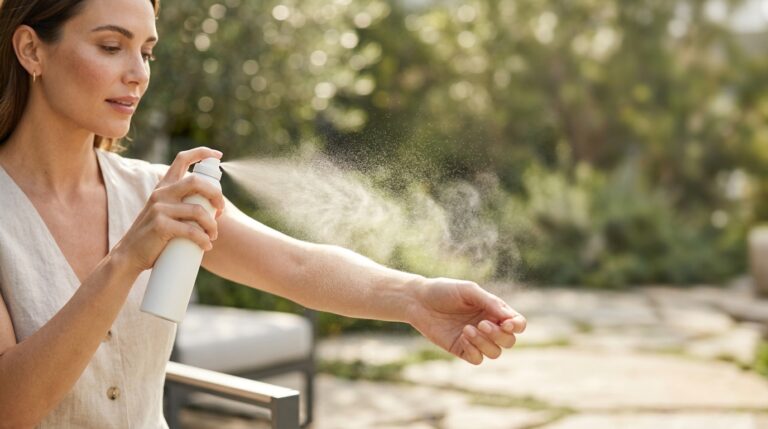
Hold the spray bottle close enough to your skin so the sunscreen does not disappear into the air. A common mistake is spraying from too far away, especially outdoors when wind is blowing.
Apply a visible layer before rubbing it in. If you cannot tell whether sunscreen reached your skin, there is a good chance you did not apply enough.
Do Not Spray Directly Into Your Face
Most experts recommend spraying sunscreen into your hands first and then applying it to your face. This helps prevent accidental inhalation and gives you better coverage.
Your face, ears, and neck are areas that often receive daily sun exposure, so skipping them can cause problems over time.
Rub It In After Spraying
Many people believe spray sunscreen does not need rubbing, but rubbing helps spread the product evenly. A quick spray-and-go method often creates patchy protection.
Think of spray sunscreen as a delivery method, not a magical invisible shield.
Reapply Regularly
No sunscreen lasts forever. Sweat, swimming, towels, and normal movement gradually remove sunscreen from your skin.
Dermatologists generally recommend reapplying sunscreen every two hours when outdoors and more frequently after swimming or heavy sweating.
Benefits of Using Spray Sunscreen
Spray sunscreen has become popular for several reasons, and there are some real advantages behind its popularity.
Easy Application
The biggest benefit is convenience. Sprays can quickly cover large areas like arms, legs, shoulders, and back. This makes them useful for outdoor activities where stopping to apply lotion feels annoying.
Lightweight Feel
Many people dislike the heavy feeling of traditional sunscreen. Spray formulas often feel lighter and less greasy, which encourages regular use.
Good for Hard-to-Reach Areas
A spray bottle can make it easier to reach areas like your back or legs, especially when applying sunscreen alone.
Helpful for Active Lifestyles
People who play sports, hike, swim, or spend long periods outdoors often prefer sprays because they are fast and portable.
However, convenience should not replace proper application. A poorly applied sunscreen spray is still a poorly applied sunscreen.
Common Mistakes People Make With Spray Sunscreen
Even people who use sunscreen regularly make mistakes with sprays. Some of these errors are surprisingly common.
Spraying Too Little
This is probably the biggest issue. A light mist may feel like coverage, but it may not provide the SPF protection listed on the label.
Spraying in Windy Conditions
A lot of sunscreen can blow away before reaching your skin. Outdoor application requires paying attention to wind direction.
Missing Small Areas
People often forget:
- Tops of feet
- Behind ears
- Hairline
- Shoulders
- Hands
These forgotten spots receive plenty of sun exposure.
Using Spray Sunscreen Near Flames
Many aerosol sunscreen sprays contain flammable ingredients. Avoid using them near open flames, grills, candles, or cigarettes until the product has fully dried.
Does Spray Sunscreen Expire?
Yes, spray sunscreen expires just like other sunscreen products.
Most sunscreens remain effective for about three years from the date of manufacture unless the label states otherwise. Once expired, the active ingredients may become less reliable.
You should also replace sunscreen if:
- The texture changes
- The smell becomes unusual
- The spray nozzle stops working properly
- The product has been stored in extreme heat
A sunscreen bottle sitting inside a hot car all summer is basically having a rough life, and the ingredients may not perform the same way.
Spray Sunscreen Safety Considerations
Spray sunscreen is generally considered safe when used properly. However, there are some precautions to keep in mind.
Avoid inhaling sunscreen mist by:
- Not spraying directly around your nose and mouth
- Applying facial sunscreen with your hands
- Using sprays carefully around children
For babies under six months, doctors usually recommend avoiding direct sun exposure and using protective clothing instead of relying only on sunscreen.
People with sensitive skin may also want to test a small area first, especially if the spray contains fragrance or certain chemical filters.
Are Mineral Spray Sunscreens Better?
Mineral spray sunscreens containing zinc oxide or titanium dioxide can be a good option for people with sensitive skin because these ingredients are less likely to cause irritation for some users.
However, “mineral” does not automatically mean “more effective.” The most important factors are:
- Broad-spectrum protection
- SPF 30 or higher
- Enough application
- Regular reapplication
A mineral sunscreen applied too thinly will still provide weak protection.
What SPF Should You Choose in a Spray Sunscreen?
For daily use, many dermatologists recommend choosing a broad-spectrum sunscreen with SPF 30 or higher.
SPF measures protection mainly against UVB rays. It does not mean you can stay outside forever without reapplying.
Here is a simple guide:
| SPF Level | Approximate UVB Protection |
|---|---|
| SPF 15 | About 93% |
| SPF 30 | About 97% |
| SPF 50 | About 98% |
No sunscreen blocks 100% of UV rays, which is why shade, clothing, and avoiding intense midday sun are still important.
Does Spray Sunscreen Work for Face Protection?
Yes, spray sunscreen can work on the face, but it is usually better to apply it carefully.
Spraying directly onto your face can cause uneven coverage and may lead to inhalation. A safer approach is spraying the product into your hands and gently applying it.
For people with oily skin, dry skin, acne-prone skin, or sensitive skin, choosing a sunscreen specifically designed for facial use may provide better comfort.
The best sunscreen is the one that fits your skin type and that you actually enjoy wearing every day.
Frequently Asked Questions About Spray Sunscreen
Does spray sunscreen work as well as lotion?
Yes, spray sunscreen can work as well as lotion when applied generously and evenly. The main difference is application technique, not protection ability.
How long does spray sunscreen last?
Spray sunscreen usually lasts about two hours outdoors. Swimming, sweating, and towel drying require more frequent reapplication.
Can you use spray sunscreen on your face?
Yes, but avoid spraying directly onto your face. Apply it using your hands for better coverage and safer application.
Is spray sunscreen safe for children?
Spray sunscreen can be used for older children, but avoid inhaling the mist and supervise application to prevent missed areas.
Why does my spray sunscreen not seem to work?
Spray sunscreen may fail because too little product was applied, areas were missed, or reapplication was skipped during sun exposure.
Final Thoughts: Does Spray Sunscreen Work?
So, does spray sunscreen work? Yes, it does, but only when you treat it like real sunscreen and not like a quick invisible spray that magically covers your skin. The formula itself is designed to protect you from harmful UV rays, but the protection level depends on how much you apply and how carefully you use it.
Spray sunscreen is a convenient option for busy mornings, outdoor adventures, and anyone who dislikes thick sunscreen textures. Just remember that convenience should not mean cutting corners. A few extra seconds of proper application can make a huge difference in how well your skin is protected.
The best sunscreen is not the fanciest bottle sitting on the shelf. It is the one you apply correctly, use consistently, and remember to reapply when your skin actually needs it.