

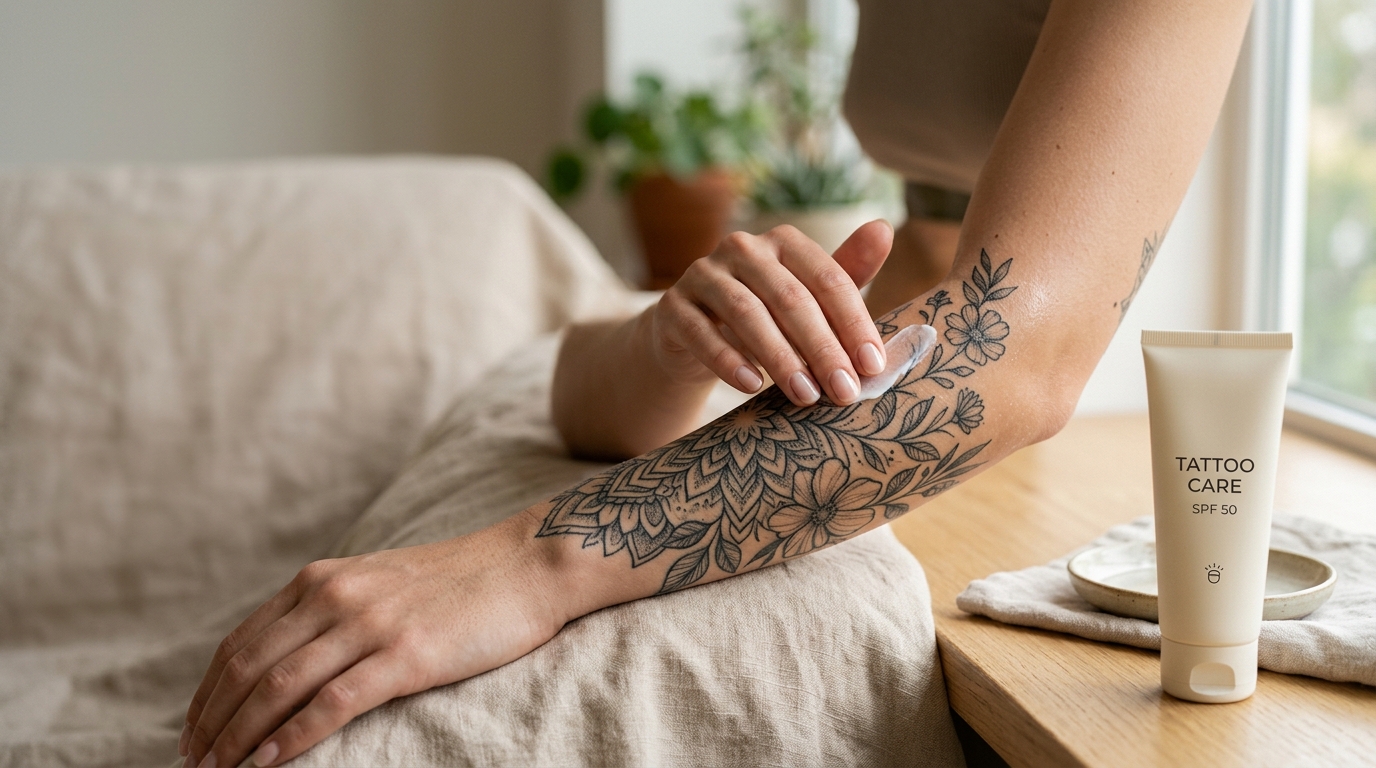
When can I put sunscreen on my tattoo is probably the question you ask while staring at fresh ink and realizing, slightly too late, that the sun is absolutely not going to wait for your tattoo to heal.
You want to protect the design, obviously, but you also don’t want to smear a random sunscreen over irritated skin and create a whole new problem.
The confusing part is that sunscreen is great for an old, healed tattoo but generally not the right thing for a fresh tattoo that is still healing. So yes, the timing really does matter here.
When can I put sunscreen on my tattoo after getting it?
In most cases, you should wait until your tattoo is fully healed before applying sunscreen directly to it. For many tattoos, this means around 2 to 4 weeks, although the exact healing time can vary depending on the tattoo’s size, location, and how your skin heals. Some tattoos may take longer, especially larger pieces where the skin is still flaking or sensitive underneath.
The reason is pretty simple, even if tattoo aftercare somehow makes everything feel complicated. A fresh tattoo involves skin that has been repeatedly punctured, and the area can be sore, red, scabby, flaky, or slightly oozing during the early healing stage. Cleveland Clinic describes tattoos as a controlled form of trauma to the skin and advises avoiding sunscreen on the tattoo until it is fully healed.
Short answer: don’t put sunscreen directly on a new tattoo while it is still healing.
Can I put sunscreen on a tattoo after 2 weeks?
Maybe, but two weeks is not a magic number. This is where people often get caught out.
If your tattoo is still peeling, scabbing, unusually shiny, tender, or irritated, it is probably not ready for sunscreen yet. The skin should look and feel more like normal skin before you start treating it like a regular part of your skincare routine.
The American Academy of Dermatology notes that itching, flaking, and scabs can occur as a tattoo heals. Cleveland Clinic also explains that the top layer may look healed earlier while deeper skin can continue healing for longer.
So rather than counting days like you’re waiting for a parcel, look at the tattoo itself.
How do I know my tattoo is healed enough for sunscreen?
A healed tattoo usually has no open areas, active scabs, peeling skin, or unusual tenderness. The skin should feel fairly normal when you touch it gently. It may still look a little different from the surrounding skin, and that alone doesn’t mean something is wrong.
Here is a quick guide:
| Tattoo condition | Sunscreen directly on tattoo? |
|---|---|
| Fresh, red, or oozing | No |
| Scabbing or peeling | No |
| Very itchy and irritated | Usually no |
| Skin looks closed and feels normal | Usually yes |
| Fully healed tattoo | Yes, and you should |
One small thing people miss: a tattoo can look fine on the surface while the skin is still settling underneath. That is why following your tattoo artist’s aftercare instructions matters more than blindly following a “day 14” rule.
What should I do if my new tattoo is exposed to the sun?
If your tattoo is still healing, your best protection is covering it and avoiding direct sunlight. Loose, breathable clothing is generally a better choice than trying to force sunscreen onto a fresh tattoo.
You can also seek shade when you’re outdoors. It sounds almost too basic, but shade really does reduce direct sun exposure, and the AAD recommends covering tattoos with clothing and seeking shade as part of sun protection.
Try not to wrap the tattoo in a tight, sweaty layer of clothing either. That can create friction and irritation, which is the exact opposite of what your healing skin is asking for, honestly.
If you know you have a beach day, outdoor event, or long drive coming up, the practical move is to plan the tattoo around your schedule. Getting fresh ink two days before a sunny holiday is, well, not the cleverest timing.
Why does sunscreen matter for a healed tattoo?
Once your tattoo has healed, sunscreen becomes one of the easiest ways to help protect both your skin and the appearance of your ink. UV light can fade some tattoo inks over time, according to dermatologists at the American Academy of Dermatology.
The sun doesn’t suddenly erase a tattoo in one afternoon. The change is usually gradual. Colours may look less vibrant, fine details can appear softer, and the whole design may start looking a bit washed out after repeated exposure.
This is especially annoying with colourful tattoos because bright shades can lose that fresh, sharp look you loved when you first got them. Black ink can fade too, though the way fading appears depends on the pigment, skin, and amount of sun exposure.
And no, moisturizer is not a replacement for sunscreen. A lotion may make skin look smoother and temporarily improve the appearance of a tattoo, but it doesn’t provide UV protection unless it is specifically formulated and labelled as sunscreen.
What sunscreen should I use on a healed tattoo?
For a healed tattoo, dermatologists generally recommend a broad-spectrum, water-resistant sunscreen with SPF 30 or higher. The AAD advises applying sunscreen about 15 minutes before going outdoors and reapplying at least every two hours while exposed.
When choosing sunscreen for tattooed skin, look for:
- Broad-spectrum protection
- SPF 30 or higher
- Water resistance if you will swim or sweat
- A formula you can apply comfortably and consistently
There is no special “tattoo sunscreen” that you absolutely must buy. This is one of those areas where marketing can make a simple thing sound like a secret skincare ritual. A sunscreen that gives proper protection and that you will actually use is the more important choice.
If your skin is sensitive, you may prefer a gentle formula. But don’t assume that “mineral” automatically means it is better for every tattoo or every person. Dermatologists generally give the same sun-protection recommendations for tattooed skin as they do for other exposed skin once the tattoo is healed.
How to apply sunscreen to your tattoo without missing spots
Once the tattoo is fully healed, apply sunscreen evenly over the entire design and the surrounding exposed skin. Do not just dab a tiny amount on the darkest parts of the tattoo and call it a day.
For general body sunscreen, the AAD says most adults need about 1 ounce, roughly a shot-glass amount, to cover exposed skin. The amount needed depends on how much skin is exposed and your body size.
A simple routine looks like this:
- Apply sunscreen about 15 minutes before going outside.
- Cover the tattoo and all other exposed skin.
- Rub the product in evenly.
- Reapply at least every two hours outdoors.
- Reapply sooner after swimming or heavy sweating.
If your tattoo is on your shoulder, forearm, chest, or leg, remember that clothing can shift during the day. You may think the design is covered, then suddenly half of it is sitting directly in the sun. Skin, annoyingly, does not send notifications.
Can I use sunscreen on a tattoo that is peeling?
It is best to avoid applying sunscreen directly to a peeling tattoo. Peeling is a normal part of healing, but it tells you the skin is still going through the repair process.
During this stage, continue with the aftercare routine recommended by your tattoo artist. Do not pick the peeling skin or scabs. NHS tattoo aftercare guidance explains that scabs should be allowed to fall away naturally rather than being pulled off, as disturbing them can affect the colour and healing of the area.
If you need to go outside, cover the tattoo with loose clothing and limit direct sun exposure until the skin has settled.
What if I accidentally put sunscreen on a new tattoo?
Don’t panic. One accidental application does not automatically mean your tattoo is ruined.
Gently follow your tattoo artist’s cleaning instructions and avoid repeatedly rubbing or scrubbing the area. If the tattoo becomes increasingly painful, hot, swollen, develops pus, or you notice worsening redness, contact a healthcare professional. The AAD lists worsening pain, swelling, warmth, and pus-like drainage among warning signs that may indicate infection.
Also, if you develop a rash, hives, blisters, or intense swelling after sun exposure, don’t just assume it is normal tattoo healing. The AAD notes that some people can develop sun-related reactions on tattooed skin.
Does sunscreen prevent tattoo fading completely?
No, and anyone promising that is overselling it a bit.
Sunscreen can help reduce UV exposure and protect the appearance of your tattoo, but it cannot freeze your tattoo in the exact condition it had on day one. Tattoos naturally change as skin ages, and other factors can affect how ink looks over time.
Still, consistent sun protection is a very sensible habit. The AAD specifically recommends SPF 30 or higher, broad-spectrum, water-resistant sunscreen for tattooed skin exposed to the sun.
Think of sunscreen as long-term maintenance. You don’t use it once and expect a lifetime result. You use it regularly, especially when your tattoo is exposed.
The bottom line: when can I put sunscreen on my tattoo?
So, when can I put sunscreen on my tattoo? The safest general answer is: when the tattoo is fully healed and the skin is no longer peeling, scabbing, open, or unusually tender. For many people, that is around 2 to 4 weeks, but healing times are not identical for everyone.
Until then, protect fresh ink with clothing and shade rather than sunscreen directly on the healing skin. Once your tattoo is healed, use a broad-spectrum, water-resistant SPF 30 or higher and reapply it regularly when you’re outside.
Your tattoo took time, money, and probably a fair amount of discomfort to get. A few seconds of sunscreen is a much less dramatic way to help keep it looking good.
FAQs
When can I put sunscreen on my tattoo after getting it?
Wait until the tattoo is fully healed, with no peeling, scabs, open skin, or unusual tenderness; this commonly takes around two to four weeks.
Can I use SPF 30 on a healed tattoo?
Yes, broad-spectrum SPF 30 or higher is recommended for healed tattoos and should be reapplied every two hours outdoors.
Why should I avoid sunscreen on a fresh tattoo?
Fresh tattoos are healing skin, and sunscreen may irritate the area; protect new ink with clothing and shade instead.
Does sunscreen stop tattoos from fading?
Sunscreen helps reduce UV exposure that can fade some tattoo inks, but it cannot completely prevent natural tattoo and skin changes.
What if my tattoo is still peeling after two weeks?
Continue protecting it from direct sunlight and wait before applying sunscreen directly until the peeling and irritation have completely settled.