


Determining how often should you use hyaluronic acid serum is a common point of confusion for those building a consistent skincare regimen. Because this ingredient acts as a powerful humectant, it is designed to draw moisture into the skin, making it a staple for anyone battling dryness or dullness.
While it is generally safe for daily use, the timing and application method matter significantly for achieving optimal hydration. By understanding the science behind this molecule, you can better tailor your routine to prevent transepidermal water loss and ensure your complexion remains plump, radiant, and healthy throughout the day and night.
Understanding the Role of Hyaluronic Acid in Skincare
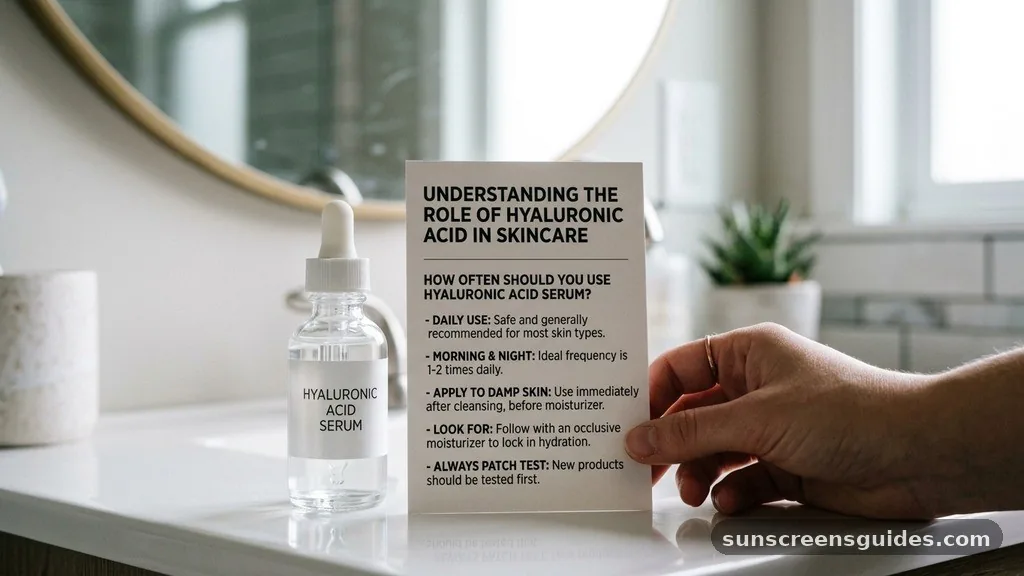
Hyaluronic acid is a naturally occurring sugar molecule found within the skin that holds up to a thousand times its weight in water. Because of its incredible capacity for hydration, it serves as a foundational element in modern skincare routines.
When applied topically, it functions primarily as a humectant, meaning it reaches out into the environment—or deeper layers of the dermis—to pull moisture toward the skin’s surface. This process is essential for maintaining the integrity of your skin barrier, which is the primary defense against environmental stressors and pollutants.
The efficacy of your serum often depends on the molecular weight of the hyaluronic acid used in the formula. Larger molecules sit on the surface, providing an immediate smoothing effect, while smaller molecules penetrate deeper to provide long-lasting hydration.
Because it is non-comedogenic and generally soothing, it is suitable for almost all skin types, including sensitive and acne-prone skin. It doesn’t typically interfere with other active ingredients, making it one of the most versatile tools in your cosmetic arsenal for combating dehydration.
Establishing the Ideal Frequency for Daily Application
When addressing how often should you use hyaluronic acid serum, the short answer is that twice daily—morning and evening—is the gold standard for most people. Using it consistently allows your skin to maintain a constant reservoir of moisture, preventing the tight, uncomfortable feeling that often accompanies dehydration.
However, the success of this frequency relies entirely on how you layer it with other products. Because hyaluronic acid is a water-loving magnet, it requires a specific environment to perform at its best.
If you apply this serum to completely dry skin in a low-humidity environment, you might paradoxically experience more dryness. This occurs because the serum may draw moisture out of the deeper layers of your skin rather than from the air. To avoid this, always apply your serum to damp skin.
Simply misting your face with water or leaving it slightly wet after cleansing provides the hydration the molecule needs to function effectively. Following this simple rule makes twice-daily use not only safe but highly beneficial for long-term skin health.
Optimizing Layering and Compatibility with Actives
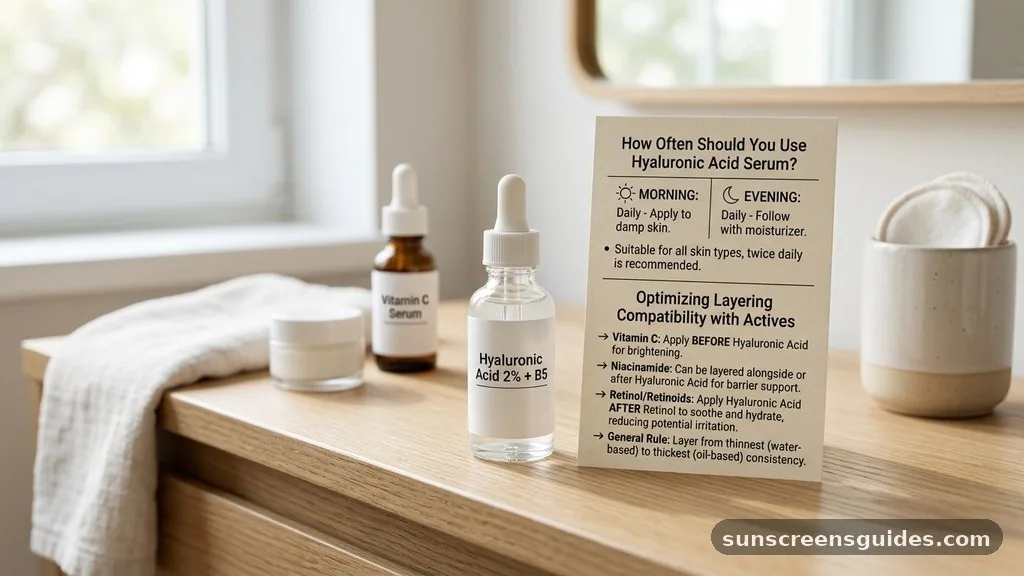
Knowing how often should you use hyaluronic acid serum is only half the battle; the other half is knowing where it fits in your sequence. Generally, you should apply your serum after cleansing and toning but before your heavier creams or oils.
Think of it as the liquid base that prepares your skin to absorb the subsequent layers of your routine. Because it is a water-based product, it should always go on before thicker, oil-based substances to ensure proper absorption and efficacy.
Many people wonder if they can combine this humectant with other popular actives like vitamin C, niacinamide, or retinol. The good news is that it pairs beautifully with almost everything.
In fact, it can often mitigate the irritation sometimes caused by stronger actives like retinol or AHAs. Here is a quick breakdown of how to layer these common ingredients for the best results:
- Vitamin C: Apply in the morning before your hyaluronic acid to brighten and protect.
- Niacinamide: Can be mixed or layered directly with the serum to improve texture.
- Retinol: Use the serum afterward to buffer potential dryness and keep the skin barrier intact.
- Occlusives: Always finish your routine with a moisturizer to lock the hydration in place.
Addressing Common Myths and Topical Gaps
There is a persistent myth that you can over-hydrate your skin by using hyaluronic acid too frequently. In reality, it is difficult to “overuse” a pure humectant, provided you are sealing it in with an appropriate moisturizer.
The actual risk is not the serum itself, but the lack of an occlusive layer. Without a cream or oil to seal the water in, the moisture captured by the serum will eventually evaporate, leading to the very transepidermal water loss you are trying to prevent.
Another gap in common knowledge is the importance of environmental humidity. If you live in an extremely arid climate, the serum has less atmospheric water to pull from, which makes the damp skin application step even more critical.
Some users find that using it only once a day is sufficient during humid summer months, while twice-daily application is necessary during the harsh, dry winter. Pay attention to how your skin feels; if it feels tight or flaky, increase your frequency or ensure you are using a heavier moisturizer over the top.
| Skin Type | Recommended Frequency | Application Strategy |
|---|---|---|
| Oily/Combination | Once or twice daily | Apply to damp skin; use a lightweight gel moisturizer. |
| Dry/Dehydrated | Twice daily | Apply to damp skin; follow with a cream-based moisturizer. |
| Sensitive | Once daily to start | Apply to damp skin; observe for any signs of reactivity. |
Frequently Asked Questions
Is it good to use hyaluronic acid serum daily?
Yes, using it daily is highly recommended to maintain consistent moisture levels and support the skin barrier.
Can you overdo hyaluronic acid application?
You cannot overuse the ingredient itself, but failing to seal it with moisturizer can lead to dryness.
What should you not mix with hyaluronic acid serum?
It is generally compatible with all skincare ingredients, as it is a gentle, hydrating, and non-irritating substance.
Do you put moisturizer on top of hyaluronic acid?
Yes, always apply a moisturizer or oil afterward to lock the hydration into your skin effectively.
Should I use hyaluronic acid in the morning or night?
You can use it both morning and night for maximum hydration and to keep your skin looking plump.
Does hyaluronic acid replace a moisturizer?
No, it is a humectant that draws water in, while a moisturizer acts as an occlusive to seal it.
Is it okay to apply hyaluronic acid to dry skin?
It is better to apply it to damp skin to prevent it from pulling moisture from your skin’s interior.
The journey to better skin health is often about consistency rather than complex formulas. By understanding how often should you use hyaluronic acid serum and mastering the art of layering it with your favorite moisturizers, you can effectively combat dryness and maintain a supple complexion. Remember that the key to success lies in applying the product to damp skin and always following up with an occlusive to lock that moisture in.
Whether you choose to incorporate it once or twice daily, listen to your skin’s needs as the seasons change. If you have questions about your specific routine, feel free to reach out and share your results as you continue your skincare journey toward a more radiant, hydrated look.



