


Navigating the complexities of a modern skincare routine often leaves enthusiasts wondering whether they should layer treatments based on consistency or efficacy. A common point of confusion for many is determining if you apply serum or moisturizer first, a step that fundamentally dictates how effectively your products work. By following the golden rule of skincare layering—moving from the thinnest to the thickest consistency—you ensure that your skin receives the maximum benefit from every drop.
Getting this order right prevents pilling and ensures that potent active ingredients can properly penetrate the surface. Mastering this sequence is the simplest way to upgrade your results without buying a single new product.
The Fundamental Logic of Skincare Layering

When deciding if you apply serum or moisturizer first, the logic is rooted in physics and the molecular weight of your products. Serums are engineered to be lightweight, fast-absorbing liquids that deliver high concentrations of active ingredients directly into the deeper layers of the epidermis. Because their molecules are typically smaller, they need to touch the skin directly to reach their destination.
If you were to apply a heavy cream first, its thicker, oil-rich texture would create a barrier that essentially blocks the serum from sinking in. Think of your skin like a sponge; it absorbs the liquid treatment first, then stays hydrated with the protective layer applied afterward.
This sequence is essential for managing transepidermal water loss, which is the process where moisture evaporates from the surface of your skin throughout the day. By locking in your serum with a moisturizer, you create a seal that keeps the active benefits inside while protecting the skin barrier from environmental stressors.
Applying a water-based serum before a cream or lotion ensures that the water-soluble actives, such as hyaluronic acid or vitamin C, are not physically prevented from doing their jobs. Once the serum feels slightly tacky or mostly dry to the touch, you are ready to move on to the next step of your regimen.
Understanding Product Texture and Absorption
The distinction between a serum and a moisturizer goes far beyond just labeling; it comes down to the chemical composition and the intended function of the formula. A serum is designed for serum absorption, meaning it is formulated with solvents that help it vanish into the skin without leaving a heavy residue.
Moisturizers, by contrast, are often emulsion-based, containing a blend of oil and water that creates a cream consistency meant to sit on the surface. Because of this, the cream serves as a final “cap” that traps everything beneath it.
If you are using a retinol application in your routine, the order becomes even more critical because these ingredients are highly sensitive and potent. Layering your products incorrectly can lead to irritation or decreased efficacy, as the retinol may not reach the cellular level it needs to function. Professionals generally recommend applying your most targeted treatment—the serum—onto clean, slightly damp skin, and then waiting roughly sixty seconds.
This brief pause allows the serum to settle into the pores before you introduce the occlusive properties of a moisturizer. Following this rule of thumb consistently leads to a healthier, more balanced complexion over time.
| Product Type | Primary Function | Typical Texture |
|---|---|---|
| Serum | Delivers concentrated actives | Thin, liquid, or gel |
| Moisturizer | Hydrates and seals | Cream, lotion, or balm |
| Face Oil | Prevents water loss | Heavy, viscous liquid |
Why Humectants and Occlusives Determine the Order
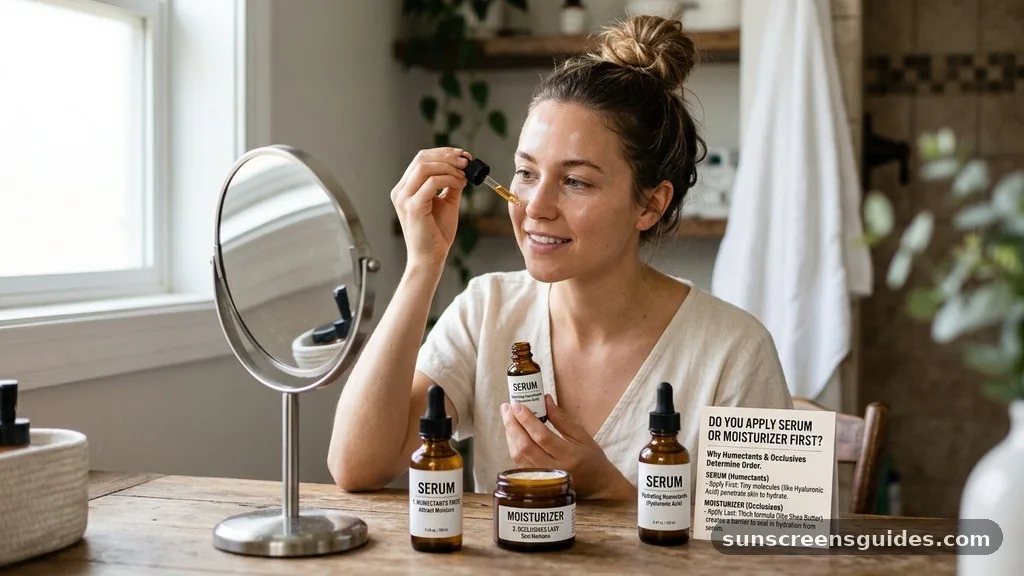
A deeper look at the chemistry involved reveals why ingredients like humectants and occlusives must be applied in a specific sequence. Humectants are ingredients that pull water from the air or deeper skin layers to the surface, and they are almost always found in high concentrations within serums.
Because these ingredients are “thirsty,” they need an occlusive moisturizer applied on top to prevent them from drying out the skin. If you skip the moisturizer, the humectants might actually pull moisture away from your skin instead of keeping it hydrated.
Applying an occlusive moisturizer acts as a physical shield. This shield not only prevents evaporation but also guards against external pollutants that could compromise your complexion. Many people make the mistake of assuming that if they have oily skin, they can skip the moisturizer, but this is a misconception.
Even oily skin types benefit from a lightweight, non-comedogenic moisturizer applied over a serum. By understanding the role of your products, you stop guessing and start building a regimen that actually addresses your specific concerns, whether that is brightening, anti-aging, or intense hydration.
Addressing Common Topical Gaps in Your Routine
One frequent question involves how to handle multiple serums or specialized treatments alongside a standard moisturizer. If your routine includes both a vitamin C serum and a hyaluronic acid treatment, the order should always be based on the thinnest consistency first.
If you have any doubt, check the label; most brands provide instructions on how their specific formulations interact with other common products. A common mistake is applying a face oil before a water-based serum, which is an error because the oil will repel the water-based product, preventing it from reaching the skin.
- Always cleanse your skin thoroughly before starting your layering process.
- Apply products starting with the thinnest consistency and ending with the thickest.
- Allow at least one minute between steps to ensure proper absorption.
- Use your moisturizer as the final step before sunscreen during the day.
- If you use a face oil, save it for the very last step to lock in all moisture.
Another gap many users face is knowing how long to wait between layers. While you don’t need to wait ten minutes for each product to dry, giving your skin a moment to breathe prevents the dreaded “pilling” effect where products clump up on the surface.
This happens when the layers become too saturated and can no longer absorb into the skin. If you notice your makeup or skincare rolling off, you are likely using too much product or not allowing enough time for the serum to set before reaching for your moisturizer.
Frequently Asked Questions
Does the order change if I am using a night cream?
No, the rule of applying serum first remains the same regardless of whether it is a day or night cream.
Can I mix my serum and moisturizer together in my palm?
While some people do this to save time, it is generally better to layer them to ensure optimal absorption.
What happens if I apply moisturizer before my serum?
The moisturizer creates a barrier that prevents the active ingredients in the serum from properly penetrating the skin.
Do I need to wait for the serum to dry completely?
You don’t need it to be bone-dry, but waiting until it feels tacky or mostly set is ideal.
Does face oil go before or after my moisturizer?
Face oils should always be the final step because they have a high molecular weight and act as sealants.
Should I apply serum on wet or dry skin?
Applying serums with humectants like hyaluronic acid on slightly damp skin can help lock in even more hydration.
How do I know if my products are absorbing correctly?
If your skin feels soft and not sticky after a few minutes, your products are likely absorbing as intended.
The order in which you apply your skincare products is the foundation of an effective beauty regimen. By consistently applying your serum before your moisturizer, you ensure that potent ingredients work exactly as they were intended, while the moisturizer provides the necessary protection to seal in that goodness. Remember that the goal is to move from the lightest to the heaviest textures, which naturally guides your hand in the correct direction every morning and night.
If you keep this simple logic in mind, you will notice an improvement in how your skin feels and how your products perform. Start paying closer attention to the texture of your products today, and your future complexion will certainly thank you for the extra care and precision.



