

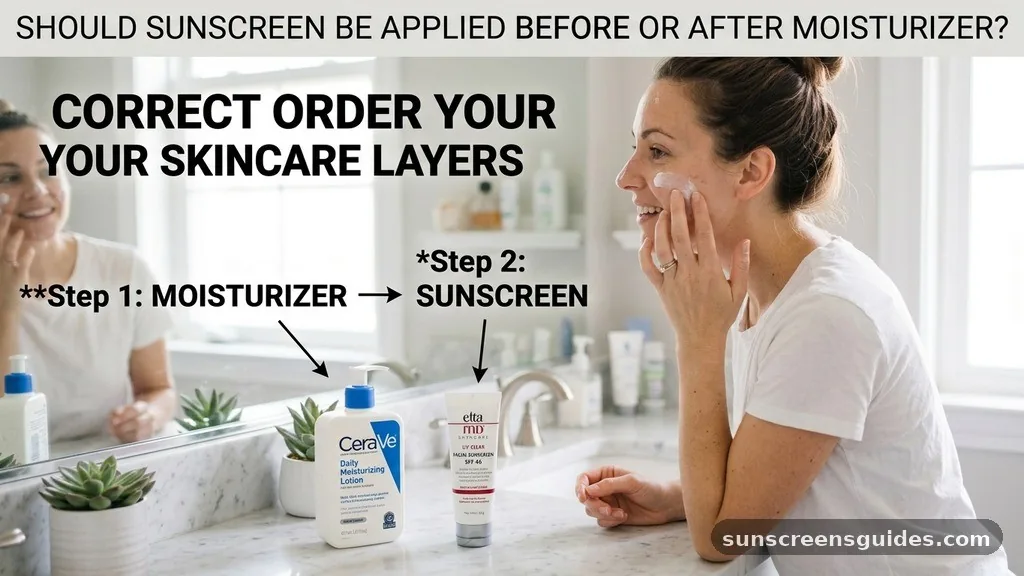
Deciding whether you should sunscreen be applied before or after moisturizer is a common point of confusion for many people building a daily routine. Getting the order right is essential because it directly impacts how well your products protect your skin from harmful UV rays. If you apply them in the wrong sequence, you risk diluting your protection or preventing your skincare from working as intended.
While it might seem like a minor detail, understanding the science behind product layering helps you maximize both your hydration and your sun defense. By following the correct order, you ensure your daytime skincare routine is both effective and comfortable.
The Correct Order for Your Skincare Layers
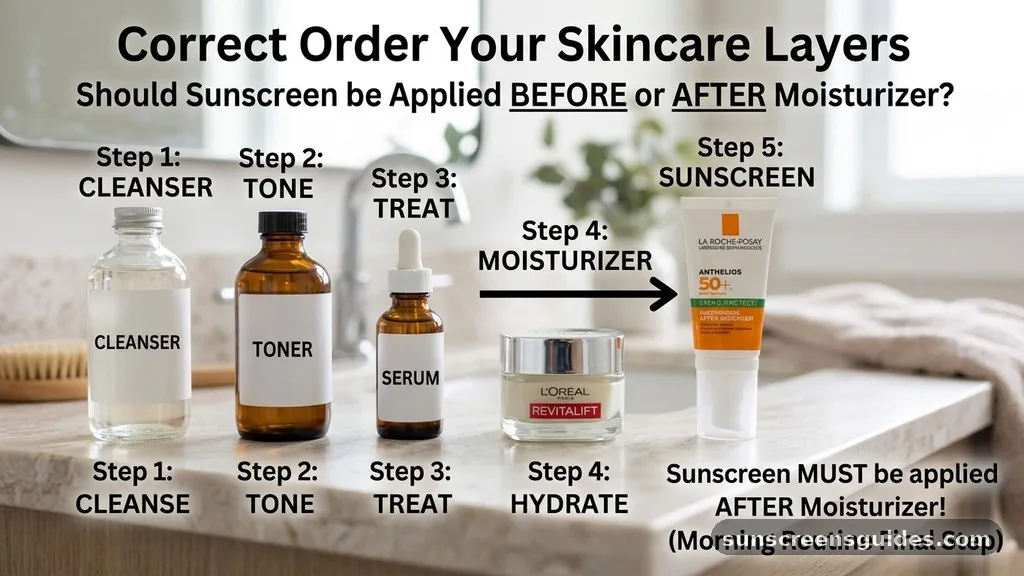
The golden rule in skincare is to apply products from the thinnest consistency to the thickest. You should apply your moisturizer first, allow it to fully absorb, and then follow up with your sunscreen.
This sequence ensures that your skin barrier remains hydrated while the sun protection forms a uniform, protective film over the surface. If you flip this order, the active ingredients in your moisturizer may struggle to penetrate the waxy or silicone-based film of a sunscreen, effectively wasting your expensive lotions.
Applying moisturizer first creates a smooth canvas. When your skin is adequately hydrated, it is less likely to produce excess oil, which can sometimes break down sunscreen filters throughout the day.
Wait about sixty seconds for the moisturizer to “set” before reaching for your SPF. This prevents the two formulas from pilling or balling up on your skin, which is a common frustration for people who use multiple layers.
Understanding Chemical vs. Physical Sunscreens
The type of product you choose significantly influences how it interacts with other layers. A chemical sunscreen needs to be absorbed into the top layer of the skin to convert UV energy into heat.
Because these formulas rely on skin penetration, applying them over a heavy moisturizer can sometimes interfere with their efficacy. You must give chemical filters time to settle into the skin before heading outside.
Conversely, a mineral sunscreen or physical sunscreen sits on top of the skin like a shield. These typically contain ingredients like zinc oxide or titanium dioxide.
Because they work by physically blocking and reflecting radiation, they do not need to be absorbed into the skin in the same way chemical versions do. However, you still want to apply them after your moisturizer so that you don’t disturb the physical layer while rubbing in your lotion.
Comparing Sunscreen Types
| Feature | Physical (Mineral) | Chemical |
|---|---|---|
| Primary Ingredients | Zinc Oxide, Titanium Dioxide | Avobenzone, Octisalate, etc. |
| Mechanism | Reflects UV rays | Absorbs and converts UV |
| Application | Last step of skincare | Last step of skincare |
| Texture | Can be thicker/white cast | Usually lighter/transparent |
Why Order Matters for Your Skin Barrier
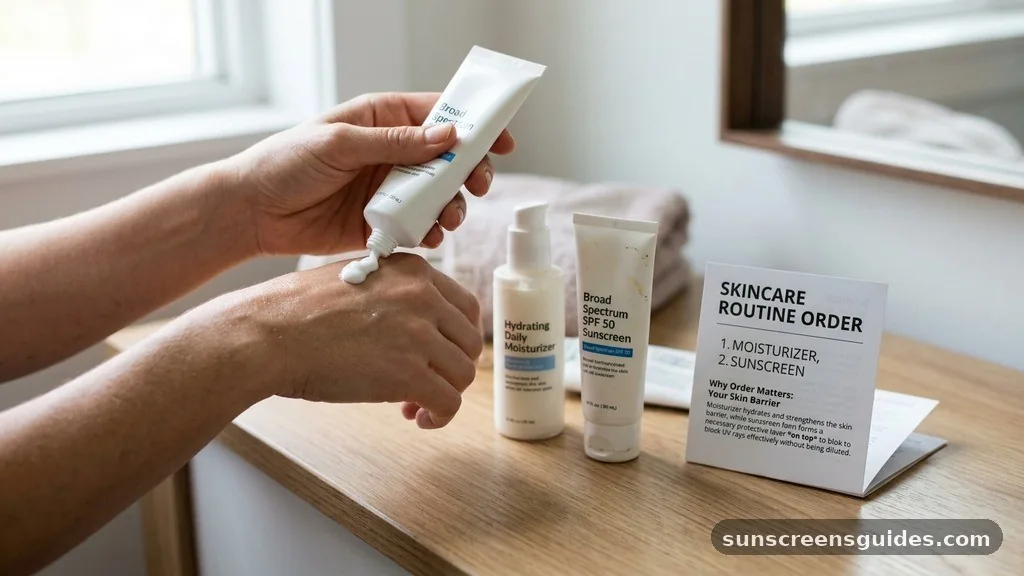
Your skin barrier is your first line of defense against the environment. Using a non-comedogenic moisturizer helps keep your pores clear while providing the necessary lipids to prevent transepidermal water loss.
If you apply sunscreen directly to dry or irritated skin, you might find that the alcohol or solvents in some chemical formulas cause stinging. Moisturizing first acts as a buffer, making the application of your SPF much more comfortable.
Furthermore, applying sunscreen as the final step in your daytime skincare routine ensures that it remains undisturbed. If you were to apply moisturizer over your sunscreen, you would be physically moving the protective particles around.
This creates gaps in your coverage, leaving patches of your face vulnerable to sun damage. Think of your sunscreen as a topcoat that needs to stay put to do its job properly.
Addressing Common Misconceptions and Topical Gaps
Many people wonder if they can mix their sunscreen and moisturizer together to save time. Dermatological experts generally advise against this practice. When you mix products in your palm, you dilute the concentration of the SPF.
A product formulated with an SPF 30 rating is only tested as SPF 30 when applied at the specific density intended by the manufacturer. By thinning it out with moisturizer, you are almost certainly lowering your protection level, leaving you with a false sense of security.
Another common question involves the use of serums. If you use a vitamin C serum, that should go on clean, dry skin first. The moisturizer comes next, and the sunscreen always goes last.
This layering technique respects the molecular weight of the ingredients. Heavier creams or oils should never go under a light serum, just as sunscreen should never go under a moisturizer.
- Cleanse your skin thoroughly to remove night-time residue.
- Apply any water-based serums first, allowing them to dry completely.
- Apply your moisturizer to lock in hydration and treat skin concerns.
- Wait for the moisturizer to feel dry to the touch.
- Apply a generous layer of broad-spectrum SPF as the final step.
- Let the sunscreen set for a few minutes before applying makeup.
The Role of SPF in Your Daily Routine
It is easy to get caught up in the debate over order, but the most important factor is consistency. You need a broad-spectrum product that covers both UVA and UVB rays.
UVA rays are responsible for premature aging, while UVB rays cause burning. Regardless of whether you prefer a chemical or mineral formula, the best sunscreen is the one you will actually wear every single day.
When you are choosing products, look for labels that indicate they are compatible with other skincare items. If you notice your makeup or moisturizer pilling, it might be a sign that your sunscreen isn’t playing nicely with the base layer. You might need to switch to a lighter gel-based moisturizer if you feel like your skin is too greasy when applying your SPF.
Tips for Optimal Absorption
Achieving perfect absorption isn’t just about the order of products; it is about the timing of your routine. If you are rushing out the door, your products won’t have the chance to settle.
Try to give your skin at least three to five minutes between applying your moisturizer and your sunscreen. This allows the water content in your moisturizer to evaporate slightly, leaving a tacky surface that helps the sunscreen adhere better.
If you struggle with the “white cast” often associated with mineral options, try applying them in small, thin layers rather than one big dollop. This technique helps you distribute the product evenly across your face and neck. Remember that your ears, the back of your neck, and your hairline are also prone to sun damage and deserve the same level of care as your cheeks and forehead.
FAQ: Common Questions About SPF and Moisturizer
Does sunscreen work if I put it on after moisturizer?
Yes, applying sunscreen after moisturizer is the correct way to ensure maximum protection and product efficacy.
Should I wait for my moisturizer to dry before applying SPF?
Yes, wait at least one minute until your skin feels dry to prevent pilling and ensure even coverage.
Can I mix moisturizer and sunscreen in my hand?
No, mixing them dilutes the SPF, which significantly lowers the level of protection you receive from the product.
Does mineral sunscreen need to be absorbed into the skin?
No, mineral sunscreens sit on the surface to reflect UV rays, acting as a physical barrier against sun.
Is it okay to use a moisturizer with built-in SPF?
It is acceptable, but ensure you apply a generous amount to achieve the full SPF rating listed on the bottle.
Does chemical sunscreen need to penetrate the skin?
Yes, chemical sunscreens must absorb into the skin to convert UV radiation into heat effectively and safely.
Should I apply sunscreen before or after makeup?
Always apply sunscreen after your skincare and before your makeup to ensure the protective layer remains entirely undisturbed.
Final Thoughts on Daily Sun Protection
Getting your routine right is one of the most effective ways to maintain skin health. By ensuring your sunscreen is applied after your moisturizer, you provide your skin with the hydration it needs while maintaining a robust barrier against environmental damage. Remember that consistency is key; using a high-quality SPF every single morning is the best anti-aging step you can take.
If you find your current products are clashing, don’t be afraid to test different textures or wait times until you find a rhythm that works for your lifestyle. Your future self will thank you for the diligence you put into your skin today. Reach out if you have more questions about fine-tuning your regimen!



