
You might be wondering, can you get tan with sunscreen because you put on SPF but still notice your skin getting a little darker after a beach day or outdoor walk. It feels confusing, right? You did the “safe” thing, covered yourself with sunscreen, but your skin still changed color somehow. The truth is, sunscreen does not create an invisible wall that blocks every single ray, so tanning can still happen, just usually in a slower and less damaging way.
Many people think sunscreen and tanning cannot exist together, but the reality is more complicated. Sunscreen reduces the amount of ultraviolet radiation reaching your skin, but most products are not designed to block 100% of UV exposure. A small amount of UV rays can still reach your skin, which may trigger melanin production and create a tan over time.
Can You Get Tan With Sunscreen On?
Yes, you can get tan with sunscreen on. Sunscreen lowers your risk of sun damage, but it does not completely stop your skin from responding to sunlight.
When your skin detects ultraviolet radiation, especially UVA rays, it produces more melanin. Melanin is the pigment responsible for giving your skin a darker appearance. Even with sunscreen, some UV radiation can still pass through, especially if the sunscreen is not applied correctly or if you spend many hours outside.
For example, an SPF 30 sunscreen theoretically allows around 1/30th of UVB radiation to reach your skin when applied correctly. That small amount may seem tiny, but over several hours it can still add up.
A few things that affect whether you tan with sunscreen include:
- The SPF level of your sunscreen
- How much sunscreen you apply
- Whether you reapply it regularly
- The strength of the sun where you are
- How naturally your skin produces melanin
- How long you stay outdoors
So yes, sunscreen can let you tan, but it usually makes the process slower and helps reduce the harmful effects of sunlight.
How Sunscreen Affects the Tanning Process
Sunscreen works by either absorbing or reflecting UV radiation before it reaches deeper layers of your skin. It mainly protects against UVA and UVB rays, which are linked to sunburn, premature aging, and skin damage.
UVA rays are especially connected with tanning because they penetrate deeper into the skin and stimulate melanin activity. UVB rays are more associated with sunburn and direct DNA damage, though both types can harm your skin.
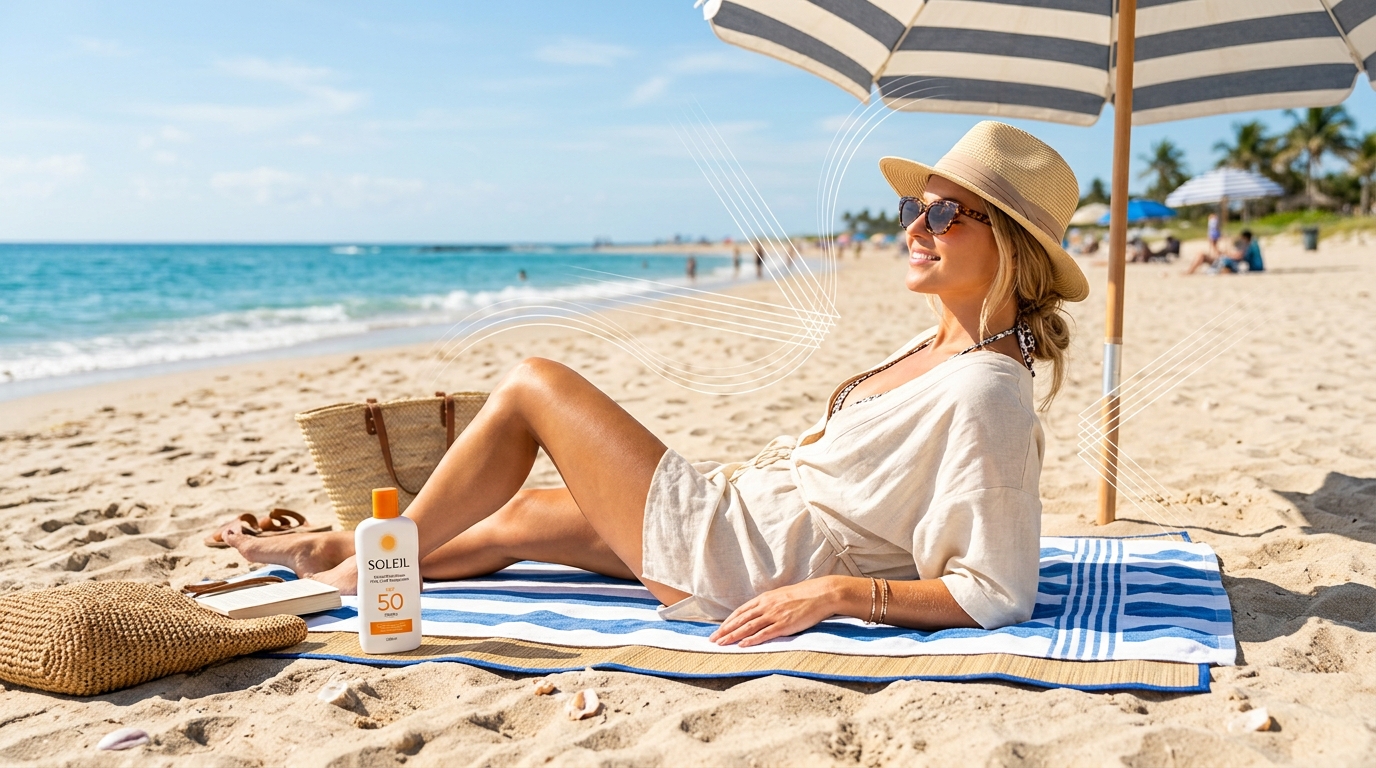
A person wearing SPF 50 may still develop a tan because no sunscreen provides complete protection. Also, many people do not apply enough sunscreen in real life. They use a thin layer, miss areas, or forget to reapply after sweating or swimming. Happens alot, honestly.
According to dermatology experts, most adults need about one ounce of sunscreen, roughly a shot glass amount, to cover the exposed areas of the body properly. The face and neck usually need about a nickel-sized amount.
Does Higher SPF Stop You From Tanning?
A higher SPF can reduce tanning, but it usually will not stop it completely.
Here is a simple comparison:
| Sunscreen SPF | Approximate UVB protection |
|---|---|
| SPF 15 | Blocks about 93% of UVB rays |
| SPF 30 | Blocks about 97% of UVB rays |
| SPF 50 | Blocks about 98% of UVB rays |
These numbers show why SPF 30 and SPF 50 do not create a huge difference. SPF 50 is stronger, but it still allows a small amount of UV radiation through.
Many people assume SPF 100 means they can stay outside all day without consequences. That is not really how it works. Sunscreen is only one part of sun protection, not a magic shield.
Can You Tan Safely While Wearing Sunscreen?
If your goal is getting a little color while protecting your skin, sunscreen is still the smarter choice. However, there is no such thing as a completely “safe” UV tan because tanning is technically a response to skin injury.
The darker color appears because your skin is trying to defend itself from UV exposure. It is basically your body saying, “hey, something is happening here,” not a sign that your skin is becoming healthier.
A safer approach is:
- Use broad-spectrum sunscreen every day
- Choose SPF 30 or higher
- Reapply every two hours outdoors
- Wear sunglasses and protective clothing
- Avoid intense midday sunlight
- Consider self-tanning products for a bronzed look
A quote often shared by skin experts is: “A tan is a sign of skin damage.” While a tan may look attractive to many people, the biological process behind it is your skin reacting to UV stress.
Why Do Some People Tan More Easily Than Others?
Have you noticed how one person gets golden after one afternoon outside while another person turns red almost instantly? That difference mostly comes from genetics and melanin production.
People with naturally higher levels of melanin often tan more easily because their skin has more pigment available to respond to sunlight. People with lighter skin may burn before developing much color.
Your tanning ability can depend on:
- Natural skin tone
- Family genetics
- Amount of melanin produced
- Geographic location
- Time spent outdoors
- Previous sun exposure
Even people who tan easily can experience sun damage. A darker tan does not mean your skin is protected from aging or other UV-related problems.
Can You Get Vitamin D While Wearing Sunscreen?
This question comes up often because sunlight helps your body produce vitamin D. Some people worry that sunscreen blocks all vitamin D production.
Research suggests normal sunscreen use may reduce vitamin D production under controlled conditions, but in everyday life many people still get enough exposure because sunscreen application is often imperfect.
The World Health Organization and other health organizations emphasize balancing sensible sun exposure with protection from excessive UV radiation.
Your vitamin D needs can also be met through foods and supplements when needed, instead of relying on intentional tanning.
Common Sunscreen Mistakes That Lead To More Tanning
Even people who use sunscreen often make mistakes that reduce protection. A little mistake here and there can change the result.
Common issues include:
- Applying sunscreen only once in the morning
- Using too little product
- Forgetting ears, hands, feet, or shoulders
- Using expired sunscreen
- Assuming waterproof means permanent protection
- Skipping sunscreen on cloudy days
Cloudy weather can be sneaky because UV rays still reach your skin. You may not feel the heat, but your skin can still receive radiation.
Sunscreen vs Tanning Oil: Which Is Better?
Tanning oils are often marketed for creating a darker tan faster, but many traditional tanning oils provide little or no UV protection.
Using tanning oil without proper sunscreen can increase your exposure to harmful UV rays. If you enjoy a bronzed appearance, combining sun protection with safer tanning alternatives is generally a better option.
Self-tanning lotions and sprays can create color without exposing your skin to UV radiation. They are not exactly the same as a natural tan, but your future skin may thank you for it.
Final Thoughts: Can You Get Tan With Sunscreen?
So, can you get tan with sunscreen? Yes, you can. Sunscreen does not completely stop tanning because some UV radiation can still reach your skin. However, it slows the tanning process and reduces the amount of damage caused by sunlight.
The goal should not be chasing a darker tan at any cost. Protecting your skin while enjoying outdoor activities is the better balance. A little color might seem nice today, but healthy skin habits matter much more over the years.
Using sunscreen correctly, staying aware of sun exposure, and choosing safer tanning options can help you enjoy the outdoors without putting your skin through unnecessary stress.
FAQs About Can You Get Tan With Sunscreen
Can you still tan with SPF 30 sunscreen?
Yes, SPF 30 allows a small amount of UV exposure, so your skin may still produce melanin and develop a gradual tan.
Does sunscreen prevent tanning completely?
No, sunscreen reduces UV exposure but does not block every ray, meaning some tanning may still occur over time.
What SPF is best if I want less tanning?
SPF 30 or higher broad-spectrum sunscreen helps reduce tanning while protecting your skin from harmful UVA and UVB rays.
Can you tan faster without sunscreen?
Yes, but tanning without sunscreen increases UV damage risks, including burns, premature aging, and long-term skin problems.
Is tanning with sunscreen safe for my skin?
Using sunscreen is safer than tanning without protection, but any UV-induced tan still represents your skin responding to exposure.