
Can you wear sunscreen in a tanning bed, is honestly a question I get asked more then you’d think, usually from someone standing outside the salon door with a bottle of SPF 30 in there hand, not sure if they should slap it on or leave it in the bag.
You’ve probably had this exact moment too, half convinced sunscreen will just ruin the whole point of going in there, half worried that skipping it is a genuinely bad idea. That little tug of war in your head, thats basically what this whole article is about, and I’m gonna try and untangle it properly instead of just throwing platitudes at you.
Why People Even Ask This Question in the First Place
Here’s the thing that makes this question tricky, sunscreen exists to block UV light, and tanning beds exist to blast you with UV light on purpose, so on paper the two ideas cancel each other out completely. You put sunscreen on to stop your skin absorbing rays, then you climb into a machine that’s whole job is to deliver rays as efficiently as possible, and something about that just feels backwards. A lot of tanning salon staff will actually tell you not to bother with regular sunscreen at all, because it defeats the purpose of you being there and paying for the session in the first place.
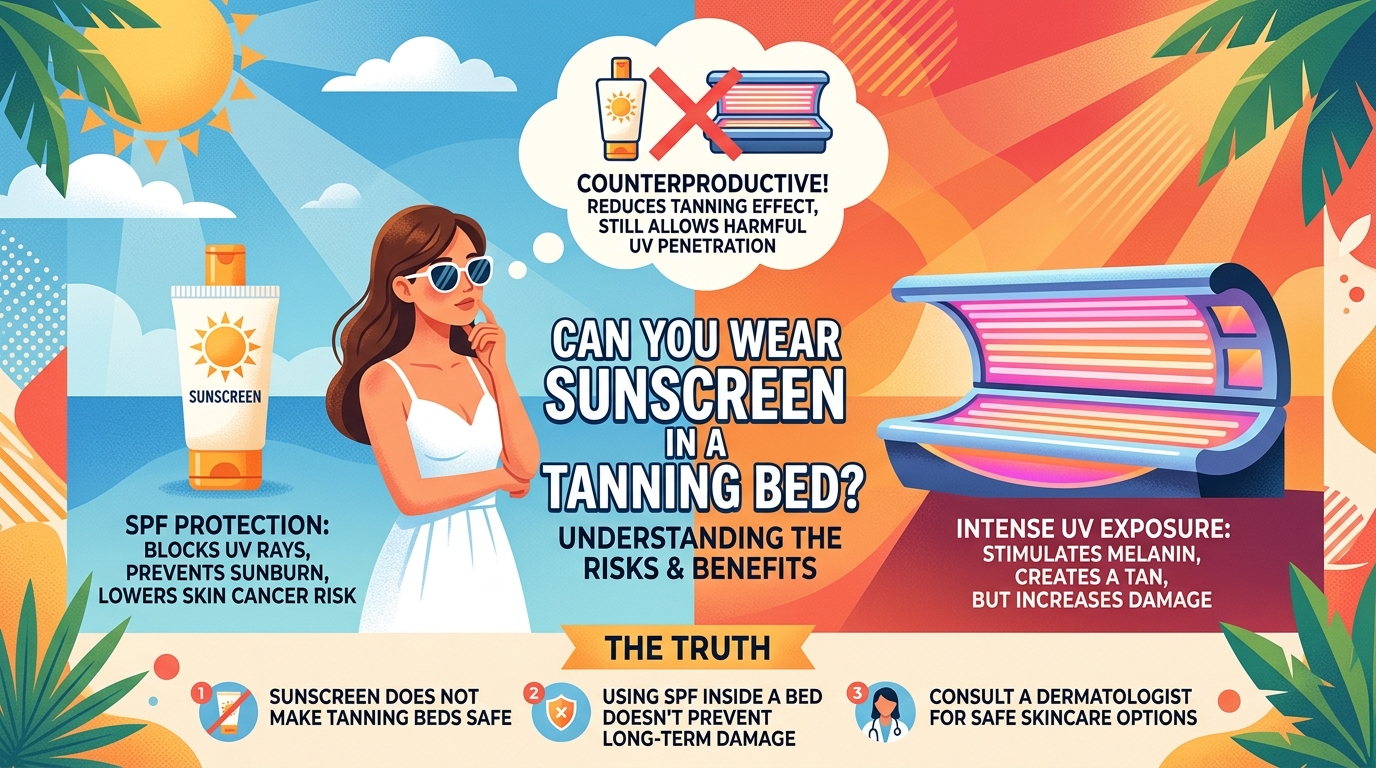
Most indoor tanning centers instead push you toward something called an “indoor tanning lotion” or an accelerator, which is a completely different animal to normal sunscreen. These products don’t block UV, they’re actually built to work alongside it, moisturizing the skin and sometimes containing ingredients that encourage melanin to kick into gear faster. So when someone says “sunscreen” in the context of a tanning bed, you kind of have to ask, do they mean the SPF lotion from the drugstore, or the specialized stuff sold at the counter of the salon. Big difference, and it trips a lot of first timers up.
What Actually Happens if You Put Regular Sunscreen On Before a Session
If you did apply a normal, broad spectrum sunscreen before laying down in a tanning bed, a few things would happen and none of them are what your going for. First off, sunscreen with an SPF rating is specifically designed to slow down UVB rays, and an SPF 30 product blocks somewhere around 97 percent of them, which sounds great outdoors but works against you indoors because it means far less tanning actually occurs. You’d basically be paying for a twelve minute session and getting maybe two minutes worth of actual result, which nobody wants after they’ve handed over cash.
There’s also a practical, kind of gross side to this that people don’t think about until it happens to them. A lot of sunscreens contain oils and chemical filters that under the heat of a tanning bed can react weirdly, sometimes leaving a filmy residue on the acrylic surface of the bed itself. Salon owners genuinely hate this because that film builds up over time and starts blocking UV transmission for every customer after you, not just you. So if your using a lie down bed with a proper sunscreen slathered on, don’t be shocked if the staff mention it, or if your skin ends up patchy and streaky in weird spots like your forehead or your nose where product tends to pool.
Does Sunscreen Actually Stop You Tanning Completely
Short answer, no, not completely, and this surprises people every single time I explain it. Sunscreen was never built to block 100 percent of UV radiation, not even the fanciest, priciest, most “clinical strength” bottle on the shelf. Dermatologists at the Cleveland Clinic have pointed out that even a high SPF product still lets some UVA rays through, and UVA is the wavelength primarily responsible for that darkening effect people chase. So technically, yes, you could still tan a little bit while wearing sunscreen, it would just take way longer and require way more sessions then most people are willing to sit through.
This actually connects to a bigger myth that refuses to die, the whole “base tan protects you” idea. A tan, even one you built up slowly and carefully, only offers protection roughly equivalent to an SPF 3 or 4 product, according to cancer researchers at MD Anderson. That’s such a tiny amount of protection it barely counts, and to even get that much you already had to damage skin cells to begin with, which kind of defeats the entire purpose of trying to protect yourself in advance.
The Real Risks Nobody Wants to Talk About at the Counter
Okay, this is the part that matters most, probably more then the streaky-tan issue or the wasted-money issue. Tanning beds are classified by the World Health Organization and the International Agency for Research on Cancer as Group 1 carcinogens, the exact same top tier category that includes tobacco and asbestos, which is a genuinely sobering thing to sit with for a second. That classification isn’t based on vibes, its based on decades of data connecting indoor UV exposure to skin cancers including melanoma, the most dangerous form.
Indoor tanning devices mostly emit UVA radiation, and they can pump out somewhere between ten and twelve times more of it compared to natural midday sunlight, depending on the bed and bulb strength. Three minutes under some of these lamps can be roughly equal to twenty or thirty minutes of noon sun exposure outside, which is a wild ratio when you actually stop and think about it. UVA penetrates deep into the dermis layer of your skin, contributing to premature aging, wrinkles, and DNA damage that accumulates quietly over years without you noticing any immediate symptom.
Here’s a rough breakdown of how the two main UV types behave, since people mix them up constantly:
| UV Type | Wavelength | Main Effect | Tanning Bed Relevance |
|---|---|---|---|
| UVA | 320-400 nm | Deep skin aging, DNA damage, tanning | Emitted in very high amounts by beds |
| UVB | 280-320 nm | Sunburn, top layer damage | Emitted in smaller amounts, still risky |
Roughly 70 percent of all skin cancers get traced back to repeated ultraviolet exposure over a persons lifetime, based on figures cited by oncology researchers, and using a tanning bed before the age of 35 has been associated with a noticeably higher melanoma risk down the line. None of this means sunscreen is pointless, it just means sunscreen alone, applied inconsistently, in a device engineered to deliver concentrated radiation, was never gonna be a real safety net.
So What Should You Actually Do
If your dead set on using a tanning bed despite everything above, which is your choice to make, there are a few smarter moves then just skipping protection entirely or dumping regular body sunscreen everywhere.
- Protect your face specifically, since facial skin is thinner and shows aging fastest, a high SPF facial product or a barrier stick can be reasonable there even if it slightly slows results
- Always wear the goggles provided, closing your eyes is not a substitute, eyelids are far to thin to block UV rays and repeated exposure damages the eyes over time
- Avoid full body sunscreen if your main goal is actually tanning, since it directly fights against the process and can gunk up the equipment
- Use a proper indoor tanning lotion instead of regular sunscreen if your priority is hydration and even color
- Tell staff about any medications you take, because certain antibiotics and acne treatments make skin burn dramatically faster under UV light
- Consider spray tanning or self tanning lotion as a genuinely safer alternative if the health data above is weighing on you
There isn’t really such a thing as a “safe” tanning bed session, no matter what marketing language gets used at the front desk, and dermatologists across pretty much every major institution agree on that point pretty unanimously. Sunscreen inside a tanning bed occupies this weird middle ground, it wont stop the underlying risk in any meaningful way, but it also isn’t gonna hurt you to apply it on smaller sensitive areas like your face or lips if that’s the compromise you land on.
Final Thoughts
At the end of the day, wearing sunscreen in a tanning bed is less about a strict yes or no answer and more about understanding what tradeoff your actually making. Regular sunscreen fights the tanning process itself, specialized indoor lotions work with the process but offer basically zero protection, and the underlying UV exposure carries real documented cancer risk regardless of what you put on beforehand. If a golden glow matters to you, that’s a completely understandable thing to want, but its worth being honest with yourself about which method gets you there and what your actually willing to risk to get it.