

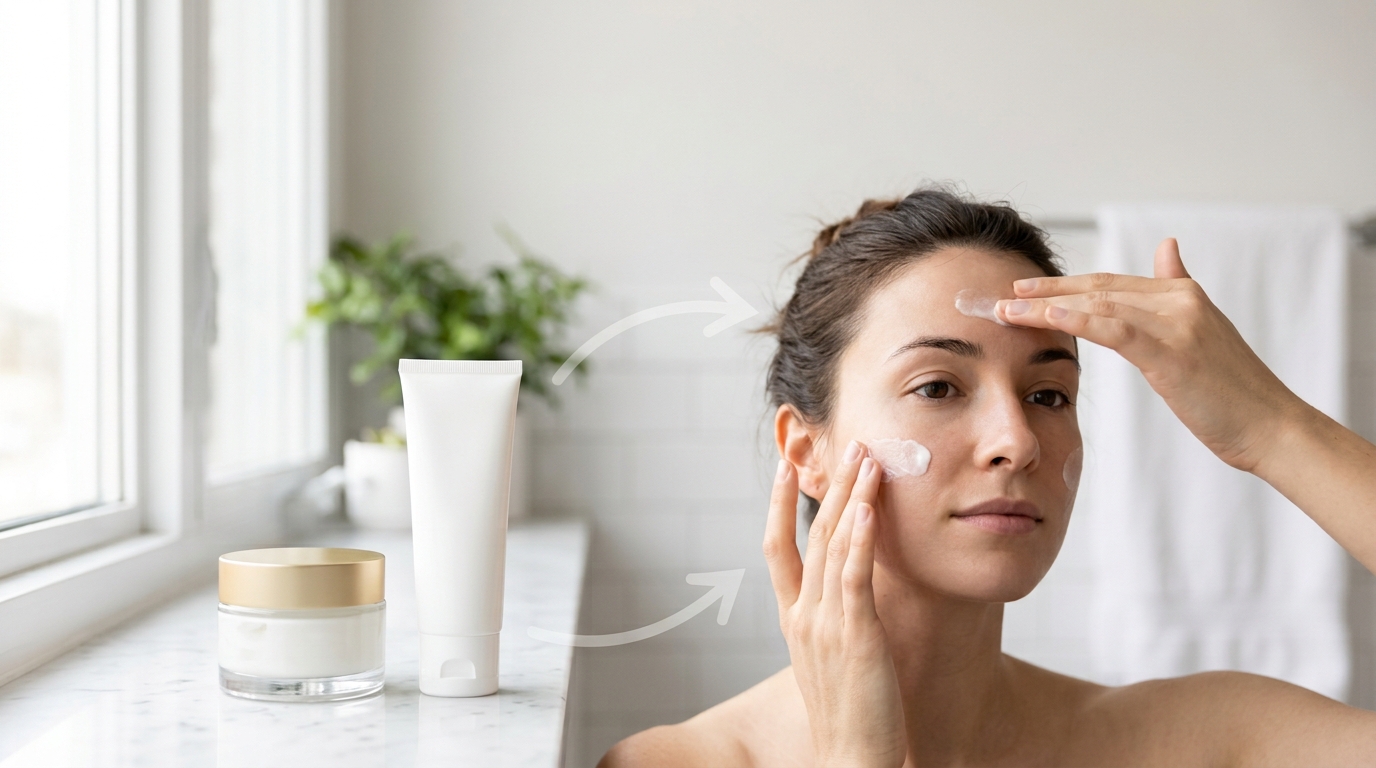
If you’ve ever stood infront of your bathroom mirror holding both bottles and genuinely not knowing which one goes first, you’re not the only one this exact thing trips up even people who’ve had a skincare routine for years. The order matters more than most people think, not in a dramatic “your face will fall off” kind of way, but in a real, practical sense that determines whether your SPF is actually doing anything at all.
Let’s get into it, because the answer is slightly more nuanced than a simple “this one first.”
The Short Answer (For People Who Just Want to Know)
Sunscreen goes on after moisturizer. That’s the general rule for most people using most products. But — and this is where things get genuinely interesting — it depends on the type of sunscreen you’re using, and understanding why the order matters will help you stop second-guessing yourself every single morning.
Why Skincare Order Actually Matters
Your skin isn’t just absorbing whatever you put on it in whatever order you apply things. There’s a logic to layering. Products that need to penetrate deeper — like serums, actives, and hydrating ingredients — should go on first, closest to the skin, so they can do their job without a barrier blocking them. Products that work on the surface, or need to form some kind of physical film, go on last.
Moisturizer is mostly there to lock in hydration and support the skin barrier. It does some absorbing, but it also sits on top and does a lot of its work right there on the surface. Sunscreen, depending on its formula, either needs to be absorbed to work or needs to sit on the very top of everything to physically block UV rays.
This is why the order isn’t arbitrary. Putting sunscreen under your moisturizer means you’re literally diluting or disrupting the SPF layer, which reduces how well it protects you.
Chemical Sunscreens vs. Mineral Sunscreens — They Work Differently
This is the part most articles gloss over, and it’s actually the key to understanding the whole thing.
Chemical sunscreens (also called organic sunscreens) contain active ingredients like avobenzone, octinoxate, oxybenzone, or homosalate. These work by absorbing UV radiation and converting it into heat, which then disperses from the skin. Because they need to actually interact with skin cells to work, they technically should go on bare or near-bare skin — applied before moisturizer — and need about 15 to 30 minutes to fully activate.
Mineral sunscreens (sometimes called physical sunscreens) use zinc oxide or titanium dioxide. They sit on top of the skin and reflect UV rays, almost like tiny mirrors. Because they don’t need to penetrate anything, they go on last — after moisturizer — and they work immediately upon application.
Here’s the catch: most dermatologists still recommend applying chemical sunscreens after moisturizer in a practical daily routine, because the real-world difference in protection is small, and the bigger risk is people not applying enough sunscreen or skipping it entirely because the routine feels complicated. A slightly-diluted-but-worn sunscreen is infinitely better than a skipped one.
So unless you’re very intentional about your routine and willing to wait for products to fully absorb and set, just apply in this order: cleanser, toner (if you use one), serum, moisturizer, sunscreen. Done.
What Dermatologists Actually Recommend
According to the American Academy of Dermatology, broad-spectrum SPF 30 or higher should be applied every day, rain or shine — and it should be the last step in your morning skincare routine before makeup. This aligns with what most board-certified dermatologists advise their patients: sunscreen is your final protective layer, not something buried under other products.
Dr. Mona Gohara, a dermatologist and associate clinical professor at Yale School of Medicine, has spoken repeatedly about how people tend to under-apply sunscreen. The recommended amount for your face alone is about a nickel-sized amount, or roughly a quarter teaspoon. Most people use significantly less, which already reduces effective protection — so adding another product on top that disrupts the sunscreen layer makes things even worse.
Does Moisturizer With SPF Count?
A lot of people try to solve this whole dilemma by using a moisturizer that has SPF built in. It seems like the obvious solution: one product, two jobs, problem solved. The reality is a bit more complicated.
Moisturizers with SPF absolutely provide some protection, and they’re better than nothing. But there are a few issues. First, the SPF in a moisturizer is often not applied in a thick enough layer to reach the labeled protection level — because you’re applying moisturizer the way you’d apply moisturizer, not sunscreen. You’d need a lot more product than most people use for their moisturizer to actually hit SPF 30 in practice.
Second, the formulation of a moisturizer with SPF has to balance both functions, and sometimes that means the sunscreen filters aren’t as concentrated or stable as in a dedicated SPF product. A 2022 study published in the journal Photodermatology, Photoimmunology & Photomedicine found that combination products with SPF often deliver lower real-world protection than standalone sunscreens with the same labeled SPF.
For everyday low-sun-exposure days — commuting, sitting by a window, quick errands — a good moisturizer with SPF is probably fine. For any extended outdoor time, a dedicated sunscreen applied properly after your moisturizer is the smarter call.
The Full Morning Routine Order, Laid Out Simply
| Step | Product | Why It Goes Here |
|---|---|---|
| 1 | Cleanser | Starts with a clean base |
| 2 | Toner (optional) | Preps and balances pH |
| 3 | Essence or serum | Lightweight actives penetrate first |
| 4 | Eye cream | Thin skin needs targeted treatment |
| 5 | Moisturizer | Seals in hydration and actives |
| 6 | Sunscreen | Final barrier, nothing goes on top |
| 7 | Makeup (if applicable) | Applied over sunscreen |
One thing people often ask: does makeup go over or under sunscreen? Makeup always goes on after sunscreen. Primer, foundation, everything. If you’re using a setting spray with SPF, that can go on top of makeup as a refresh, but it’s not a substitute for your base sunscreen layer.
What Happens If You Apply Sunscreen Under Moisturizer?
Let’s say you do it the other way around. What actually happens?
With a mineral sunscreen, you’re physically pushing those UV-blocking particles away from the surface of your skin, essentially burying them under a layer of moisturizer. The particles are designed to sit on the skin and reflect light, not be mixed into other products. Applying moisturizer on top reduces their effectiveness.
With a chemical sunscreen, you’re adding a layer that can partially disrupt the even distribution of the sunscreen film you created. Depending on how thick or occlusive your moisturizer is, it may also affect how the chemical filters interact with skin. Some research suggests layering products on top of chemical sunscreens can reduce their photostability — meaning they break down faster under UV light than they’re supposed to.
Neither scenario is a disaster if it happens occasionally, but if this is your daily routine, you’re likely getting meaningfully less protection than the SPF number on the bottle suggests.
Common Mistakes People Make With Sunscreen Application
Beyond the order question, there are a few other things that quietly undermine people’s sun protection:
- Not waiting between steps. Ideally, you let each product absorb a bit before adding the next. Giving your moisturizer a minute or two to settle before sunscreen helps the sunscreen go on evenly without pilling.
- Rubbing sunscreen in too aggressively. Sunscreen, especially mineral formulas, should be patted and gently spread — not rubbed vigorously like a lotion. Rubbing can disrupt the protective layer.
- Forgetting to reapply. Sunscreen breaks down over time, especially with sun exposure, sweat, or touching your face. Reapply every two hours if you’re outside. This is the step most people skip entirely.
- Skipping the neck and ears. These are common spots for sun damage and skin cancers, and they get genuinely neglected by most people.
- Not applying enough. The nickel-sized amount. Seriusly. Most people apply about 25-50% of what they should.
Does It Matter If You Have Oily or Dry Skin?
Sort of. The basic order — moisturizer then sunscreen — stays the same regardless of your skin type, but the products you choose within that order can shift.
If you have oily or acne-prone skin, you might find that using a lighter moisturizer (or a gel-based one) before sunscreen keeps your skin from feeling too heavy or greasy. Some people with oily skin skip a traditional moisturizer entirely and use a sunscreen that has hydrating ingredients built in, essentially letting the SPF product do double duty. That’s a valid approach as long as your skin tolerates it and the sunscreen provides adequate hydration.
If you have dry skin, you might want a richer moisturizer underneath, and then a sunscreen that isn’t too mattifying or drying on top. Cream-based sunscreens tend to sit more comfortably on dry skin than gel or water formulas.
For sensitive skin, mineral sunscreens are generally the better pick because they’re less likely to cause irritation than chemical filters — zinc oxide in particular is well tolerated by most skin types, including people with rosacea.
A Few Sunscreen Formulas Worth Understanding
The market has changed a lot in recent years. Sunscreen used to basically come in one texture: thick, white, slightly miserable to apply. Now there are:
- Fluid or serum-type SPFs that absorb like a serum and can go on quite light
- Gel SPFs that work well under makeup and for oily skin
- Tinted SPFs that offer some color correction and can reduce the white cast from mineral formulas
- Stick sunscreens for on-the-go reapplication (though they’re harder to get even coverage with)
The format you choose might influence where it sits best in your routine. A very fluid, serum-like SPF sometimes works fine between moisturizer and makeup without the same disruption risk as a thicker formula. But the default advice still stands: apply it last.
The Bottom Line
Put sunscreen on after moisturizer. Use enough of it — a proper amount, not a light swipe. Let it sit for at least a minute before you apply makeup. And if you’re going to be outside for a while, reapply it. That’s genuinely most of what there is to know.
The order debate matters, but it’s not worth getting so caught up in that you end up frustrated and skipping SPF altogether. Sunscreen worn imperfectly is far better than sunscreen sitting on a shelf. Start with moisturizer, end with sunscreen, and your skin is going to thank you in a few decades.