

Sunscreen is a non-negotiable part of skin health, yet many of us find ourselves debating whether the convenience of a mist actually provides the same defense as traditional creams. When you wonder if the mist-based products found on drugstore shelves are up to the task, the answer is a resounding yes, provided you use them correctly.
The primary concern is rarely the formulation itself, but rather the human error inherent in a quick, breezy application. Understanding how these products interact with your skin is the first step toward better sun safety and long-term protection against harsh environmental elements.
The Science Behind Spray Sunscreen Effectiveness
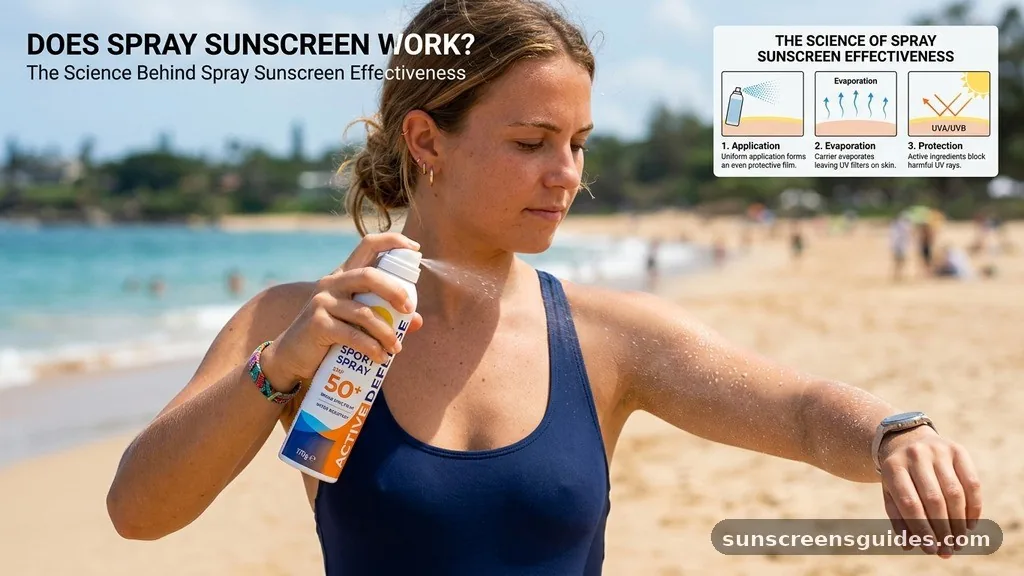
Spray sunscreen works by delivering chemical filters or mineral blockers to the surface of the skin through an aerosol application mechanism. Just like a standard sunscreen lotion, these sprays are formulated to provide broad-spectrum protection against both UVA and UVB rays.
The SPF rating indicated on the bottle represents the level of protection you receive, assuming you apply the product with sufficient density and uniformity. When sprayed properly, the liquid film dries into a protective layer that absorbs or reflects UV radiation before it can penetrate the dermis.
The chemical components in these sprays function similarly to those in lotions, binding to the skin to dissipate heat or block incoming photons. Because the alcohol or solvent base in a spray evaporates quickly, it often leaves behind a lighter, less greasy feel that many people prefer for daily use or active lifestyles.
However, the thinness of the spray can sometimes lead users to underestimate how much product is actually needed to achieve the labeled protection factor. Consistency is the key to ensuring you are getting the full value of the sunscreen’s stated capacity.
The Challenge of Uniform Application
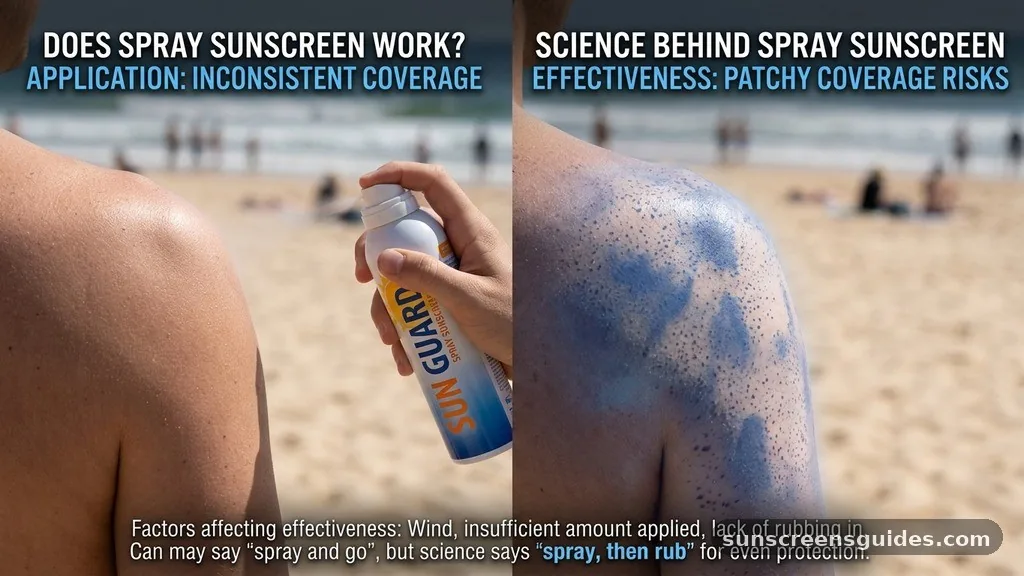
The most significant barrier to effective spray usage is the lack of uniform application. Unlike a cream, which you can physically see and spread across your skin, a fine mist can easily be blown away by the wind or applied too thinly to reach the recommended thickness.
If you don’t coat every inch of exposed skin, you create gaps where UV radiation can still cause damage. Research suggests that most people spray for only a few seconds, which is rarely enough to reach the necessary milligrams of product per square centimeter of skin.
To combat this, you must treat your application with the same level of attention you would give to a thick lotion. Always apply in a sheltered, wind-free area to ensure the product lands on your body rather than the atmosphere.
Once the mist is on your skin, you should spend a moment rubbing it in thoroughly. This manual spreading acts as a secondary safety measure, helping to fill in any missed spots and ensuring that the protective barrier is continuous across your face, neck, arms, and legs.
Comparing Spray and Lotion Formulations
Choosing between a spray and a lotion often comes down to personal preference and the specific situation at hand. While lotions offer a more tactile experience that makes it easy to track where you have already applied, sprays offer unmatched convenience for hard-to-reach areas like the back. The following table highlights the functional differences between these two common delivery methods.
| Feature | Sunscreen Spray | Sunscreen Lotion |
|---|---|---|
| Ease of Application | High (Good for large areas) | Moderate (Requires manual rubbing) |
| Visible Coverage | Low (Harder to see missed spots) | High (Easy to see distribution) |
| Wind Sensitivity | High (Product can blow away) | None |
| Drying Time | Fast (Alcohol-based) | Slower |
Addressing Inhalation Risk and Skin Safety
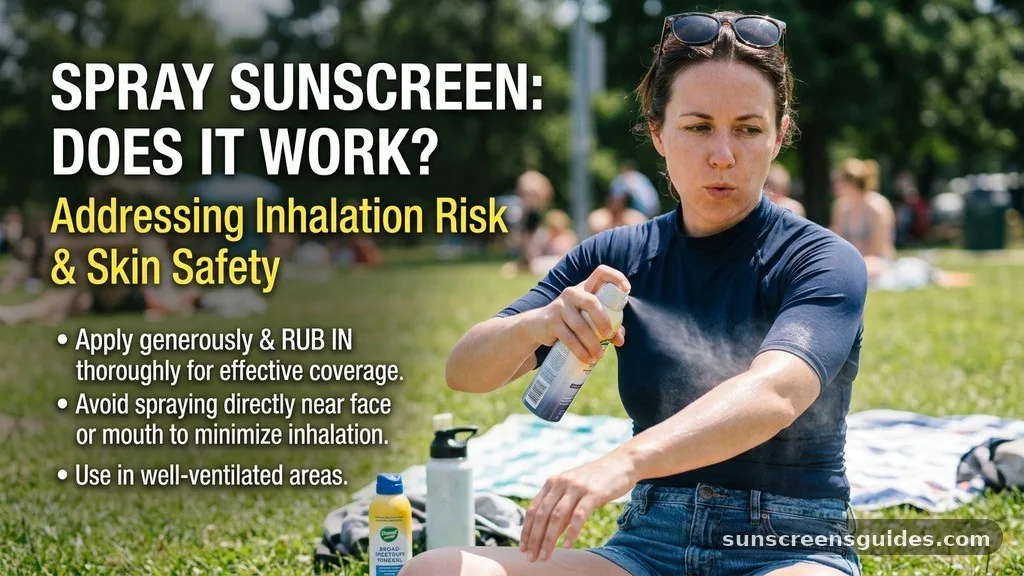
A frequently discussed topic regarding aerosol products is the inhalation risk. Because the spray creates a fine cloud of particles, there is a legitimate concern about breathing in the chemical components. Health experts generally advise that you never spray these products directly onto your face.
Instead, you should spray the sunscreen into your hands first and then apply it to your face like a standard cream. This simple adjustment eliminates the risk of inhaling the aerosolized mist while ensuring your face gets the necessary protection against photoaging.
FDA regulations monitor the ingredients used in these products to ensure they meet safety standards for topical use. While topical absorption of sunscreen ingredients is generally considered safe and vital for skin cancer prevention, the lungs are a different story.
By keeping the product away from your respiratory tract, you maintain the benefits of the protective barrier without unnecessary risks. If you are applying spray to children, this hands-first method is doubly important to prevent them from breathing in the mist or getting it into their eyes.
Maximizing Your Protection Strategy
To make sure your sunscreen is working as hard as you think it is, you need a strategy that accounts for the limitations of aerosols. High-performance sunscreen is only as good as the technique used to apply it. Consider these essential tips for getting the most out of your bottle:
- Apply in a sheltered area: Avoid windy beaches or outdoor patios where the product will dissipate before hitting your skin.
- Use the two-pass method: Spray the area once, rub it in, and then spray it a second time to ensure you haven’t missed any patches.
- Focus on high-exposure zones: Don’t forget the tops of your ears, the back of your neck, and the tops of your feet, which are often neglected.
- Check the expiration date: Chemical filters degrade over time; using an expired bottle significantly reduces your level of defense against UV damage.
- Reapply frequently: Like all sunscreens, sprays lose effectiveness after swimming, sweating, or toweling off, regardless of their water-resistance rating.
Common Misconceptions and Topical Gaps
One common question is whether spray sunscreen works through clothing. While some specialized fabrics provide UPF protection, a thin layer of spray on top of a cotton shirt does not magically turn that fabric into a shield. You should apply sunscreen directly to the skin, even if you plan to wear clothes over it, to prevent sunburns in areas where fabric might shift or provide insufficient cover.
Another gap in public knowledge concerns “natural” or “mineral” sprays. While these exist, they often contain physical blockers like zinc oxide or titanium dioxide, which can be harder to spray evenly. Always check the nozzle for clogging if you choose a mineral-based formula, as these particles can settle and block the mechanism, leading to inconsistent application.
Finally, there is the issue of “waterproof” claims. No sunscreen is truly waterproof; they are merely water-resistant for a set amount of time. If you spend hours in the water, the protective barrier will eventually wash away.
Relying on a single morning application of a spray is a recipe for a painful burn. You must acknowledge that the spray’s light texture often gives a false sense of security, leading people to reapply less frequently than they would with a thicker, more visible cream.
The Role of Sunscreen in Long-Term Skin Health
Consistent use of effective sunscreen is the single most important factor in skin cancer prevention. The cumulative damage from UVA and UVB rays adds up over a lifetime, leading not just to sunburns, but to permanent changes in the skin’s DNA.
By incorporating a reliable spray into your daily routine, you are taking a proactive step toward maintaining skin integrity. The goal is to reach a point where application feels as automatic as brushing your teeth.
It is helpful to view sunscreen as a daily essential rather than a vacation accessory. Even on cloudy days, a significant percentage of UV light reaches the earth, contributing to long-term photoaging.
By using a spray correctly, you are building a physical barrier or chemical shield that keeps your skin healthy for decades to come. Don’t let the convenience of the spray make you complacent; treat the application with the seriousness that your long-term health deserves.
Conclusion
When you ask does spray sunscreen work, the answer remains a firm yes, provided you commit to the proper application technique. The aerosol format is a convenient tool that allows for quick coverage, but its effectiveness depends entirely on your willingness to ensure a thick, uniform layer across all exposed areas. By avoiding inhalation, applying in wind-free zones, and rubbing the product into the skin, you gain the same high-level protection as you would from a traditional lotion.
Staying consistent with your habits is the ultimate secret to maximizing the benefits of your chosen sunscreen. Whether you prefer the mist or the cream, the best product is always the one you actually use. Stay diligent, keep your skin protected, and enjoy your time outdoors safely.
Is spray sunscreen as effective as lotion?
Yes, it is equally effective, provided you apply enough product and rub it in to ensure even coverage.
Does spray sunscreen work on the face?
Yes, but spray it into your hands first and then apply it to your face to avoid inhalation.
Should I rub in spray sunscreen after applying?
Yes, rubbing the sunscreen in helps ensure a uniform layer and prevents missed spots across your skin surface.
Does spray sunscreen work over makeup?
It is not ideal, as it may not penetrate makeup effectively; apply sunscreen underneath your makeup for protection.
Is spray sunscreen bad for the environment?
Some aerosol propellants and chemical ingredients can be harmful; look for reef-safe, eco-friendly options when shopping.
How do I know if I used enough spray?
If you can see a sheen on your skin, you have likely applied enough, but always rub it in.
Does spray sunscreen expire faster than lotion?
No, both typically have the same shelf life; check the expiration date on the bottle for accuracy.



