


Deciding exactly how long to wait between serum and moisturizer is a common point of confusion in many daily skincare routines. You might have heard conflicting advice ranging from waiting minutes to moving instantly to the next step. Understanding the science behind product layering helps you maximize the effectiveness of your active ingredients while ensuring your skin remains healthy.
By learning the ideal timing for your skin’s absorption rate, you can prevent pilling and ensure that potent formulas penetrate deeply rather than evaporating from the surface. This article explains the timing nuances required to build an efficient, professional-grade routine that respects your skin barrier.
Understanding Product Absorption and Layering Science
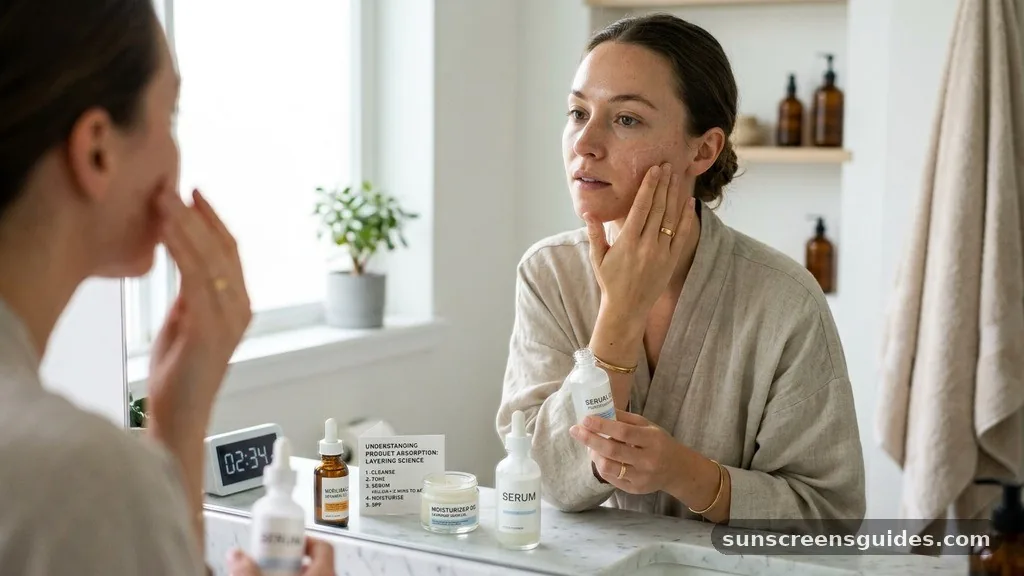
To determine how long to wait between serum and moisturizer, you must first grasp the concept of product absorption. Skin is a complex organ designed to protect you, which means it is naturally resistant to substances sitting on its surface. When you apply a serum, it typically features a lightweight, water-based emulsion designed to deliver concentrated active ingredients directly to the epidermis.
These formulas are generally designed to sink in quickly. If you immediately slather a heavy cream over a still-wet serum, you risk diluting the product or causing it to “pill”—that frustrating rolling effect where your skincare forms little balls on your face.
The general consensus among dermatologists is that you should wait until the serum feels slightly tacky to the touch but no longer wet. For most water-based serums, this takes anywhere from 30 to 60 seconds. This tacky finish is actually the “sweet spot” for moisture retention.
If you wait until your skin is bone-dry, you might miss the chance to lock in extra hydration. By applying your moisturizer while the skin is still slightly damp from the serum, you create a more effective seal, helping to prevent transepidermal water loss throughout the day.
The Role of Ingredients in Timing
Not all serums are created equal, and the chemistry of your specific products dictates your wait time. For instance, a hyaluronic acid serum acts as a humectant, meaning it pulls water into the skin.
If you apply a moisturizer immediately after a hyaluronic acid serum, you are trapping that hydration effectively. Conversely, highly acidic or potent treatments like vitamin c or niacinamide may require a bit more time to stabilize before they interact with the lipids in your moisturizer.
If you are using a very thin, watery serum, the skin penetration happens almost instantly. However, if you are layering multiple serums, you should always wait at least a minute between each one. The golden rule of skincare layering is to go from the thinnest consistency to the thickest.
Your moisturizer, which often acts as an occlusive agent to keep everything else in, should almost always be the final step before sunscreen. If you rush this process, you are essentially mixing your products on the surface of your skin rather than allowing them to perform their intended functions in the layers where they are needed most.
| Serum Type | Recommended Wait Time | Why It Matters |
|---|---|---|
| Water-based (Hyaluronic Acid) | 30-60 Seconds | Locks in humectants before they evaporate. |
| Acid-based (Vitamin C/AHA) | 2-3 Minutes | Allows skin pH to rebalance and prevents irritation. |
| Oil-based Serums | 1-2 Minutes | Prevents oil from blocking water-based absorption. |
Why Skin pH and Barrier Health Matter

Your skin pH plays a significant role in how well products absorb. The skin’s acid mantle sits at a slightly acidic level, usually around 4.7 to 5.7. Many potent serums are formulated at specific pH levels to remain active.
If you rush to apply a heavy, alkaline moisturizer immediately after an acidic serum, you might inadvertently alter the pH of the serum, rendering it less effective. This is why many experts suggest giving your skin a moment to “breathe” after applying chemical exfoliants or high-potency treatments.
Protecting the skin barrier is the ultimate goal of any routine. If you are constantly applying products too quickly or rubbing them in with too much force, you can cause micro-tears or irritation, which compromises your barrier. A compromised barrier leads to increased sensitivity and moisture loss.
By waiting the appropriate amount of time, you allow the products to settle into your facial pores and skin texture naturally. This passive approach is far gentler than aggressive rubbing and ensures that your skin remains calm and protected throughout the day.
Addressing Common Skincare Layering Myths
There is a pervasive myth that you must wait 10 to 15 minutes between every single step of your routine. While this might be ideal in a laboratory setting, it is largely impractical for the average person.
The reality is that your skin reaches a point of “diminishing returns” regarding absorption. Once the bulk of the product has moved past the surface, waiting an extra ten minutes won’t necessarily yield better results; it might just lead to your skin feeling dry and tight.
- Focus on texture rather than a clock: If your skin feels tacky, it is usually ready for the next product.
- Avoid excessive rubbing: Pressing products into the skin is more effective and less irritating than rubbing.
- Consider the climate: In humid environments, products take longer to dry; in dry, arid climates, they absorb almost instantly.
- Don’t overcomplicate: If you are using more than three serums, you may be experiencing product fatigue, where the skin simply cannot absorb any more.
- Sunscreen is non-negotiable: Always wait until your moisturizer is fully set before applying SPF to avoid streaking the protective layer.
Frequently Asked Questions
How long should you wait to put on moisturizer after serum?
You should generally wait 30 to 60 seconds, or until the serum feels slightly tacky, not wet.
What is the 4 2 4 rule in skincare?
It refers to a cleansing method: 4 minutes of oil cleansing, 2 minutes of water-based cleansing, 4 minutes rinsing.
Which two serums cannot be used together?
Avoid mixing high-strength retinol with direct acids like AHAs or BHAs to prevent severe skin irritation.
Does waiting longer between products improve absorption?
No, excessive waiting can lead to product evaporation and does not significantly enhance penetration beyond the initial minute.
Should I wait for serum to dry completely?
No, apply your moisturizer while the skin is still slightly damp to help seal in the hydration effectively.
Can I apply moisturizer immediately if my skin is very dry?
Yes, if your skin is dehydrated, applying moisturizer quickly helps trap the serum’s moisture before it evaporates away.
Does the order of skincare really matter?
Yes, always layer from the thinnest, most watery consistency to the thickest, most occlusive cream for optimal results.
Conclusion
Mastering the timing of your skincare routine is less about strict adherence to a timer and more about listening to your skin. By waiting for that subtle shift from wet to tacky, you ensure that your serums have the best chance to do their work before your moisturizer locks them in. Remember that consistency and a gentle touch are far more important than exact precision.
Whether you are using a simple routine or a complex multi-step regimen, the goal is always to support your skin barrier and maintain hydration. Experiment with these timings to see what works best for your specific skin type and environment. If you found these tips helpful, try adjusting your morning routine tomorrow and notice how your skin feels throughout the day.



