

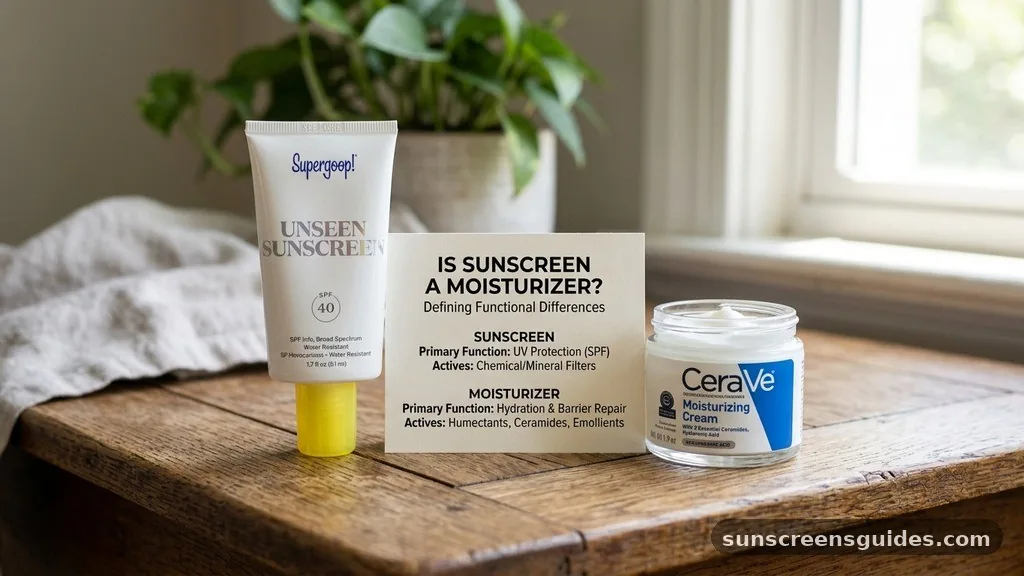
Many people wonder if they can streamline their morning routine by skipping a dedicated lotion, leading to the common question of whether sunscreen acts as a moisturizer for the face. While both products aim to improve the health of your complexion, they serve fundamentally different purposes in your daily regimen.
Understanding the distinction between SPF products and traditional hydrating creams helps you maintain your skin barrier function while ensuring you stay protected from the sun. Knowing if you can rely on a single product depends largely on your specific skin type and the environmental conditions you face throughout the day.
Defining the Functional Differences
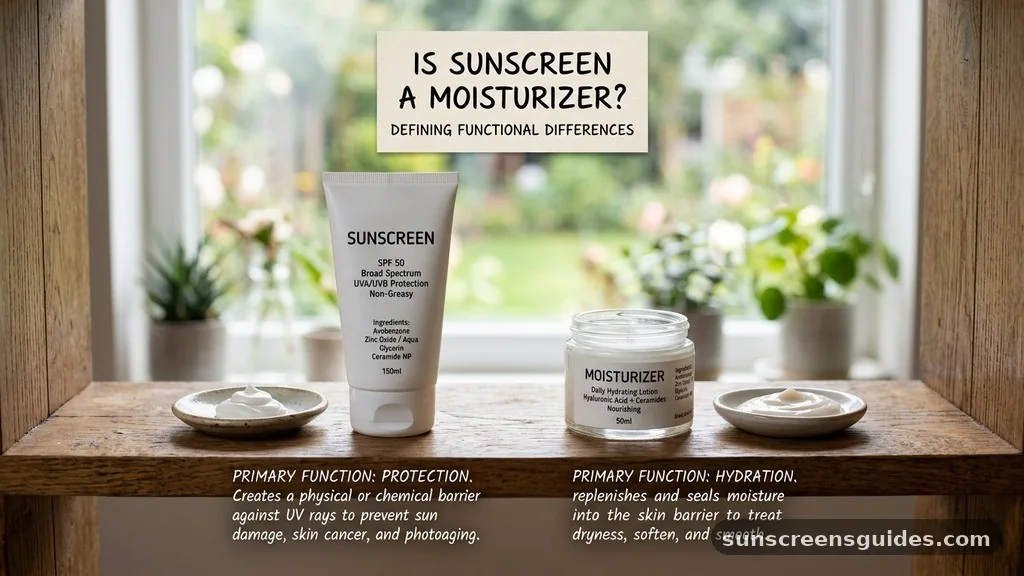
Sunscreen is primarily formulated as a shield against ultraviolet radiation, whereas a moisturizer is designed to restore hydration and prevent transepidermal water loss. While some modern formulations attempt to bridge this gap, their primary chemical architectures remain distinct. A moisturizer focuses on delivering humectants, emollients, and occlusives to the epidermis.
Sunscreen, conversely, relies on either chemical filters or physical mineral blockers like zinc oxide or titanium dioxide to neutralize light energy. These active ingredients are meant to sit on the surface or absorb radiation rather than sink deep into the skin to repair its structural moisture balance. If you treat a sunscreen as your sole source of hydration, you may find your skin feeling tight or flaky by midday.
When Sunscreen Functions as a Moisturizer
You can certainly find hybrid products that successfully combine hydration with sun protection. Many newer, lightweight formulas are designed to serve both roles, especially for those with oily or combination skin. These products often contain ingredients like hyaluronic acid or glycerin, which act as humectants to draw water into the skin.
If your sunscreen feels rich and leaves a dewy finish, it likely contains enough emollients to satisfy your skin’s daily requirements. However, people with extremely dry or compromised skin often find that these dual-purpose products do not provide enough long-term nourishment. In such cases, treating your sunscreen as a final protective layer rather than a total replacement for a cream is the safest path.
| Feature | Standard Moisturizer | Sunscreen |
|---|---|---|
| Primary Goal | Hydration/Barrier repair | UV protection |
| Key Ingredients | Ceramides, Hyaluronic acid | Zinc oxide, Avobenzone |
| Application | Absorbs into skin | Forms a surface shield |
| Frequency | Day and Night | Daytime only |
The Role of Skin Barrier Function
Your skin barrier function is the outermost layer of your complexion that keeps moisture in and irritants out. When you suffer from dehydration, your barrier becomes porous, leading to sensitivity and premature signs of photoaging. While a high-quality, non-comedogenic sunscreen can help protect this barrier from the harsh effects of the sun, it doesn’t always provide the reparative fatty acids or lipids found in dedicated moisturizers.
If you rely solely on sunscreen, you might miss out on essential nutrients that bolster the skin’s natural defenses. Think of your moisturizer as the “food” that keeps the skin cells plump and resilient, while sunscreen is the “armor” that prevents external damage. Balancing both is the gold standard for long-term dermatological health.
Optimizing Your Skincare Layering
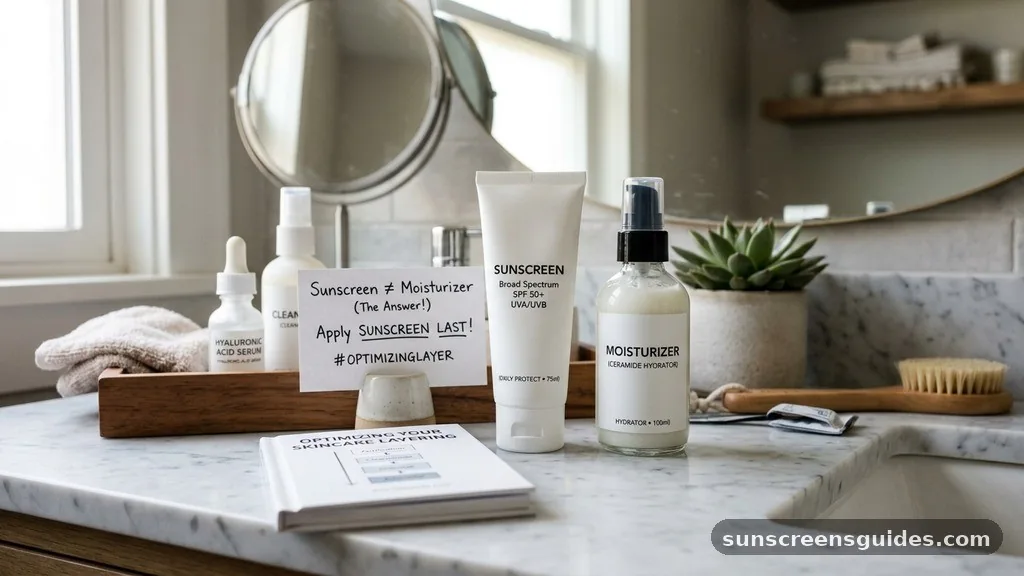
Proper skincare layering usually dictates that you apply products from the thinnest consistency to the thickest. By applying your moisturizer first, you ensure that the water-binding agents reach the skin cells before you seal everything in with your sunscreen. This sequence helps prevent the sunscreen from interfering with the absorption of your more intensive treatments.
- Cleanse your face to remove impurities and prepare the surface.
- Apply serums containing active ingredients to target specific concerns like hyperpigmentation.
- Apply a lightweight moisturizer to lock in hydration.
- Finish with a generous layer of broad-spectrum protection to safeguard against UV rays.
- Wait at least sixty seconds between steps to allow each layer to set properly.
Addressing Common Misconceptions
A prevalent myth suggests that you cannot layer products without causing breakouts. In reality, choosing a non-comedogenic moisturizer and a lightweight sunscreen prevents clogged pores. Many people fear that adding a moisturizer under sunscreen will dilute the protective properties, but as long as the sunscreen is applied evenly and allowed to dry, the SPF rating remains effective.
Another misconception is that oily skin does not need moisturizer. Even oily skin can experience dehydration; when the skin is stripped of water, it often overproduces oil to compensate. Using a gel-based moisturizer followed by an oil-free sunscreen provides the necessary balance without feeling heavy or greasy.
Filling the Gaps in Daily Sun Protection
Many users wonder if they can use sunscreen at night or if it matters which product goes on first. Sunscreen is strictly a daytime necessity because it is designed to combat ultraviolet radiation, which is not present at night. Using SPF products while you sleep provides no benefit and may even congest your pores unnecessarily.
Additionally, some people assume that because their makeup contains SPF, they don’t need a standalone sunscreen. This is a common error, as most people do not apply enough makeup to achieve the full protection listed on the bottle. Always apply a dedicated sunscreen as a base to ensure you are getting the full, labeled protection.
Conclusion
Deciding if your sunscreen counts as a moisturizer ultimately comes down to your skin’s unique needs. While modern hybrid products offer excellent convenience, they often fall short of providing the deep hydration needed to maintain a healthy skin barrier function. By incorporating both a dedicated moisturizer and a high-quality sunscreen into your morning ritual, you provide your skin with the defense it needs against photoaging while keeping it nourished and supple.
Start by observing how your skin feels at the end of the day; if you notice tightness or flaking, your current routine likely needs the extra support of a dedicated hydrating layer. Consistency is the most important factor in any regimen, so find a combination that feels comfortable and stick with it.
No, they are distinct products; sunscreen protects against UV rays, while moisturizer hydrates and repairs the skin.
Can I skip moisturizer and use sunscreen alone?
If your sunscreen is highly moisturizing and your skin is oily, you might, but most people need both.
Should I apply sunscreen before or after moisturizer?
Always apply your moisturizer first, let it absorb, and then follow up with your sunscreen as protection.
Does sunscreen provide enough hydration for dry skin?
Rarely; dry skin usually requires the heavier emollients and humectants found in a dedicated, rich facial moisturizer.
Is it okay to wear sunscreen at night?
No, there is no benefit to wearing sunscreen at night, and it may clog your pores unnecessarily.
What does non-comedogenic mean for my sunscreen?
It means the product is formulated to not block your pores, which is ideal for acne-prone skin.
How much sunscreen do I need for full protection?
You should use approximately a nickel-sized amount for your face and neck to ensure proper SPF coverage.



