

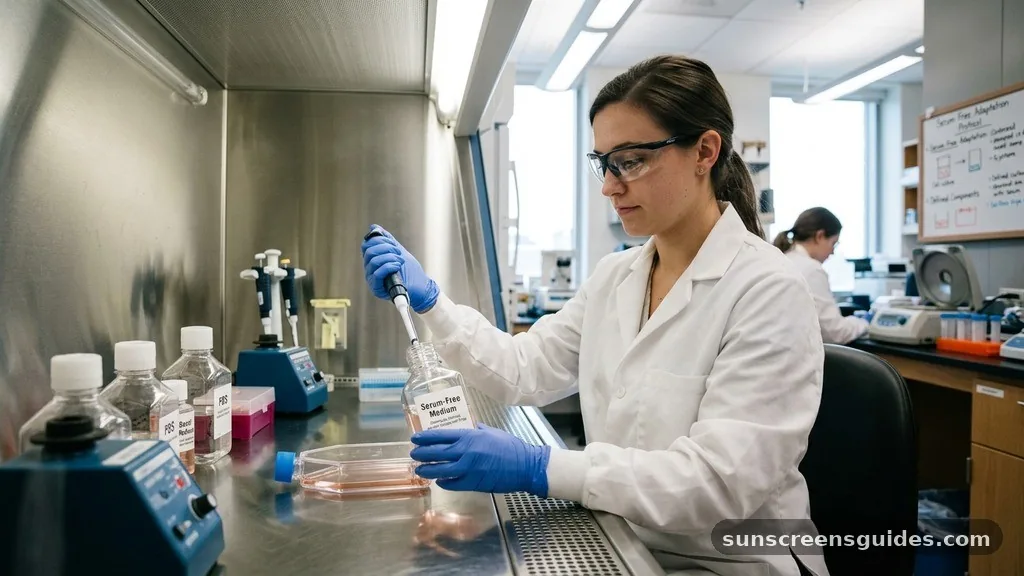
Understanding what is serum free media involves recognizing the shift toward precision in modern laboratory practices. Researchers now prioritize consistency, moving away from the biological unpredictability of traditional additives. By replacing animal-derived components with specific, engineered nutrients, scientists gain better control over their experimental variables.
This article breaks down the mechanics, advantages, and technical requirements of these specialized formulations. Whether you are scaling up production for therapeutics or running sensitive diagnostic assays, grasping the nuances of these environments will help you improve your outcomes. Let’s look at how moving to a cleaner, more controlled culture environment changes the way we study cellular behavior and produce vital biological agents.
Defining the Shift Away from Serum
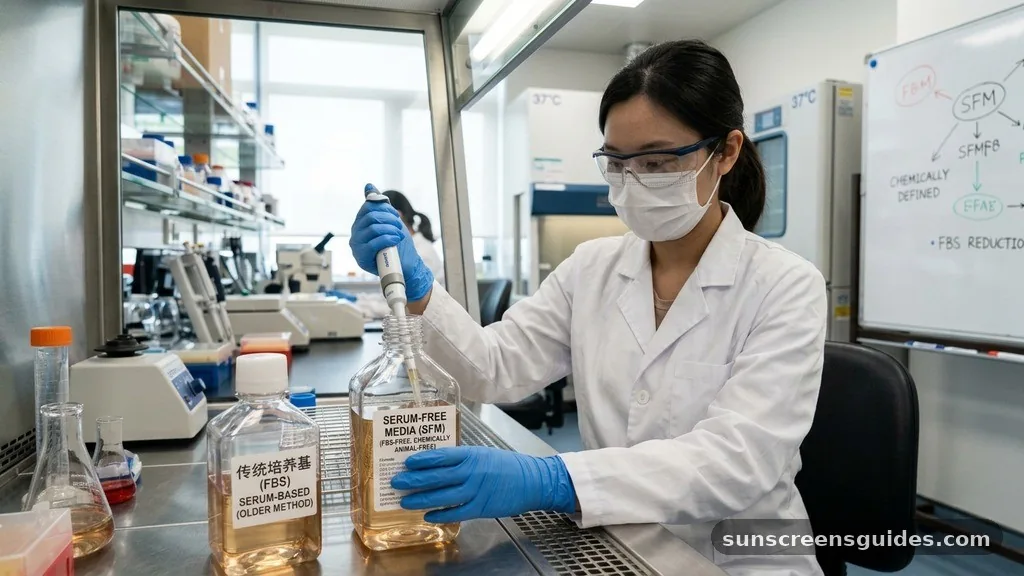
When asking what is serum free media, the core definition refers to a cell culture environment that eliminates the need for animal-derived additives like fetal bovine serum (FBS). Historically, researchers relied on FBS because it provided a complex, “all-in-one” cocktail of hormones, lipids, and growth factors that cells needed to survive. However, this convenience came with significant drawbacks.
Because it is a biological product, FBS is notoriously prone to batch-to-batch variability. One shipment might perform perfectly, while the next could lead to unexpected cell death or phenotypic shifts, making it impossible to standardize experiments across different labs or timeframes.
The primary goal of developing these alternatives is to create a predictable, reproducible environment for cell culture. By removing undefined animal components, scientists can isolate the specific effects of experimental drugs or genetic modifications without the “noise” introduced by unknown serum proteins.
This transition is essential for industries focused on bioprocessing, where the goal is to produce high-quality, clinical-grade materials. Without the variability of animal-based additives, companies can ensure that their manufacturing processes remain consistent from the first trial to the final commercial run.
Essential Components of Defined Formulations
Transitioning to a system without serum requires a deep understanding of what individual cells actually need to thrive. Since you no longer have a “magic soup” of nutrients, you must manually supplement the basal medium with specific ingredients. These typically include a combination of hormones, attachment factors, and trace elements that perform the heavy lifting previously done by the serum.
Among the most common additions are insulin, which helps with glucose uptake, and transferrin, which serves as an iron carrier. Additionally, selenium is often included as an essential trace element to support enzyme function.
The level of control here is the real benefit. When you use a chemically defined media formulation, you know exactly what is in your flask. Every component has a known concentration, which allows for precise optimization of cell viability and growth rates.
If a cell line isn’t performing as expected, you aren’t left guessing which component of the serum might be off; you can systematically adjust your supplement concentrations. This level of granular control is the hallmark of modern biotechnology, transforming cell culture from a bit of an art form into a rigorous, data-driven science.
Advantages in Bioprocessing and Antibody Production

The industrial application of these media types is primarily driven by the need for regulatory compliance and safety. When producing monoclonal antibodies or other recombinant proteins for human therapy, the use of animal-derived products introduces a risk of viral or prion contamination.
By switching to a protein-free formulation or a serum-free alternative, manufacturers effectively eliminate these safety concerns. This regulatory advantage makes the approval process for new drugs significantly smoother, as it removes a major variable in the safety profile of the final product.
Beyond safety, the efficiency of cell line development is vastly improved when the growth environment is optimized. In a serum-free setup, cells can often be grown to higher densities, which directly translates to higher yields of the desired protein.
Because you are not dealing with the inhibitory components sometimes found in serum, you can fine-tune the metabolic environment to encourage the cells to focus their energy on production rather than just survival. This leads to cleaner downstream processing, as the purification team doesn’t have to filter out the massive amounts of bovine albumin typically found in serum-containing cultures.
Addressing Topical Gaps in Culture Optimization
A common point of confusion for those new to this field is how to successfully transition a cell line that has been adapted to serum for years. The process isn’t as simple as swapping the liquid; it requires a systematic, step-down approach. You cannot simply drop cells into a serum-free environment and expect them to survive.
Instead, you must gradually reduce the percentage of serum over several passages, allowing the cells to adapt to the new metabolic constraints. This process often reveals the “hidden” requirements of the cell, helping researchers identify which specific growth factors are truly necessary versus those that were merely supportive.
Another gap in current literature is the cost-benefit analysis of these specialized media. While the reagents themselves are often more expensive than a bottle of FBS, the total cost of ownership is often lower.
Consider the time saved on troubleshooting batch failures, the reduction in purification costs, and the increased yield of the target protein. Below is a comparison of typical characteristics seen in these two environments.
| Feature | Serum-Containing | Serum-Free |
|---|---|---|
| Consistency | Low (Batch variability) | High (Chemically defined) |
| Contamination Risk | Higher (Animal origin) | Lower (Synthetic/Recombinant) |
| Purification Needs | High (Complex protein mix) | Low (Simplified background) |
| Cost per Liter | Lower upfront cost | Higher upfront cost |
Implementation Steps for Success
If you are planning to make the switch, follow these proven strategies to ensure your cells adapt successfully to the new environment.
- Perform a gradual adaptation: Reduce serum concentrations in 25% increments over several weeks.
- Monitor morphology: Watch for changes in shape or clumping, which indicate cellular stress.
- Use specialized basal media: Ensure your base formula is compatible with serum-free supplementation.
- Maintain high seeding density: Cells often require higher initial concentrations to trigger growth in the absence of serum.
- Document every variable: Keep a detailed log of supplement concentrations to identify the “tipping point” for your specific cell line.
- Test for functionality: Verify that your final product maintains its biological activity despite the change in culture conditions.
- Consult manufacturer protocols: Many suppliers provide specific “adaptation kits” that simplify this transition.
Conclusion
Understanding what is serum free media represents a fundamental step for any lab aiming to achieve high-level reproducibility and safety in their biological research. By moving away from the undefined, variable nature of animal serum, you unlock the ability to standardize your protocols and produce cleaner, more consistent results. While the transition requires a deliberate and cautious approach—particularly during the adaptation phase—the long-term benefits in bioprocessing, regulatory ease, and experimental clarity are well worth the effort.
Taking the time to optimize your media composition will undoubtedly lead to more robust cell health and more reliable data in your future projects. If you have questions about specific formulations or need help selecting the right media for your project, feel free to reach out to a technical specialist.
What is a serum free media example?
Serum-free media examples include formulations like CD-CHO or Ex-Cell, which use specific recombinant proteins instead of serum.
Why is serum free media used?
It is used to eliminate batch-to-batch variability and reduce risks of viral or prion contamination in bioprocessing.
What are the disadvantages of serum?
Serum introduces undefined components, poses high contamination risks, and creates significant variability between different production batches.
Can cells grow in serum-free media?
Yes, many cell lines can thrive in serum-free conditions if properly adapted to specific, defined nutrient formulations.
Is serum-free media always protein-free?
No, serum-free media often contains purified proteins like recombinant insulin or transferrin to support essential cell functions.
How long does adaptation take?
Adaptation typically takes several weeks, involving a gradual reduction of serum to allow cells to adjust metabolically.
Does serum-free media cost more?
The price per liter is higher, but it reduces total costs by improving yield and simplifying downstream protein purification.



