


Mastering the process of how to use face serum correctly is the secret to transforming your complexion. Many people buy expensive bottles filled with potent active ingredients but fail to see results because they apply them at the wrong stage of their skincare routine. When you learn to time your application and prepare your skin properly, you significantly improve epidermal absorption.
This guide clears up the confusion around layering products, ensuring you get the most out of your investment while protecting your delicate skin barrier. Whether you are targeting fine lines or uneven tone, the way you layer these concentrated liquids makes all the difference.
Understanding the Role of Face Serum
Face serums are lightweight, fast-absorbing treatments formulated to deliver a high concentration of specific actives directly into the deeper layers of the skin. Unlike thick creams that sit on the surface to provide a seal, serums are designed to penetrate. They function as a delivery vehicle for ingredients like hyaluronic acid, vitamin c, or niacinamide.
By including these in your daily regimen, you address specific concerns like dehydration, hyperpigmentation, or loss of elasticity. Because their molecules are smaller than those in traditional moisturizers, they reach the target cells more effectively. Think of your serum as the hardworking engine of your routine, while your moisturizer acts as the protective cover.
Step-by-Step Application Technique
The order of operations is vital for efficacy. You want to move from the lightest, thinnest consistency to the thickest. Applying a serum after a heavy oil or cream creates a barrier that prevents the serum from reaching your pores.
The Basic Layering Order
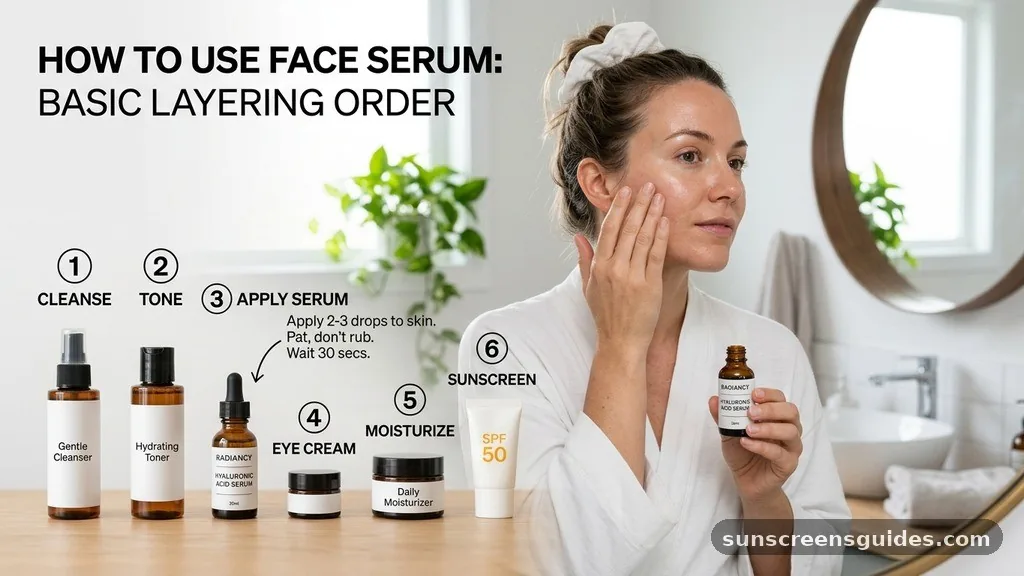
1. Facial cleanser: Remove dirt, oil, and makeup to create a clean canvas.
2. Toner: Balance your skin’s pH and remove any lingering debris.
3. Serum: Apply your treatment while the skin is still slightly moist.
4. Moisturizer: Lock in the hydration and seal the actives inside.
5. Sunscreen: Essential for daytime routines to prevent UV damage.
Applying to Damp Skin

One of the most effective ways to boost performance is to apply your serum on damp skin. Water acts as a conduit for certain ingredients, particularly humectants like hyaluronic acid.
When the skin is slightly hydrated from a wash or a mist, the product spreads more evenly and absorbs faster. This simple trick prevents the “pilling” effect where products ball up on the skin’s surface.
Selecting the Right Serum for Your Needs
Not every bottle is created equal, and choosing the right one depends on your specific goals. You should look at the ingredient list to determine if the formula matches your current needs. Some serums are meant for daytime use, while others are strictly for nighttime repair.
Popular Ingredient Benefits
* Vitamin C: Best used in the morning to fight free radical damage from pollution and sun exposure.
* Retinol: A powerhouse for cellular turnover, always reserve this for your nighttime routine to avoid sun sensitivity.
* Niacinamide: Excellent for regulating sebum production and refining skin texture throughout the day or night.
* Hyaluronic Acid: Safe to use twice daily to maintain optimal hydration levels across all skin types.
Addressing Common Application Mistakes
Even skincare enthusiasts make errors that compromise product performance. The most frequent mistake is using too much product.
Serums are highly concentrated; you rarely need more than a few drops to cover your entire face and neck. Over-applying can lead to sticky residue or irritation, especially when using strong actives.
Another major oversight is skipping the patch test. Before slathering a new formula all over your cheeks, apply a small amount to your inner forearm.
Wait twenty-four hours to check for redness or itching. This is especially critical if you have sensitive skin or are introducing potent ingredients for the first time.
| Ingredient | Best Time to Use | Primary Benefit |
|---|---|---|
| Vitamin C | Morning | Brightening and Protection |
| Retinol | Night | Anti-aging and Renewal |
| Hyaluronic Acid | Morning and Night | Deep Hydration |
| Niacinamide | Morning and Night | Texture and Pore Control |
Why Product Penetration Matters
The success of your regimen depends on how well the ingredients interact with your skin’s natural structure. If you have oily skin, you might worry that serums are comedogenic, but most modern formulations are designed to be lightweight and non-clogging. The goal is to reach the target depth without triggering a breakout or causing inflammation.
Focusing on the health of your skin barrier is paramount. If your barrier is damaged, even the most expensive serum won’t work as intended.
Look for calming ingredients like ceramides or peptides if you find your skin feels tight or stings upon application. Consistency is just as important as the product itself; regular use allows the actives to accumulate and show visible results over several weeks.
Topical Gaps: Managing Multiple Serums
A common question is whether you can use more than one serum at a time. The answer is yes, but you must be strategic.
If you want to use both a brightening serum and a hydrating one, apply them in order of viscosity. Start with the thinner, water-based liquid and let it sink in for about a minute before applying the next.
However, avoid layering too many harsh actives simultaneously. Using a high-strength retinol alongside a potent chemical exfoliant can overwhelm your skin, leading to redness and peeling.
If you want to incorporate multiple types of treatment, consider alternating them by day or separating them by morning and evening sessions. This “cycle” approach keeps your skin balanced while allowing you to enjoy the benefits of various high-performance ingredients.
FAQ: Common Questions About Face Serum
Can you use face serum daily?
Yes, most serums are designed for daily use, though check labels for specific instructions regarding potent ingredients.
What is the correct way to apply serum?
Gently press the serum into your face and neck using your palms rather than rubbing it vigorously.
Can I leave serum on overnight?
Absolutely, as many repair-focused serums contain ingredients that work best while your skin undergoes its natural cycle.
What does a serum do for your face?
Serums deliver high concentrations of specific active ingredients directly into the skin to target unique dermatological concerns.
Do I really need a moisturizer after serum?
Yes, a moisturizer acts as a sealant to lock in the serum and prevent moisture loss through evaporation.
How long should I wait between applying products?
Wait about 60 seconds between layers to ensure the previous product has absorbed, preventing any sticky residue buildup.
Can I use a serum if I have sensitive skin?
Yes, but opt for fragrance-free, soothing formulas and always conduct a patch test before full facial application.
Final Thoughts on Serum Integration
Integrating a serum into your daily habits is one of the most effective ways to see a tangible change in your complexion. By understanding the importance of layering and timing, you ensure that these potent formulas can work their magic without interference. Remember that patience is key, as skin cells require time to regenerate and respond to new treatments.
Start slow, monitor your skin’s reaction, and don’t be afraid to adjust your routine as your needs change with the seasons or environment. Using face serum effectively isn’t just about the bottle you choose; it’s about the consistency you bring to the process every single day. If you have questions about specific combinations or want to share your results, feel free to reach out and keep the conversation going.



