

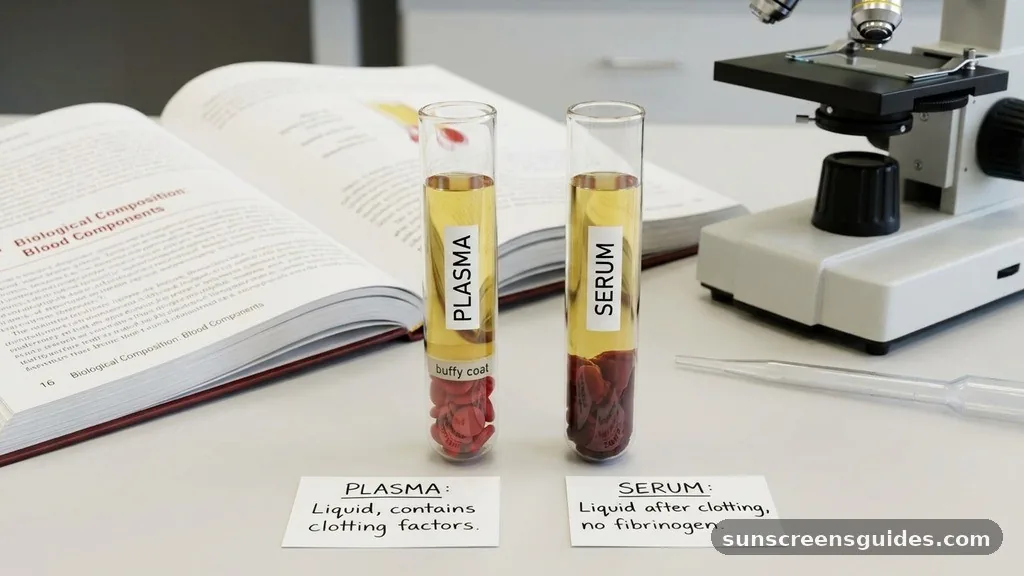
When you look at a vial of blood, it might seem like a uniform red liquid, but beneath the surface, it’s a complex mixture of cells and proteins. Understanding what’s the difference between plasma and serum is fundamental for anyone working in medical diagnostics or simply curious about human biology.
While both are clear, yellowish fluids derived from blood, they represent distinct states of the sample based on how they were handled after collection. Knowing whether a sample contains its original clotting proteins or has been stripped of them significantly impacts how lab technicians interpret results and diagnose conditions, making this knowledge vital for accurate clinical pathology.
The Biological Composition of Blood Components
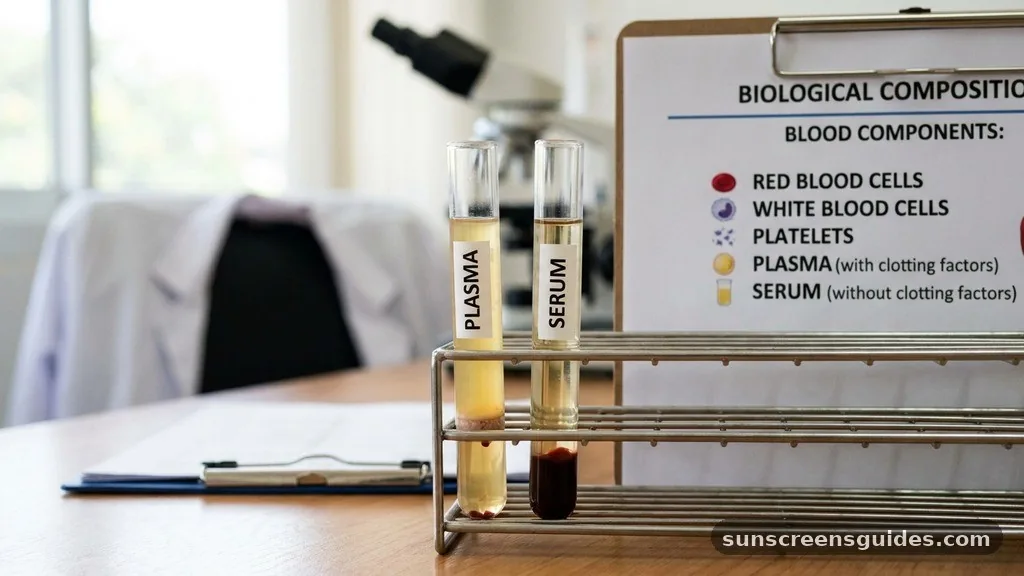
At its core, blood consists of solid cellular elements suspended in a liquid medium known as plasma. When we talk about blood plasma, we are referring to the straw-colored liquid left behind once you remove the red blood cells, white blood cells, and platelets.
This liquid is incredibly rich in blood plasma proteins, such as albumin and globulins, which play critical roles in immune response, osmotic pressure, and transporting nutrients throughout the body. Most importantly, plasma contains a full complement of coagulation factors, including fibrinogen, which is a specialized protein that triggers the formation of a clot when blood is exposed to air or injury.
In contrast, serum is essentially the fluid that remains after blood has been allowed to clot. During the process of clot formation, the coagulation factors—specifically fibrinogen—are consumed to form a physical mesh that traps blood cells and platelets. Once this process concludes, the remaining liquid lacks these clotting proteins, resulting in a composition that is biochemically distinct from the original plasma.
Because serum is “exhausted” of its ability to clot, it provides a stable environment for certain types of chemical analyses. Scientists often prefer serum for specific tests because the absence of fibrinogen prevents the interference of fibrin strands that might otherwise clog sensitive diagnostic machinery or skew photometric readings during analytical chemistry assays.
The Role of Anticoagulants and Centrifugation
The practical distinction between these two fluids is defined largely by how laboratory staff process the sample using centrifugation and chemical additives. To obtain plasma, blood must be collected in vacutainer tubes treated with anticoagulants. These agents, such as EDTA or heparin, work by chemically blocking the clotting cascade before it can begin.
EDTA, for example, binds calcium ions, which are essential cofactors for enzymes that drive the formation of fibrin; by sequestering these ions, the blood remains in a liquid state. Once the blood is centrifuged, the cellular components are forced to the bottom of the tube, leaving the plasma as the clear blood supernatant at the top.
Conversely, obtaining serum requires the blood to undergo natural coagulation. When blood is drawn into a standard tube, it is left to sit for a period—usually 30 to 60 minutes—to ensure the formation of a solid clot. This process is often accelerated in a serum separator tube, which contains a gel that forms a physical barrier between the clot and the liquid serum during the spinning process.
If you were to use an anticoagulant to get serum, the test would fail because the chemical would prevent the very clotting process required to create the serum. Therefore, the choice of collection tube is the primary determinant of whether a lab receives plasma or serum for analysis, and this choice is dictated by the specific diagnostic test required.
Comparative Analysis of Plasma and Serum Properties
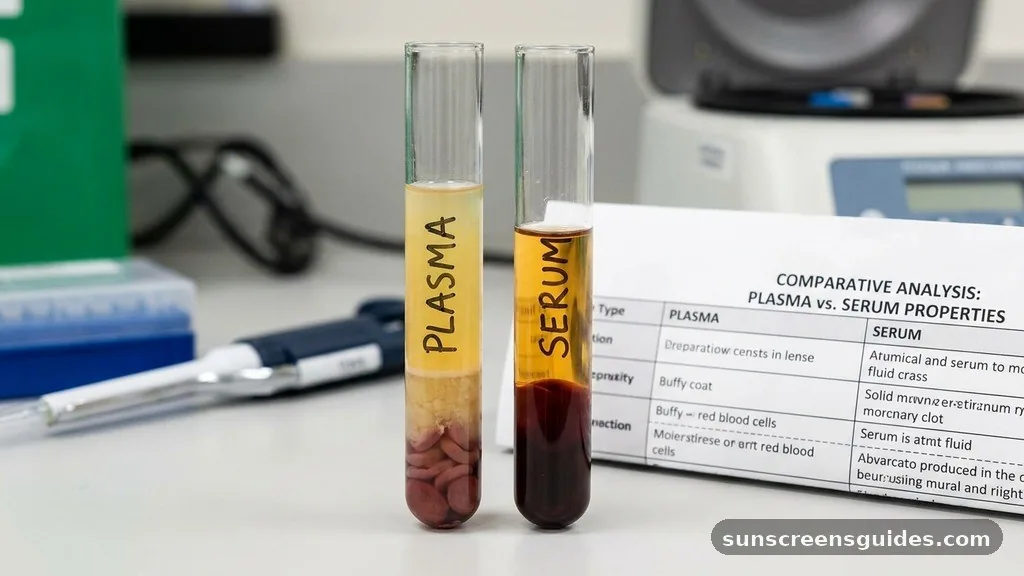
The table below highlights the fundamental differences that clinicians and lab technicians monitor when choosing between these two sample types. These differences dictate not only the storage requirements but also the validity of specific laboratory results.
| Feature | Plasma | Serum |
|---|---|---|
| Clotting Factors | Present (e.g., Fibrinogen) | Absent (Consumed) |
| Requires Anticoagulant | Yes | No |
| Processing Time | Immediate | Requires Clotting Time |
| Primary Use | Coagulation studies, Emergency tests | Biochemistry, Immunology, Serology |
Beyond the presence of fibrinogen, the two substances differ in their chemical stability and the types of molecules they hold. Because plasma is chemically “closer” to the state of blood inside the body, it is frequently used for tests that require an accurate snapshot of the patient’s real-time physiological status.
Serum, by being the byproduct of a finished biological process, is considered more stable for long-term storage and certain serological assays. The absence of fibrinogen in serum also means that the sample is less prone to sudden variations in viscosity if the temperature shifts, which is a major advantage for automated clinical chemistry analyzers that rely on precise fluid dynamics to dispense samples into reaction wells.
Addressing Topical Gaps in Hematology
A frequent point of confusion is why some labs prioritize one over the other for specific hematology panels. One common misconception is that one fluid is “better” than the other, but this is inaccurate; they are simply different tools for different needs. For instance, when a doctor orders a coagulation study to see how well a patient’s blood clots, they must use plasma.
If they used serum, the coagulation factors would have already been used up, making it impossible to measure the patient’s actual clotting potential. Therefore, understanding the specific diagnostic goal is key.
Another gap involves the role of thrombocytes (platelets) in these samples. In plasma samples treated with EDTA, the platelets are preserved and prevented from aggregating. In serum, platelets are largely depleted or trapped within the clot mass.
This becomes critical when measuring substances released by platelets during the clotting process, such as serotonin or certain growth factors. Using serum for these tests would result in artificially elevated levels of these substances, as the act of clotting forces the platelets to release their contents into the fluid. This is why researchers and clinicians must be extremely careful to select the correct medium to avoid false positives or skewed quantitative data in sensitive clinical assays.
- Plasma contains fibrinogen and other active coagulation factors.
- Serum is the liquid remaining after the clotting process is complete.
- Anticoagulants like heparin or EDTA are mandatory for plasma collection.
- Centrifugation speed and time vary based on the desired separation.
- Serum is the standard for most immunology and serology testing.
- Plasma is the preferred choice for emergency and coagulation diagnostics.
- Proper tube selection prevents sample contamination and ensures accurate lab results.
Conclusion
Distinguishing between these two fluids is more than an academic exercise; it is a fundamental requirement for accurate medical testing. By understanding that plasma is the liquid fraction of blood before clotting and serum is the fluid left after clotting, you can better appreciate the precision required in modern diagnostic workflows. Whether it involves the use of anticoagulants to preserve proteins or the natural clotting cascade to isolate serum, every step in the process is designed to ensure the biological integrity of the sample.
The next time you review a medical report or look at lab requirements, you will recognize that knowing what’s the difference between plasma and serum is essential to interpreting the data correctly. If you have further questions about specific diagnostic protocols or the chemical properties of blood, reach out to your local laboratory or consult your healthcare provider to learn more about how these samples are processed for your health.



