

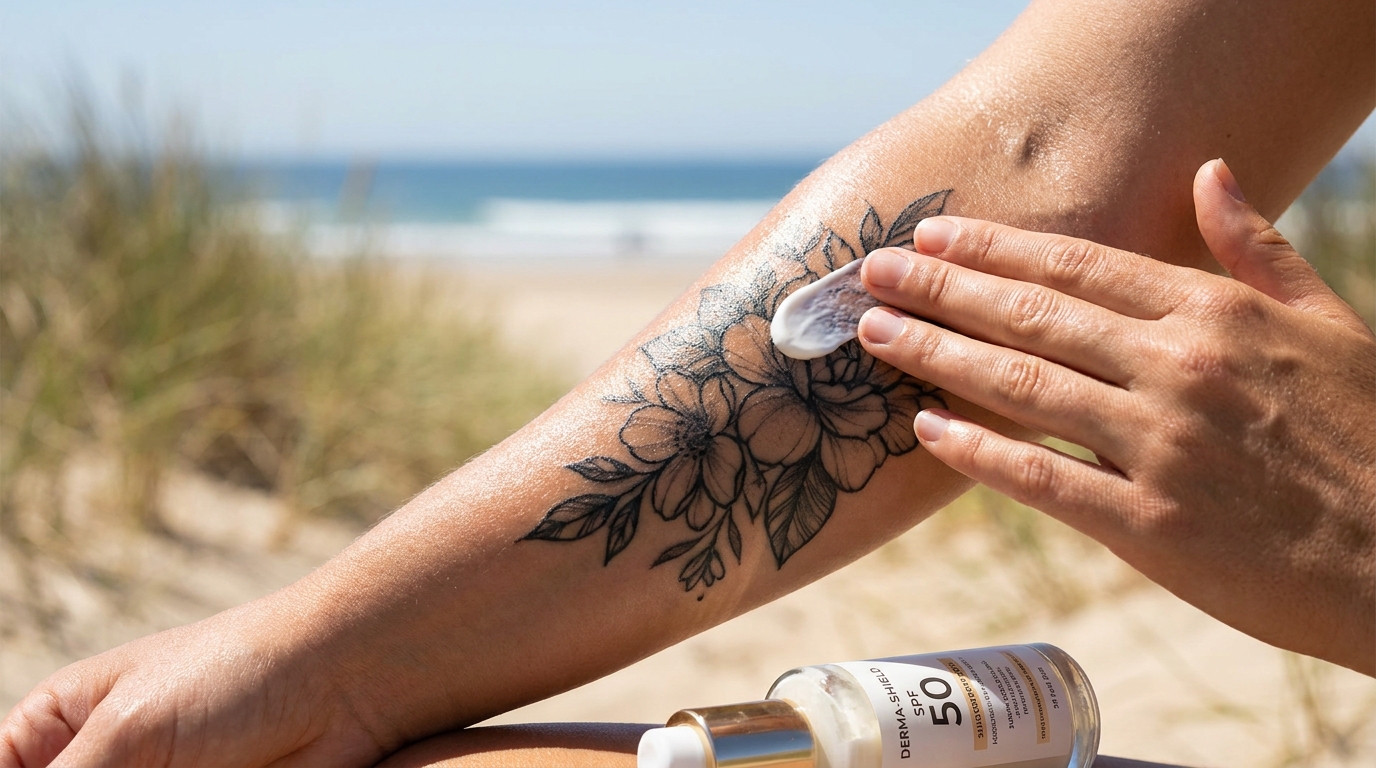
If you’re wondering when can I start putting sunscreen on my tattoo, chances are you’re staring at fresh ink and feeling kinda nervous about messing it up. That’s a good instinct, honestly. A tattoo may look amazing after a few days, but appearances can be a bit decieving. Skin heals in layers, and what seems fine on the surface might still be repairing underneath. It’s easy to think, “Well, it dosen’t hurt anymore, so sunscreen should be okay,” but that isn’t always how tattoo healing works.
Sun exposure is one of the biggest reasons tattoos lose their sharpness and vibrant color over time. At the same time, applying sunscreen too early can irritate healing skin, trap moisture, or even interfere with the natural recovery process. Finding the right timing is more important than many people realize.
This guide explains exactly when it’s safe to apply sunscreen to a tattoo, why waiting matters, what dermatologists recommend, and how you can protect your artwork for years without risking the healing process.
Why Fresh Tattoos and Sunscreen Don’t Mix Right Away
A brand-new tattoo isn’t just ink sitting on your skin. It’s technically an open wound. During tattooing, thousands of tiny needle punctures place pigment into the dermis while damaging the upper layers of skin.
During the first few weeks, your body focuses on repairing itself. That means inflammation, peeling, itching, and new skin formation are all happening at once. Even if everything looks mostly healed, your skin barrier may still be weaker than normal.
Most sunscreens contain ingredients that are completely safe for healthy skin but can be irritating when applied to healing tissue. Chemical UV filters, fragrances, preservatives, and alcohol-based formulas may sting or trigger irritation before your tattoo has fully recovered. It’s kinda unfair, but fresh ink is picky like that.
When Can I Start Putting Sunscreen on My Tattoo?
The short answer is simple:
Wait until your tattoo has completely healed before applying sunscreen.
For most people, complete healing takes 2 to 4 weeks, although larger or heavily shaded tattoos can require 4 to 6 weeks or even longer depending on your body and aftercare routine.
Most professional tattoo artists recommend waiting until:
- No peeling remains.
- There are no open spots.
- Scabs have naturally fallen away.
- Skin feels smooth rather than tight.
- Redness has disappeared.
- The tattoo no longer feels tender.
Only after reaching this point should sunscreen become part of your tattoo care routine.
Typical Tattoo Healing Timeline
| Healing Stage | Time Frame | Should You Use Sunscreen? |
|---|---|---|
| Fresh tattoo | Days 1–3 | No |
| Peeling and flaking | Days 4–14 | No |
| Surface healing | Weeks 2–4 | Usually no |
| Fully healed skin | Around Weeks 3–6 | Yes |
Keep in mind that healing isn’t exactly a race. Some people heal surprsingly fast while others simply need more time.
Why Applying Sunscreen Too Early Can Be a Problem
Many people assume sunscreen always protects skin, so using it immediately sounds logical. Unfortunately, healing tattoos behave differently.
Applying sunscreen too soon may:
- Cause irritation or burning sensations.
- Increase redness.
- Slow skin recovery.
- Trap bacteria if skin hasn’t sealed.
- Lead to uneven healing.
- Increase itching.
While serious complications are uncommon, there’s really no benefit to rushing sunscreen before healing finishes.
What Dermatologists Recommend
Most dermatologists agree on one important principle:
“Avoid sunscreen on open or healing wounds until the skin barrier has completely recovered.”
The recommendation aligns with guidance from organizations like the American Academy of Dermatology, which advises protecting healing wounds by covering them rather than applying sunscreen before complete healing.
Instead of sunscreen during early healing, experts recommend:
- Wearing loose clothing.
- Staying in shade.
- Avoiding direct midday sunlight.
- Limiting outdoor exposure.
These simple habits protect the tattoo without exposing delicate skin to unnecessary ingredients.
What Happens if Your Fresh Tattoo Gets Sunburned?
Sunburn and fresh tattoos are a really bad combination.
Ultraviolet radiation damages skin cells while increasing inflammation. Since healing tattoos already involve inflammation, adding UV damage creates extra stress for your skin.
Potential problems include:
- Faded pigment.
- Patchy healing.
- Increased swelling.
- Longer recovery.
- Higher discomfort.
- Blurred tattoo lines.
Research published by health organizations consistently shows ultraviolet radiation breaks down pigments over time while accelerating visible tattoo fading.
Even one afternoon in strong sunlight can affect fresh ink more than people expect.
How to Protect a Healing Tattoo Without Sunscreen
Until sunscreen becomes safe, physical protection is your best option.
Here are practical ways to keep your tattoo safe:
- Wear lightweight long sleeves.
- Use loose cotton clothing.
- Stay indoors during peak UV hours.
- Walk in shaded areas.
- Use umbrellas if spending time outside.
- Avoid tanning altogether.
One little habit can make a bigger difference than you’d think.
Signs Your Tattoo Is Ready for Sunscreen
Sometimes people ask, “It looks healed…but is it really?”
Look for these signs:
- Skin texture feels completely normal.
- No flakes remain.
- No shiny healing layer.
- No itching.
- No tenderness.
- No scabbing.
- Color appears settled.
If you’re unsure, waiting another few days usually won’t hurt anything.
Choosing the Best Sunscreen for Tattoos
Not every sunscreen is equally tattoo-friendly.
Dermatologists generally recommend broad-spectrum products with SPF 30 or higher.
Features worth looking for include:
- Broad-spectrum UVA and UVB protection.
- SPF 30 to SPF 50.
- Fragrance-free.
- Sensitive skin formulas.
- Water-resistant when swimming.
- Non-comedogenic if tattoo is near acne-prone skin.
Mineral sunscreens containing zinc oxide or titanium dioxide are often preferred because they’re less likely to irritate sensitive skin.
Chemical vs Mineral Sunscreen for Tattoos
| Feature | Mineral Sunscreen | Chemical Sunscreen |
|---|---|---|
| Works immediately | Yes | No, about 15 minutes |
| Sensitive skin | Better choice | May irritate some people |
| White cast | Sometimes | Rare |
| Tattoo-friendly | Often preferred | Usually fine after healing |
Both types protect tattoos well once healing finishes.
Does Sunscreen Prevent Tattoo Fading?
Absolutely.
The biggest enemy of tattoo longevity isn’t age—it’s sunlight.
Ultraviolet rays gradually break apart tattoo pigments while damaging collagen in the surrounding skin. Over months and years, colors become lighter, blacks lose depth, and fine details soften.
Regular sunscreen use significantly slows this process.
A well-protected tattoo can remain vibrant for decades compared with tattoos repeatedly exposed to strong sunlight.
How Much Sunscreen Should You Apply?
Many people simply don’t use enough sunscreen.
For tattoo protection:
- Cover the entire tattoo evenly.
- Apply about 15 minutes before sun exposure if using chemical sunscreen.
- Reapply every two hours.
- Reapply immediately after swimming.
- Reapply after heavy sweating.
Skipping reapplication kinda defeats the point, honestly.
Can You Tan After Getting a Tattoo?
You should avoid intentional tanning while your tattoo heals.
After healing, tanning remains risky because UV exposure naturally fades tattoo pigment over time.
Whether it’s sunlight or tanning beds, both expose tattoos to ultraviolet radiation that gradually reduces sharpness and color intensity.
Is SPF 50 Better Than SPF 30?
Both provide excellent protection.
Here’s a simple comparison:
| SPF | UVB Protection |
|---|---|
| SPF 15 | About 93% |
| SPF 30 | About 97% |
| SPF 50 | About 98% |
The difference isn’t massive, but SPF 50 offers slightly greater protection, especially for people spending long periods outdoors.
Common Mistakes People Make
People often damage tattoos without realizing it.
Avoid these common mistakes:
- Applying sunscreen before healing finishes.
- Picking peeling skin.
- Spending hours in direct sunlight.
- Forgetting to reapply sunscreen.
- Assuming cloudy days are safe.
- Using expired sunscreen.
- Visiting tanning beds.
Little habits pile up over the years, and tattoos kinda remember all of them.
Long-Term Tattoo Care Beyond Sunscreen
Sunscreen is only one part of preserving beautiful tattoos.
Good long-term care also includes:
- Moisturizing regularly.
- Drinking enough water.
- Avoiding repeated sunburns.
- Wearing protective clothing outdoors.
- Keeping skin healthy year-round.
- Avoiding excessive tanning.
Healthy skin keeps tattoo pigment looking clearer and more vibrant.
What Tattoo Artists Usually Recommend
Professional tattoo artists almost universally advise clients to avoid sunscreen until healing finishes.
Instead, they encourage:
- Following aftercare instructions exactly.
- Washing gently.
- Applying recommended healing ointments or moisturizers.
- Staying away from pools and hot tubs.
- Keeping tattoos out of direct sunlight.
Every artist may have slightly different aftercare instructions, but waiting before using sunscreen is one recommendation that stays remarkably consistent.
Scientific Evidence Supporting Sun Protection
Studies on ultraviolet radiation consistently demonstrate that UV exposure accelerates skin aging while damaging pigments found in tattoos.
According to the World Health Organization, ultraviolet radiation contributes to skin damage through cumulative exposure over time. The American Academy of Dermatology similarly emphasizes daily sun protection to reduce UV-related skin injury.
Although tattoo-specific long-term studies remain somewhat limited, dermatologists widely agree that protecting tattoos from UV exposure helps preserve color and detail for much longer.
Final Thoughts
Knowing when can I start putting sunscreen on my tattoo really comes down to one simple rule: wait until your tattoo has fully healed. For most people, that’s around two to four weeks, though some tattoos naturally take longer. Applying sunscreen before your skin barrier has recovered may cause unnecessary irritation without offering meaningful benefits.
During healing, your best protection is clothing, shade, and avoiding direct sunlight. Once your tattoo has completely recovered, using a broad-spectrum SPF 30 or SPF 50 sunscreen every day becomes one of the easiest ways to preserve crisp lines and vibrant colors. Tattoos are an investment, after all, and a few extra moments spent protecting them today can help them look impressive many years down the road.
When can I start putting sunscreen on my tattoo after getting it?
Most tattoos need two to four weeks before sunscreen is safe. Wait until peeling, scabbing, redness, and tenderness have completely disappeared before applying any sunscreen.
Can I put SPF 50 on a peeling tattoo?
No. Peeling indicates your tattoo is still healing. Applying SPF during this stage may irritate sensitive skin and interfere with normal recovery, so wait longer.
What should I use instead of sunscreen on a fresh tattoo?
Protect your tattoo with loose clothing, shade, and limited sun exposure. Continue following your tattoo artist’s recommended moisturizer until healing finishes completely.
Does sunscreen stop tattoos from fading?
Sunscreen greatly slows fading by reducing ultraviolet damage to tattoo pigments. Regular SPF use helps preserve brighter colors and sharper lines over many years.
Is mineral sunscreen better for healed tattoos?
Yes. Mineral sunscreens containing zinc oxide or titanium dioxide are often gentler on sensitive skin while providing broad-spectrum protection for fully healed tattoos.