
You’ve probably caught yourself wondering, can you tan with sunscreen on, especially after spending an afternoon outside and noticing your skin looks a bit darker anyway. It feels kinda confusing, doesn’t it? You put sunscreen on because everyone says you should, then somehow you still end up with a tan. That makes people think sunscreen doesn’t really work, but that’s not quite what’s happening. The truth sits somewhere in the middle, and it’s a lot more interesting than the usual yes-or-no answer people throw around.
A surprising number of people believe sunscreen completely blocks every single ray from the sun. It dosen’t. Even high-SPF formulas allow a small percentage of ultraviolet radiation to reach your skin. That tiny amount can still trigger melanin production, which is your body’s natural response to UV exposure. So yes, tanning can happen while wearing sunscreen, but the process is usually slower and significantly safer than tanning without protection.
Understanding why this happens means looking at how sunlight interacts with your skin rather than assuming sunscreen creates an invisible wall. Once you know the science behind it, choosing the right sunscreen becomes much easier.
Can You Tan With Sunscreen On?
The short answer is yes, you can tan with sunscreen on.
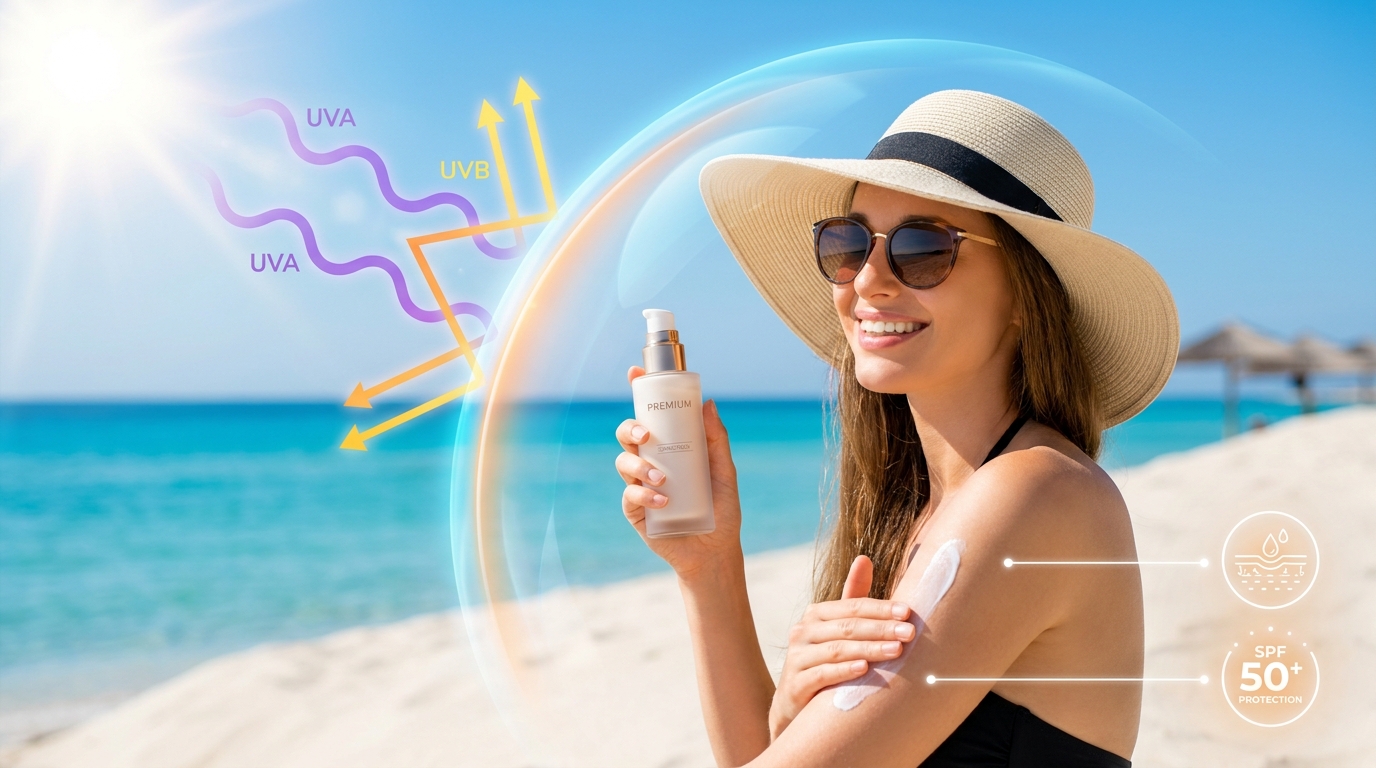
Sunscreen reduces the amount of ultraviolet (UV) radiation reaching your skin, but no sunscreen blocks 100% of UV rays. Since some UV radiation still gets through, your skin can produce melanin, the pigment responsible for tanning.
Here’s how much UVB different SPF levels roughly allow through when applied correctly:
| SPF | UVB Blocked | UVB That Reaches Skin |
|---|---|---|
| SPF 15 | About 93% | Around 7% |
| SPF 30 | About 97% | Around 3% |
| SPF 50 | About 98% | Around 2% |
| SPF 100 | About 99% | Around 1% |
Those percentages may seem tiny, but hours of sun exposure can still be enough for your skin to gradually darken. And honestly, very few people apply sunscreen as thickly as researchers do during laboratory testing, so real-world protection is often lower.
Why Does Your Skin Tan Anyway?
Your skin isn’t trying to become prettier or darker. It’s actually reacting to damage.
When ultraviolet radiation reaches skin cells, it can damage DNA. In response, specialized cells called melanocytes increase melanin production. That pigment spreads through nearby skin cells to help absorb and scatter UV radiation before it causes more harm.
It’s sort of your body’s improvised shield. Clever, but not perfect.
The tanning process usually follows these steps:
- UV rays penetrate the skin.
- DNA damage begins.
- Melanocytes produce more melanin.
- Skin gradually becomes darker.
- The tan fades as skin naturally renews itself.
A tan is therefore evidence that your skin responded to ultraviolet exposure. Even if there’s no visible sunburn, your skin has still experienced some level of stress.
Does Sunscreen Prevent Tanning Completely?
Not usually.
Several factors determine whether you’ll tan while wearing sunscreen:
- SPF level
- Broad-spectrum protection
- Amount applied
- Reapplication frequency
- Time spent outdoors
- UV Index
- Skin type
- Water or sweat exposure
Imagine two people wearing SPF 50. One applies enough sunscreen every two hours. The other spreads a tiny amount once in the morning before spending six hours at the beach. Even though both used the same product, their actual protection is completely different.
Dermatologists often point out that underapplying sunscreen is one of the biggest reasons people still burn or tan.
UVA and UVB: The Difference Actually Matters
Many people only hear about SPF and assume that’s the whole story. It isn’t.
Ultraviolet radiation comes mainly in two forms that affect your skin differently.
| Type | Main Effect |
|---|---|
| UVA | Causes tanning, premature aging, wrinkles, and contributes to skin cancer |
| UVB | Causes sunburn and also contributes to skin cancer |
| UVC | Blocked naturally by Earth’s atmosphere |
SPF mainly measures protection against UVB rays.
That’s why dermatologists recommend broad-spectrum sunscreen, which protects against both UVA and UVB exposure. Without broad-spectrum coverage, you might avoid burning while still receiving significant UVA exposure that deepens tanning and accelerates skin aging. It’s a bit sneaky, really.
Why Some People Tan Faster Than Others
You may wear exactly the same sunscreen as your friend and still end up much darker.
That’s because genetics influence tanning ability more than many people realize.
Several factors affect how quickly skin tans:
- Natural skin tone
- Genetics
- Existing melanin levels
- Age
- Certain medications
- Hormonal changes
- Geographic location
- Altitude
- Reflection from water, snow, or sand
People with darker complexions naturally produce more melanin, allowing them to tan more easily while generally burning less quickly. However, this does not mean they’re immune to UV damage or skin cancer.
Does Higher SPF Mean You Won’t Tan?
Higher SPF reduces tanning, but doesn’t necessarily eliminate it.
Here’s a simple comparison.
| SPF Level | Chance of Tanning |
|---|---|
| SPF 15 | Higher |
| SPF 30 | Moderate |
| SPF 50 | Lower |
| SPF 100 | Lowest, but still possible |
One common misconception is that SPF 100 offers twice the protection of SPF 50. It dosen’t. The increase is relatively small, although it can provide additional benefit during prolonged outdoor exposure.
The bigger difference usually comes from proper application rather than chasing the highest SPF number available.
Common Reasons People Still Tan While Wearing Sunscreen
Many cases have nothing to do with sunscreen “failing.”
Instead, people often make one or more of these mistakes:
- Applying too little sunscreen
- Missing ears, neck, scalp, or feet
- Forgetting to reapply every two hours
- Waiting until already outside
- Using expired sunscreen
- Rubbing it off with towels
- Losing protection after swimming
- Sweating heavily during sports
Research suggests most adults apply only about one-quarter to one-half of the recommended amount, reducing SPF performance dramatically.
Is Tanning Ever Safe?
This question gets asked constantly.
The medical consensus is straightforward.
There is no such thing as a completely safe tan caused by UV exposure.
According to the American Academy of Dermatology, a tan is a visible sign that skin cells have responded to ultraviolet damage. Likewise, the World Health Organization classifies ultraviolet radiation as a known human carcinogen, linking excessive exposure to skin cancers, including melanoma.
That doesn’t mean stepping outside is dangerous by itself. Sunlight offers benefits such as supporting vitamin D production and improving mood for many people. The goal isn’t avoiding daylight altogether—it’s avoiding unnecessary UV damage.
What About Tanning Through Clouds?
Oddly enough, yes.
Clouds block visible sunlight far better than ultraviolet radiation.
Studies estimate that up to 80% of UV rays can still pass through light cloud cover. That’s why people sometimes return from an overcast beach day looking noticeably darker.
You might even underestimate your exposure because cooler temperatures make the sun feel weaker, when it actually isn’t.
Can You Tan Through Windows?
Mostly from UVA rays.
Standard household and office windows block most UVB radiation, reducing the likelihood of sunburn.
However, many windows allow significant amounts of UVA to pass through. Over long periods, especially while driving or sitting beside large windows, gradual tanning and premature skin aging can still occur.
Modern laminated glass blocks much more UVA than older untreated glass, but protection varies by manufacturer.
How to Reduce Tanning While Still Enjoying the Outdoors
If your goal is healthy skin rather than maximum color, a few habits make a huge difference.
Consider these practical tips:
- Wear SPF 30 or higher broad-spectrum sunscreen daily.
- Apply sunscreen 15 minutes before going outside.
- Reapply every two hours.
- Reapply immediately after swimming or heavy sweating.
- Wear sunglasses with UV protection.
- Use wide-brimmed hats.
- Choose UPF-rated clothing when outdoors for long periods.
- Seek shade between 10 a.m. and 4 p.m.
- Don’t rely on cloudy weather for protection.
These small habits add up over years. Your future skin will probably thank you, even if your current self forgets now and then.
Myths About Tanning With Sunscreen
A few persistent myths keep circulating online.
Myth: Sunscreen completely blocks all sunlight.
Fact: No sunscreen blocks 100% of UV radiation.
Myth: You need a tan before vacation to avoid burning.
Fact: A base tan offers minimal protection, roughly equivalent to SPF 3 or less.
Myth: Dark skin doesn’t need sunscreen.
Fact: Every skin tone can develop sun damage and skin cancer.
Myth: If you don’t burn, you’re safe.
Fact: UV damage can occur even without visible redness.
What Dermatologists Usually Recommend
Most dermatologists emphasize consistency over perfection.
Rather than searching for ways to tan “safely,” experts recommend minimizing unnecessary UV exposure while continuing outdoor activities responsibly.
A balanced routine generally includes:
- Daily broad-spectrum SPF 30 or higher.
- Protective clothing.
- Shade during peak UV hours.
- Regular skin self-checks.
- Professional skin examinations if you notice changing moles or unusual spots.
The focus isn’t avoiding sunshine forever. It’s protecting your skin enough that today’s fun doesn’t become tomorrow’s regret.
Final Thoughts
So, can you tan with sunscreen on? Yes, you absolutely can. Sunscreen lowers the amount of ultraviolet radiation reaching your skin, but it doesn’t eliminate it completely. Because some UV rays still penetrate, melanin production can continue, leading to a gradual tan.
That doesn’t mean sunscreen isn’t working. Quite the opposite, actually. A properly applied broad-spectrum sunscreen dramatically reduces your risk of sunburn, premature aging, and skin cancer while still allowing you to enjoy time outdoors. The small amount of tanning you may notice is evidence that sunscreen isn’t an impenetrable barrier—not that it’s ineffective.
Instead of viewing sunscreen as permission to stay in the sun indefinitely, think of it as one important layer of protection alongside shade, clothing, and sensible exposure. Your skin remembers every sunny afternoon, even the ones you’ve mostly forgotten, so taking care of it today is a decision that quietly pays off years later.
Can you still tan while wearing SPF 50 sunscreen?
Yes. SPF 50 blocks about 98% of UVB rays, but a small amount still reaches your skin, making gradual tanning possible during extended sun exposure.
Why did I get darker even though I applied sunscreen?
You may have applied too little, skipped reapplication, or spent several hours outside. Even correctly applied sunscreen allows limited UV exposure that can trigger melanin production.
Does sunscreen stop sunburn better than tanning?
Yes. Sunscreen is far more effective at reducing sunburn than preventing tanning because limited ultraviolet radiation can still stimulate pigment production without causing immediate redness.
Can I get vitamin D while wearing sunscreen?
Yes. Research suggests many people still produce vitamin D while wearing sunscreen because real-world application rarely blocks every ultraviolet ray reaching the skin.
Is there a sunscreen that prevents tanning completely?
No. No sunscreen blocks 100% of ultraviolet radiation, so complete prevention of tanning through sunscreen alone isn’t possible under normal outdoor conditions.