

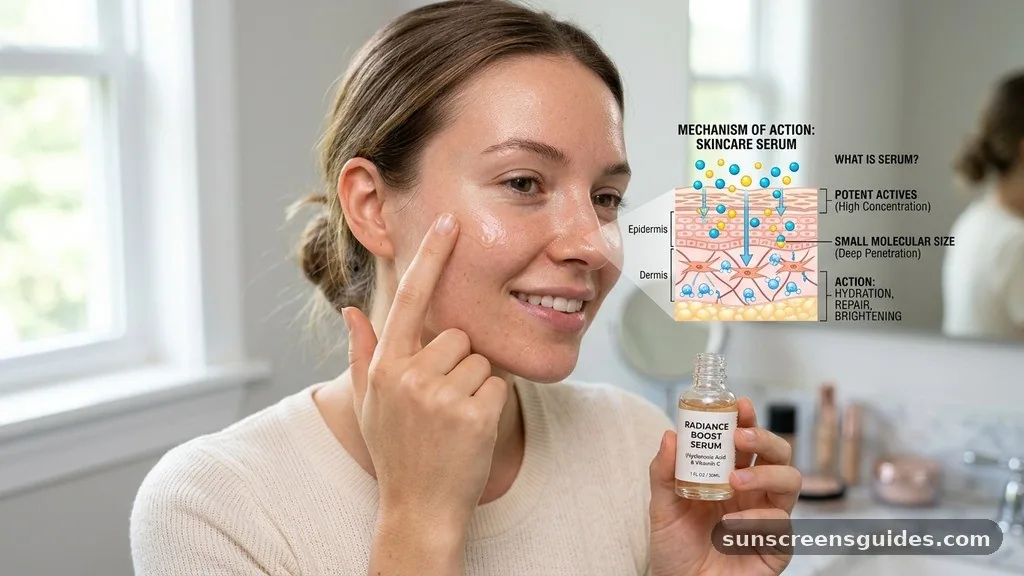
Understanding what is serum for helps you decide how to best care for your skin or hair. Essentially, these products are concentrated delivery systems designed to transport potent ingredients deep into the surface of your skin to address specific concerns like dryness, aging, or acne.
Unlike heavy creams that sit primarily on top to provide a protective seal, a high-quality serum uses a lightweight formulation to ensure those critical actives reach their target. If you have been wondering why your routine feels incomplete or why your current products aren’t delivering the results you expected, integrating the right serum might be the missing link in your daily regimen.
The Mechanism of Action in Skincare Serums
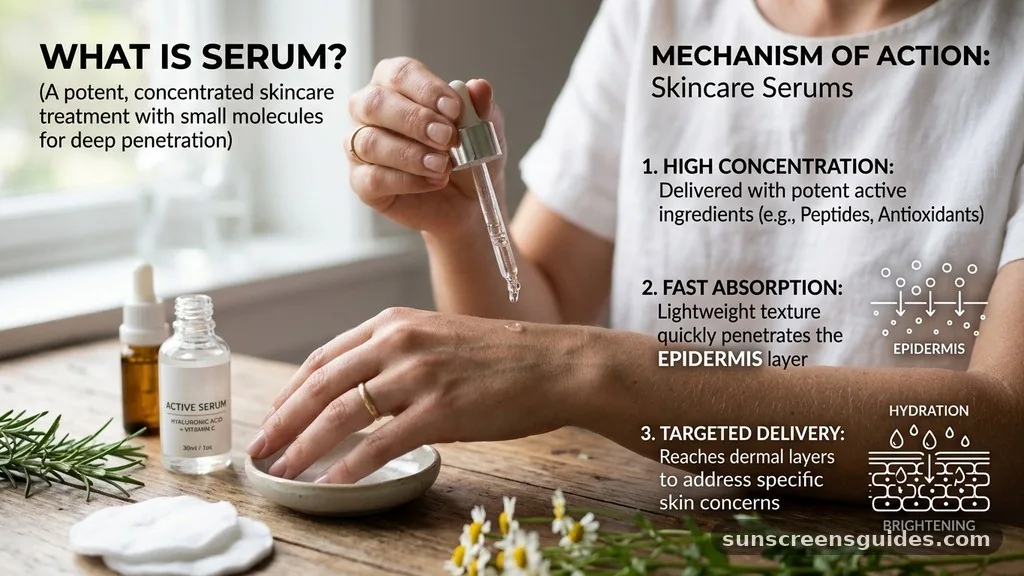
At its core, knowing what is serum for requires understanding how these liquids function compared to thicker lotions or oils. Most facial serums are water-based or formulated with a very thin consistency, which allows for rapid absorption into the skin.
This formulation is intentional; it is designed to maximize dermis penetration by utilizing ingredients with a smaller molecular weight. When a product is too thick, it cannot travel through the tight cellular junctions of the epidermis, rendering the expensive ingredients largely useless.
By stripping away common fillers like thickeners, waxes, or heavy occlusives found in creams, serum manufacturers create a high-density “cocktail” of active ingredients. These ingredients are the heavy lifters of your vanity cabinet.
Whether you are using hyaluronic acid to plump up dehydrated cells or niacinamide to help with sebum regulation, the serum is the vehicle that ensures these compounds actually get to work. Because they are so concentrated, you usually only need a few drops to cover your entire face, making them surprisingly cost-effective over time.
Targeting Specific Concerns with Potent Actives
The primary role of a serum is to act as a precision tool for your skincare routine. You aren’t just applying “moisturizer” when you use a serum; you are applying a targeted treatment.
For example, if you are struggling with dullness, a vitamin c serum can brighten your complexion by neutralizing free radicals, while a retinol serum works to accelerate cell turnover for a smoother texture. This precision is exactly what people mean when they ask what is serum for; it is about addressing a specific physiological need at the cellular level.
To help you categorize your needs, we have broken down some common active ingredients and their primary functions below.
| Ingredient | Primary Benefit | Best For |
|---|---|---|
| Hyaluronic Acid | Deep Hydration | Dry or Dehydrated Skin |
| Retinol | Cell Turnover | Fine Lines and Texture |
| Vitamin C | Brightening | Dark Spots and Dullness |
| Peptides | Firming | Elasticity and Aging |
Bridging the Gap Between Cleansing and Moisturizing
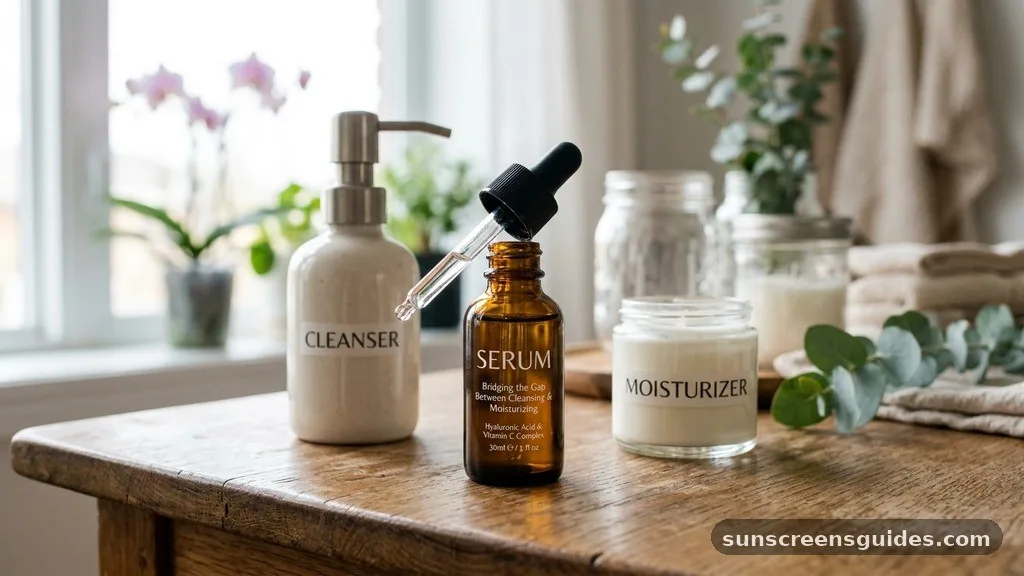
One of the most common questions regarding what is serum for is where it actually fits in your daily ritual. A good rule of thumb is to apply your products from the thinnest to the thickest consistency.
Think of your routine as a sandwich: your cleanser removes the debris, the serum delivers the treatment, and your moisturizer acts as an occlusive layer to lock everything in. If you apply a heavy cream first, the serum will simply sit on top of that barrier, unable to reach the skin where it needs to function.
This order of operations is crucial for preventing trans-epidermal water loss. While many people believe a serum is a replacement for moisturizer, it is almost always a partner. A serum provides the “medicine,” while your moisturizer provides the “shield.”
Using both ensures that you are hydrating the skin while simultaneously preventing that moisture from evaporating into the dry air. This combination is particularly effective for those dealing with a compromised skin barrier that feels tight or irritated.
Addressing Misconceptions and Topical Gaps
There is a lingering myth that serums are only for people with “problem skin” or for those in a certain age bracket. In reality, figuring out what is serum for is about recognizing that everyone has a unique skin profile that changes with the seasons and environmental stressors.
For instance, even oily skin types can benefit from a non-comedogenic serum that focuses on hydration without clogging pores. You don’t need a ten-step routine, but you do need products that actually interact with your skin biology rather than just sitting on the surface.
Another gap in common knowledge is the difference between serums meant for the face and those meant for the hair. While both are “serums,” the chemical compositions are worlds apart. Hair serums are typically silicone-based, designed to coat the cuticle to provide shine and frizz control.
Facial serums are biologically focused on absorption. If you apply a hair serum to your face, you will likely end up with breakouts, and if you apply a facial serum to your hair, it will likely provide zero cosmetic benefit.
- Serums contain high concentrations of active molecules.
- They have a low viscosity for better absorption.
- They are designed to be layered under heavier creams.
- They address specific issues like pigmentation, elasticity, or oiliness.
- They function best on clean, slightly damp skin.
- They should not be expected to replace sunscreen or deep moisturizers.
What is serum for in a biological context?
Beyond skincare, the term “serum” in biology refers to blood plasma that has had the clotting factors and cells removed. It is the liquid part of blood that contains proteins, electrolytes, and antibodies. Researchers study this fluid to understand how the body responds to infections or to diagnose diseases. It is a completely different substance from the cosmetic bottles you buy at the store, though both rely on the idea of a concentrated, filtered solution.
Can I use multiple serums at once?
You can layer serums, but you need to be careful with chemical interactions. For instance, you should never mix strong chemical exfoliation acids with high-strength retinol in the same application, as this can cause significant irritation. Instead, try using your antioxidant serum in the morning to protect against the environment and your restorative serum at night. When in doubt, start with one and see how your skin reacts over a few weeks.
Is a serum really necessary for a basic routine?
If you are currently happy with your skin and your routine is simple, you don’t “need” a serum. However, if you have a specific concern that your basic cleanser and cream aren’t fixing, a serum is the most effective way to introduce a targeted treatment without overhauling your entire collection of products.
What is the shelf life of a typical serum?
Because they contain high concentrations of active ingredients, many serums are sensitive to light and air. You should typically finish a bottle within six months of opening. If the color changes significantly or the product develops a strange odor, it is likely oxidized and should be discarded.
How do I know if a serum is working for me?
Skincare is a marathon, not a sprint. While some hydrating serums provide immediate relief, ingredients like retinol or vitamin C can take eight to twelve weeks to show visible changes in tone or texture. Be patient and consistent with your application.
Do serums cause purging?
If a serum contains active ingredients like retinol or AHAs that increase cell turnover, you might experience a brief period of “purging” where existing breakouts come to the surface. This is temporary and usually passes as your skin adjusts to the new chemical activity.
Are there any side effects to using serums?
The most common side effect is contact dermatitis or irritation caused by high concentrations of actives. Always perform a patch test on your inner forearm before applying a new product to your entire face to ensure your skin tolerates the formula.
In conclusion, understanding what is serum for transforms your approach to self-care from a guessing game into a precise, results-oriented habit. By choosing products that align with your specific skin goals and applying them at the correct stage of your routine, you can maximize the health and appearance of your complexion. Serums are not magic potions, but when used with intention, they are the most powerful tools in your arsenal.
Whether you are focusing on hydration, anti-aging, or balancing oil production, the right formula will support your skin’s natural functions. We encourage you to start with one targeted product, monitor your skin’s response, and enjoy the process of refining your daily routine for better, long-term results.



