
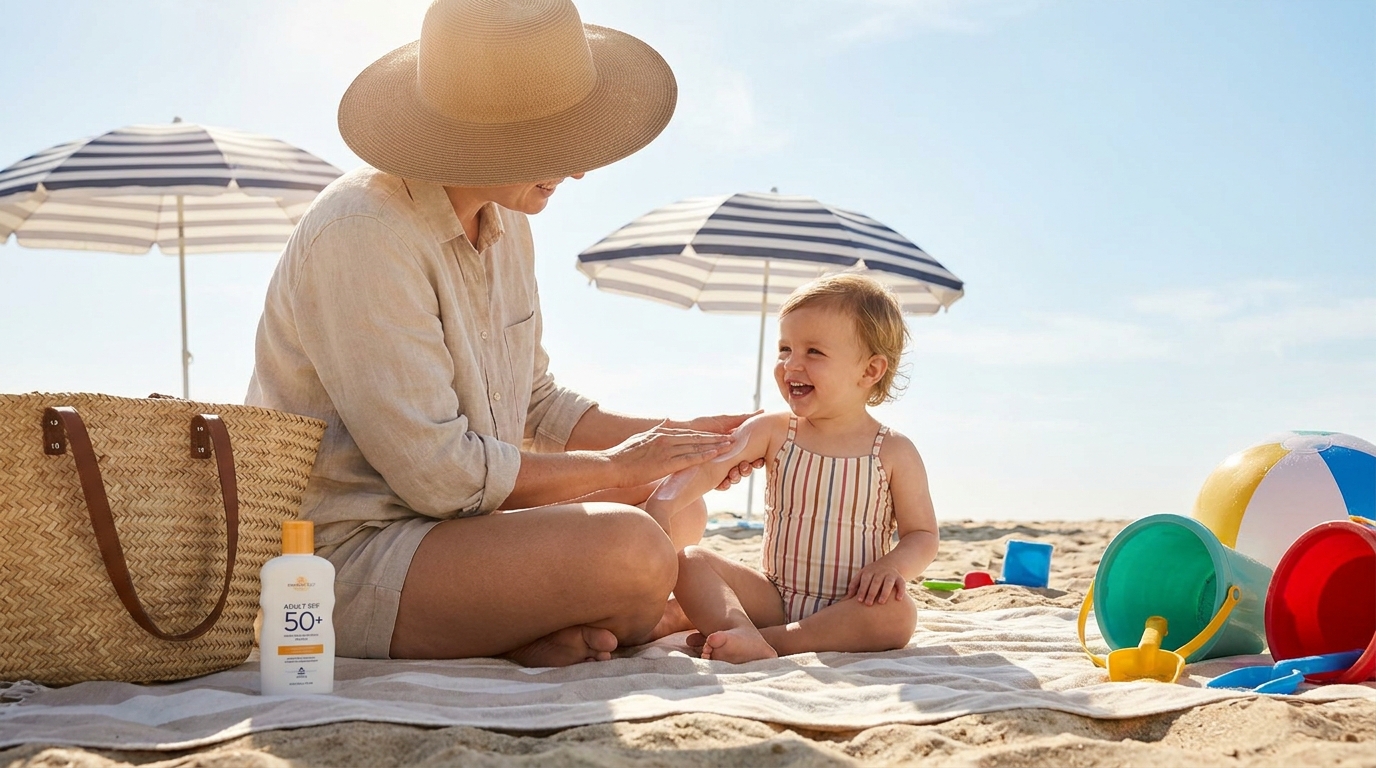
Can kids use adult sunscreen when you’re standing in the store aisle wondering whether to buy a separate children’s formula or just use the sunscreen already sitting in your bathroom cabinet? It’s a common parenting question, and the answer is a little more interesting than a simple yes or no. Many parents have faced this exact moment: the sun is strong, the kids are ready to run outside, and you’re holding a bottle of sunscreen wondering if it’s actually safe for their delicate skin.
The good news is that many adult sunscreens can be used on children, but there are a few important things you should know before applying any random product to your child’s skin. Children’s skin has unique needs, especially when they are younger, and choosing the right sunscreen can make a big difference in protecting them from harmful ultraviolet (UV) rays.
Understanding the difference between adult and kids’ sunscreen, knowing which ingredients to look for, and learning when a separate children’s sunscreen is better can help you make a smarter choice for your family.
Can Kids Use Adult Sunscreen Safely?
Yes, kids can often use adult sunscreen safely, especially when the product is a broad-spectrum sunscreen designed to protect against both UVA and UVB rays. The important part is not whether the label says “adult” or “kids,” but what ingredients the sunscreen contains and whether it is suitable for your child’s age and skin type.
Many adult sunscreens and children’s sunscreens use the same active ingredients. The biggest differences are usually related to texture, fragrance, added ingredients, and marketing. A sunscreen labeled for children is often created with sensitive skin in mind, while adult formulas may include ingredients that some children find irritating.
For example, an adult mineral sunscreen containing zinc oxide or titanium dioxide may be perfectly appropriate for a child. On the other hand, an adult sunscreen with strong fragrances, alcohol, or certain chemical filters may cause irritation, especially for babies or children with sensitive skin.
According to the American Academy of Pediatrics (AAP), sunscreen is generally recommended for children older than 6 months. Babies younger than 6 months should mainly be protected through shade, protective clothing, and avoiding direct sun exposure.
Adult Sunscreen vs Kids Sunscreen: What Is the Difference?
The difference between adult and kids sunscreen is not always about effectiveness. Both can provide excellent sun protection if used correctly. The main differences often come down to formulation.
| Feature | Adult Sunscreen | Kids Sunscreen |
|---|---|---|
| Sun protection | Can provide SPF 30+ broad-spectrum protection | Usually SPF 30+ broad-spectrum protection |
| Ingredients | May include chemical filters, fragrance, alcohol, or cosmetic additives | Often designed for sensitive skin with fewer irritants |
| Texture | May be lightweight or designed for daily facial use | Often thicker and more water-resistant |
| Skin sensitivity | May irritate some children | Usually gentler for young skin |
| Marketing | Made for general users | Made specifically for children and parents |
A child does not automatically need a sunscreen with a cartoon character on the bottle. What matters most is the SPF level, broad-spectrum protection, ingredients, and how well your child tolerates the product.
What Type of Sunscreen Is Best for Children?
When choosing sunscreen for kids, experts generally recommend looking for a few key features.
Choose Broad-Spectrum Protection
Broad-spectrum sunscreen protects against two types of ultraviolet radiation:
- UVA rays, which contribute to premature skin aging and long-term skin damage
- UVB rays, which are responsible for sunburn
A sunscreen that only protects against one type of UV radiation does not provide complete protection.
Look for SPF 30 or Higher
The American Academy of Dermatology recommends using sunscreen with SPF 30 or higher. SPF measures protection against UVB rays, which cause sunburn.
Higher SPF does not mean you can apply sunscreen once and forget about it. Even SPF 100 sunscreen needs regular reapplication.
Consider Mineral Sunscreen for Younger Children
Mineral sunscreens contain active ingredients such as:
- Zinc oxide
- Titanium dioxide
These ingredients sit on top of the skin and physically reflect UV rays. They are often recommended for children because they are less likely to cause irritation.
Chemical sunscreens use ingredients that absorb UV radiation. They can also be effective, but some children with sensitive skin may experience redness or discomfort.
Can Babies Use Adult Sunscreen?
For babies under 6 months old, sunscreen is usually not the first choice. Their skin is thinner and more sensitive, so experts recommend avoiding direct sunlight whenever possible.
Instead, parents should focus on:
- Keeping babies in shaded areas
- Using lightweight protective clothing
- Putting a wide-brimmed hat on the baby
- Avoiding peak sunlight hours
If sun exposure cannot be avoided, small amounts of sunscreen may sometimes be applied to exposed areas like the back of hands or feet, but parents should discuss options with a pediatrician.
For babies older than 6 months, sunscreen can generally be used. A gentle mineral sunscreen is often a good starting point.
Ingredients Parents Should Pay Attention To
Reading sunscreen labels can feel confusing because ingredient names are not always easy to understand. Here are some things parents may want to consider.
Ingredients That Are Usually Well-Tolerated
- Zinc oxide
- Titanium dioxide
These mineral ingredients are commonly recommended for sensitive skin and young children.
Ingredients That May Cause Irritation
Some children may react to:
- Added fragrance
- Certain preservatives
- Alcohol-based formulas
- Some chemical sunscreen filters
This does not mean these ingredients are dangerous for every child. Many adults and children use them without problems. It simply means parents should pay attention to how their child’s skin responds.
How to Test Adult Sunscreen on Your Child
Before applying a new sunscreen all over your child’s body, it is smart to perform a small patch test.
Follow these steps:
- Apply a small amount of sunscreen to a small area of skin, such as the inside of the wrist.
- Wait about 24 hours.
- Check for redness, itching, swelling, or irritation.
- If the skin looks normal, you can usually apply the sunscreen more broadly.
Children’s skin can sometimes surprise you. A product that works perfectly for one child may not work well for another.
How Much Sunscreen Should Kids Use?
Many parents do not apply enough sunscreen, which reduces the actual protection their child receives.
A common recommendation is:
- About one ounce (a shot-glass amount) for the exposed body of an older child or adult
- A smaller amount for younger children depending on their size
Make sure to cover commonly missed areas, including:
- Ears
- Neck
- Shoulders
- Tops of feet
- Back of hands
- Around the hairline
Sunscreen should be applied about 15 minutes before going outside when using many chemical formulas. Mineral sunscreens generally provide protection immediately after application, but following the product instructions is always best.
How Often Should Kids Reapply Sunscreen?
Even the best sunscreen does not last all day.
Children should reapply sunscreen:
- Every two hours during outdoor activities
- After swimming
- After heavy sweating
- After towel drying
Water-resistant sunscreen helps during swimming and sports, but “water-resistant” does not mean waterproof. Sunscreen eventually wears off.
Common Mistakes Parents Make With Sunscreen
Even parents who understand sun safety can accidentally make mistakes. Some common ones include:
Using Too Little Sunscreen
A thin layer may feel easier to apply, but it may not provide the SPF protection listed on the bottle.
Forgetting Cloudy Days
Clouds block some sunlight, but UV rays can still reach the skin. Children can still get sunburned on cloudy days.
Relying Only on Sunscreen
Sunscreen is one part of sun protection. Clothing, shade, and timing also matter.
Using Expired Sunscreen
Old sunscreen may not protect as effectively. Check expiration dates and replace products that have changed in smell, color, or texture.
Should Parents Buy Separate Kids Sunscreen?
Buying a separate kids sunscreen is not always necessary. If your adult sunscreen is:
- Broad-spectrum
- SPF 30 or higher
- Gentle on skin
- Free from irritating ingredients
- Suitable for your child’s age
then it may work perfectly fine.
However, a children’s sunscreen may be a better choice if your child has:
- Sensitive skin
- Eczema-prone skin
- Frequent irritation from skincare products
- A dislike of strong smells or heavy textures
The best sunscreen is the one your child will actually allow you to apply and that protects their skin consistently.
Final Thoughts on Can Kids Use Adult Sunscreen
So, can kids use adult sunscreen? In many cases, yes. The label on the bottle is not the most important factor. The ingredients, SPF level, broad-spectrum protection, and your child’s individual skin sensitivity matter much more.
Parents do not need to panic if they accidentally use adult sunscreen on their child. Many adult formulas are completely suitable, especially gentle mineral options. The goal is simple: protect children’s skin from harmful UV exposure while choosing a product that works comfortably for them.
Sun protection habits built during childhood can have lifelong benefits. Teaching children to wear sunscreen, seek shade, and respect the sun helps create healthy routines that stay with them as they grow.
Frequently Asked Questions
Can a 5-year-old use adult sunscreen?
Yes, most 5-year-olds can use adult sunscreen if it provides broad-spectrum SPF 30 protection and does not irritate their skin.
Is kids sunscreen better than adult sunscreen?
Kids sunscreen is often gentler, but many adult sunscreens provide equal protection when they contain suitable ingredients.
Can children use sunscreen with chemical filters?
Yes, children can use chemical sunscreens, but sensitive children may prefer mineral formulas containing zinc oxide or titanium dioxide.
What SPF sunscreen should kids use?
Children should generally use broad-spectrum sunscreen with SPF 30 or higher and reapply it regularly during outdoor activities.
Can I use my sunscreen on my child?
You can use your sunscreen on your child if it is safe, gentle, broad-spectrum, and appropriate for their age and skin sensitivity.