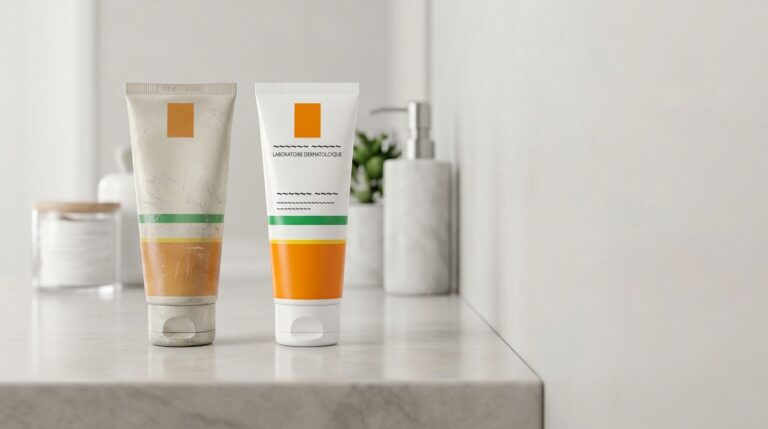

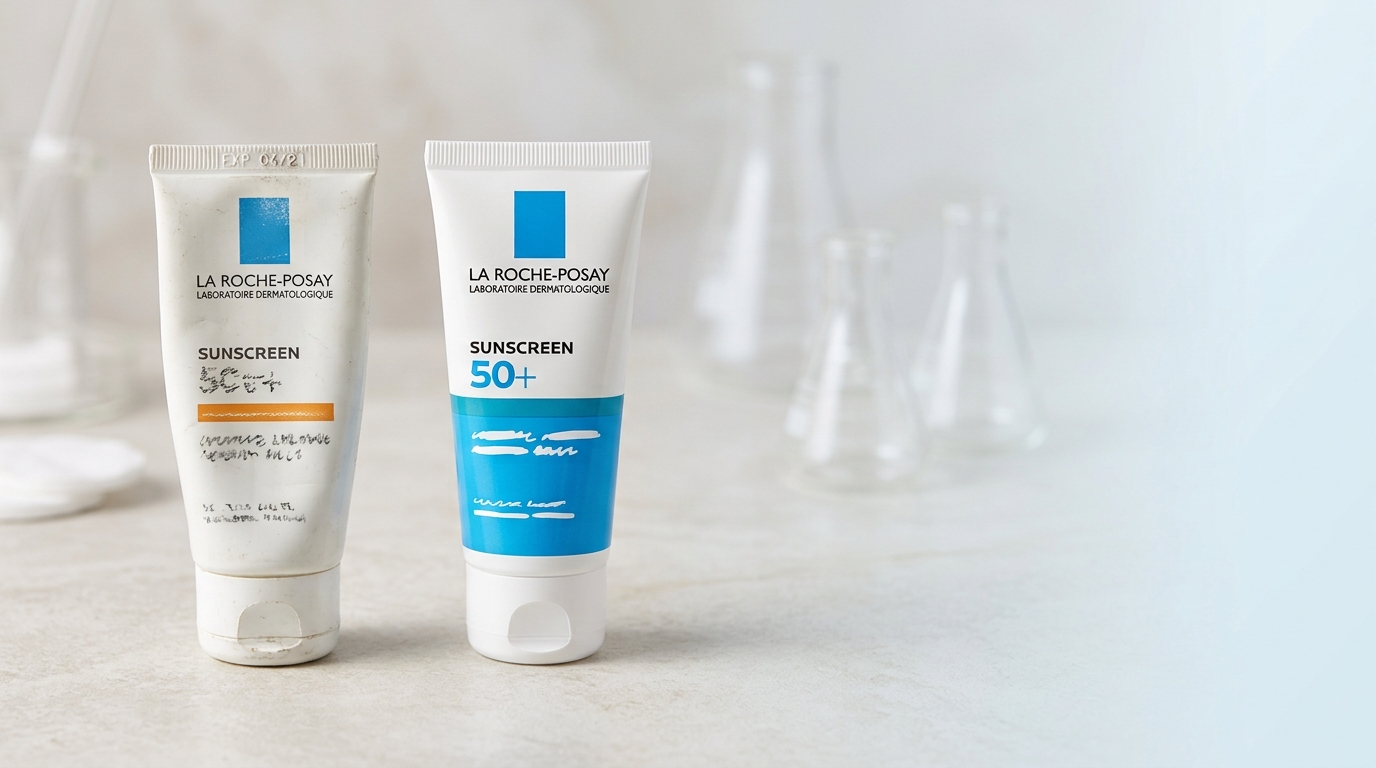
Does expired sunscreen work? Honestly, if you just found an old bottle in your bathroom drawer and you’re wondering whether it can still save your skin today, you’re not being dramatic at all. Most people have stood there, looked at the date, and thought, “well… sunscreen is sunscreen, right?” The slightly annoying truth is that expired sunscreen may not give you the protection printed on the bottle, and that is where things get a bit risky.
You might still see the same white cream, the same familiar smell, and a bottle that looks completely normal. But sunscreen is not judged by how innocent it looks. Its sun-protective ingredients and formula have to remain stable enough to provide the labeled protection. Once the expiration date has passed, that assurance is gone.
So, does expired sunscreen work or not?
The short answer is you should not rely on expired sunscreen.
It may still provide some level of protection, but there is no reliable way for you to know how much protection remains. The U.S. Food and Drug Administration (FDA) recommends not using sunscreen after its expiration date because it may no longer be safe and effective as intended. In plain words, that old SPF 50 may not behave like SPF 50 anymore.
The expiration date is basically the period during which the manufacturer has evidence that the product remains stable, strong, and suitable for its intended use when stored correctly. After that point, the product is a question mark, and your skin really isn’t the place to run a little science experiment.
So, does expired sunscreen work? Maybe partially, but you cannot safely count on it. That difference matters, especially if you are going to the beach, spending hours outside, or already have skin that burns quickly.
Why does sunscreen expire?
Sunscreen is a carefully formulated product, not just a random lotion with SPF written on it. It contains active ingredients designed to absorb, reflect, or scatter certain ultraviolet radiation, depending on the type of sunscreen and its ingredients.
Over time, these ingredients can become less stable. The rest of the formula can also change. The FDA explains that expiration dates for drug products reflect the period when the product is known to retain its strength, quality, and purity under the recommended storage conditions.
There is another slightly sneaky issue too: heat can speed up product breakdown. A sunscreen left in a hot car, direct sunlight, or a very warm place may degrade faster than one stored properly. The FDA specifically warns that sunscreen kept in hot environments, such as a car, may break down more quickly.
So yes, your sunscreen can technically be “not expired yet” but still look suspicious if it has been cooking in your car for months. A very bad little spa day for the sunscreen.
What happens if you use expired sunscreen?
The biggest problem is unreliable sun protection.
You may apply the product believing you are protected by SPF 30 or SPF 50, while the formula may no longer deliver the same labeled protection. The American Academy of Dermatology (AAD) notes that expired sunscreen should be thrown away because the active ingredients may break down and no longer protect your skin properly.
That can lead to:
- Sunburn
- Greater UV exposure
- Premature skin aging
- Increased long-term skin damage
- A false sense of security
And honestly, the false confidence part is what catches people. You might stay outside longer because you think your sunscreen is doing its job, when it may be doing a much weaker job than expected.
Can expired sunscreen cause a skin reaction?
It can. As sunscreen ages, the formula may change, and the AAD says expired or spoiled sunscreen may cause irritated skin or an allergic skin reaction. The organization also notes that mold or bacteria may potentially grow inside an old container over time.
That does not mean every expired sunscreen will instantly give you a rash. It means the product is no longer something you should confidently put on your skin, especially your face, neck, or other sensitive areas.
How can you tell if sunscreen has gone bad?
The expiration date is your first check. But your sunscreen may also show visible signs that it is no longer in good condition.
Look for these changes:
| Sign | What it may indicate |
|---|---|
| Different color | Formula may have degraded |
| Foul or unusual smell | Product may have spoiled |
| Separation | Ingredients may no longer be properly mixed |
| Dry or flaky texture | Formula has changed |
| Lumpy consistency | Product may no longer apply evenly |
The AAD specifically recommends replacing sunscreen if you notice obvious changes in color or consistency. It also lists changes such as a different odor, separation, and a dry or flaky texture as signs to discard the product.
But here’s the part people sometimes don’t want to hear: if the sunscreen is expired, you do not need to inspect it like a detective. Even if it looks perfectly fine, the FDA recommends throwing it away after the expiration date.
What if sunscreen has no expiration date?
This is where many people get confused, especially with older bottles.
According to the FDA, a sunscreen without an expiration date should generally be considered expired three years after purchase. If you do not know when you bought it, the FDA recommends discarding it rather than guessing.
The AAD also suggests writing the purchase date on a sunscreen bottle that does not have an expiration date. It’s a very simple thing, but somehow most of us remember to do it only after the bottle has become ancient.
No date and no idea when you bought it? Replace it. Saving a few dollars is not worth gambling with your sun protection.
Does expired SPF 50 still work?
People often ask this specifically because SPF 50 sounds like a huge safety net.
The answer is still do not rely on expired SPF 50. The number on the label only tells you the protection level the product is designed and tested to provide under the relevant conditions. SPF is not a magical permanent power rating that survives forever.
The FDA explains that SPF measures the amount of solar energy needed to produce sunburn on protected skin compared with unprotected skin. It does not mean SPF 50 lets you stay in the sun 50 times longer.
So if the product is expired, you cannot assume the “50” is still performing exactly as advertised. That little number is not immortal, sadly.
Can you use expired sunscreen for one day?
I get why you are asking. Maybe you’re already packed for a trip, the store is closed, and the only sunscreen you found is expired by a few months.
Still, I would not recommend relying on it for a day outdoors. The FDA’s guidance is to discard expired sunscreen because there is no assurance that it remains safe and fully effective.
If you have absolutely no usable sunscreen, use other sun-protection methods while you get a fresh product: seek shade, wear tightly woven clothing, cover exposed skin, and use a wide-brimmed hat. The AAD also says sunscreen should not be your only form of sun protection because no sunscreen blocks 100% of the sun’s UV rays.
A day of extra caution is much smarter than pretending an expired bottle is still brand new.
How to use sunscreen correctly so it actually protects you
Fresh sunscreen can still fail to protect you properly if you use too little or forget to reapply. This is where people accidentally sabotage their own sunscreen, and yes, it happens constantly.
The AAD recommends applying sunscreen about 15 minutes before going outdoors and reapplying every two hours while outdoors, or immediately after swimming or sweating.
For most adults, the AAD says about 1 ounce of sunscreen, roughly enough to fill a shot glass, is needed to cover exposed body skin. For the face, it recommends at least about 1 teaspoon, or roughly the length of your index and middle fingers when using the finger-length method.
A simple checklist:
- Choose a broad-spectrum sunscreen.
- Check the expiration date before applying.
- Apply enough product.
- Put it on before going outside.
- Reapply every two hours outdoors.
- Reapply after swimming or heavy sweating.
- Add shade, protective clothing, and a hat when possible.
It sounds like a lot written down, but in real life it becomes routine pretty fast.
The final truth about whether expired sunscreen works
So, does expired sunscreen work? The honest answer is that you should not trust it to provide the protection printed on the label. It may still look normal, and it might provide some protection, but there is no dependable guarantee after the expiration date.
The FDA recommends discarding expired sunscreen, while dermatologists also warn that old or spoiled sunscreen may lose effectiveness and potentially irritate your skin.
If your sunscreen is expired, has changed color or texture, smells strange, or has been sitting in a hot car, replace it. Your skin is worth more than squeezing three extra uses out of a bottle that has already passed its best protection window. A fresh sunscreen, used in enough quantity and reapplied properly, is the much less stressful choice.
FAQs About Expired Sunscreen
Does expired sunscreen still protect your skin?
Expired sunscreen may offer uncertain protection, but its labeled SPF effectiveness is no longer guaranteed, so you should replace it rather than rely on it.
How long is sunscreen good after its expiration date?
Sunscreen should not be considered reliably effective after expiration. The FDA recommends discarding expired sunscreen because safety and effectiveness are no longer assured.
Can I use sunscreen that expired one month ago?
It is best not to use it. Even one month past expiration means the product is outside its guaranteed stability and effectiveness period.
Does expired SPF 50 become useless?
Not necessarily, but its actual protection is uncertain. You should never assume expired SPF 50 still provides the labeled SPF 50 protection.
How do I know my sunscreen has gone bad?
Check for expiration, unusual odor, color changes, separation, dryness, or a flaky texture. Any obvious formula change means it should be replaced.