

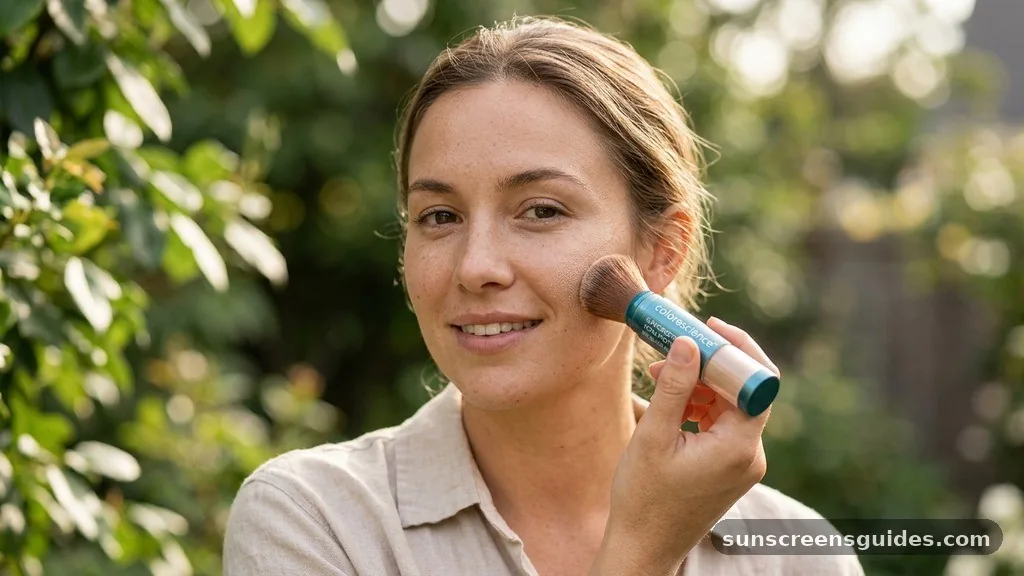
Many people wonder if powder sunscreen actually provides the protection it promises when they see it sitting on a store shelf. You might be curious if these lightweight, portable products offer the same level of defense as traditional lotions, especially when you are trying to touch up your makeup throughout a busy day.
While the convenience is undeniable, understanding how these mineral-based products perform under real-world conditions is essential for maintaining skin health. When you evaluate whether does powder sunscreen work, you are really asking if it can deliver the consistent, reliable coverage required to prevent sun damage effectively.
How Powder Sunscreen Functions on the Skin
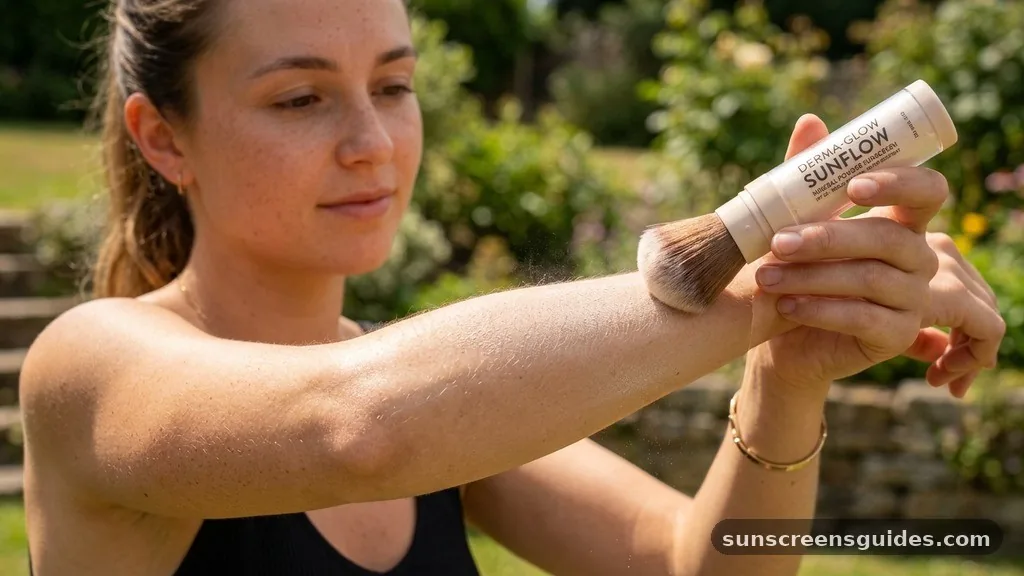
It is helpful to recognize that powder formulations function differently than their liquid or cream counterparts. Most of these products rely on physical filters, specifically zinc oxide or titanium dioxide, which sit on the surface of the skin to reflect ultraviolet rays. Unlike chemical sunscreens that absorb into the skin to convert UV radiation into heat, these inorganic minerals act as a physical barrier.
Because you are applying a dry medium, the way the particles settle is critical. You need to create an even layer to ensure that you aren’t leaving gaps where UV radiation can penetrate.
While these minerals are excellent at blocking broad-spectrum rays, the efficacy often depends on the density of the powder applied. If you only use a light dusting, you might not achieve the labeled SPF level, which is a major concern for those relying on these products as their primary source of protection.
The Practical Reality of Application
The biggest hurdle for powder-based protection is the sheer amount of product needed to reach the tested SPF rating. Most clinical studies on sunscreen efficacy utilize a standard thickness of 2mg/cm², which is quite difficult to achieve with a brush or puff. If you apply a sheer, translucent layer, you are likely receiving only a fraction of the stated protection on the packaging.
To get the most out of your product, consider these expert-backed techniques:
- Apply over a base layer of traditional liquid sunscreen for maximum security.
- Use the powder primarily for mid-day touch-ups rather than initial morning application.
- Pat the product onto the skin rather than buffing or sweeping it, which helps build a more opaque layer.
- Focus on areas prone to missed spots, such as the hairline, ears, and the back of the neck.
- Ensure your skin is dry before application, as moisture can cause the powder to clump and become uneven.
Comparing Sunscreen Formulations
Not all sun protection methods are created equal, and your choice should depend on your lifestyle and specific skin needs. The following table compares common sunscreen types to help you decide how to integrate powder into your routine.
| Formulation Type | Best Use Case | Primary Advantage | Key Limitation |
|---|---|---|---|
| Liquid/Lotion | Full initial coverage | Easy to measure thickness | Can feel greasy or heavy |
| Powder | Reapplication/Touch-ups | Non-greasy, matte finish | Hard to achieve uniform density |
| Stick | Targeted areas/Sports | Portable and water-resistant | Can tug on delicate eye skin |
Skin Types and Suitability
If you are dealing with oil buildup or have a complexion that leans toward the oily side, powder sunscreen can be a fantastic addition to your vanity. It effectively absorbs excess sebum while simultaneously providing a secondary layer of UV defense. This makes it particularly popular for office workers or commuters who want to stay protected without ruining their makeup.
However, those with dry or flaky skin might find that powders highlight texture or cling to dry patches. If you fall into this category, it is vital to keep your skin hydrated underneath.
Regardless of your skin type, remember that you are applying a mineral product that shouldn’t be inhaled. Always hold your breath for a second while dusting the product near your face to avoid breathing in the fine particles.
Addressing Environmental Factors
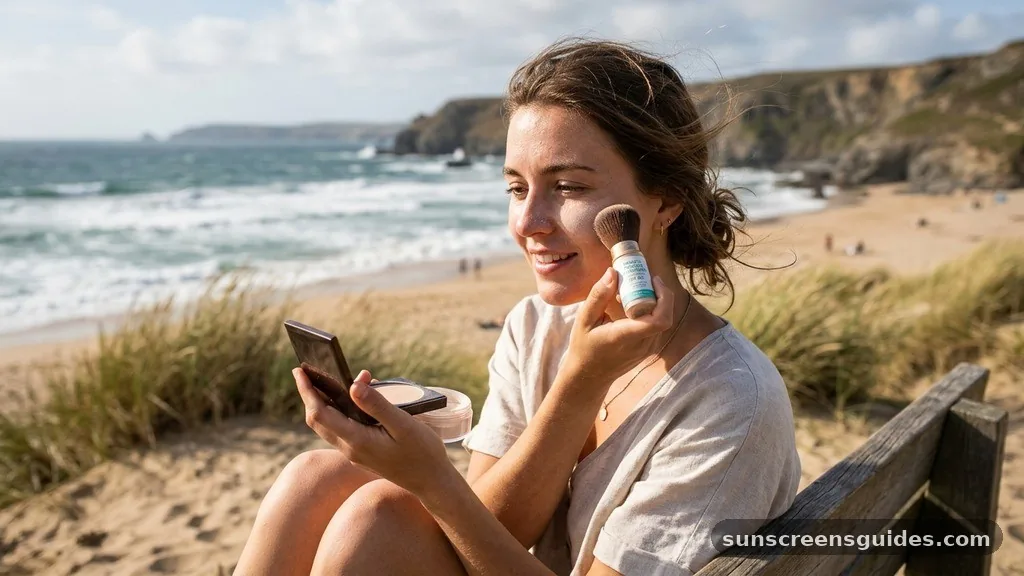
Outdoor activities introduce sweat and humidity, which can degrade the integrity of your sun protection. While many brands market their powders as water-resistant, the reality is that a powder foundation or setting powder is easily compromised by heavy sweating. If you are heading to the beach or going for a run, a water-resistant lotion is almost always the superior choice.
Powder is best reserved for environments where you aren’t expecting significant perspiration. It works well as a convenient way to refresh your coverage when you are indoors or in a mild outdoor setting. If you notice the product shifting or settling into fine lines, it is a sign that your protection is likely no longer uniform, and it’s time to re-evaluate your application.
Common Misconceptions About Protection
One common myth is that powder sunscreen is inherently better or more effective because it contains “natural” minerals. In truth, both chemical and mineral sunscreens are highly regulated and effective when used correctly.
The confusion often stems from the method of delivery. Because powder is often used sparingly, users frequently underestimate the amount required to block UV rays.
Another issue is the “set it and forget it” mentality. Many users believe that one quick pass of the brush is enough for the entire day.
Sunscreen, regardless of its form, needs to be reapplied every two hours, especially if you are in direct sunlight. If you rely on powder, you must be diligent about these touch-ups, or you will quickly lose the protection you were counting on.
Topical Gaps: Scalp and Hairline Coverage
A frequently overlooked area for sun damage is the scalp and the hairline. Traditional lotions can leave hair looking greasy or weighed down, making them unpopular for use on the head.
This is where powder sunscreen truly shines as a hero product. Because it is dry and mattifying, it can be dusted along a part line or around the hairline without leaving a sticky residue.
When applying to the scalp, part your hair in several sections to ensure the powder reaches the skin directly. Using your fingers to gently tap the powder into the scalp can help it stick better than just relying on the brush bristles. This technique provides a much-needed layer of defense for skin that is often exposed to the sun but rarely receives adequate care.
FAQ: Understanding Powder Sunscreen
Does powder sunscreen work as well as lotion?
It offers similar protection only if applied in a thick, even layer, which is difficult to achieve.
Can I use powder sunscreen as my only sun protection?
It is not recommended; it is best used as a secondary layer or for mid-day touch-ups only.
Does powder sunscreen expire?
Yes, like all sunscreen, it has an expiration date, and the efficacy of the minerals degrades over time.
Is powder sunscreen effective for acne-prone skin?
Yes, it is often preferred because it is non-comedogenic and helps manage oil buildup throughout the day.
Does powder sunscreen work on the scalp?
It is highly effective for the scalp as it protects without making hair look greasy or weighed down.
How much powder sunscreen do I need to apply?
You need to apply a visible, opaque layer to achieve the SPF rating listed on the product packaging.
Is powder sunscreen safe to inhale?
It is best to hold your breath briefly during application to avoid inhaling the fine, loose mineral particles.
Closing Thoughts on Sun Protection
When you consider how to incorporate sun safety into your daily life, it becomes clear that the best product is the one you actually use. While liquid lotions provide the most reliable initial coverage, the convenience of a powder ensures that you are actually reapplying throughout the day, which is the most important factor in preventing long-term damage. By using powder strategically—focusing on the hairline and mid-day touch-ups—you can effectively supplement your routine without sacrificing comfort or your makeup finish.
Always prioritize a base layer of traditional sunscreen for your morning routine, and let the powder serve as your reliable partner for keeping your protection consistent until the sun goes down. If you have questions about specific mineral formulations, feel free to reach out for more tailored advice.



