

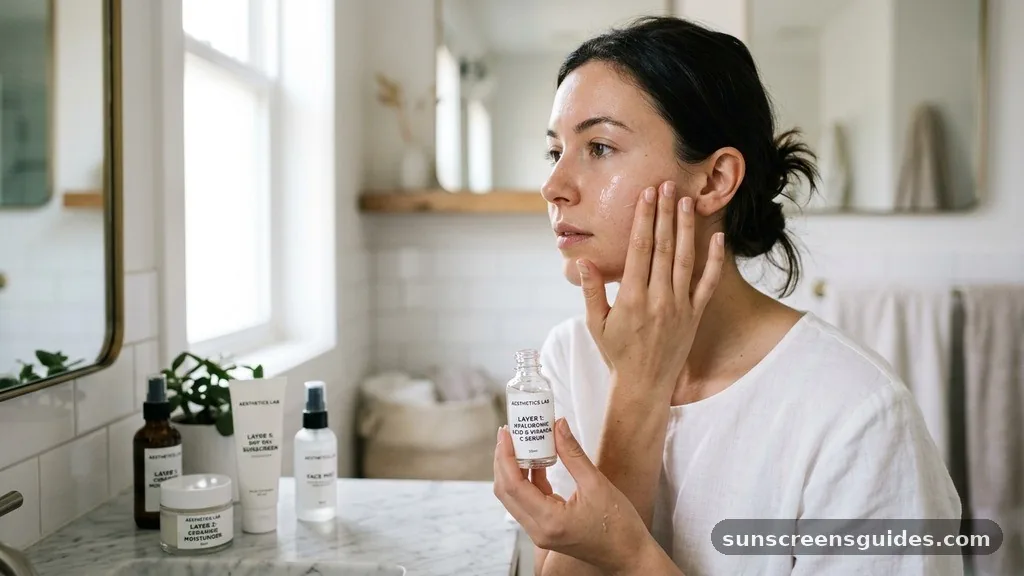
Deciding whether you should apply your serum or moisturizer first is one of the most common points of confusion in a daily beauty routine. If you get the sequence wrong, you might be preventing your most expensive products from actually doing their job. Generally, the rule of thumb is to apply products from the thinnest consistency to the thickest, ensuring each layer can penetrate the surface effectively.
By understanding how molecular weight influences skincare layering, you can finally stop guessing which bottle to reach for next. Getting the order of your serum or moisturizer first dilemma right ensures your complexion receives the maximum benefit from your targeted treatments.
The Science of Skincare Layering

The primary reason for following a specific sequence is to respect the absorption rate of different formulas. Your skin acts as a barrier, and while it is designed to keep things out, it also requires help to let beneficial compounds in. When you consider the serum or moisturizer first question, you are essentially managing how ingredients interact with your skin barrier.
Lighter, aqueous-based products are designed to sink in quickly. They usually contain smaller molecules that travel through the outer layers of the epidermis with ease. If you were to apply a heavy cream before a light serum, the cream would essentially act as a physical shield.
It would block the serum from reaching your skin, rendering those potent active ingredients ineffective. By applying your serum first, you allow those high-concentration formulas to deliver their benefits directly to the target area.
Why Serum Comes Before Moisturizer
Serums are essentially concentrated delivery systems. They often house powerful molecules like vitamin c, retinol, or niacinamide, which are meant to address specific concerns like hyperpigmentation, fine lines, or texture. Because these liquids have a low viscosity, they must be applied to clean, slightly damp skin to maximize their efficacy.
Once you have applied your serum, you need to seal it in. This is where the moisturizer steps in. Most moisturizers function as an occlusive or an emollient.
An occlusive creates a thin, breathable film over the skin to prevent transepidermal water loss, which is the process where moisture evaporates from your skin throughout the day. If you skip the moisturizer, even the best serum might leave your skin feeling tight or dehydrated because the environment is pulling that internal hydration away from you.
Understanding Product Texture and Consistency
If you ever find yourself staring at a shelf of new products, just remember the simple “thin to thick” rule. This is the most reliable way to determine the correct application order.
- Start with the most liquid-like consistency, such as a toner or essence.
- Follow with your targeted treatment serums.
- Apply your eye cream, which sits somewhere between a serum and a moisturizer.
- Finish with your heavier moisturizer or face oil to lock everything in.
- Always apply sunscreen as your final step during your morning routine.
This logical progression ensures that you aren’t fighting against physics. If you apply a thick, butter-like cream, a thin serum simply cannot penetrate that layer. Think of it like trying to paint a wall with a wet cloth; the paint won’t stick if there is already a heavy wax coating in the way.
Common Ingredients and Their Roles
To better understand why this order matters, it helps to look at the specific ingredients you are using. Different compounds have different jobs, and knowing their chemical nature helps you plan your routine.
| Ingredient Type | Primary Function | Best Placement |
|---|---|---|
| Humectant (e.g., Hyaluronic Acid) | Draws water into the skin | Apply on damp skin before cream |
| Active Ingredients (e.g., Retinol) | Treats specific skin concerns | Directly onto clean, dry skin |
| Emollient/Occlusive | Softens and seals in moisture | Last step before SPF |
Hyaluronic acid is a classic example of a humectant. It works by grabbing moisture from the surrounding air and pulling it into your skin.
If you apply it on top of a thick cream, it won’t be able to access the moisture it needs to function properly. Therefore, you should always apply your hyaluronic acid serum on slightly damp skin, then immediately follow with your moisturizer to trap that hydration inside.
Addressing Common Topical Gaps
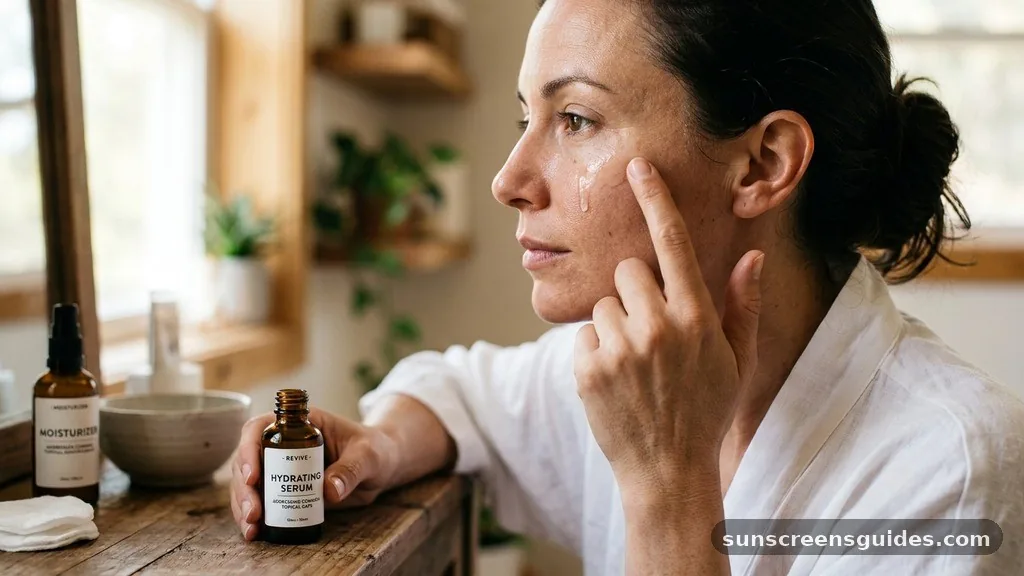
Many people struggle with the “serum or moisturizer first” debate because they use multiple serums at once. If you are layering two different serums, the same rule applies: go from the thinnest, most watery consistency to the slightly thicker, more gel-like serum. For example, a water-thin vitamin c serum should always go on before a thicker, viscous niacinamide treatment.
Another gap often missed is the impact of pH balance. Some active ingredients require a specific acidic environment to work. If you layer a product with a high pH over a product that needs a low pH, you might neutralize the effectiveness of the first serum.
Always wait about 60 seconds between applications to let each product “set” and absorb. This brief pause prevents pilling, which is that annoying crumbling effect that happens when product layers don’t play nicely together.
The Role of Skin Barrier Integrity
Your skin barrier is the outermost layer of your body, and it acts as a gatekeeper. When this barrier is compromised, you might experience irritation, redness, or extreme dryness.
If your skin is currently sensitive, you might be tempted to skip serums altogether. However, using a soothing, barrier-repairing serum under a rich moisturizer is actually one of the best ways to heal the skin.
By keeping the order consistent, you support the barrier’s natural ability to hold onto water. Think of the serum as the “treatment” and the moisturizer as the “protection.”
You wouldn’t put a bandage on a cut before cleaning it, and you shouldn’t put a heavy cream over a dry, untreated face. The serum provides the nourishment, and the moisturizer ensures that nourishment stays exactly where you put it.
When Can You Break the Rules?
Sometimes, you might hear advice that contradicts the standard layering method. For instance, some people with very oily skin prefer to use a lightweight serum and skip the moisturizer entirely during the day.
While this might feel comfortable in the short term, it can lead to dehydration over time. If you have oily skin, look for gel-based moisturizers that are non-comedogenic rather than skipping the step.
There are also instances where specific products are designed to be mixed. If a brand explicitly states that their serum and moisturizer can be combined, you can ignore the layering order.
However, when using products from different lines or brands, sticking to the “thin to thick” rule is the safest way to avoid irritation or product waste. Always prioritize the health of your skin over the convenience of a shorter routine.
Consistency and Patience
Skincare results are rarely immediate. Whether you are using a potent retinol to combat signs of aging or a hydrating serum to plump the skin, it takes time for these ingredients to make a visible difference. By mastering the sequence of your routine, you ensure that every drop of product you use is working toward your goals.
Don’t be discouraged if your skin doesn’t change overnight. The most important factor is consistency.
If you consistently apply your products in the correct order every single morning and evening, you are giving your skin the best possible environment to thrive. It’s not about having the most expensive products; it’s about using the ones you have in a way that makes sense for your skin’s biology.
Conclusion
Navigating the nuances of your daily routine becomes much simpler once you prioritize the physical properties of your products. By consistently applying your serum before your moisturizer, you ensure that active treatments penetrate deeply while protective creams seal in essential hydration. Remember that the goal is to support your skin’s natural functions rather than fighting against them.
As you continue to refine your regimen, keep a close eye on how your complexion responds to these changes. If you find your products are pilling or you aren’t seeing the results you expected, revisit the order and give each layer a moment to absorb.
Consistency with these small adjustments will lead to a healthier, more balanced complexion over time. Feel free to reach out if you have more questions about your specific routine.
FAQ
Does the order change if I use a face oil?
Yes, oils are generally the thickest product and should always be applied last to seal everything in.
Should I wait for my serum to dry completely?
Wait about 60 seconds until the skin feels slightly tacky, which helps the moisturizer absorb more effectively.
Can I use a moisturizer as a serum?
No, moisturizers contain heavier emollients that prevent the concentrated active ingredients in serums from penetrating properly.
What if my moisturizer contains active ingredients?
If your moisturizer contains actives, apply it after your lighter serums, as it is still a thicker formulation.
Does sunscreen change the layering sequence?
Always apply sunscreen as the absolute final step in your morning routine, after your serum and moisturizer.
Can I mix my serum and moisturizer in my hand?
While possible, it can dilute the serum’s potency and prevent it from absorbing into the skin’s deeper layers.
Why does my product pill after I layer them?
Pilling usually happens when products are applied too quickly or if they contain conflicting ingredients like silicones.



