

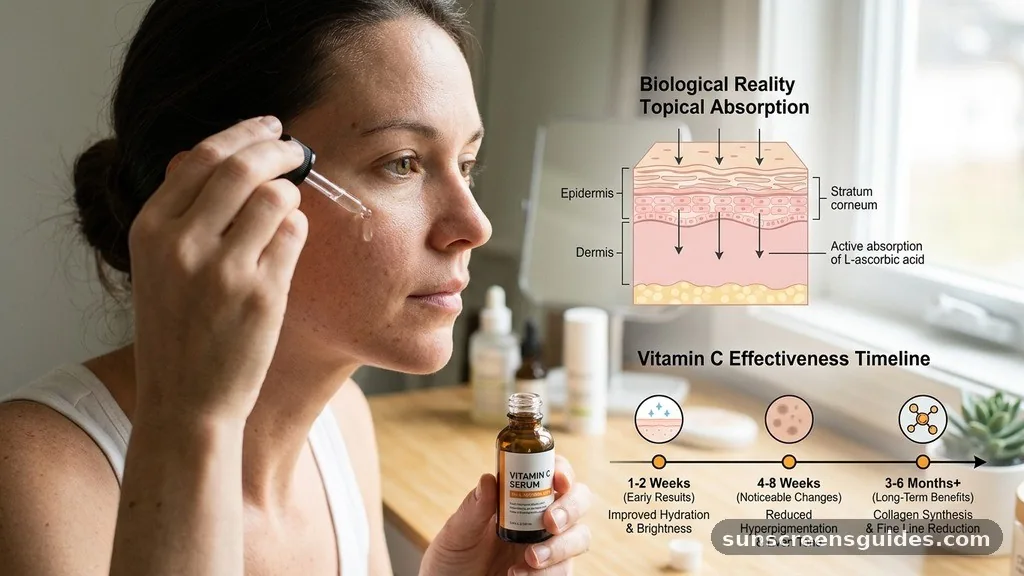
Many skincare enthusiasts wonder how long for vitamin C serum to work once they start a new bottle. It is a common frustration to apply a product for a week and see no immediate transformation, but the reality of topical skincare is that biological changes take time.
You aren’t just applying a cream; you are influencing complex processes like collagen synthesis and the regulation of melanin production. Understanding these physiological timelines prevents you from quitting too early and ensures you give your routine a fair chance to deliver the skin brightening and protective results you expect.
Consistency is the secret ingredient in any effective regimen. While you might notice subtle changes in texture within a few days, the deeper physiological shifts—such as a reduction in photodamage or a visible fade in stubborn hyperpigmentation—typically require several weeks of dedicated, daily use. By managing your expectations and learning how your skin interacts with this potent antioxidant protection, you can cultivate a more effective, science-backed approach to your daily routine.
The Biological Reality of Topical Absorption
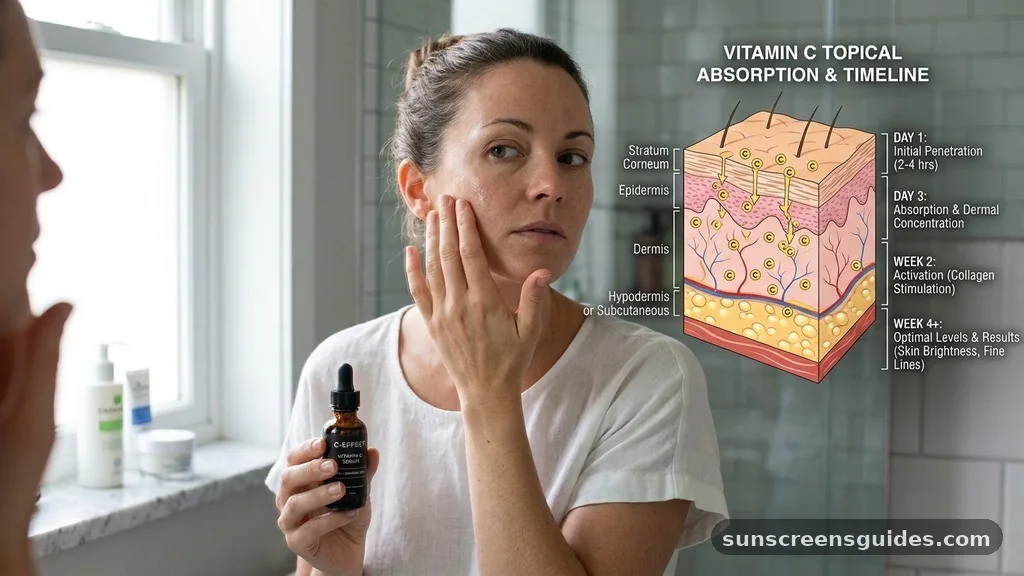
When you apply a serum, it does not instantly erase years of sun damage. The primary goal of a high-quality formula, especially one containing L-ascorbic acid, is to penetrate the outer layer of the skin to reach the dermis where it can neutralize oxidative stress.
Because the skin is designed to act as a skin barrier to keep foreign substances out, the absorption process is gradual. You are essentially feeding your skin cells the nutrients they need to repair themselves, and this cellular repair work happens at a metabolic pace that cannot be rushed by simply applying more product.
Most users begin to notice a difference in skin radiance within two to four weeks. During this initial phase, the serum is working to balance your skin’s tone and provide immediate environmental defense.
However, the structural changes that lead to firmer skin or the fading of dark spots are tied to your natural skin cell turnover cycle. This cycle typically spans 28 to 40 days, meaning you must stay the course for at least one full month before you can truly evaluate whether the specific concentration of the product is providing the desired level of efficacy.
Timeline for Visible Skin Improvements
Tracking the effectiveness of your serum requires a bit of patience and a long-term perspective. While everyone’s skin is unique, the following table provides a general guideline of what you can expect as you integrate the product into your morning routine.
| Timeframe | Expected Result |
|---|---|
| 1-2 Weeks | Improved skin texture and subtle increase in natural glow. |
| 4-8 Weeks | Visible reduction in mild hyperpigmentation and redness. |
| 3-6 Months | Significant improvement in fine lines and overall skin firmness. |
Short-term results are often limited to superficial hydration and a temporary brightness that comes from the serum’s light-reflecting properties. As you move into the two-month mark, the cumulative effect of the antioxidant protection becomes much more apparent.
This is when the reduction in melanin production begins to show as a more even complexion. If you are targeting deeper sun spots or significant textural issues, your patience will be rewarded as the serum continues to support your skin’s natural repair mechanisms over several months of consistent application.
Factors That Influence Speed and Efficacy
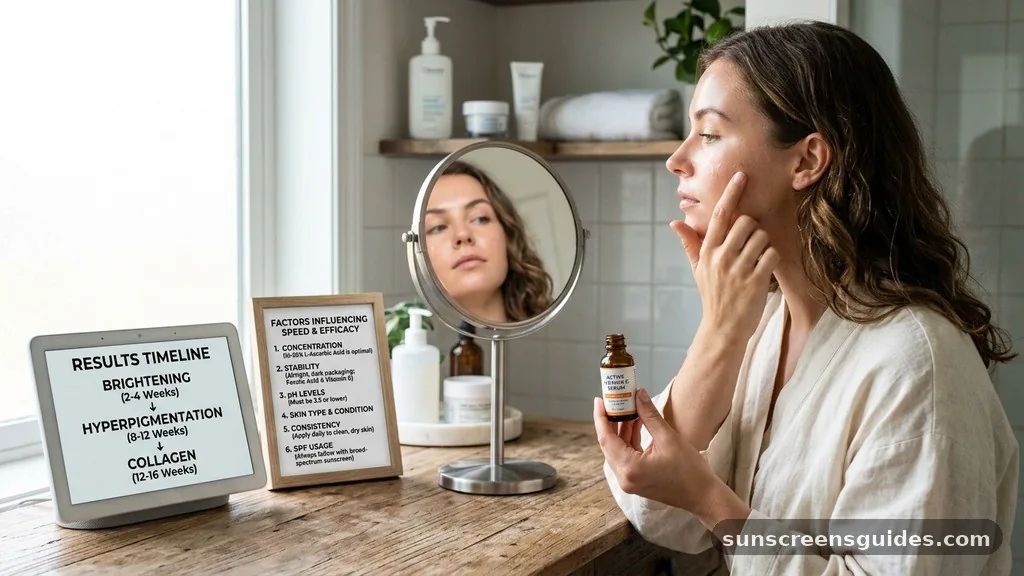
Several variables determine exactly how fast you see results. The stability of the formula is perhaps the most significant factor. L-ascorbic acid is notoriously sensitive to light, heat, and air. If your bottle has oxidized—turning a dark orange or brown color—it has lost its potency and will not deliver the promised results regardless of how long you use it.
Always ensure your serum is stored in a cool, dark place to maintain its stability. Additionally, the presence of synergistic ingredients like ferulic acid can significantly boost the serum’s performance, effectively doubling the photoprotection and stabilizing the active ingredients to ensure they reach the target cells intact.
Your pre-application habits also play a major role. If you have significant dead skin buildup, the serum may struggle to penetrate, making regular but gentle exfoliation a helpful partner in your routine. However, be cautious not to over-exfoliate, as this can compromise your skin barrier and lead to irritation when you layer a potent serum on top.
Performing a patch testing protocol when you first introduce a new product is also essential. If your skin becomes inflamed or breaks out, you won’t be able to use the product long enough to see the long-term benefits, highlighting the importance of starting slow to ensure long-term tolerance.
Addressing Common Misconceptions and Gaps
A common misconception is that a higher percentage of active ingredients equals faster results. In reality, concentrations above 20% often lead to irritation without providing additional benefits, which can actually stall your progress as your skin works to heal from the inflammation. Another gap in knowledge involves the order of operations.
Many people believe they should apply their treatment after heavy creams, but serums are designed to be applied on clean, dry skin before heavier moisturizers to ensure maximum absorption. If you apply your serum over a thick layer of oil or wax-based cream, you are essentially creating a barrier that prevents the active ingredients from ever reaching the cells they need to influence.
It is also vital to recognize the role of sun protection. Using a serum without a broad-spectrum sunscreen is counterproductive. Because the serum is working to reverse photodamage, allowing new UV rays to cause fresh damage undermines the entire process.
Think of the serum as your repair crew and the sunscreen as your protective shield. Without both, you are essentially trying to fill a bucket that has holes in the bottom. By pairing your morning antioxidant serum with a reliable SPF 30 or higher, you protect the work the serum is doing, allowing the active compounds to focus on long-term repair rather than constantly fighting against new environmental triggers.
What if I don’t see results after three months?
If you have used a high-quality, stable product for over three months with no change, it is time to reassess your approach. First, check the ingredient list to ensure you are using a form of vitamin C that your skin responds to. Some individuals find that they require a different derivative or a higher concentration to see movement.
It is also possible that your current routine contains conflicting ingredients that deactivate the serum. For example, using certain strong acids immediately after application can alter the pH, rendering the serum ineffective. Consulting with a dermatologist can help you identify if there is an underlying skin condition preventing the product from doing its job.
How do I know if the serum is working even if I don’t see massive changes?
Sometimes the most important work happens invisibly. If your skin feels less reactive to environmental stress, is maintaining better hydration levels, or simply looks “healthier” without a specific spot fading, the serum is likely providing the necessary support. Think of it as a preventative measure.
Even if the visible results aren’t dramatic overnight, the long-term protection against free radicals is happening at a cellular level. Keep a photo journal to track your progress; often, we miss the slow, gradual improvements because we look at our reflection every single day.
Is it normal to experience a slight tingle?
A mild, temporary tingling sensation is often reported when using high concentrations of vitamin C, especially when you are just starting out. This is typically due to the low pH required for the ingredient to remain effective. However, this should never be painful, stinging, or cause intense redness.
If the tingling persists or evolves into a burning sensation, wash it off immediately and consider a lower concentration or a buffered formula. Your skin’s tolerance can be built up over time, so there is no need to push through significant discomfort to get results.
Does the time of day I apply it matter?
While you can technically apply it at night, it is most effective in the morning. Since the primary function of this ingredient is to provide antioxidant protection against daily environmental stressors like pollution and UV rays, using it before you head out for the day gives you the best return on investment.
The serum helps neutralize the free radicals that your sunscreen might miss. If you prefer to use other actives like retinol or AHAs in the evening, keeping your vitamin C in the morning avoids potential interactions that could lead to sensitivity.
Can I mix it with other skincare ingredients?
While you can layer most products, be careful with mixing. Avoid applying strong chemical exfoliants or certain copper peptides at the exact same time as your serum, as these can destabilize the formula.
The best practice is to wait about three to five minutes after applying your serum to allow it to fully absorb into the skin before moving on to your moisturizer or other treatments. This “wait time” is a simple but effective way to ensure that each layer of your routine has the chance to perform its specific function without interference from the next step.
How do I store my serum to keep it active?
Storage is critical for longevity. Because vitamin C is highly unstable, it reacts quickly with oxygen, heat, and light. If you notice your serum turning from clear or light yellow to a deep orange or brown, it has oxidized and should be discarded, as it will no longer provide the intended benefits.
Keep the bottle tightly capped and stored in a cool, dark place, such as a drawer or a cabinet. Some people choose to keep their serum in the refrigerator, which can help extend its shelf life, though it is not strictly necessary as long as it is kept away from direct sunlight.
What is the best way to start for a beginner?
If you have never used this type of product before, start with a lower concentration, such as 5% to 10%. This allows your skin to acclimate to the active ingredients without causing excessive irritation.
You can use it every other morning for the first week to see how your skin reacts before moving to daily application. Remember that consistency is more important than strength; a lower-percentage product used every single day will almost always yield better, more sustainable results than a high-strength product used sporadically because of irritation.
The journey to better skin through topical treatments is a marathon rather than a sprint. While we all crave instant gratification, the biological processes that repair the skin and brighten the complexion are inherently gradual. By committing to a stable product, protecting your skin from the sun, and allowing your cellular turnover cycle to work its magic, you will eventually see the benefits you were looking for.
Keep your routine consistent, stay patient with the process, and remember that the best results from knowing how long for vitamin c serum to work come to those who give their skin the time it needs to thrive. If you have questions about your specific skin type, feel free to reach out or consult with a professional to refine your strategy.



