

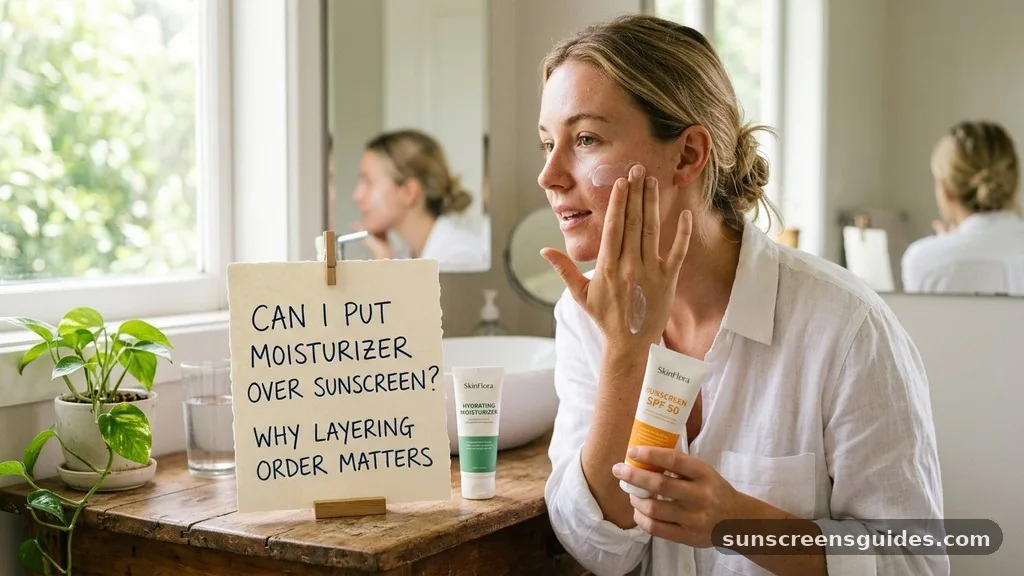
Many skincare enthusiasts spend years perfecting their daily regimen, yet the question of whether you can put moisturizer over sunscreen remains a point of confusion for many. The golden rule of layering is to apply products from the thinnest consistency to the thickest, but sun protection often complicates this sequence. If you have ever wondered if your sun protection factor is compromised by a rich cream, you are certainly not alone.
Understanding the science behind product absorption and the stability of UV filters will help you make the right choice. By getting your layering order down, you ensure your skin stays hydrated while maintaining maximum defense against environmental damage.
Why the Layering Order Matters

The primary reason we follow a specific sequence in our morning regimen is to ensure that every active ingredient performs its intended function without being blocked by another product. When you ask if you can put moisturizer over sunscreen, the short answer is that it is generally not recommended.
Sunscreen is formulated to form a protective film on the surface of your skin, and applying a moisturizer on top can disrupt that uniform layer. This disruption directly impacts your SPF efficacy, which is the ability of your product to block harmful UV radiation.
If you apply a thick, creamy moisturizer after your sunscreen, you essentially “dilute” or redistribute the UV filters that were meant to stay put. This can lead to patchy coverage, leaving parts of your face vulnerable to sun damage. Additionally, sunscreen is designed to be the final step of your protective routine.
By keeping it as the last layer, you ensure that the film remains intact throughout the day. If you struggle with dry skin, the better approach is to apply your moisturizer first, allow it to settle, and then finish with your sun protection.
Understanding Product Absorption and Compatibility
Effective skincare relies on the timing of application. When you apply your products, your skin needs a brief window to absorb the active ingredients before you layer on something else. This is why moisturizer absorption time is a critical factor in your morning routine.
If you rush the process, products might pill, creating little balls of residue on your skin. This not only looks messy but also signals that your products are not bonding correctly with the skin barrier.
The Role of Occlusives and Humectants
To understand why layering matters, you must consider the chemistry of your products. Humectants, like hyaluronic acid or glycerin, draw moisture into the skin, while occlusive agents seal that moisture in. If you apply a heavy occlusive moisturizer over your sunscreen, you are essentially creating a barrier that may prevent the sunscreen from drying down properly.
This interaction can interfere with the way chemical vs physical sunscreen formulas sit on the face. Physical sunscreens, which contain zinc oxide or titanium dioxide, work by reflecting light, and a moisturizer applied over them can physically shift those minerals, creating gaps in your coverage.
Addressing the Common Myth of Moisturizer Over Sunscreen
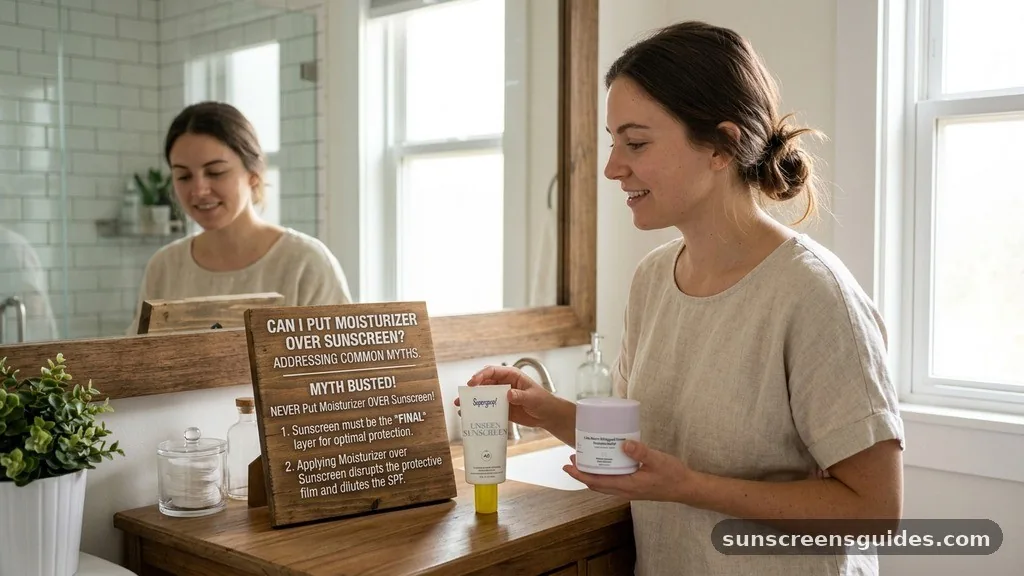
There is a persistent idea that applying a moisturizer on top of sunscreen can help lock in hydration or provide a “dewy” finish. While the aesthetic result might seem appealing, the functional cost is high.
When you manipulate the sunscreen layer with a second product, you risk altering the broad-spectrum protection that the manufacturer promised on the label. Dermatologists consistently advise that the sunscreen should be the final “shield” against the world.
If your sunscreen feels too drying, you are likely using the wrong formula for your skin type rather than needing to layer another product over it. Look for sunscreens that include built-in hydrating ingredients like ceramides or squalane. This allows you to combine your skin barrier protection and sun defense into one step, eliminating the need to worry about the order of operations entirely.
Dermatological Guidelines for Your Daily Routine
According to most dermatological guidelines, the standard procedure is to cleanse, apply serums, moisturize, and finish with sunscreen. This skincare routine order is not just a suggestion; it is based on the necessity of letting the sunscreen create a stable, invisible film. When you violate this order, you risk transepidermal water loss if the moisturizer is not applied at the right time, but you also jeopardize your daily UV defense.
Comparing Product Application Methods
The table below illustrates the standard expectation for how products should interact with your skin barrier.
| Product Type | Ideal Application Order | Primary Function |
|---|---|---|
| Serum | First | Targeted treatment |
| Moisturizer | Second | Hydration and barrier support |
| Sunscreen | Last | UV filter film formation |
Identifying and Filling Topical Gaps
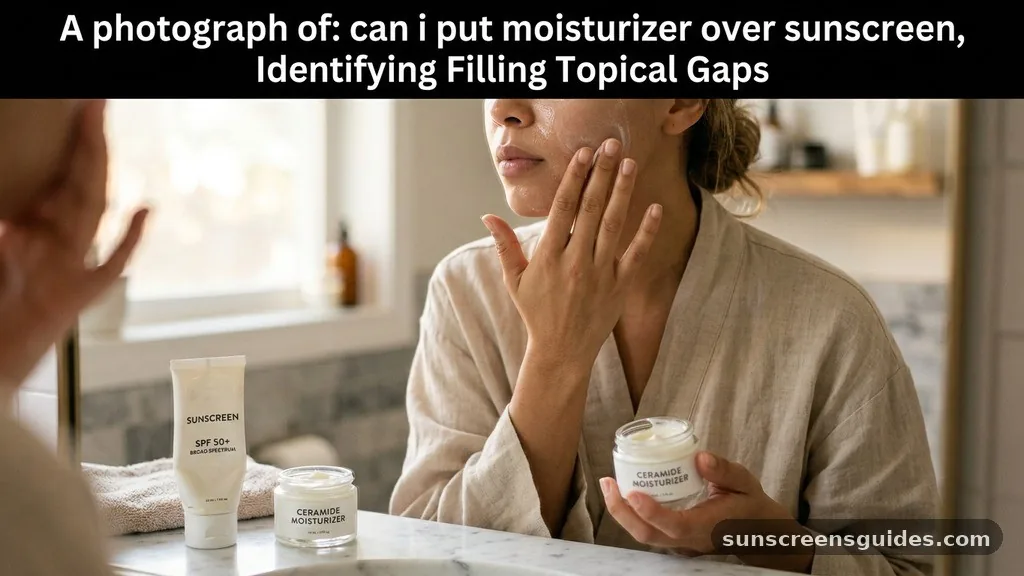
A common issue that arises when discussing this topic is the “reapplication” phase. Many people ask, “If I can’t put moisturizer over sunscreen, how do I reapply sunscreen over makeup or moisturizer throughout the day?”
This is a valid concern that often gets overlooked. Reapplying sunscreen over a full face of makeup or a heavy moisturizer can be difficult, but it is necessary for maintaining your sun protection factor.
To address this, consider using alternative formats for reapplication. Powder-based sunscreens, setting sprays with SPF, or cushion compacts are designed specifically to be applied over existing layers without ruining your look.
These products are formulated to be light and non-disruptive, meaning they won’t cause the same issues that a thick, creamy moisturizer would. By shifting your strategy to these formats, you solve the problem of needing to “layer” without compromising the integrity of your sun protection.
Choosing the Right Products for Your Skin Type
When your routine feels cumbersome, it is often because you are using products that aren’t playing well together. If you find yourself wanting to put moisturizer over sunscreen because your skin feels tight, evaluate your current cleanser.
A harsh cleanser might be stripping your natural oils, making your skin crave extra hydration. Switching to a gentler, non-comedogenic cleanser might alleviate the dryness, allowing your sunscreen to sit comfortably on its own.
* Select a lightweight, water-based serum for midday hydration.
* Ensure your moisturizer is fully absorbed before starting your SPF application.
* Check the ingredient list for compatibility between your serum and sunscreen.
* Opt for a sunscreen with added emollients if you have chronically dry skin.
* Wait at least 60 seconds after moisturizing before applying your sun protection.
The Importance of Consistency
Sticking to a reliable order matters because your skin needs to develop a rhythm. When you change your layering habits, you might experience breakouts or pilling, which can discourage you from wearing sunscreen daily. Consistency is the secret to healthy skin.
If you find that you absolutely must use a specific moisturizer for its treatment properties, apply it in the evening instead. By separating your intense hydration steps from your morning protective steps, you allow each product to do its job effectively without interference.
Conclusion
Navigating the nuances of your morning routine becomes much simpler when you prioritize the stability of your sun protection. While it is tempting to layer products to achieve a certain texture or finish, the primary goal of your morning regimen is to keep your skin safe from UV damage. By applying your moisturizer first and allowing it adequate time to absorb, you create the perfect canvas for your sunscreen to form a continuous, protective film.
Avoiding the habit of placing creams over your sun protection will ensure that your SPF efficacy remains consistent throughout your day. If you find your skin still feels dry, explore better-formulated sunscreens that offer hydration, rather than trying to fix the issue with an extra layer. Start these habits today to see a real difference in your skin’s health and appearance.
FAQ
Is it ever okay to put moisturizer over sunscreen?
Generally, no. Doing so disrupts the protective film and significantly lowers your SPF efficacy and coverage.
What is the 3-minute rule for skincare?
It suggests waiting about 3 minutes for each product to absorb before applying the next layer correctly.
Does sunscreen go on before or after moisturizer?
Sunscreen should always be applied after your moisturizer once the latter has fully absorbed into the skin.
Can I put makeup over sunscreen?
Yes, you can apply makeup over sunscreen, but wait for the sunscreen to dry to avoid streaking.
Does a moisturizer change the SPF rating?
Applying products over sunscreen can create gaps in coverage, effectively reducing the intended protection level significantly.
What if my moisturizer contains SPF?
If your moisturizer has SPF, it acts as your primary sun protection, so you don’t need extra layers.
How long should I wait for moisturizer to absorb?
Wait at least one to three minutes until your skin feels dry to the touch before applying sunscreen.



