

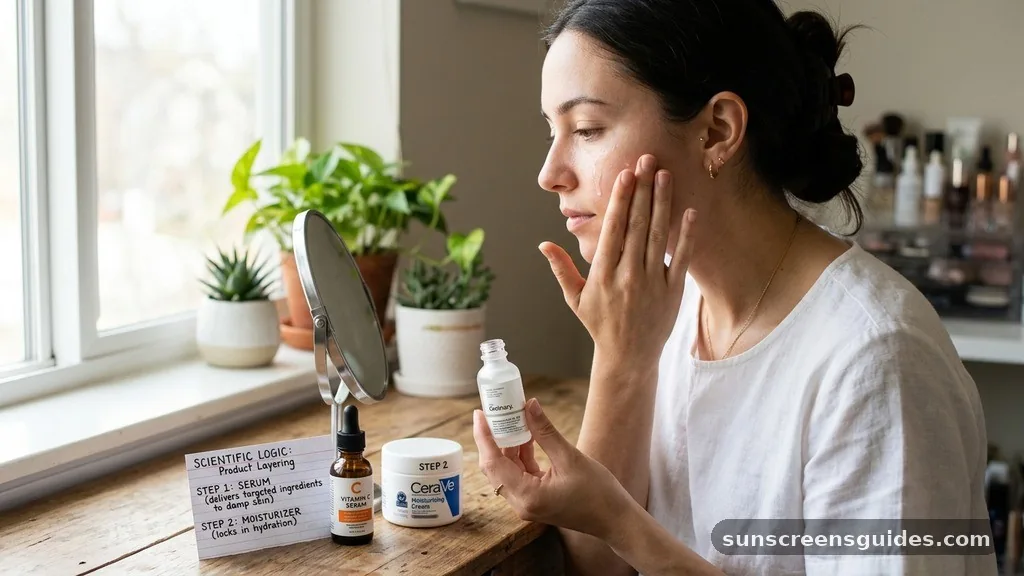
Navigating the complexities of a multi-step skincare routine often leaves people wondering if they are applying their products in the most effective sequence. If you have ever stared at your bathroom counter questioning whether you should put serum on before moisturizer, you are certainly not alone in this confusion. Understanding the logic behind product layering is the key to ensuring your expensive formulas actually work as intended.
By following a structured approach based on the chemical properties of your products, you can maximize the benefits of your routine and achieve healthier, more radiant skin. Let’s break down the science of why the sequence of your application truly matters for your complexion.
The Scientific Logic of Product Layering

The primary reason you must know if you should put serum on before moisturizer involves the concept of molecular weight. Skincare products are formulated with varying particle sizes, and your skin is designed to absorb smaller, lighter molecules much more efficiently than thicker, heavier ones. A water-based serum typically contains highly concentrated active ingredients designed to penetrate deep into the epidermis to address specific concerns like hyperpigmentation, fine lines, or dehydration.
If you apply a thick, emollient-rich cream first, you essentially create a physical barrier on the surface of your skin. This barrier prevents the serum from reaching the deeper layers where it needs to work.
By applying your serum first, you allow those potent actives to make direct contact with your skin cells without any interference. Once the serum has had a moment to absorb—usually just a minute or two—you can then proceed to your next step. This layering strategy ensures that you aren’t wasting product or limiting the dermatological efficacy of your treatments.
Think of it as painting a wall; you wouldn’t apply a thick wax topcoat before the primer, because the paint wouldn’t be able to adhere to the surface. Similarly, your skin needs the lightest, most concentrated treatments applied directly to its surface to ensure proper penetration.
Understanding Ingredients and Their Roles
When you look at your product labels, you will notice distinct differences between serums and moisturizers, particularly regarding their roles as humectants or occlusives. Serums are often packed with humectants like hyaluronic acid, which draw moisture from the environment into the skin. If you leave these humectants exposed to dry air, they can sometimes have a paradoxical effect, drawing moisture out of your skin instead of into it.
This is why following up with a moisturizer is absolutely vital. A good moisturizer acts as an occlusive, sealing the hydration and the active ingredients inside your skin to prevent transepidermal water loss.
Consider the following breakdown of how different product types contribute to your overall skin hydration:
- Water-based serums: High concentration of actives; designed to penetrate deep for targeted treatment.
- Treatment lotions: Mid-weight formulas that balance hydration with some active delivery.
- Emollient moisturizers: Heavier consistency; designed to soften the skin and create a barrier.
- Occlusive creams/balms: Thickest consistency; designed to prevent water evaporation and protect the surface.
This hierarchy ensures that your skin remains supple and protected throughout the day or night. By understanding these roles, you can identify exactly why the order of operations is more than just a preference—it is a functional requirement for maintaining a healthy barrier repair process.
Addressing Common Topical Gaps
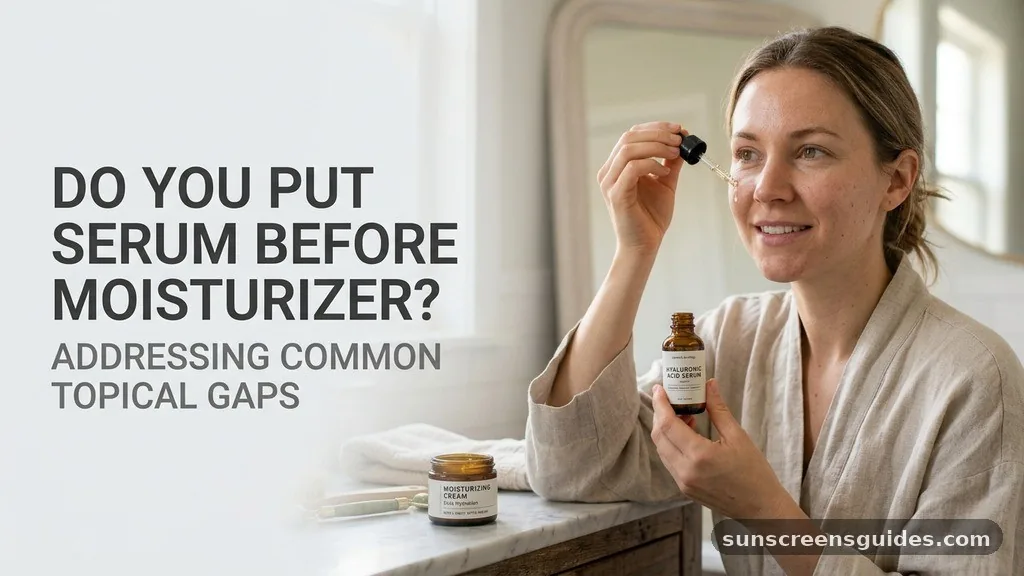
A frequent point of confusion involves what to do when you have multiple serums or very specific product textures that don’t fit the standard “thinner to thicker” rule. For instance, some people wonder if they should apply a thick, oil-based serum before a thin, water-based moisturizer. While the general rule is to apply by consistency, you must also prioritize your actives.
If you are using a potent vitamin c serum, you want that to go first regardless of its thickness, as it needs to act on the skin immediately. If you have questions about layering multiple serums, always apply your most targeted treatment on clean, bare skin first.
Another gap in common knowledge is the timing between layers. Many people rush through their routine, applying one product immediately after the other. While you don’t need to wait twenty minutes, giving each layer about sixty seconds to set prevents “pilling,” where the products clump together and roll off the skin.
If you are using a product with niacinamide, which can sometimes be irritating if applied directly over highly acidic formulas, waiting a brief period allows your skin’s pH to stabilize. This small window of time is often the difference between a smooth finish and a frustrating, flaky application.
Comparing Application Strategies
To simplify the process, it helps to visualize the differences in how these products interact with your skin’s surface. The following table provides a quick reference for how to categorize your products if you are still feeling uncertain about your specific regimen.
| Product Type | Primary Function | Placement in Routine |
|---|---|---|
| Cleanser | Remove impurities | First |
| Water-based Serum | Targeted active delivery | Second (after cleansing) |
| Oil-based Serum | Nourishment/sealant | Third (or mixed) |
| Moisturizer | Hydration & protection | Fourth (final step) |
| Sunscreen | UV protection | Last (Daytime only) |
By following this general flow, you ensure that your skincare routine remains effective and that each product has the best possible chance to perform its intended task. Remember that if you are using an oil-based moisturizer, it should always come after your water-based serums, as oil can block the absorption of water-soluble ingredients if applied beforehand. Keeping your routine organized this way saves time and prevents you from feeling like your products are fighting each other for space on your face.
Frequently Asked Questions
Does the order change at night?
No, the logic of applying thin, active-heavy serums before thicker creams remains consistent for both morning and evening.
Can I mix my serum into my moisturizer?
While some products can be mixed, applying them separately ensures the serum penetrates the skin before the moisturizer seals.
What if my serum feels tacky?
A slight tackiness is normal; let it absorb for one minute before applying your moisturizer to prevent pilling.
Do I need a serum if I have a good moisturizer?
Serums provide concentrated active ingredients that moisturizers alone cannot offer, so they serve two very different skincare roles.
Should I apply sunscreen after moisturizer?
Yes, always apply your sunscreen as the absolute final step of your morning routine, even after your moisturizer.
Does the brand of the products matter?
Mixing brands is perfectly fine as long as the textures and active ingredients are compatible with your specific skin type.
What happens if I apply moisturizer first?
The moisturizer creates a barrier that prevents the active ingredients in your serum from penetrating the skin effectively.
Applying your products in the correct order is a small change that yields significant results for your complexion. By prioritizing the application of your serum before your moisturizer, you ensure that your skin receives the full benefits of your chosen active ingredients. This method respects the biology of your skin barrier and the physical properties of your products, leading to better hydration and more visible results over time.
If you feel your current regimen isn’t delivering, try adjusting your layering order to match these principles. Consistency is the most important factor in any skincare journey, so give your skin a few weeks to adjust to the new sequence and observe the improvements. You are now well-equipped to refine your daily habits and achieve the healthy, glowing results you’ve been working toward.



