
Is sunscreen safe during pregnancy? If you are standing in front of your bathroom mirror reading every ingredient on the bottle and suddenly thinking, “wait, can I even use this now?”, you are honestly not alone. Pregnancy can make even a normal skincare step feel like a tiny medical decision, and sunscreen is one of those things people suddenly start questioning a lot.
The short answer is yes, sunscreen is generally safe during pregnancy, and protecting your skin from ultraviolet (UV) rays is still important. But not every pregnant person feels comfortable using every formula, and that is where the confusion starts. Dermatologists often recommend choosing a mineral sunscreen containing zinc oxide or titanium dioxide, especially if your skin has become more sensitive during pregnancy.
Is sunscreen safe during pregnancy?
Yes, sunscreen is safe during pregnancy when you choose and use it properly. The American Academy of Dermatology recommends pregnant people protect their skin with broad-spectrum, water-resistant sunscreen with an SPF of 30 or higher. Its pregnancy skincare guidance specifically suggests physical sunscreen containing zinc oxide, titanium dioxide, or both to help reduce skin irritation.
Pregnancy itself does not mean you should stop wearing sunscreen. Actually, your skin may become more sensitive to the sun, and hormonal changes can make pigmentation changes more noticeable. The NHS also advises pregnant people to protect their skin with high-factor sunscreen and avoid staying in the sun for long periods.
So if you have been avoiding sunscreen because you thought it might harm your baby, you do not necessarily need to skip it. The better move is checking the formula, rather than throwing the whole sunscreen idea out the window.
What type of sunscreen is best during pregnancy?
When people ask what sunscreen is safe during pregnancy, the most commonly recommended choice is a mineral or physical sunscreen.
Mineral sunscreens usually use:
- Zinc oxide
- Titanium dioxide
These ingredients sit on the skin and help protect it from UV radiation. The AAD specifically recommends physical sunscreen with zinc oxide or titanium dioxide during pregnancy, partly because these formulas can be gentler for skin that has suddenly become reactive.
| Sunscreen type | Pregnancy-friendly choice |
|---|---|
| Mineral sunscreen | Often the preferred option |
| Zinc oxide sunscreen | Commonly recommended |
| Titanium dioxide sunscreen | Commonly recommended |
| SPF 30+ broad-spectrum | Recommended |
| Fragrance-free formula | Helpful for sensitive skin |
A small thing people forget, though: “mineral” does not automatically mean the sunscreen is perfect for every person. You still need to read the label, check the SPF, and see how your own skin reacts. Pregnancy skin can be a little unpredictable, honestly.
Why do many pregnant women choose mineral sunscreen?
The main reason is simplicity. When you are pregnant and staring at a long ingredient list that looks like it was written by a chemistry professor having a bad day, mineral sunscreen can feel easier to understand.
The AAD recommends zinc oxide and titanium dioxide during pregnancy and also suggests looking for products free of fragrance and harsh ingredients that may irritate sensitive skin.
This does not mean every other sunscreen ingredient is proven dangerous in pregnancy. It means mineral formulas are a commonly recommended cautious choice, particularly when your skin is more sensitive than usual. That difference matters, because internet skincare advice sometimes turns “preferred” into “the other option is dangerous,” which is not a very honest way to explain it.
What SPF should you use while pregnant?
For most pregnant adults, choose a broad-spectrum sunscreen with SPF 30 or higher. Broad-spectrum protection helps protect against both UVA and UVB radiation, and SPF measures protection against UVB.
The AAD recommends broad-spectrum, water-resistant sunscreen with SPF 30 or higher for pregnant people.
Is SPF 50 better during pregnancy?
SPF 50 can be a useful choice, especially if you spend a lot of time outdoors, live in a sunny climate, or have skin that burns easily. But SPF 30 is also a recommended minimum in dermatology guidance.
The important part is not buying SPF 100 and then applying a tiny dot to your whole face. Enough sunscreen and regular reapplication matter more than chasing a very high number, and this is where many of us quietly mess it up.
Can sunscreen help pregnancy melasma?
Yes, sunscreen can help reduce the worsening of pregnancy-related pigmentation, including melasma or dark facial patches.
Hormonal changes during pregnancy can make skin pigmentation more noticeable, and UV exposure may make those darker areas worse. NHS guidance notes that pregnancy can cause skin pigmentation changes and that pregnant people may burn more easily, so protecting the skin is especially sensible.
If you already notice brown or greyish patches on your cheeks, forehead, or upper lip, daily sun protection is worth taking seriously. It may not magically erase the pigmentation, unfortunately, but it can help prevent sunlight from making the situation even more stubborn.
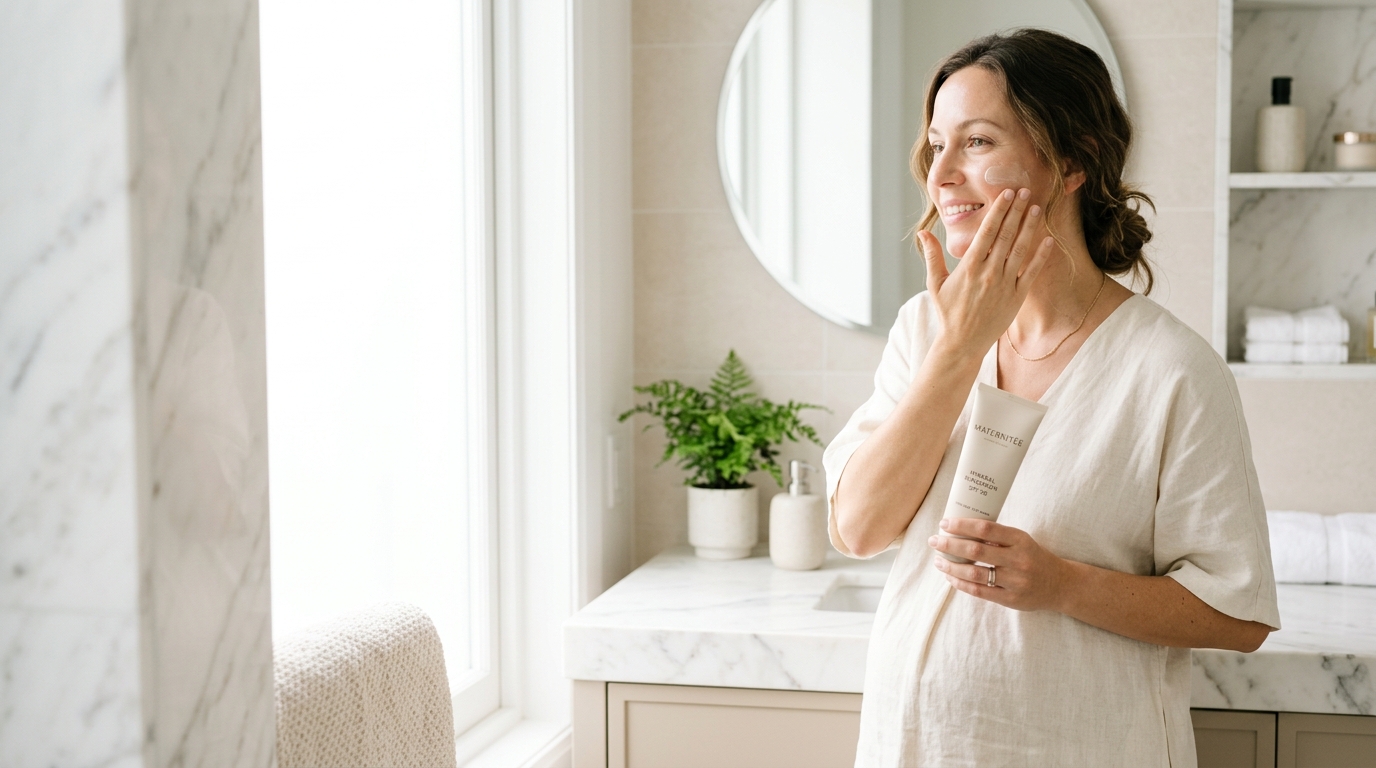
A tinted mineral sunscreen may also be useful for some people because it can make the white cast less noticeable while giving you daily UV protection. The AAD notes that tinted sunscreen can help prevent a white residue, especially for people with darker skin tones.
What sunscreen ingredients should you avoid during pregnancy?
This is the part where online advice gets messy very quickly.
The most cautious approach is to choose a sunscreen with zinc oxide or titanium dioxide as the active ingredients, particularly if you want to follow dermatology guidance specifically written for pregnancy. The AAD also recommends avoiding fragrance and harsh ingredients if your skin is easily irritated.
You may see online lists saying you must avoid every chemical sunscreen ingredient during pregnancy. However, it is important not to confuse a preference for mineral sunscreen with proof that all chemical sunscreens are harmful during pregnancy.
If you are already using a sunscreen and feel worried about one particular ingredient, speak with your obstetrician, midwife, dermatologist, or pharmacist. A personal medical professional can look at the exact product and your pregnancy situation, which a random social media comment obviously cannot do.
How to apply sunscreen safely while pregnant
Choosing a pregnancy-friendly sunscreen is only half the job. Applying it like a tiny dab on your nose and hoping for the best is, well, not really the plan.
Try these steps:
- Apply sunscreen to exposed skin before going outside.
- Use a generous amount on your face, neck, ears, and other uncovered areas.
- Choose broad-spectrum SPF 30 or higher.
- Reapply about every two hours when outdoors.
- Reapply after swimming, sweating, or towel drying.
- Wear protective clothing and seek shade when possible.
The AAD says sunscreen should be reapplied every two hours and after swimming or sweating, while NHS guidance also stresses using sunscreen alongside clothing and shade rather than relying on sunscreen alone.
And yes, cloudy weather still counts. UV exposure does not politely disappear because the sky looks grey.
Is spray sunscreen safe during pregnancy?
Sunscreen itself may be safe to use during pregnancy, but spray application deserves a little extra care. Try not to inhale the product, and do not spray it directly toward your face.
For facial skin, a lotion, cream, or sunscreen stick may feel easier to control. If you have asthma, allergies, or strong sensitivity to fragrances, choosing a gentle fragrance-free product may be more comfortable anyway.
Should you stop sunscreen if your skin is irritated?
If your sunscreen causes burning, itching, swelling, or a rash, stop using that particular product and ask a healthcare professional for advice if the reaction is significant or does not settle.
Pregnancy can make skin more sensitive, and the AAD recommends choosing gentle products and avoiding ingredients that may irritate sensitive skin.
Sometimes the issue is not “sunscreen during pregnancy” at all. It may simply be fragrance, alcohol, or another formula ingredient your skin suddenly hates for no obvious reason. Skin can be weird like that.
Final answer: Is sunscreen safe during pregnancy?
Yes, sunscreen is generally safe during pregnancy and you should not avoid sun protection just because you are pregnant. For a simple, cautious choice, look for a broad-spectrum, water-resistant SPF 30 or higher mineral sunscreen containing zinc oxide or titanium dioxide.
Pregnancy can make your skin more sensitive and more prone to pigmentation changes, so daily sun protection may actually become more useful during this time. Use sunscreen generously, reapply when needed, and combine it with shade and protective clothing. If you are unsure about a specific sunscreen ingredient or have a skin reaction, check with your doctor or pharmacist instead of guessing from an online ingredient list.
Is sunscreen safe during pregnancy in the first trimester?
Yes, sunscreen is generally considered safe during pregnancy, and mineral formulas containing zinc oxide or titanium dioxide are commonly recommended by dermatologists.
Can I use SPF 50 sunscreen while pregnant?
Yes, SPF 50 sunscreen can be used during pregnancy; choose broad-spectrum protection and apply enough product consistently for meaningful protection.
Is mineral sunscreen better during pregnancy?
Mineral sunscreen is often preferred during pregnancy because dermatologists commonly recommend zinc oxide or titanium dioxide for sensitive pregnancy skin.
Can sunscreen cause pregnancy melasma?
Sunscreen does not cause pregnancy melasma; consistent sun protection may help reduce UV-related worsening of pregnancy-related facial pigmentation.
Should I ask my doctor before using sunscreen during pregnancy?
Most pregnant people can use sunscreen safely, but ask your doctor about a specific product if you have allergies, irritation, or ingredient concerns.