

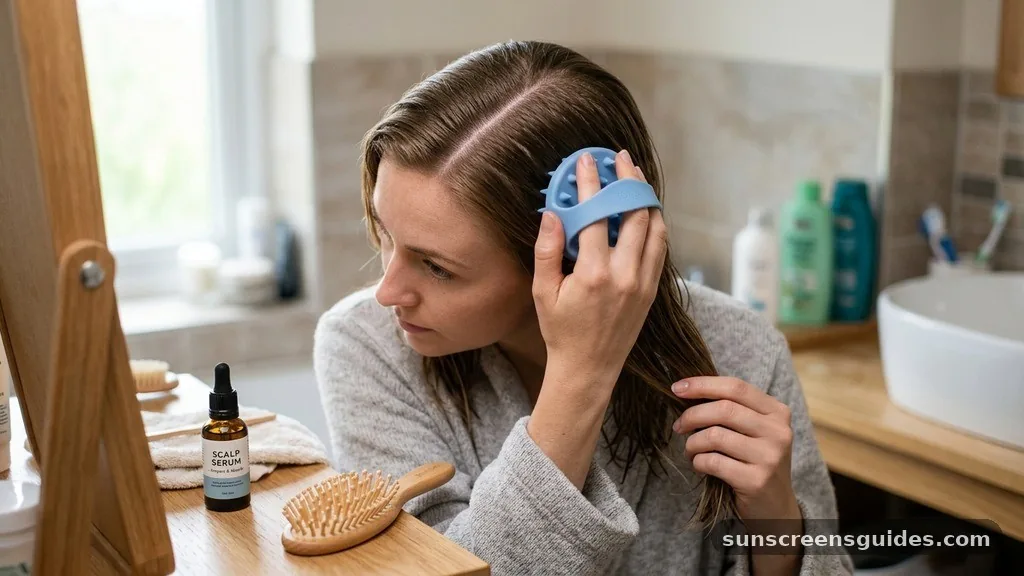
Learning how to apply scalp serum correctly is the missing link in many personal care routines. While most people obsess over hair strands, true hair longevity begins at the root, where follicular stimulation actually happens.
By focusing your efforts on the skin itself, you can create a balanced environment that supports stronger growth and better overall scalp health. Whether you are dealing with thinning areas or simply want to improve your hair’s baseline vitality, mastering the technique ensures that active ingredients reach their intended destination rather than just coating your hair shaft.
Preparing Your Scalp for Maximum Absorption
Before you even touch the product, your scalp needs to be in a receptive state. Think of your scalp like soil; if it is clogged with sebum production or dead skin cells, the nutrients in your serum won’t penetrate effectively. Most experts recommend starting with a clean, slightly damp hair surface, though many formulations are specifically designed for dry hair.
If you have just washed your hair, towel-dry it until it is merely moist. This moisture acts as a delivery vehicle, helping the active ingredients spread more evenly across the skin.
You should also consider the state of your pores. If you suffer from frequent scalp inflammation, be careful with mechanical exfoliation before application. Instead, gently brush your hair to detangle it, which prepares the skin for better access.
If you are using a dermaroller as part of your routine, do so before applying the serum, as the micro-channels created will significantly increase absorption. However, always ensure your tools are sterilized to avoid introducing bacteria into the hair follicles, which could lead to irritation rather than the desired growth.
The Step-by-Step Application Technique
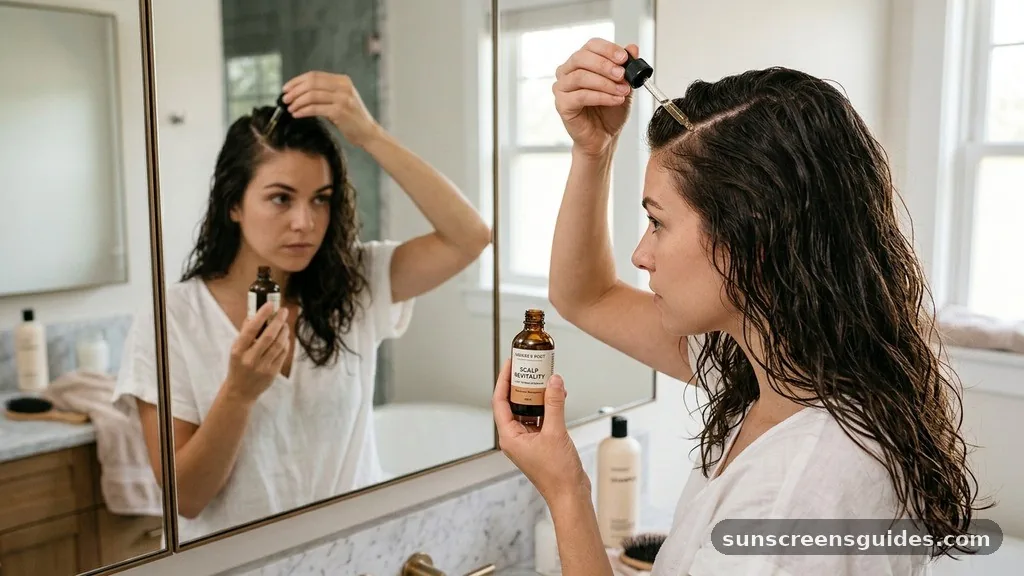
When it comes to the actual application, precision is your best friend. Using a pipette or a specialized dropper applicator allows you to deposit the liquid directly onto the skin rather than wasting it on your hair strands.
Start by parting your hair in one-inch sections, working from the front hairline back toward the crown. This systematic approach ensures you cover the areas of concern, such as the temples or the part line, where thinning is often most noticeable.
Once you have placed a small drop along a part, use your fingertips to distribute it gently. Avoid using your fingernails, as these can scratch the delicate skin barrier. Focus on a tapping or pressing motion rather than rubbing, which can cause unnecessary friction and hair breakage.
Repeat this process until you have covered the entire scalp area. If you find your hair feels greasy after application, you are likely using too much product; most serums require only a few milliliters to cover the entire head, so start small and increase only if your scalp feels dry or tight.
| Method | Best For | Key Benefit |
|---|---|---|
| Damp Application | High porosity hair | Improved product spread |
| Dry Application | Daily maintenance | No styling interference |
| Post-Dermaroller | Growth stimulation | Deep ingredient penetration |
Integrating Scalp Massage for Follicular Health

Applying the serum is only half the battle; the real magic happens during the scalp massage. Once the product is distributed, use the pads of your fingers to move the scalp in small, circular motions.
This process is not just about relaxation; it is about physical follicular stimulation. By increasing local blood circulation, you provide the hair follicles with the oxygen and nutrients they need to sustain a healthy hair growth cycle.
Consistency is vital here. A three-minute massage after applying your serum can significantly enhance the efficacy of the active ingredients. You might notice a slight tingling sensation, which is often a sign of increased blood flow.
If you have low hair density, focus your massage on those specific areas to encourage blood vessel dilation. Be gentle, however, as aggressive tugging can lead to traction alopecia. The goal is to stimulate the underlying tissue without causing stress to the hair roots themselves.
- Part hair into sections to ensure the serum touches the skin, not just the hair.
- Use a mirror to check the back of your head for even coverage.
- Always wash your hands thoroughly before and after application to maintain hygiene.
- Store your serum in a cool, dark place to preserve the potency of active compounds.
- Avoid heat styling immediately after application to prevent the serum from evaporating.
- Keep a log of your progress to see if your hair density improves over 3-6 months.
Addressing Common Application Gaps
Many users struggle with the “greasy hair” problem, leading them to quit the routine prematurely. This usually occurs because they are applying the product too close to the hair shaft. To avoid this, keep the dropper close to the scalp surface and move slowly.
If you have fine or oily hair, consider applying your serum in the evening. This allows the product to work as a leave-in treatment overnight, and you can wash it out in the morning if needed. This prevents the “weighed down” look that often discourages people from being consistent.
Another common gap is the failure to recognize the importance of the hair porosity of your scalp. Some people have naturally drier skin that absorbs products instantly, while others have a thicker barrier. If you have a dry scalp, you might need a serum with a lipid-based carrier.
If you have an oily scalp, look for water-based or alcohol-based formulas that dry quickly. Don’t be afraid to adjust your frequency—if your scalp feels irritated, drop back to every other day. Finding your unique rhythm is the most important part of long-term success.
Frequently Asked Questions
How often should I apply scalp serum?
Most formulas work best when applied once daily or every other day for consistent follicle support.
Can I use scalp serum on wet hair?
Yes, damp hair often allows for better distribution, though always check the specific instructions on your bottle.
Does scalp serum cause hair loss initially?
A temporary shed can occur as the hair growth cycle resets, but this is usually a positive sign.
How much serum should I use per application?
Typically, a few droppers or about 2-3 milliliters is sufficient to cover the entire affected scalp area.
Can I apply hair oil after scalp serum?
It is usually best to apply your serum first to ensure direct contact, then follow with other treatments.
Do I need to wash my hair after applying serum?
Most scalp serums are designed as leave-in treatments and do not require rinsing unless they leave residue.
What if my scalp feels itchy after application?
Slight tingling is normal, but persistent itching may indicate an allergy; wash the product off immediately if irritated.
The journey to better hair health is a marathon, not a sprint. By refining how you apply scalp serum, you ensure that every drop is utilized effectively, feeding your follicles exactly what they need to thrive. Remember that patience is essential; hair growth cycles are slow, and you may not see significant changes for several months.
Keep your routine simple, stay consistent with your applications, and pay attention to how your skin responds to different formulations. If you take the time to massage the scalp and focus on direct application, you are setting the stage for thicker, healthier hair. Start your journey today by being deliberate with your technique, and feel free to reach out if you have questions about specific product types or routines.