

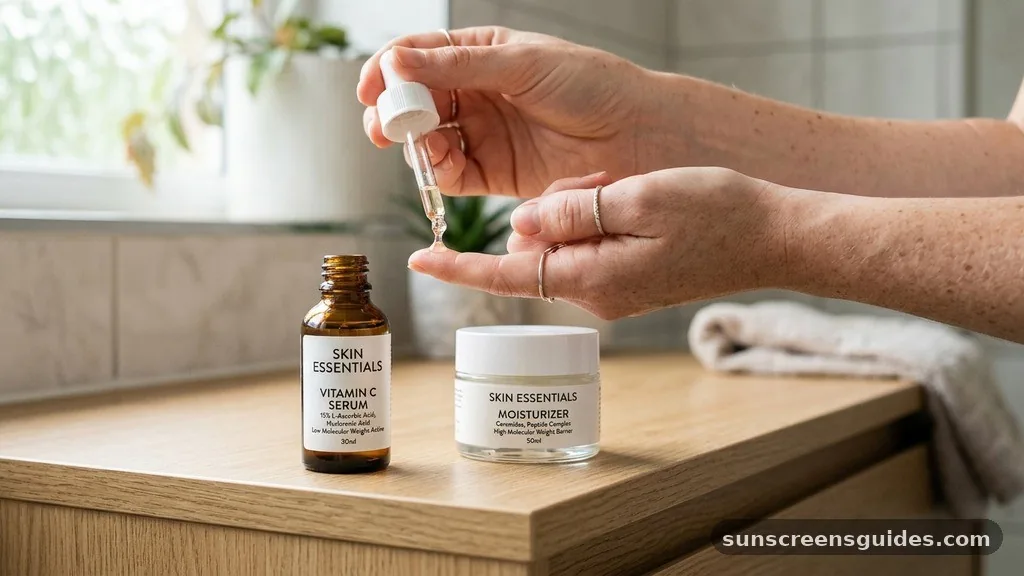
Figuring out the correct sequence for your daily skincare products often feels like a puzzle, especially when you are trying to decide if you should apply your vitamin C serum before or after moisturizer. Most dermatologists agree that the general rule for product application is to layer from the thinnest consistency to the thickest, which places your serum firmly before your cream.
Getting the skincare routine order wrong can hinder the performance of your active ingredients and leave your skin feeling tacky or overwhelmed. By placing your potent treatment directly onto clean, dry skin, you ensure that the formula has the best possible chance to deliver its brightening and protective benefits.
Why Serum Consistency Dictates Order
The primary reason you apply a serum before a moisturizer comes down to serum viscosity and the way your skin absorbs liquids. Serums are typically water-based or lightweight formulations designed to penetrate the outer layers of the skin quickly. Moisturizers, on the other hand, are often formulated with occlusive agents like waxes, silicones, or heavy oils that create a seal over the skin.
If you apply a thick moisturizer first, you create a physical barrier that prevents the lighter serum from reaching your pores. You want that concentrated dose of antioxidant protection to touch your skin while it is most receptive.
The Role of Molecular Weight

When you consider the molecular weight of your products, the logic becomes even clearer. Smaller molecules are designed to travel deeper into the epidermis, while larger, more complex molecules sit on the surface to lock in moisture and protect the skin barrier function.
Vitamin C, particularly in the form of L-ascorbic acid, is a relatively small molecule that needs direct access to the skin to be effective. If you place a heavy cream underneath, you are effectively blocking the path for these ingredients.
Optimizing Epidermal Penetration and pH Levels
The efficacy of your vitamin C serum before or after moisturizer debate is also deeply tied to pH levels. L-ascorbic acid requires a low, acidic pH—usually below 3.5—to remain stable and effectively penetrate the skin. Moisturizers are almost always formulated at a higher, more neutral pH to match the natural state of the skin’s surface.
Mixing a high-pH moisturizer with a low-pH serum can neutralize the vitamin C before it has a chance to work. By applying the serum first and waiting a few minutes for it to absorb, you allow the active ingredient to do its job without interference.
Wait Times and Absorption
Many people rush through their morning routine, but giving your serum time to sink in is crucial. If you apply your moisturizer immediately after the serum, you might accidentally dilute or shift the product around, reducing its concentration.
Aim to wait about 60 to 90 seconds after applying your serum before moving on to the next step. This brief pause ensures that the epidermal penetration is complete and the product has “set” on your face.
Ingredients That Work Well Together
Understanding how your products interact allows you to build a more effective daytime skincare regimen. Vitamin C acts as an incredible shield against environmental stressors like UV rays and pollution. When you pair it with other ingredients, you can actually boost its stability.
| Ingredient Pairing | Benefit |
|---|---|
| Vitamin C + Ferulic Acid | Increases stability and doubles photoprotection. |
| Vitamin C + Hyaluronic Acid | Provides brightening while ensuring deep hydration. |
| Vitamin C + Sunscreen | Maximized defense against free radical damage. |
Synergy with Ferulic Acid and Hyaluronic Acid
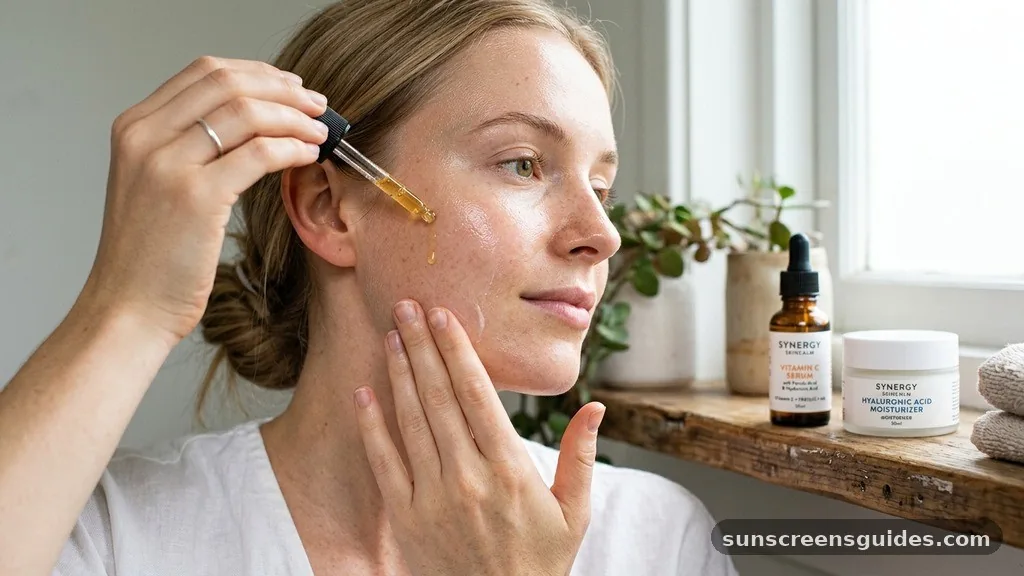
You will frequently see vitamin C formulated alongside ferulic acid, which helps stabilize the unstable L-ascorbic acid molecule. Because they are often found in the same bottle, this combination is easy to use.
Similarly, layering a hyaluronic acid serum before your vitamin C or applying it immediately after can prevent trans-epidermal water loss. These ingredients work in harmony to keep the skin plump, hydrated, and resilient throughout the day.
Common Mistakes in Product Layering
Even with the best intentions, it is easy to fall into traps that make your expensive products less effective. One common mistake is applying vitamin C on damp skin.
While some products absorb better when the skin is slightly wet, high-potency L-ascorbic acid can sometimes cause irritation if applied to damp skin because moisture increases the rate of absorption, which might be too much for sensitive skin types. Always apply to clean, dry skin to avoid unnecessary stinging.
- Applying products in the wrong order, starting with creams instead of liquids.
- Using too much product, which leads to pilling when you apply your moisturizer.
- Neglecting to use sunscreen over your vitamin C during the day.
- Storing your vitamin C serum in a warm or sunny spot, which causes oxidation.
- Skipping the wait time between serum application and cream application.
Addressing Specific Skin Concerns
For those dealing with specific issues, the order of application remains the same, but the focus shifts. If you are using vitamin C to combat dark spots or hyperpigmentation, consistency is your best friend. You must prioritize the serum’s contact with your skin every single morning.
If you incorporate chemical exfoliation into your routine, be very careful about when you use it. Acids and vitamin C can be a potent mix that leads to redness if used simultaneously. It is usually best to use your exfoliating acids at night and save the vitamin C for your morning routine.
The Role of Occlusive Agents
Moisturizers act as a seal, but they can also be a double-edged sword if your skin is prone to breakouts. If you use a very heavy, occlusive cream, make sure it is non-comedogenic so that it does not trap the serum and clog your pores. The goal is to lock in the hydration and the benefits of the serum, not to create a layer of grease that suffocates your skin.
The Truth About Nighttime Use
A common question is whether you should use vitamin C at night. While it is primarily marketed for daytime skincare because of its protective antioxidant properties, there is no rule saying you cannot use it at night.
However, because it is an antioxidant meant to protect you from sun and pollution, most experts recommend using it in the morning. If you do choose to use it at night, the rule of applying your vitamin C serum before or after moisturizer remains the same: serum first, then your heavier night cream or treatment.
Maximizing Results with Your Routine
To get the most out of your investment, keep your routine simple. You do not need ten steps to achieve glowing skin. Focus on high-quality ingredients that target your specific needs.
Start with a gentle cleanser, follow up with your vitamin C serum, wait a moment, apply your moisturizer, and finish with a broad-spectrum SPF. This basic structure is the gold standard for a reason. It protects, treats, and hydrates without causing unnecessary conflict between the layers of product on your face.
Frequently Asked Questions
Does the order of application matter for all serums?
Yes, always apply products from the thinnest to thickest consistency to ensure proper absorption and efficacy.
Can I mix vitamin C directly into my moisturizer?
It is not recommended, as the moisturizer can alter the pH and stability of the vitamin C serum.
Should I wait until the serum is completely dry?
Yes, waiting about 60 to 90 seconds ensures the serum has absorbed before you apply your moisturizer.
Does vitamin C cause sun sensitivity?
No, vitamin C is an antioxidant that actually helps protect the skin from UV-related oxidative stress damage.
Can I use vitamin C with retinol?
It is generally better to use vitamin C in the morning and retinol at night to avoid irritation.
What happens if I apply moisturizer first?
The moisturizer creates a barrier that prevents the active ingredients in the serum from penetrating your skin.
Is it okay to use vitamin C every day?
Yes, daily use of vitamin C is recommended to maintain its protective antioxidant benefits on your skin.
Final Thoughts on Product Layering
Mastering the sequence of your skincare products is the most effective way to ensure you are getting the results you paid for. When you choose to apply your vitamin C serum before or after moisturizer, you are ultimately deciding how well your skin receives those vital antioxidants. By keeping the serum as the first step after cleansing and allowing it to penetrate fully before locking it in with a moisturizer, you create a powerhouse routine that promotes long-term skin health.
Remember that consistency and patience are just as important as the order itself. If you find your skin feels better with a slightly different approach, feel free to adjust, but always keep the thinnest-to-thickest rule in mind as your foundation for success. Happy glowing.