

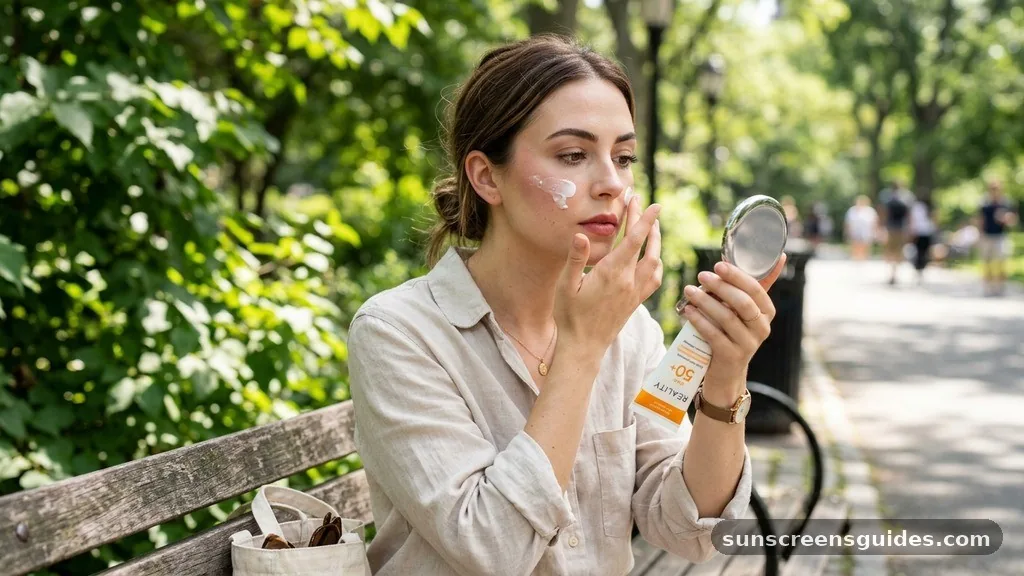
Maintaining consistent sun protection throughout the day is a common struggle for anyone who wears cosmetics. Many people wonder if they can put sunscreen over makeup without ruining their base, yet they worry that skipping reapplication leaves them vulnerable to UV rays. The reality is that while original application remains the most important step, finding ways to refresh your broad-spectrum protection is essential for effective sun damage prevention.
You don’t need to choose between a flawless complexion and keeping your skin barrier healthy. Learning the right techniques allows you to touch up your face effectively while keeping your foundation looking fresh.
The Reality of SPF Reapplication
When you ask whether you can put sunscreen over makeup, the short answer is yes, but the method you choose dictates your success. Dermatologists consistently recommend reapplying sunscreen every two hours to maintain the efficacy of your SPF rating.
Applying a traditional thick lotion directly over a full face of glam will almost certainly lead to foundation disruption, causing your products to streak or pill. Instead, you need to rely on specific formats that sit lightly on top of pigments.
The primary challenge involves maintaining an even layer of protection without disturbing the pigments underneath. Most liquid formulas interact poorly with existing layers, often leading to a patchy finish.
By switching to lightweight, sprayable, or powdered alternatives, you minimize friction. This prevents the “sludge” effect that happens when heavy creams interact with setting powders or oils.
Topical Methods for Sunscreen Application
To ensure you are effectively shielding yourself from photoaging, you must adapt your tools and products. The following table highlights common options and how they impact your look throughout the day.
| Application Method | Best For | Effect on Makeup |
|---|---|---|
| Powder Sunscreen | Oily Skin | Minimal disruption; adds a matte finish. |
| SPF Setting Spray | All Skin Types | Locks in look while adding a thin layer. |
| Sunscreen Cushion | Dry Skin | Hydrating; requires a gentle tapping motion. |
Using Powder Sunscreen for Touch-Ups
Powder sunscreen is arguably the most convenient way to top up your protection. These products usually contain mineral sunscreen ingredients like zinc oxide or titanium dioxide.
Because they are dry, they don’t break down the oils in your concealer or foundation. Many people find that these powders double as a blotting agent, removing shine while providing a necessary boost to their PA rating.
To apply, use a fluffy brush or the puff provided with the product. Gently press the powder onto your skin rather than sweeping it back and forth.
A sweeping motion is more likely to lift your makeup off the skin, leading to a patchy appearance. By tapping the product, you deposit the mineral particles evenly across the surface.
The Role of SPF Setting Sprays

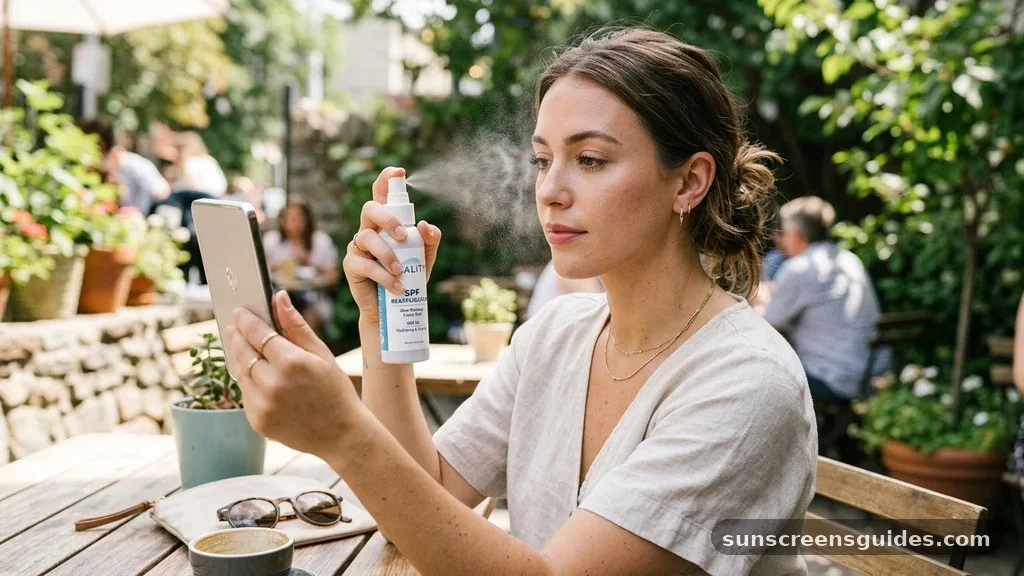
If you prefer a dewy finish, an SPF setting spray might be your best companion. These sprays are designed to form a thin, protective veil over your face. They are incredibly useful for maintaining sun damage prevention without you having to touch your face with dirty fingers or brushes.
However, keep in mind that sprays can be tricky. It is easy to miss spots, especially around the hairline or the sides of the nose.
To ensure full coverage, you should hold the bottle at least six to eight inches away from your face and move it in a cross-hatch pattern. Close your eyes tight and hold your breath to avoid inhaling the mist, then allow it to dry completely before you resume your day.
Addressing Common Topical Gaps
Many people worry that they aren’t getting the full listed SPF when using these methods. It is a valid concern.
To achieve the specific SPF number on the bottle, you need a certain thickness of product, which is rarely achieved with a quick misting or a dusting of powder. Think of these reapplication methods as supplemental protection rather than a replacement for your morning base.
Another gap in current advice is the “wet” look. If you apply a liquid sunscreen over makeup using a makeup sponge or beauty blender, you risk lifting the makeup entirely. If you must use a lotion, do not rub it in.
Instead, use a damp sponge to pat the sunscreen into the skin. This “stippling” motion is significantly gentler than using your fingertips and helps to blend the new layer without smearing the pigments underneath.
Choosing Between Physical and Chemical Formulas
Your choice of formula significantly impacts how it performs over your cosmetics. A physical sunscreen (mineral-based) is often preferred for reapplication because it sits on top of the skin and reflects UV radiation. Because it doesn’t need to be absorbed into the pores to work, it is less likely to interfere with the chemistry of your foundation.
Conversely, a chemical sunscreen must be absorbed into the skin to convert UV energy into heat. If you apply this over a heavy foundation, it may struggle to penetrate the skin properly.
If you do choose a chemical formula, look for lightweight, alcohol-based serums that dry down instantly. These are less likely to cause the “pilling” effect that ruins your aesthetic.
Maintaining Your Skin Barrier Throughout the Day
Your skin barrier is the first line of defense against environmental stressors. Frequent reapplication of products can sometimes lead to congestion, especially if you are layering heavy creams.
If you notice your pores looking clogged by the end of the day, ensure you are using a double-cleansing method at night. Using an oil-based cleanser first will help break down the combination of makeup and SPF, ensuring your pores stay clear.
Remember that environmental protection isn’t just about the product you put on; it is also about physical barriers. If you are going to be in direct, intense sunlight, consider wearing a wide-brimmed hat or staying in the shade.
No sunscreen, regardless of how perfectly it is applied, is 100% effective on its own. Using a combination of physical shade and topical protection is the gold standard for maintaining youthful, healthy skin.
Frequently Asked Questions
Does sunscreen lose effectiveness when applied over makeup?
It remains effective, but the uneven thickness from layering may result in slightly lower protection levels overall.
Is it okay to use a beauty blender to apply SPF over makeup?
Yes, using a clean makeup sponge in a patting motion helps prevent smearing your foundation during application.
Which type of sunscreen is best for mid-day touch-ups?
Powder sunscreen is ideal because it doesn’t disrupt liquid foundation and provides a matte, shine-free finish quickly.
Do SPF setting sprays actually provide enough protection?
They provide supplemental protection, but it is difficult to achieve the full SPF rating with a light mist.
Can I just use my regular liquid sunscreen over my foundation?
It is not recommended, as liquid formulas often cause foundation disruption, leading to streaks and an uneven appearance.
Does mineral sunscreen work differently than chemical versions?
Yes, mineral sunscreen sits on the surface, making it generally more compatible for layering over existing makeup.
How often should I reapply sunscreen when wearing makeup?
Aim for every two hours of sun exposure to maintain your broad-spectrum protection and prevent long-term damage.
While it requires some trial and error to find the right product for your specific routine, protecting your skin from UV rays is worth the effort. By incorporating powder sunscreen or a high-quality setting spray into your midday touch-ups, you can keep your look intact while ensuring you stay safe from photoaging. Start by testing which format feels most comfortable on your skin, and don’t be afraid to experiment with different application techniques like patting instead of rubbing.
Consistency is the secret to success, so find a method you enjoy and make it a regular part of your daily routine. Protecting your complexion now will pay off for years to come, keeping your skin healthy and radiant.



