

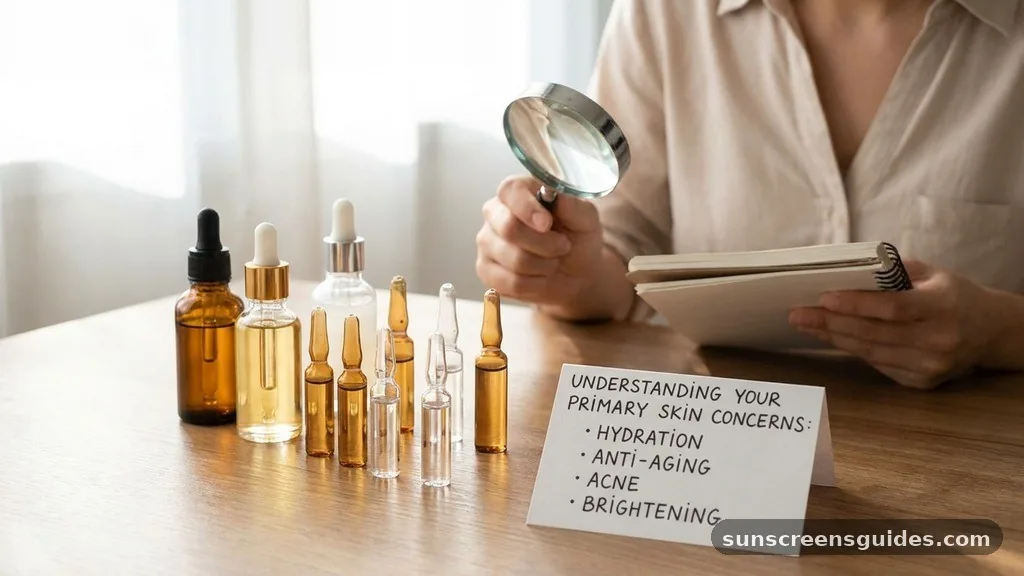
Selecting the right skincare products feels overwhelming, especially when you are trying to figure out how to choose face serum that actually works for your unique complexion. With aisles packed with bottles promising miracles, it is easy to get lost in the marketing jargon and flashy packaging. The secret lies in understanding your specific concerns rather than just following trends.
By focusing on your skin’s immediate needs—whether it is hydration, brightness, or clarity—you can easily narrow down the options. This process helps you build a routine that feels less like a chore and more like a targeted approach to achieving a healthy, balanced glow every single day.
Understanding Your Primary Skin Concerns 
Before looking at specific labels, you need to identify what your skin is actually asking for. Most people find that the most effective way to approach how to choose face serum is to isolate one or two major goals.
Are you battling persistent dryness, or is your main issue an uneven skin tone that lacks radiance? If your skin feels tight and uncomfortable, your priority should be replenishment.
If you notice dark spots or a dull appearance, you should look for ingredients that boost luminosity. Never try to fix five problems at once with five different products; this often leads to irritation and makes it impossible to see what is working.
Focusing on one goal allows you to track progress accurately. For instance, if you struggle with trans-epidermal water loss, you need a product that seals in moisture rather than one that focuses purely on surface exfoliation. By documenting your skin’s baseline state, you create a point of comparison for the weeks ahead.
Remember that your skin’s needs change with the seasons, stress levels, and hormonal fluctuations. Being flexible and observant is just as important as the initial selection of your product.
Decoding Active Ingredients for Better Results
Once you have identified your needs, looking at the ingredient list becomes much simpler. You don’t need a degree in chemistry, but you should recognize the heavy hitters. Hyaluronic acid acts as a powerful humectant, drawing moisture into the skin to provide a plump, hydrated look.
If your concern is aging or fine lines, retinol is widely considered the gold standard for promoting cell turnover. For those dealing with dullness, vitamin c is an essential antioxidant that protects against environmental damage while brightening the complexion.
Understanding these components helps you avoid buying products that contain high concentrations of ingredients your skin doesn’t need. If you have sensitive skin, for example, you might want to start with lower percentages of these actives to build tolerance. The following table provides a quick reference for common concerns and the corresponding ingredients that usually address them effectively.
| Skin Concern | Recommended Ingredient | Primary Benefit |
|---|---|---|
| Dehydration | Hyaluronic Acid | Deep hydration and plumping |
| Dullness | Vitamin C | Brightening and antioxidant defense |
| Acne/Congestion | Salicylic Acid | Clear pores and oil control |
| Fine Lines | Retinol or Peptides | Texture improvement and firming |
| Redness/Texture | Niacinamide | Barrier support and soothing |
Matching Serums to Dermatological Skin Types
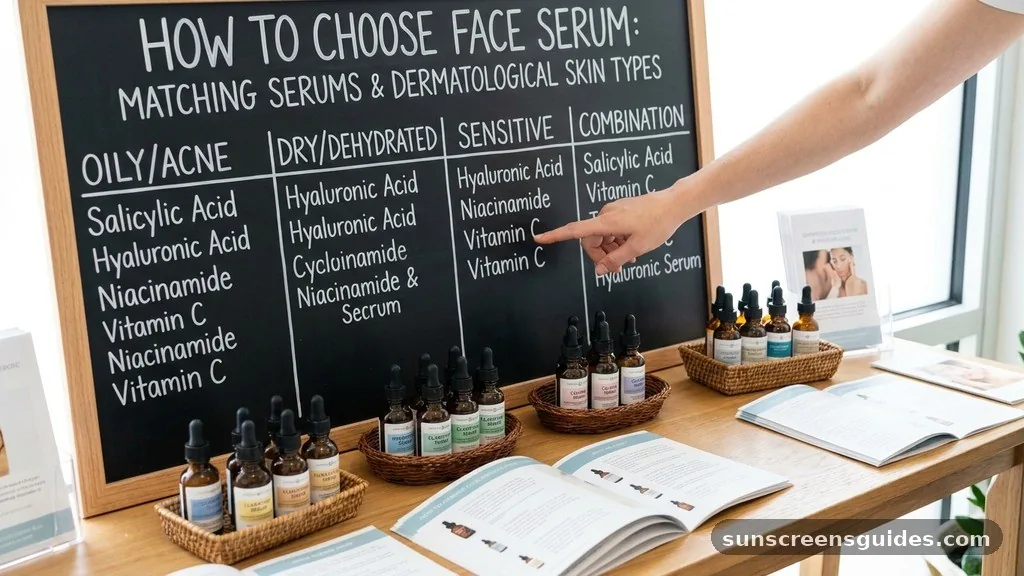
Your skin type is the foundation for every decision you make in your beauty routine. When learning how to choose face serum, you must consider whether your skin is oily, dry, combination, or sensitive, as these categories dictate how your skin absorbs and reacts to different formulations. If you have oily or acne-prone skin, you should specifically look for non-comedogenic labels to ensure the product won’t clog your pores. Light, water-based serums are usually the best choice here because they offer benefits without adding excess weight or greasiness.
Those with dry skin should gravitate toward oil-based serums or those containing ceramides and fatty acids. These components help strengthen the skin barrier, preventing moisture from escaping throughout the day. It is also important to consider the texture of the serum; some are milky and creamy, while others are essentially watery.
If you have very reactive or sensitive skin, look for minimalist formulas with fewer preservatives and fragrances. You can always perform a patch test on your jawline to ensure a product doesn’t cause a negative reaction before applying it to your entire face.
Managing Serum Layering and Routine Integration
The order in which you apply your products matters as much as the products themselves. The general rule for serum layering is to apply formulas from the thinnest, most watery consistency to the thickest, most emollient one.
This ensures that the active molecules can penetrate the surface effectively without being blocked by heavier creams or oils. If you use multiple serums, wait about sixty seconds between applications to let each one absorb fully. This simple habit prevents pilling and ensures you get the full benefit of every drop you apply.
There are also certain combinations that should be handled with caution. Mixing too many potent actives, such as high-strength exfoliation acids and retinoids, can lead to a compromised barrier. If you are a beginner, stick to a simple rotation: use your brightening vitamin C in the morning to protect against daytime pollutants and reserve your restorative retinol or peptides for your evening routine.
This keeps your skin balanced and minimizes the risk of redness or inflammation caused by over-treating.
Addressing Topical Gaps in Skincare Knowledge
Many articles fail to address how to tell if a serum is actually working or if you should stop using it. One common gap is the confusion surrounding “purging” versus “breaking out.” When you introduce a new active, especially an acid or a retinoid, your skin might experience a short period of increased breakouts as it clears out trapped debris.
This usually resolves within a few weeks. However, if you notice burning, persistent itching, or rashes, that is a clear signal that the product is irritating your skin and you should stop immediately.
Another often overlooked aspect is the shelf life of your products. Serums, particularly those containing sensitive ingredients like vitamin C, can oxidize and lose their potency when exposed to light or air.
If your serum changes color—for example, turning from clear to a dark amber—it has likely oxidized and is no longer effective. Storing your bottles in a cool, dark place, rather than on a sunny bathroom shelf, will significantly extend their life and ensure you are getting the value you paid for.
Frequently Asked Questions How do I know what serums to use on my face?
Identify your primary skin concern, such as dryness or acne, and choose an ingredient targeting that specific issue.
Which two serums cannot be used together?
Avoid layering high-strength retinol and potent chemical exfoliants like AHAs or BHAs to prevent severe skin irritation.
Which is better for aging skin, retinol or hyaluronic acid?
Retinol is superior for treating fine lines, while hyaluronic acid is best for plumping and deep surface hydration.
What is the most recommended serum for face?
There is no single “best” serum; the right choice depends entirely on your unique skin type and goals.
Can I use vitamin C and niacinamide together?
Yes, modern formulations allow them to be used together, though some people prefer alternating to avoid sensitivity.
How long should I wait between applying serums?
Wait about one minute between products to allow each layer to absorb into your skin properly before continuing.
Does a more expensive serum always perform better?
Not necessarily; look for high-quality active ingredients rather than the price tag or the brand’s luxury status.
Selecting the right products for your face is a journey of trial and observation. By focusing on your specific skin needs and understanding how to choose face serum based on proven ingredients, you can build a routine that yields real results. Don’t feel pressured to buy every new launch you see; instead, master the basics of hydration, protection, and repair.
Start slow, pay attention to how your skin responds, and adjust your routine as needed. Your skin will thank you for the consistency and care you provide. Feel free to experiment with different combinations once you have established a solid baseline, and always prioritize products that make your skin feel healthy and balanced.