

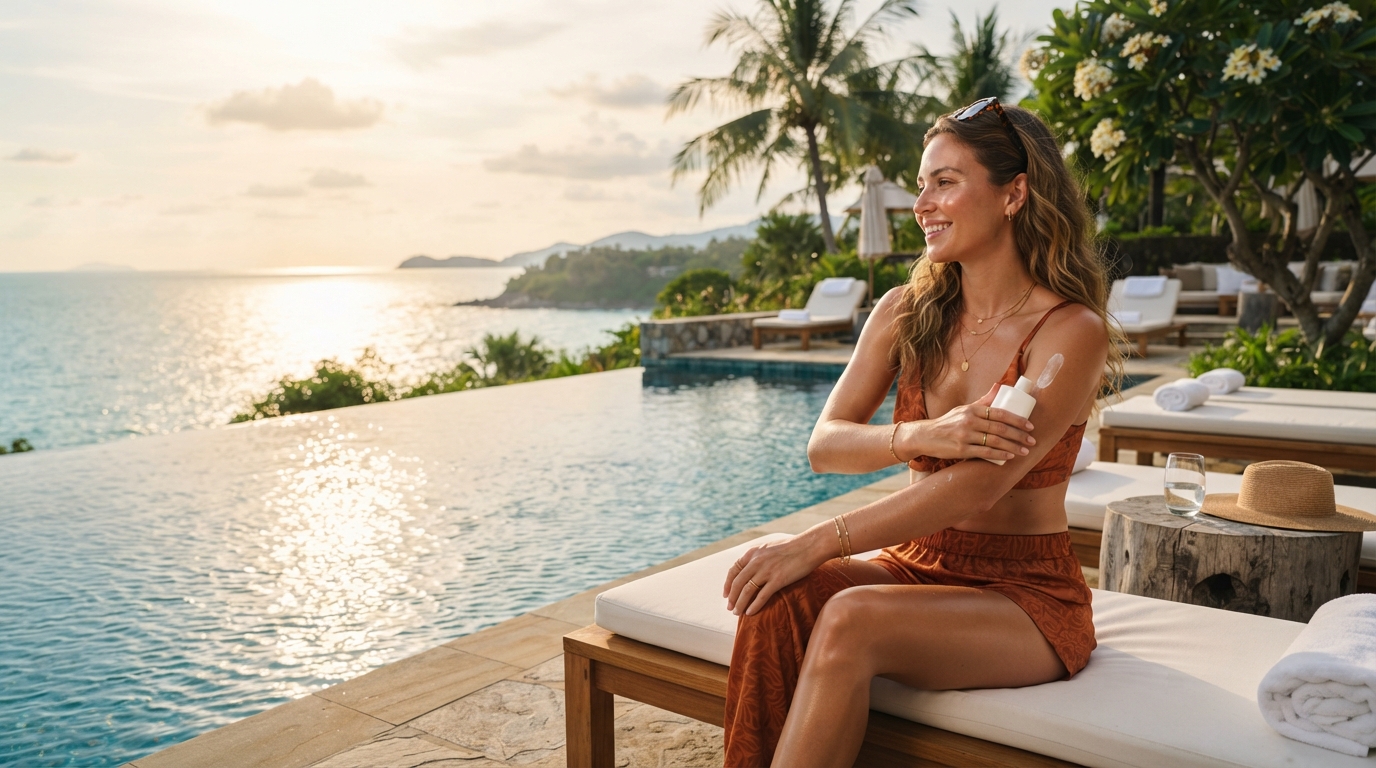
You keep wondering if can you get a tan with sunscreen on is actually a yes-or-no thing, because you wore SPF all afternoon and somehow came home looking a little browner anyway. It feels kinda unfair at first. You did what everyone says to do, yet your skin still changed color. That tiny moment of confusion happens to loads of people, and honestly, the answer isn’t as simple as sunscreen blocking every single ray from reaching your skin. It does a lot, sure, but not in the magical force-field way people sometimes imagine.
A tan is your skin responding to ultraviolet (UV) radiation by producing more melanin. Sunscreen reduces the amount of UV radiation reaching your skin, but unless it blocks every ray—which no sunscreen can—it doesn’t completely eliminate the possibility of tanning. The amount you tan depends on several things working together: the SPF, how much sunscreen you applied, whether you reapplied it, your skin tone, the UV index, and even how long you stayed outside. It’s a bit messy, if we’re being honest.
The Short Answer: Yes, You Can Still Tan While Wearing Sunscreen
The quick answer is yes.
If you’ve ever asked yourself, can you get a tan with sunscreen on, science says you absolutely can. Sunscreen is designed to reduce UV exposure, not eliminate it entirely. Even a high-quality sunscreen allows a small percentage of ultraviolet rays to reach your skin.
That means your skin can still produce melanin, although usually much more slowly than if you weren’t wearing sunscreen at all. Think of sunscreen as turning down the volume instead of muting the music. The sound is quieter, but it hasn’t disappeared.
Dermatologists consistently recommend sunscreen because reducing UV exposure lowers the risk of sunburn, premature aging, and skin cancer—not because it guarantees you’ll never tan.
Understanding Why Skin Tans in the First Place
Your skin doesn’t tan because it’s trying to look better in summer. It tans because it’s reacting to damage.
When ultraviolet radiation penetrates your skin, specialized cells called melanocytes begin producing more melanin. Melanin absorbs some UV radiation, helping protect deeper skin layers from additional damage.
It’s basically your body’s emergency response.
There are two primary types of ultraviolet radiation involved:
| UV Type | Effect on Skin |
|---|---|
| UVA | Causes tanning, aging, wrinkles, and contributes to skin cancer |
| UVB | Causes sunburn and also contributes to tanning and skin cancer |
Modern broad-spectrum sunscreens protect against both UVA and UVB rays, though they cannot stop every single photon of UV light from reaching your skin.
That little detail is why tanning can still happen.
What SPF Actually Means
One of the biggest misunderstandings is thinking SPF measures total protection.
It doesn’t.
SPF mainly measures protection against UVB radiation.
Here’s a general comparison:
| SPF | Approximate UVB Protection |
|---|---|
| SPF 15 | About 93% |
| SPF 30 | About 97% |
| SPF 50 | About 98% |
| SPF 100 | About 99% |
Notice something?
Even SPF 100 doesn’t block 100% of UV rays.
That remaining one or two percent may sound tiny, but during several hours outdoors, it can still be enough to stimulate melanin production—especially if sunscreen isn’t applied perfectly. Most people dont use nearly enough sunscreen, so real-life protection often ends up being lower than the number printed on the bottle.
Why People Still Tan Despite Wearing SPF 50
Many people assume SPF 50 means they can stay outside forever.
Not really.
Several everyday mistakes reduce sunscreen effectiveness.
- Applying too little sunscreen
- Missing areas like ears, neck, hands, and feet
- Forgetting to reapply every two hours
- Swimming or sweating without reapplication
- Using expired sunscreen
- Staying outside during peak UV hours
Research published by dermatology organizations shows that most adults apply only around 25% to 50% of the recommended sunscreen amount. That means SPF 50 might perform closer to SPF 15 or even less under normal conditions. Thats a pretty big gap.
Can You Get a Deep Tan With Sunscreen?
Usually, no.
A deep, dark tan requires significant UV exposure.
Since sunscreen reduces UV penetration, developing a strong tan generally takes much longer. In many cases, people notice only a gradual color change rather than an intense bronze appearance.
However, people with naturally olive or darker skin tones may still develop noticeable tanning even while consistently wearing sunscreen because their skin produces melanin more efficiently.
Genetics matter almost as much as sun exposure.
Does Broad-Spectrum Sunscreen Stop Tanning Better?
Broad-spectrum sunscreen offers better overall protection because it shields against both UVA and UVB radiation.
Since UVA rays are heavily involved in tanning, broad-spectrum formulas help reduce tanning more effectively than sunscreens that primarily focus on UVB protection.
Still, “reduce” isn’t the same thing as “prevent.”
That distinction matters more than people realise.
Why Some People Tan Faster Than Others
You may spend the entire day beside a friend, wear the same sunscreen, and somehow end up with completely different skin tones.
That’s normal.
Several factors influence tanning speed:
- Natural skin color
- Genetics
- Existing melanin levels
- Geographic location
- Altitude
- Time of day
- UV Index
- Reflection from water, snow, or sand
Someone with very fair skin may burn before tanning, while someone with medium skin may gradually tan with minimal burning.
Your sunscreen isn’t the only variable in the equation.
Does Reapplying Sunscreen Prevent Tanning?
Reapplying sunscreen greatly reduces tanning compared with wearing it only once.
Sunscreen naturally breaks down over time because of sunlight, sweat, friction from clothing, and water exposure.
Dermatologists recommend:
- Apply sunscreen 15–30 minutes before sun exposure.
- Use approximately one ounce (about a shot glass) for the entire body.
- Reapply every two hours.
- Reapply immediately after swimming or heavy sweating.
These habits don’t eliminate tanning completely, but they dramatically reduce cumulative UV damage.
Is It Bad If You Tan While Wearing Sunscreen?
A tan itself is evidence that UV radiation reached your skin.
That’s an important point.
Even though sunscreen lowers the amount of UV exposure, tanning still indicates your skin activated its defense system.
The American Academy of Dermatology states there is no such thing as a healthy tan produced by ultraviolet radiation because tanning reflects DNA damage occurring within skin cells.
That sounds a bit dramatic maybe, but decades of research supports it.
Can You Tan Through Clouds?
Surprisingly, yes.
Cloudy weather doesn’t completely block ultraviolet rays.
Studies estimate that up to 80% of UV radiation can pass through thin cloud cover.
That’s why people sometimes return from an overcast beach day looking noticeably darker despite never seeing bright sunshine.
Clouds affect visible light more than ultraviolet light.
Can You Tan in the Shade While Wearing Sunscreen?
You can.
Shade reduces direct sunlight but doesn’t eliminate reflected UV radiation.
Water, sand, concrete, glass, and even nearby buildings reflect ultraviolet rays back toward your skin.
Combined with the small percentage of UV rays passing through sunscreen, tanning remains possible.
It’s sneaky in a way. You feel cooler, so your brain quietly assumes you’re safer than you really are.
Does Waterproof Sunscreen Stop Tanning?
Not exactly.
No sunscreen is truly waterproof.
Current labeling regulations use terms like:
- Water resistant (40 minutes)
- Water resistant (80 minutes)
After those time limits, sunscreen protection begins decreasing unless reapplied.
So if you’re swimming all afternoon without reapplying, tanning becomes increasingly likely.
Myths About Tanning With Sunscreen
Let’s clear up a few common misconceptions.
Myth: SPF 100 Means You Can’t Tan
False.
Even SPF 100 allows a small amount of UV radiation through.
Myth: You Don’t Need Sunscreen If You Want a Tan
False.
Skipping sunscreen dramatically increases sunburn risk, skin aging, and skin cancer.
Myth: Dark Skin Doesn’t Need Sunscreen
False.
Although darker skin contains more melanin, UV damage and skin cancer can still occur.
Myth: One Morning Application Lasts All Day
Definitely false.
Sweat, movement, water, and sunlight gradually reduce sunscreen effectiveness.
What Dermatologists Recommend
Leading dermatology organizations generally agree on these practices:
- Choose SPF 30 or higher.
- Use broad-spectrum sunscreen.
- Reapply every two hours.
- Wear protective clothing.
- Seek shade during peak UV hours.
- Wear sunglasses with UV protection.
- Use wide-brimmed hats when possible.
These recommendations are supported by organizations including:
“There is no safe or healthy way to get a tan.”
That guidance reflects decades of skin cancer research from the American Academy of Dermatology and similar medical organizations worldwide.
Real-Life Example
Imagine two friends spending six hours at the beach.
Friend A applies SPF 50 generously every two hours, wears a hat, and occasionally sits under an umbrella.
Friend B applies SPF 50 once in the morning and never reapplies.
By evening, Friend A may develop only a slight tan, while Friend B could end up noticeably darker—or even sunburned.
The sunscreen itself wasn’t different.
The habits were.
Key Takeaways
If you’re still wondering, can you get a tan with sunscreen on, the answer remains yes—but usually less than without sunscreen.
Remember these important points:
- Sunscreen reduces UV exposure instead of eliminating it.
- Higher SPF lowers tanning but doesn’t completely prevent it.
- Broad-spectrum sunscreen protects against both UVA and UVB rays.
- Proper application matters as much as SPF number.
- Reapplication keeps protection working.
- Any tan indicates some UV damage occurred.
- Daily sunscreen use remains one of the best ways to reduce premature skin aging and lower skin cancer risk.
Instead of viewing sunscreen as something that promises zero tanning, it’s more accurate to think of it as a powerful safety tool. Your skin still experiences the outdoors, just with far less ultraviolet stress than it otherwise would. Thats honestly the goal, not perfection.
Can you get a tan with SPF 50 sunscreen on?
Yes. SPF 50 blocks about 98% of UVB rays, yet some ultraviolet radiation still reaches your skin, allowing gradual tanning over extended exposure.
Why did I tan even though I wore sunscreen?
You may have applied too little, skipped reapplication, or spent many hours outside. Even properly applied sunscreen cannot block every ultraviolet ray completely.
Does sunscreen stop tanning completely?
No. Sunscreen significantly reduces tanning by limiting UV exposure, but no sunscreen offers 100% protection against all ultraviolet radiation reaching your skin.
Is tanning with sunscreen safer than tanning without it?
Yes. Wearing sunscreen lowers UV damage, decreases sunburn risk, and reduces long-term skin cancer risk, even though some tanning may still occur.
Should I wear sunscreen if I actually want a tan?
Yes. Sunscreen helps protect your skin while reducing excessive UV damage. Any tan still reflects skin stress, so protection remains worth wearing every time.