

Protecting your skin while expecting requires careful consideration of the products you apply daily. Determining exactly what sunscreen is safe for pregnancy often involves shifting your focus toward specific ingredient labels rather than brand names alone. You are likely balancing the need for effective UV defense against the desire to avoid any substances that could potentially cross the placental barrier or trigger sensitivities.
Fortunately, dermatologists generally agree on a clear path forward that keeps both you and your developing baby secure while preventing common skin concerns like melasma. This overview explains the science behind these choices so you can confidently select the right protection for your routine.
The Core Difference: Mineral vs. Chemical Filters

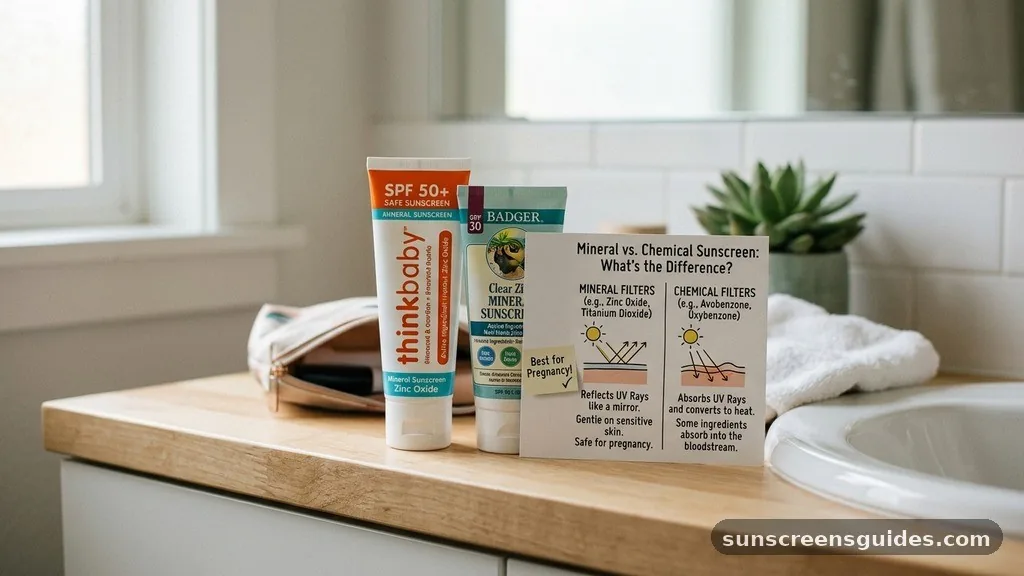
To understand what sunscreen is safe for pregnancy, you must first distinguish between the two primary types of UV filters available on the market. Most dermatologists recommend mineral sunscreen as the gold standard for expectant mothers. These formulas use physical blockers—specifically zinc oxide and titanium dioxide—to sit on top of the skin and reflect harmful rays away from your body.
Chemical filters, on the other hand, function by absorbing UV radiation and converting it into heat, which the skin then releases. Because these ingredients are designed to penetrate the outer layers of the epidermis, there is a greater concern regarding skin absorption and potential systemic exposure. While research on the direct risks of many chemical filters is still evolving, the consensus for pregnancy is to favor the physical, non-penetrating barrier of mineral-based products.
Ingredients to Avoid During Pregnancy
When you scan the back of a sunscreen bottle, certain chemical compounds often appear that experts suggest skipping while you are pregnant. These ingredients have been flagged in various studies for their potential to disrupt endocrine function or cause systemic absorption. Keeping a mental or physical checklist of these items helps you make quick, safe decisions in the skincare aisle.
Common Chemicals to Bypass
- Oxybenzone: Frequently cited as a major concern due to its high rate of skin absorption and potential for hormone disruption.
- Avobenzone: While popular for providing broad-spectrum coverage, it is often avoided by those seeking to minimize chemical exposure.
- Octinoxate: Another common filter that is sometimes linked to hormone-related health concerns in animal studies.
- Homosalate: Often found in mass-market lotions, this is another chemical filter frequently swapped for safer physical alternatives.
Avoiding these components doesn’t mean you have to sacrifice protection. By choosing formulas that rely on physical blockers, you can still achieve excellent results without the worry associated with traditional chemical-based products.
Managing Pregnancy-Related Skin Changes
Pregnancy triggers significant hormonal changes that can drastically alter your skin’s behavior. One of the most common issues reported by expectant mothers is melasma, often referred to as the “mask of pregnancy.” This condition manifests as dark, patchy spots of hyperpigmentation, usually appearing on the cheeks, forehead, or upper lip.
Sun exposure acts as the primary catalyst for these dark spots. Because your hormones are already sensitizing your skin, even a brief period of unprotected time in the sun can make existing discoloration much harder to treat later.
Consistent application of a high-quality, broad-spectrum protection product is your best defense against these permanent pigment shifts. By blocking both UVA and UVB rays, you significantly reduce the likelihood that these spots will darken throughout your second and third trimesters.
Selecting the Right Product for Your Needs

Finding the right bottle involves looking for more than just the “mineral” label. You want a product that feels comfortable for daily wear so you aren’t tempted to skip it. Many modern mineral sunscreens have moved past the thick, chalky white cast that defined the industry a decade ago.
Key Features to Look For
| Feature | Why It Matters |
|---|---|
| Broad-Spectrum | Ensures protection against both UVA (aging) and UVB (burning) rays. |
| Non-comedogenic | Prevents clogged pores, which is essential if your skin is breaking out due to hormones. |
| Physical Blockers | Uses zinc oxide or titanium dioxide for non-absorbed protection. |
| Fragrance-Free | Reduces the risk of irritation, as pregnancy can make skin hypersensitive. |
If you struggle with breakouts, prioritizing a non-comedogenic formula is a smart move. Pregnancy can increase oil production for many women, and a heavy, greasy sunscreen may exacerbate acne. Look for “tinted” mineral sunscreens if you are concerned about a white cast; these often blend into the skin tone much more seamlessly while providing a subtle, smoothing effect.
Addressing Common Topical Gaps
Many people ask whether “reef-safe” labeling has any relevance to pregnancy safety. While the term reef-safe sunscreen primarily refers to the protection of marine ecosystems by excluding chemicals like oxybenzone, it often aligns perfectly with pregnancy-safe criteria. If a bottle is certified as reef-safe, it is almost certainly a mineral-based formula, making it a reliable shortcut when you are unsure about an ingredient list.
Another gap in common advice is the timing of application. Some believe that waiting until the second trimester is sufficient, but this is a misconception. Because the skin undergoes changes from the very beginning of conception, starting a consistent sun-care routine early in the first trimester is the most effective way to prevent the onset of hyperpigmentation.
Additionally, remember that windows—whether in your car or at the office—do not block all UVA rays. Relying on sun protection even when you are mostly indoors is a vital habit for maintaining an even complexion throughout your pregnancy.
Applying Sunscreen Effectively
Simply owning a safe product isn’t enough; you need to apply it with the same diligence you would apply to any other health-related precaution. Most people apply far less than the recommended amount, which leaves them vulnerable to sun damage. Experts suggest using at least a nickel-sized amount for the face and neck alone.
If you are spending time outdoors, reapplication is non-negotiable. Mineral particles can be wiped away by sweat, clothing, or even accidental touching throughout the day.
Set a reminder on your phone to reapply every two hours if you are in direct sunlight. If you find the process tedious, keep a travel-sized tube in your handbag or car console so that you never have to go without your essential layer of protection.
Conclusion
Identifying what sunscreen is safe for pregnancy is a manageable process when you focus on physical mineral filters. By prioritizing zinc oxide and titanium dioxide while avoiding chemical agents like oxybenzone, you protect your skin from both harmful UV rays and unnecessary chemical exposure. This proactive approach helps you manage common pregnancy-related skin concerns like melasma while ensuring your daily routine remains both effective and gentle.
Remember that consistency is the most important factor in preventing hyperpigmentation during these months. As your skin continues to react to changing hormones, stay vigilant with your application habits, and don’t hesitate to reach out to your dermatologist if you notice unusual changes in your complexion. Your commitment to these simple habits provides a solid foundation for healthy, radiant skin throughout your entire pregnancy journey.
Frequently Asked Questions
Is it safe to use chemical sunscreen during pregnancy?
Most doctors recommend avoiding chemical filters because they penetrate the skin and may cause hormone-related systemic absorption.
What is the best sunscreen to use while pregnant?
The best choice is a mineral-based sunscreen containing zinc oxide or titanium dioxide as the primary active ingredients.
Can I use tinted sunscreen while I am pregnant?
Yes, tinted mineral sunscreens are excellent for pregnancy because they hide the white cast of zinc and mask hyperpigmentation.
Does pregnancy increase my sensitivity to the sun?
Yes, hormonal shifts make your skin more prone to dark spots and melasma, requiring consistent, daily sun protection.
Are there specific ingredients I must avoid in skincare?
Beyond certain sunscreen filters, you should generally avoid retinoids and high-dose salicylic acid until after you give birth.
Do I need to wear sunscreen if I am mostly indoors?
Yes, UVA rays penetrate glass windows, which can still trigger or worsen pregnancy-related skin discoloration and melasma.
How often should I reapply my mineral sunscreen?
You should reapply your sunscreen every two hours if you are outdoors or if you are sweating heavily.



