


Knowing exactly when to apply hair serum is the difference between a sleek, salon-quality finish and a greasy, weighed-down look. Many people struggle with timing because they treat serums like standard conditioners, which leads to lackluster results or dull strands. Whether you are aiming for intense frizz control or simply want to add a touch of luminosity to your daily style, the moment you pick up the bottle matters.
By understanding how the product interacts with your hair cuticle, you can transform your routine. Mastering the application window ensures you maximize the benefits of your chosen formula, keeping your hair looking polished throughout the day.
The Ideal Moment for Application
The most effective time to apply hair serum is immediately after washing, while your strands are still damp. Specifically, you should target towel-dried hair that is no longer dripping wet. This timing is crucial because the serum acts as a sealant, locking in the moisture your hair absorbed during the washing process.
When you apply it to damp hair, you are essentially trapping hydration within the shaft before you begin the drying or styling process. This technique helps smooth the outer layer of the hair, leading to a much shinier appearance.
Why Damp Hair Wins Over Dry
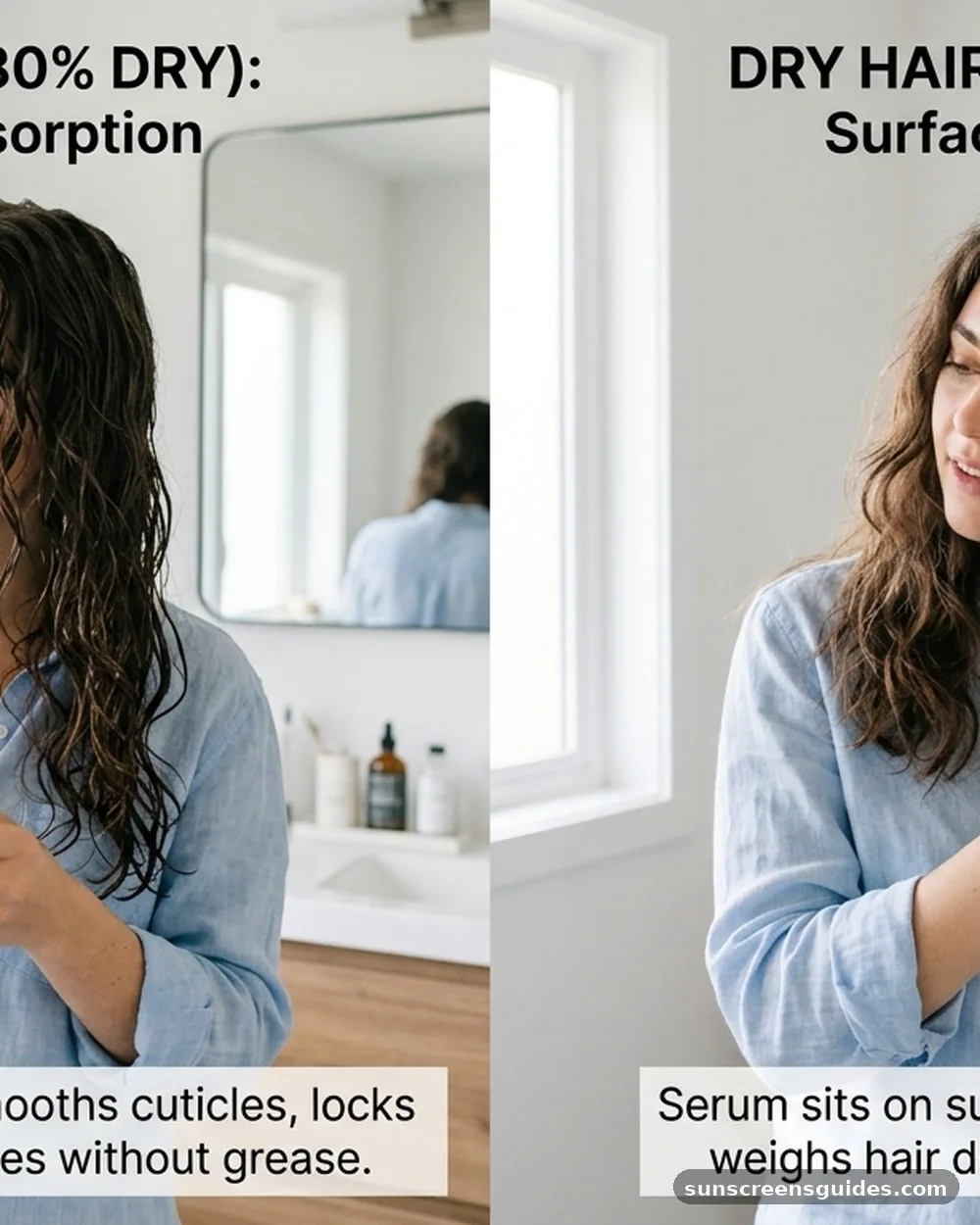
Applying product to damp hair ensures an even distribution that is harder to achieve once the hair is fully dry. When hair is wet, the strands are more pliable and porous, allowing the active ingredients in the serum to penetrate or coat the surface more effectively.
This creates a protective barrier that is especially vital if you plan to use thermal styling tools shortly after. By getting ahead of the drying process, you ensure that every strand receives a light, uniform coating rather than concentrating too much product in one spot.
Correcting Common Application Missteps
A frequent mistake is applying serum directly to the scalp, which often leads to oily roots and a lack of volume. Instead, focus your efforts on the mid-lengths to ends of your hair. These areas are typically the oldest, driest, and most prone to damage.
By concentrating the product where it is needed most, you avoid the heavy, flat look that comes from over-saturating the top of your head. This method also protects your scalp health by keeping pores clear and preventing unnecessary buildup that could lead to irritation.
The Role of Hair Texture and Porosity

Your specific hair texture dictates how much product you should use and how often you apply it. Those with fine hair might only need a pea-sized amount to avoid weighing their style down, while thick or curly hair can handle a bit more to achieve adequate frizz control. Furthermore, consider your hair porosity.
High-porosity hair absorbs products quickly and often requires a heavier, oil-rich serum, while low-porosity hair benefits from lighter, water-based formulas. Adjusting your quantity based on these factors is the secret to a professional look.
| Hair Type | Application Frequency | Recommended Amount |
|---|---|---|
| Fine/Straight | Daily (ends only) | 1-2 drops |
| Wavy/Medium | Post-wash | 2-3 drops |
| Curly/Coarse | Post-wash + touch-ups | 3-5 drops |
Serum as a Thermal Shield
If you use blow dryers, flat irons, or curling wands, serum is an essential heat protectant. Applying it before these tools touch your hair creates a physical barrier that minimizes heat damage. This is particularly important for preventing split ends and breakage caused by constant exposure to high temperatures.
Make sure to distribute the serum thoroughly through the mid-lengths to ends before you switch on your styling device. This proactive step keeps your hair resilient and shiny, even if you heat style regularly.
Combining with Other Products
Many people wonder how to layer serums with other styling products. As a rule of thumb, you should apply your serum after your leave-in conditioner but before your stronger hold products like hairspray or mousse.
The leave-in conditioner provides the core hydration, while the serum acts as the finishing touch to smooth the hair cuticle and lock everything in place. This order ensures that your hair remains soft and manageable while still achieving the desired hold for your style.
Addressing Topical Gaps in Hair Care
Many users ask if they can use serum to fix existing damage. While serums provide excellent frizz control and shine, they are essentially cosmetic fixes rather than reparative treatments. They smooth down the hair cuticle to hide the appearance of flyaways, but they cannot physically fuse a split end back together.
To truly manage split ends, you must incorporate regular trims into your routine. Serums are best viewed as a preventative measure to stop further fraying during your daily grooming and thermal styling habits.
Another common gap involves the use of silicone-based versus natural oil serums. Silicone-based products are superior for creating that glass-like, polished finish and offering superior protection against humidity. However, they can build up over time.
If you use a heavy silicone serum, ensure you are using a clarifying shampoo occasionally to remove residue. Natural oil-based serums are better for long-term nourishment but may not offer the same level of sleekness for a blowout. Choose your formula based on the immediate goal of your current style.
When to Refresh Your Look
You might find yourself needing a touch-up mid-day to combat flyaways or sudden frizz. In these cases, it is perfectly acceptable to apply a tiny amount of serum to dry hair. The key here is “tiny.”
Warm a single drop between your palms and lightly smooth it over the surface of your hair rather than working it through the interior sections. This keeps the hair looking fresh without making it appear greasy. It is the perfect way to revitalize a style that has lost its luster as the hours pass.
- Focus application on the mid-lengths to ends to maintain volume.
- Always rub the serum between your palms before touching your hair to ensure even distribution.
- Use only a pea-sized amount to start; you can always add more, but you can’t take it away.
- Avoid the scalp area entirely to keep your hair feeling clean and light.
- Apply to damp hair for the best moisture-locking results.
- Use as a heat protectant before blow-drying to minimize breakage.
- Refresh dry hair with a drop only if you struggle with persistent flyaways.
Frequently Asked Questions
Can I apply hair serum every day?
Yes, you can apply it daily, provided you only use a small amount on the ends.
Is it better to apply serum on wet or dry hair?
Applying it to damp hair is generally best for moisture retention and smoother frizz control results.
Does hair serum help with hair growth?
Most hair serums are designed for surface shine and protection, not for stimulating new hair growth.
Should I use serum before or after a leave-in conditioner?
Apply your leave-in conditioner first, then follow with the serum to seal in that added moisture.
Can I leave hair serum in overnight?
It is better to wash it out, as leaving products in can attract dust and cause buildup.
Does hair serum expire?
Yes, most serums have a shelf life of 12 to 24 months after the bottle is opened.
Will hair serum make my hair greasy?
It will only become greasy if you apply too much product or if you apply it near roots.
Summary and Next Steps
Mastering the timing of your hair care routine is a simple way to elevate your daily style. By prioritizing the application of your serum while your hair is damp, you leverage the product’s ability to seal the hair cuticle and lock in essential moisture. Remember to focus on the mid-lengths to ends and treat the serum as a functional heat protectant rather than just a styling aesthetic.
If you find your hair looking dull or struggling with persistent flyaways, try adjusting your quantity or switching to a formula better suited to your specific hair texture. Start today by experimenting with these application techniques to see how much healthier and more polished your hair can look. Feel free to share your results or reach out if you have more questions about your routine.