

Navigating your beauty regimen during those nine months often feels like walking through a minefield of potential ingredient warnings. Many expectant mothers find themselves asking if they can use vitamin C serum while pregnant, especially when they notice changes in their complexion that demand a boost.
Because your skin undergoes significant hormonal shifts, finding a brightening solution that is both effective and harmless for your baby is a top priority. Most experts agree that this popular antioxidant is a staple in a healthy pregnancy-safe skincare routine, provided you choose the right formulation and consult your healthcare provider about your unique health history.
The Science of Vitamin C During Pregnancy

The short answer to the question of whether you can use vitamin C serum while pregnant is generally yes. Vitamin C, known scientifically as ascorbic acid, is a naturally occurring nutrient that is essential for collagen synthesis and skin health.
Since it is a topical antioxidant, its primary function is to protect the skin from environmental stressors like pollution and UV damage. Unlike some more aggressive chemical treatments, topical vitamin C is not typically considered teratogenic, meaning it does not cause birth defects or developmental issues in a growing fetus.
Most dermatologists view this ingredient as a gentle way to maintain a radiant glow throughout your trimesters. Because your skin may experience increased sensitivity or dryness during this time, a high-quality serum can help soothe and brighten without the irritation associated with harsher active ingredients.
Always remember that your body absorbs a very small amount of topically applied substances. This limited skin absorption means that the systemic impact on your baby is likely negligible, but it is always wise to stick to high-quality products that avoid unnecessary fillers.
Addressing Hyperpigmentation and Melasma
One of the most common skin concerns during pregnancy is the development of hyperpigmentation or the “mask of pregnancy,” medically referred to as melasma. These dark spots appear due to the surge in hormones like estrogen and progesterone, which stimulate melanin production.
Vitamin C is highly effective at inhibiting the enzyme tyrosinase, which is responsible for melanin synthesis. By incorporating this serum into your daily ritual, you may be able to fade existing spots or prevent new ones from darkening further.
While vitamin C is a fantastic tool, it is often most effective when paired with other safe brightening agents. Many people find that rotating their products helps manage the shifting needs of their skin.
Because melasma can be stubborn, patience is key. Consistent application, typically in the morning, ensures that your skin remains protected against oxidative stress throughout the day, giving you a better chance at managing those patches of uneven skin tone while keeping your pregnancy safe.
Ingredients to Avoid and Safe Alternatives
While you can use vitamin C serum while pregnant, you must be hyper-aware of other ingredients in your bottle. Some common skincare additives are strictly off-limits because they carry known risks for fetal development.
For example, retinoids—a class of vitamin A derivatives—are widely prohibited during pregnancy due to their link to birth defects. Similarly, high-dose salicylic acid treatments are often discouraged by experts, though low-dose spot treatments are sometimes debated.
To help you organize your routine, refer to the table below comparing common skincare ingredients and their typical status during pregnancy.
| Ingredient | Pregnancy Safety Status | Primary Function |
|---|---|---|
| Vitamin C (Ascorbic Acid) | Generally Safe | Antioxidant/Brightening |
| Retinoids (Retinol/Tretinoin) | Avoid Completely | Anti-aging/Acne |
| Niacinamide | Safe | Barrier support/Soothing |
| Azelaic Acid | Safe | Acne/Redness/Pigmentation |
| Salicylic Acid | Use with Caution | Exfoliation/Acne |
Building a Pregnancy-Safe Skincare Routine
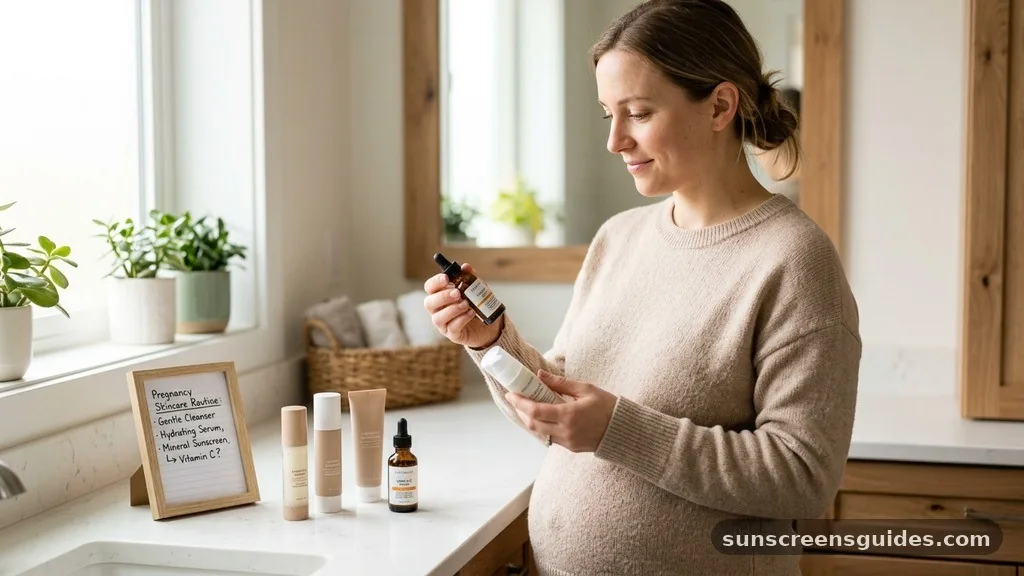
Establishing a skincare routine that feels indulgent yet safe is a great way to prioritize self-care during pregnancy. When starting with a new vitamin C product, look for L-ascorbic acid, which is the most potent and researched form of the vitamin. If your skin feels particularly sensitive, you might prefer a derivative like magnesium ascorbyl phosphate, which is gentler but still provides the necessary antioxidant benefits.
* Start with a gentle, fragrance-free cleanser to remove impurities without stripping natural oils.
* Apply your vitamin C serum to clean, dry skin every morning before your moisturizer.
* Follow up with a physical mineral sunscreen containing zinc oxide or titanium dioxide.
* Include niacinamide in the evening to help regulate sebum and calm any redness.
* Consider azelaic acid if you are dealing with hormonal breakouts, as it is widely considered safe and effective.
Always patch-test a new product on your inner forearm to ensure you do not have an allergic reaction. Pregnancy hormones can make your skin behave unpredictably, so even products that worked for you in the past might cause a flare-up now.
Topical Absorption and Safety Myths
A common point of confusion for many expectant parents involves how much of a product actually enters the bloodstream. The biological reality is that our skin barrier is quite effective at keeping most topical applications on the surface. When you ask if you can use vitamin C serum while pregnant, you are essentially asking if that specific molecule can penetrate deep enough to reach the placenta.
Scientific literature suggests that the molecular weight of L-ascorbic acid and its typical concentration levels make it unlikely to reach systemic circulation in amounts that would pose a risk. Myths often circulate because people conflate oral supplements with topical serums.
While oral vitamins should always be managed by your obstetrician-gynecologist to avoid exceeding safe intake levels, topical application is a different physiological process. Always prioritize products with transparent labels so you can verify exactly what you are applying to your face.
Addressing Common Topical Gaps
There is often a gap in information regarding whether you can use vitamin C serum while pregnant if you have specific skin types like rosacea or eczema. Pregnancy can exacerbate these conditions significantly. If you have a compromised moisture barrier, even a benign ingredient like vitamin C might sting upon application.
In these cases, it is essential to focus on hydration first. Using a humectant like hyaluronic acid underneath your vitamin C can buffer the intensity and prevent irritation.
Another gap involves the shelf life and stability of your products. Vitamin C is notoriously unstable and can oxidize when exposed to light or air, turning a brownish color. Once it oxidizes, the efficacy drops and it may even cause irritation to sensitive pregnancy skin.
Store your serum in a cool, dark place, or choose a formula in an opaque pump bottle to maintain its integrity. If the product changes color significantly, it is best to discard it rather than risking an unnecessary reaction on your face.
Conclusion
Deciding if you can use vitamin C serum while pregnant ultimately comes down to choosing high-quality, stable formulations and monitoring how your skin reacts to the changes of pregnancy. By sticking to established ingredients like ascorbic acid and avoiding known hazards like retinoids, you can effectively manage issues like melasma and dullness while maintaining a safe environment for your baby. Your complexion may go through many phases over these nine months, but consistent, gentle care will serve you well.
Always reach out to your healthcare provider if you have specific concerns about your skin health or if you experience persistent irritation. Taking a cautious, informed approach allows you to enjoy your beauty routine with complete peace of mind.
Is it safe to use vitamin C serum daily during pregnancy?
Yes, it is generally considered safe to use a topical vitamin C serum every morning while pregnant.
Can vitamin C help with pregnancy-related melasma?
Yes, vitamin C can help inhibit melanin production, potentially fading dark spots and managing hormonal skin discoloration.
Should I stop using vitamin C if my skin becomes sensitive?
Yes, if your skin becomes irritated, discontinue use and consult your doctor to find a gentler alternative.
Are there specific forms of vitamin C that are safer?
L-ascorbic acid is effective and safe, but derivatives like magnesium ascorbyl phosphate are gentler for sensitive skin.
Does topical vitamin C affect the developing fetus?
No, topical application has minimal systemic absorption, making it unlikely to impact the baby in any way.
Can I use niacinamide alongside my vitamin C serum?
Yes, these two ingredients are generally compatible and can work together to improve skin texture and tone.
Is it necessary to consult my obstetrician before starting a new serum?
It is always a good idea to discuss your entire skincare regimen with your doctor for personalized safety.



