

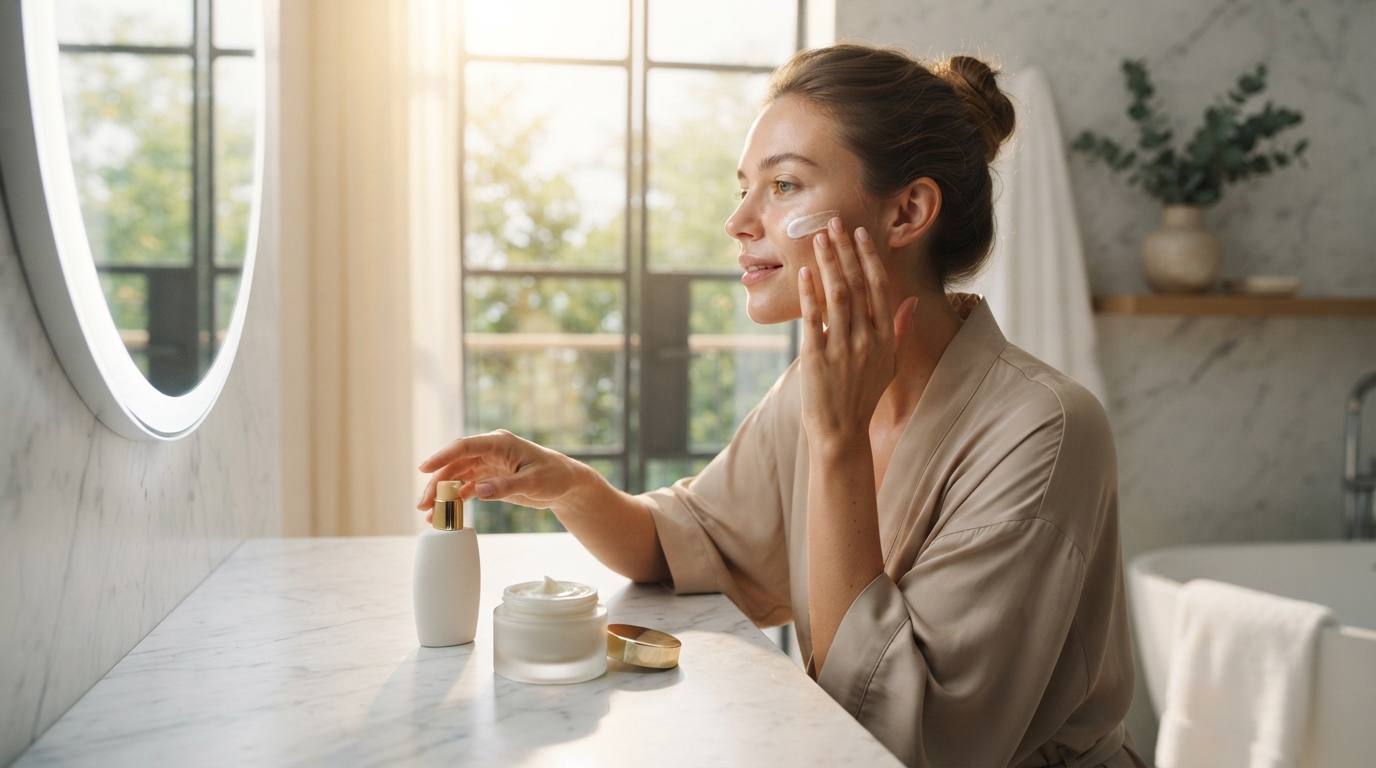
You keep standing in front of the mirror wondering, do I apply sunscreen before or after moisturizer, and somehow every bottle on the shelf seems to disagree with the last one you picked up. It gets oddly confusing, doesnt it? You just want your skincare to work without turning it into a chemistry exam before breakfast. The good news is that the answer is actually pretty straightforward once you understand why each product belongs where it does. And no, you don’t need a twenty-step routine to protect your skin properly.
Daily sun protection has become one of the most researched parts of skincare. According to the American Academy of Dermatology (AAD), regular sunscreen use helps reduce the risk of skin cancer and slows visible signs of premature aging caused by ultraviolet (UV) exposure. That’s a pretty big payoff for something that takes less than a minute.
This guide explains exactly where sunscreen fits into your routine, why moisturizer matters first in most situations, and the exceptions that can change the order.
The Short Answer: Moisturizer First, Sunscreen Last
If you’re asking, do I apply sunscreen before or after moisturizer, the answer for most people is simple.
Apply moisturizer first. Apply sunscreen as the final step of your morning skincare routine.
Think about it like painting a wall. You prepare the surface first, then you apply the protective coating. Sunscreen forms a protective film over your skin, and putting another skincare product on top can disturb that layer. It’s a tiny detail that makes a suprising difference.
The usual morning routine looks like this:
| Step | Product |
|---|---|
| 1 | Cleanser |
| 2 | Toner (optional) |
| 3 | Serum |
| 4 | Moisturizer |
| 5 | Sunscreen |
| 6 | Makeup (if worn) |
That order gives every product the best chance to perform as intended.
Why Moisturizer Goes Before Sunscreen
Moisturizer has a different job than sunscreen.
A moisturizer works by helping the skin retain water, supporting the skin barrier, and reducing dryness. Sunscreen’s job is completely different—it shields your skin from UVA and UVB radiation.
When moisturizer goes on first, it hydrates the skin and creates a comfortable surface. Sunscreen can then spread evenly over the top.
If you reverse them, the moisturizer may dilute, smear, or partially remove the sunscreen layer. It’s a bit like putting a raincoat on, then trying to adjust your sweater underneath. You can do it, sure, but you’ll probably mess up the raincoat.
Dermatologists generally recommend allowing moisturizer to absorb for about one minute before applying sunscreen. You dont need to wait forever.
Does the Type of Sunscreen Matter?
Yes, a little.
Both mineral and chemical sunscreens are generally applied after moisturizer, but they work differently.
Chemical Sunscreen
Chemical sunscreens contain ingredients such as:
- Avobenzone
- Octisalate
- Homosalate
- Octocrylene
- Octinoxate
These filters absorb UV rays and convert them into a tiny amount of heat before the rays can damage the skin.
Years ago, people often believed chemical sunscreen had to be applied directly onto bare skin. Modern dermatology guidance says that applying it after moisturizer is perfectly acceptable as long as the moisturizer has absorbed first.
Mineral Sunscreen
Mineral sunscreens typically use:
- Zinc oxide
- Titanium dioxide
These ingredients sit near the skin’s surface and scatter or absorb UV radiation.
Because they create a physical protective layer, mineral sunscreens almost always belong at the very end of your skincare routine before makeup.
What If My Moisturizer Already Contains SPF?
This is where things get a little messy, honestly.
Many moisturizers advertise SPF 15, SPF 30, or even SPF 50. While they can provide some protection, there’s an important catch.
People usually apply much less moisturizer than the amount needed to reach the labeled SPF.
Research consistently shows most adults apply only about 25% to 50% of the recommended sunscreen amount. The same habit carries over to SPF moisturizers.
If you’ll spend meaningful time outdoors, dermatologists generally recommend:
- Use your regular moisturizer.
- Follow with a dedicated broad-spectrum sunscreen SPF 30 or higher.
An SPF moisturizer works nicely on lazy indoor mornings, maybe, but relying on it alone for beach days or long walks isn’t really the best idea.
Should Sunscreen Go Before Makeup?
Absolutely.
Your morning order should usually be:
- Moisturizer
- Sunscreen
- Primer
- Foundation
- Concealer
- Powder
Applying sunscreen over foundation usually creates streaks and uneven coverage.
If you need more protection later in the day, consider:
- SPF setting sprays
- Powder sunscreens
- Sunscreen sticks
- Cushion sunscreen products
They’re not perfect replacements for a proper morning application, but they make reapplication much easier.
How Much Sunscreen Should You Actually Apply?
This is where almost everyone slips up.
Dermatologists recommend approximately:
| Area | Recommended Amount |
|---|---|
| Face | Two finger lengths of sunscreen |
| Face and neck | About 1/4 teaspoon |
| Entire body | Around one ounce (a shot-glass full) |
Using less sunscreen reduces the level of protection dramatically.
For example, applying half the recommended amount doesn’t simply cut SPF in half. Protection drops much more than people expect, which is kinda unfair but that’s how sunscreen testing works.
Should You Wait Between Moisturizer and Sunscreen?
Yes, but only briefly.
You don’t need a ten-minute countdown.
Usually:
- Apply moisturizer.
- Wait 30–60 seconds.
- Apply sunscreen evenly.
The moisturizer should feel mostly absorbed rather than wet.
If products begin rolling into tiny flakes, called pilling, you may be using too much product or rubbing too aggressively.
Patting sunscreen onto the skin instead of rubbing hard often helps.
What Happens If You Apply Sunscreen Before Moisturizer?
Nothing dangerous happens, but it isn’t ideal.
Possible issues include:
- Uneven sunscreen coverage
- Reduced UV protection
- Increased product pilling
- Sunscreen rubbing off during moisturizer application
Imagine carefully laying fresh snow on the ground and then dragging a rake through it. That’s sorta what happens to the sunscreen layer.
Morning Skincare Routine Example
Here’s an easy routine that works for most skin types.
For Dry Skin
- Gentle cleanser
- Hydrating serum
- Rich moisturizer
- SPF 30 or higher sunscreen
Dry skin often feels more comfortable when moisturizer fully settles before sunscreen goes on.
For Oily Skin
- Foaming cleanser
- Lightweight gel moisturizer
- Oil-free sunscreen
Modern sunscreens are much lighter than older formulas, so they don’t always leave that greasy feeling people still expect.
For Sensitive Skin
- Fragrance-free cleanser
- Barrier-supporting moisturizer
- Mineral sunscreen containing zinc oxide
This combination tends to minimize irritation for many people, although everyone’s skin reacts a bit differently.
Common Sunscreen Myths
Myth: Sunscreen Replaces Moisturizer
Not really.
Many sunscreens contain hydrating ingredients, but they aren’t designed primarily to repair the skin barrier.
Myth: SPF 100 Means You Never Need to Reapply
False.
The U.S. Food and Drug Administration recommends reapplying sunscreen every two hours when outdoors and after swimming or sweating.
Myth: Cloudy Days Don’t Require Sunscreen
Actually, up to 80% of UV rays can pass through clouds.
That cloudy morning can still expose your skin to ultraviolet radiation, which feels kinda sneaky when you think about it.
Myth: Darker Skin Doesn’t Need Sunscreen
Everyone benefits from sunscreen.
Although melanin provides some natural protection, people of every skin tone can experience sun damage, hyperpigmentation, and skin cancer.
Choosing the Right Sunscreen
Not every sunscreen feels the same.
Look for these features:
- Broad-spectrum protection
- SPF 30 or higher
- Water-resistant if you’ll sweat
- Non-comedogenic for acne-prone skin
- Fragrance-free if your skin is sensitive
Finding one you actually enjoy wearing matters more than chasing the fanciest label. A sunscreen sitting unopened in a bathroom drawer protects exactly nobody.
What Dermatologists Recommend
Leading dermatology organizations generally agree on several points:
“Use a broad-spectrum, water-resistant sunscreen with an SPF of 30 or higher.”
That recommendation aligns with guidance from the American Academy of Dermatology.
The Skin Cancer Foundation also advises applying sunscreen every day to exposed skin, regardless of the season.
Meanwhile, the U.S. Centers for Disease Control and Prevention emphasizes combining sunscreen with shade, protective clothing, hats, and sunglasses for the best protection.
Those recommendations have remained remarkably consistent because decades of research continue supporting them.
Real-Life Example
Imagine two friends getting ready for a summer picnic.
Sarah cleanses her face, applies moisturizer, waits about a minute, then finishes with SPF 50 sunscreen before putting on makeup.
Emily applies sunscreen first, then massages moisturizer over everything because she’s in a hurry.
By lunchtime, Sarah’s sunscreen layer remains more evenly distributed, while Emily has likely disturbed parts of hers without realizing it.
It’s not something you’d notice by looking in the mirror, but UV protection depends on creating a consistent film across the skin.
Final Thoughts
So, do I apply sunscreen before or after moisturizer? For nearly everyone, moisturizer comes first and sunscreen comes last in the morning skincare routine. That order helps both products perform their intended jobs without interfering with each other.
The routine doesn’t need to be perfect every single day. Missing a step once isn’t the end of the world. But making sunscreen the final layer before makeup becomes a habit that quietly protects your skin year after year. Funny thing is, the biggest skincare upgrade isn’t usually buying another expensive serum. It’s simply using enough sunscreen, putting it on in the right order, and remembering to reapply when you’re outside.
Do I apply sunscreen before or after moisturizer if I have oily skin?
Even with oily skin, apply moisturizer first, then sunscreen. Choose lightweight, oil-free formulas so your routine feels comfortable and doesnt become overly greasy.
Can I skip moisturizer if my sunscreen feels hydrating?
You can if your skin feels comfortable, but dry or sensitive skin usually benefits from moisturizer underneath sunscreen to support the skin barrier and reduce dryness.
How long should I wait after moisturizer before sunscreen?
Wait about 30 to 60 seconds until your moisturizer mostly absorbs. Then apply sunscreen evenly without rubbing too aggressively for the best coverage.
Can I mix moisturizer and sunscreen together?
No. Mixing them can dilute sunscreen, making protection less reliable. Apply each product separately in the correct order for consistent UV coverage.
Should sunscreen be the last skincare step every morning?
Yes. Sunscreen should generally be the final skincare step before makeup, creating an even protective layer that shields your skin from harmful ultraviolet rays.