


Figuring out the specific sequence of your daily products is essential for getting the most out of your investment. Many people find themselves wondering if does serum go before or after moisturizer, and getting this wrong can actually prevent your active ingredients from penetrating your skin properly.
By following the standard rule of applying products from thinnest to thickest consistency, you ensure that your skin barrier receives the nourishment it needs without creating a barrier that blocks absorption. Understanding how these layers interact will help you build a more effective regimen that delivers real, visible results for your complexion.
The Fundamental Rule of Skincare Layering
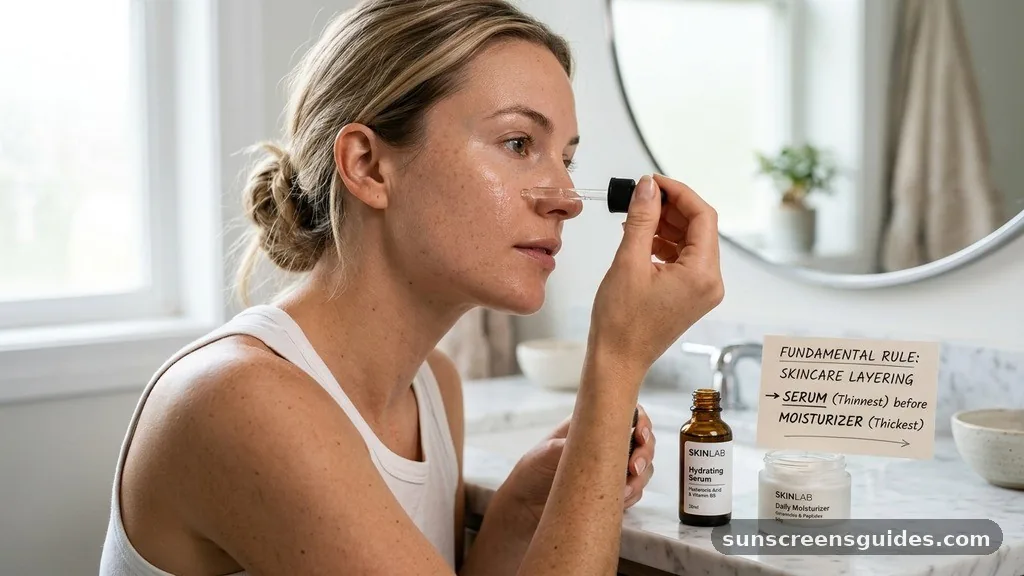
When you ask does serum go before or after moisturizer, the short answer is always before. Serums are formulated with a smaller molecular weight, which allows them to penetrate deeper into the skin to deliver concentrated active ingredients.
Moisturizers, on the other hand, are typically thicker and designed to sit on the surface to lock in hydration. If you apply a heavy cream first, you effectively create a seal that prevents the serum from reaching your pores.
Think of your skin like a sponge. If you coat the sponge in wax first, water won’t be able to soak in. A facial cleanser and toner prep the surface, but the serum is the workhorse meant to treat specific concerns like aging, dullness, or dehydration.
Applying it directly to clean, slightly damp skin ensures the maximum absorption rate. Once the serum has had a minute or two to sink in, your moisturizer acts as a protective blanket.
Why Consistency Matters for Absorption
The primary reason we layer products by texture is to avoid pilling and ensure efficacy. A humectant-rich serum like hyaluronic acid needs to be applied to clean skin so it can pull moisture from the air or deeper layers of the epidermis. If you layer it over a heavy oil or a waxy cream, it will struggle to function.
The Role of Occlusives
Moisturizers often contain occlusive agents, such as petrolatum or heavy waxes, which are designed to reduce transepidermal water loss. These ingredients are fantastic for keeping your skin hydrated, but they are not designed to be absorbed deep into the tissue. When you layer your products correctly, you allow the active treatment to do its job, while the moisturizer finishes the process by sealing everything in place.
Structuring Your Daily Regimen
To keep things simple, follow a logical progression that moves from your lightest liquids to your heaviest creams. This prevents product build-up and helps your skin maintain a healthy skin barrier.
- Step 1: Cleanse your face with a gentle facial cleanser.
- Step 2: Apply toner to balance the skin’s pH levels.
- Step 3: Apply your treatment serum (like Vitamin C or retinol).
- Step 4: Wait sixty seconds for the serum to absorb.
- Step 5: Apply your moisturizer to lock in the treatment.
- Step 6: Finish with sunscreen during your morning routine.
Understanding Product Specifics
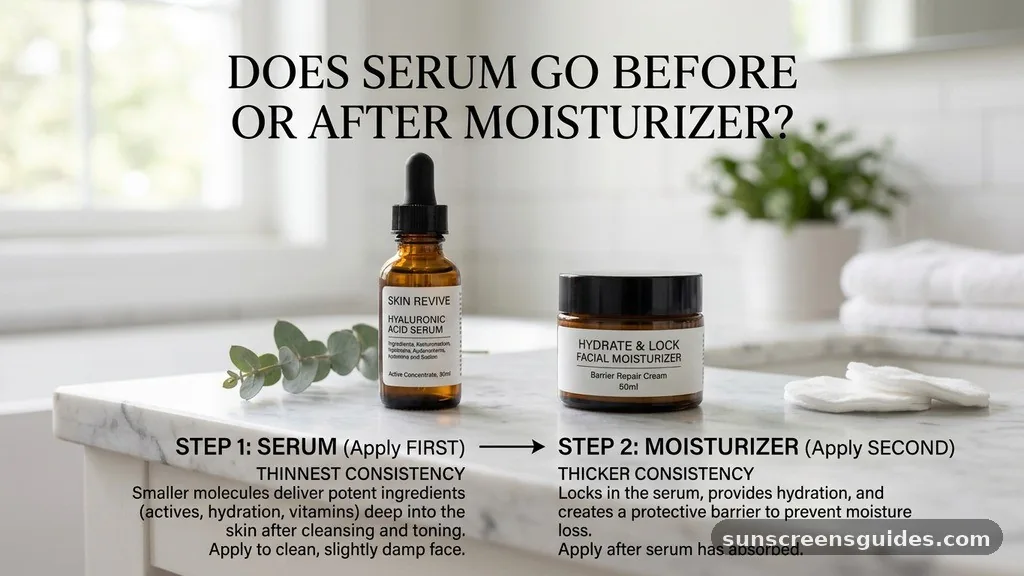
Not all serums are created equal, and some require special attention regarding how they interact with other products. For instance, a vitamin c serum is best used in the morning to fight environmental stressors, while a retinol treatment is strictly for nighttime use due to its sensitivity to light. If you use a chemical exfoliant, this usually fits into the routine after cleansing but before any hydrating serums.
| Product Type | Texture | Typical Placement |
|---|---|---|
| Cleanser | Water/Gel | First |
| Toner | Liquid | Second |
| Serum | Lightweight/Gel | Third |
| Moisturizer | Cream/Lotion | Fourth |
| Sunscreen | Cream/Paste | Final (AM Only) |
Addressing Common Skincare Gaps
One common mistake people make is ignoring the wait time between steps. You don’t need to wait twenty minutes, but letting your serum become slightly tacky or dry to the touch is crucial.
If you apply your moisturizer while your face is still dripping with serum, the two will mix on the surface rather than layering effectively. This can dilute the potency of your active ingredients and lead to a messy, sticky finish that doesn’t sit well under makeup.
Another gap is the issue of non-comedogenic formulas. If you suffer from acne, you might be tempted to skip moisturizer altogether. This is a mistake.
Even oily skin needs moisture; you just need to choose a lighter, water-based formula. If you aren’t sure if a product is right for you, check the label for non-comedogenic status, which means the ingredients are less likely to clog your pores.
The Importance of Skin Barrier Health
Your skin barrier is the front line of defense against pollution, bacteria, and harsh weather. When you layer products incorrectly, you may end up causing irritation or dryness, which weakens this barrier.
By ensuring your serum is absorbed before the moisturizer is applied, you provide the skin with the nutrients it needs to stay resilient and plump. Over-application of too many heavy products can also lead to inflammation, so keep your routine streamlined.
Conclusion
Mastering the order of your skincare products is the most effective way to see real improvements in your skin’s texture and tone. By ensuring that your lightweight treatments are applied before your protective layers, you allow your skin to utilize every drop of the active ingredients you pay for. Remember that consistency is far more important than complexity; a simple, well-ordered routine will always outperform a chaotic one with too many products.
Start by checking your serum’s consistency and applying it directly to clean skin, then follow up with your preferred moisturizer to seal in the goodness. If you have questions about specific product pairings, feel free to reach out and share your current routine for a personalized assessment.
FAQ
Always apply your serum before your moisturizer, as serums have a lighter consistency and higher ingredient concentration.
Can I mix my serum and moisturizer together?
While you can, it is generally better to layer them separately to ensure the serum absorbs fully first.
How long should I wait between serum and moisturizer?
Wait about sixty seconds or until the serum feels slightly tacky before applying your moisturizer on top.
What happens if I apply moisturizer before serum?
The moisturizer creates a barrier that prevents the active ingredients in the serum from penetrating your skin properly.
Does the order change for nighttime routines?
No, the rule of thinnest to thickest consistency remains the same regardless of the time of day.
Should I use a different order for Vitamin C serums?
Vitamin C should always be applied after cleansing and before your moisturizer to maximize its antioxidant benefits.
Are there exceptions to the layering rule?
Very rarely, but always prioritize applying your thinnest, most potent treatments closest to the skin for best results.



