

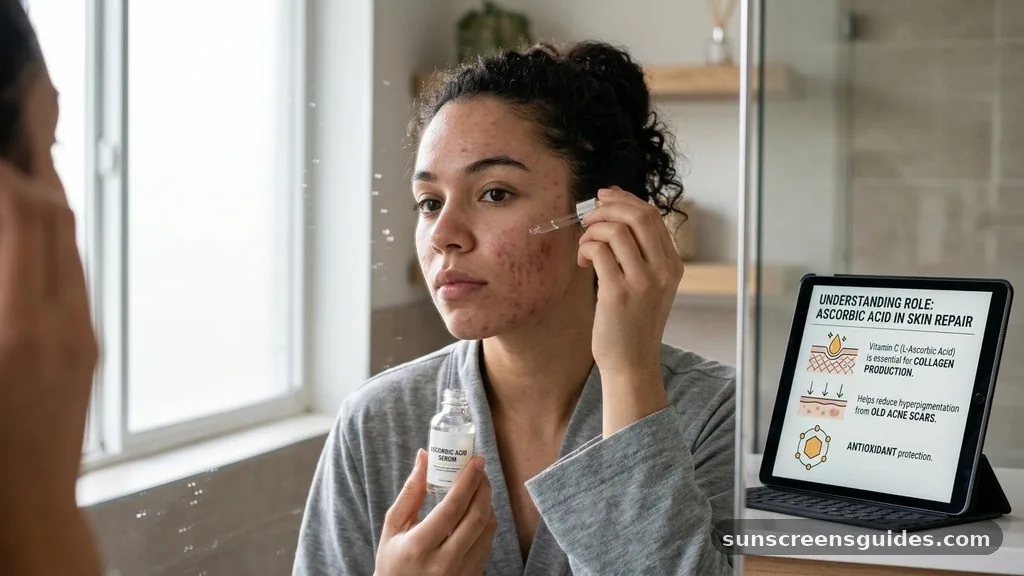
Many people wonder if incorporating a targeted treatment into their skincare routine is worth the investment, particularly when looking at how does vitamin c serum help with acne scars. Dealing with leftover marks after a breakout can be frustrating, but understanding how specific ingredients influence skin repair is the first step toward clearer results.
Vitamin C is celebrated for its ability to brighten the complexion and even out skin tone, making it a popular choice for those struggling with residual pigment. By examining the science behind this potent antioxidant, you can better determine if this product fits your specific needs and skin goals.
Understanding the Role of Ascorbic Acid in Skin Repair
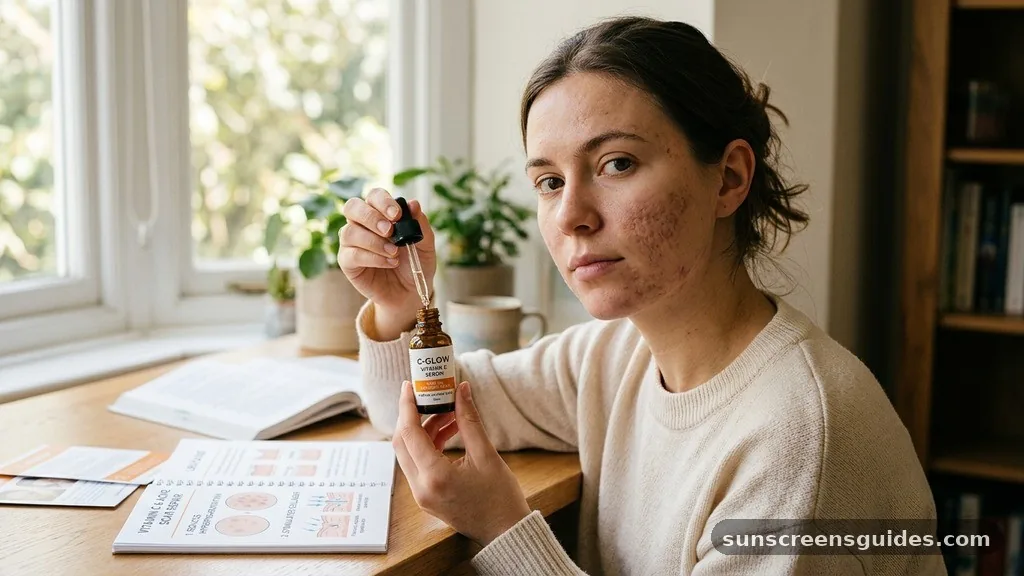
To understand how does vitamin c serum help with acne scars, you must first look at the mechanism of ascorbic acid. This active ingredient functions primarily as a tyrosinase inhibitor, which means it blocks the enzyme responsible for the production of excess pigment.
When you experience a breakout, the inflammatory response often leaves behind a dark, discolored mark, a condition clinically referred to as post-inflammatory hyperpigmentation (PIH). By slowing down the creation of new pigment, vitamin C prevents these areas from becoming even darker while encouraging the fading of existing spots.
Beyond pigmentation control, this ingredient is vital for collagen synthesis. Scars that have a structural component—those that feel slightly depressed or uneven—benefit significantly from increased collagen levels. Vitamin C acts as a necessary cofactor for the enzymes that stabilize and cross-link collagen molecules.
When your skin has adequate levels of this nutrient, it can repair its structural matrix more effectively. While it cannot magically “fill in” deep, pitted scars like a filler would, it creates a healthier foundation that makes the overall skin surface look smoother and more resilient over time.
Addressing Post-Inflammatory Hyperpigmentation
If you are specifically struggling with the red or brown marks that remain after a pimple has healed, you are dealing with PIH. This is where vitamin C truly shines as a brightening agent.
Because it is one of the most effective topical antioxidants, it neutralizes free radicals caused by UV exposure and environmental stress, which often darken existing scars. By protecting the skin from these external aggressors, the serum allows the natural healing process to focus on recovery rather than defense.
Consistency remains the most important factor in seeing results with these treatments. Because skin cells undergo a natural cell turnover cycle every 28 to 40 days, you shouldn’t expect an overnight miracle. Most users notice a significant reduction in the intensity of dark spots after about eight to twelve weeks of daily application.
It is also common to pair vitamin C with other ingredients to speed up the process. For instance, using a formula that includes ferulic acid can stabilize the vitamin C, making it more potent and less prone to oxidation, which ensures you are getting the full benefit of every drop you apply.
Comparing Common Ingredients for Scar Management
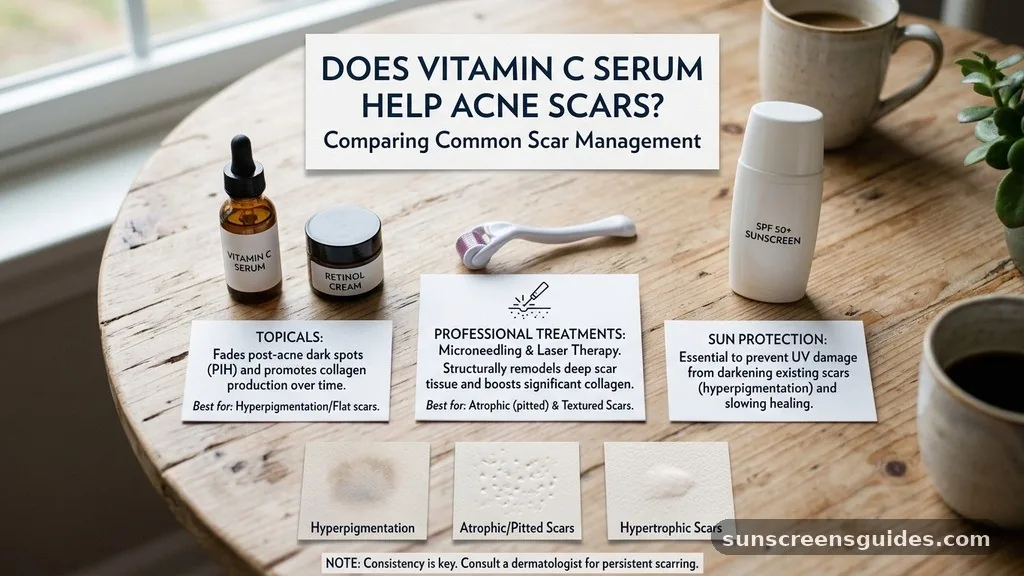
Navigating the market for acne-related skincare can be overwhelming, especially when you see various active ingredients promising similar outcomes. It is helpful to understand how vitamin C stacks up against other popular choices. While some ingredients are designed to exfoliate the surface, others work deeper within the dermal layers to change how the skin produces pigment.
| Ingredient | Primary Mechanism | Best For |
|---|---|---|
| L-ascorbic acid | Tyrosinase inhibition/Collagen synthesis | Fading dark spots and firming skin |
| Niacinamide | Anti-inflammatory/Barrier support | Redness and uneven texture |
| Retinoids | Accelerated cell turnover | Deep acne scarring and resurfacing |
| AHAs/BHAs | Chemical exfoliation | Smoothing rough scar tissue |
Each of these options serves a distinct purpose, and many dermatologists suggest a layered approach. For example, if you find that your skin is reactive, you might use a vitamin C serum in the morning to fight environmental damage and a gentle exfoliant or niacinamide in the evening to calm the skin.
This combination strategy often yields faster, more visible improvements than relying on a single product. When you approach your routine with a clear understanding of what each ingredient does, you are far less likely to waste money on ineffective products.
Addressing Topical Gaps and Skin Sensitivity
A common point of confusion is whether high-concentration vitamin C is always better. Many people assume that a 20% or 30% concentration will work faster, but this often leads to irritation, which can actually worsen post-inflammatory hyperpigmentation.
If your skin barrier repair process is compromised, the inflammation from the irritation might create new dark spots, effectively undoing the work of the serum. It is usually more beneficial to start with a stable, lower percentage—around 10% to 15%—and ensure your skin tolerates the formula well before moving to stronger versions.
Another frequent gap in knowledge involves the stability of the product. L-ascorbic acid is notoriously unstable and can lose its potency when exposed to air, heat, or light. If your serum has turned a dark orange or brown color, it has oxidized and is no longer providing the benefits you need to fade your scars.
Always look for opaque, airtight packaging to ensure the product remains active. Taking care of your serum is just as important as the application itself, as a degraded product will not provide the brightening effects required to treat persistent acne marks.
Effective Integration into Your Skincare Routine
If you have decided that you want to start using these treatments, proper application is key. The following list outlines the most effective ways to integrate a serum into your daily life to maximize your results:
- Apply your serum to clean, dry skin in the morning to capitalize on its antioxidant protection.
- Always follow with a broad-spectrum sunscreen, as vitamin C can make skin slightly more sensitive to sun exposure.
- Store your bottle in a cool, dark place, such as a drawer or a cabinet away from bathroom humidity.
- Avoid mixing high-strength vitamin C with other strong actives like benzoyl peroxide or high-percentage AHAs in the same step, as this can lead to stinging.
- Monitor your skin for signs of irritation, such as persistent redness or itching, and scale back frequency if necessary.
By following these simple guidelines, you can ensure that you are getting the most out of your purchase while minimizing the risk of adverse reactions. Remember that skin health is a long-term commitment, and the most successful outcomes come from those who stay consistent with their chosen routine.
Summary of Results and Expectations
When considering how does vitamin c serum help with acne scars, it is essential to manage your expectations regarding the timeline and the type of scarring being treated. These serums are highly effective at addressing surface-level discoloration, such as brown or red marks, but they are not a replacement for professional dermatological treatments like laser therapy or microneedling for deep, indented scars. By using high-quality ingredients and maintaining a consistent, protective skincare routine, you provide your skin with the best possible environment for natural repair.
If you stay patient and combine your topical regimen with effective sun protection, you will likely see a brighter, more uniform complexion over the coming months. Start with a stable formula, listen to your skin, and enjoy the gradual improvements as your marks begin to fade.
Does vitamin C serum clear acne scars?
It helps fade the dark, discolored marks left behind by acne, but it does not remove deep, pitted scars.
How long does it take for vitamin C to remove acne scars?
Visible improvement in pigmentation typically occurs after eight to twelve weeks of consistent, daily usage of the serum.
What serum is best for acne scars?
Serums containing L-ascorbic acid, niacinamide, or retinoids are generally considered the most effective for treating various types of scarring.
What fades acne scars fast?
Combining a vitamin C serum with daily sunscreen and professional treatments like chemical peels or microneedling provides the fastest results.
Does vitamin C help acne dark spots?
Yes, it acts as a tyrosinase inhibitor, which slows down pigment production and helps fade existing dark spots over time.
Does niacinamide help with acne scars?
Niacinamide is excellent for reducing redness, soothing inflammation, and improving overall skin texture alongside vitamin C treatments.
Is it safe to use vitamin C every day?
Most people can safely use vitamin C once daily, provided their skin tolerates the concentration without developing any irritation.



