

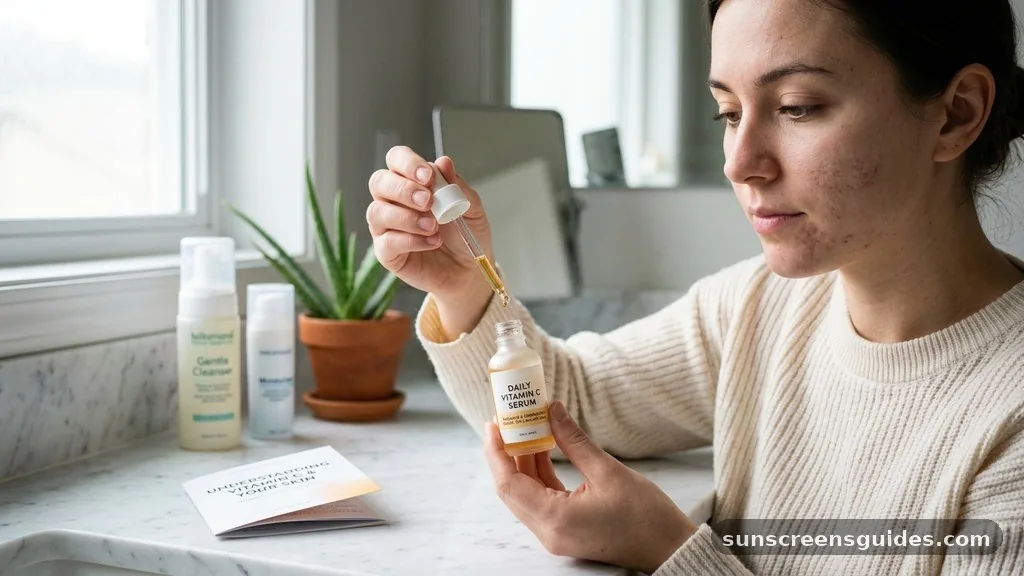
Many people wonder if incorporating a targeted treatment into their routine, specifically asking does vitamin C serum help with acne, will finally clear their skin. While this potent antioxidant is celebrated for brightening and anti-aging, its relationship with active breakouts is nuanced. For some, it acts as a soothing anti-inflammatory agent, while for others, specific formulations can trigger irritation.
Understanding the balance between skin barrier health and active acne is essential before you apply this ingredient to inflamed areas. This article explores the biological mechanisms behind vitamin C, how it interacts with congested pores, and whether it deserves a permanent spot in your fight against persistent blemishes.
Understanding the Role of Vitamin C in Skin Health
Vitamin C, often found in skincare as L-ascorbic acid, is a powerful molecule that combats oxidative stress on the skin’s surface. By neutralizing free radicals, it protects the skin from environmental damage that can exacerbate inflammation. When considering if does vitamin C serum help with acne, it is important to recognize that its primary function is skin repair rather than direct antibacterial action.
The ingredient is famous for promoting collagen synthesis, which is vital for healing the skin after a breakout has occurred. By supporting the structural integrity of the dermis, it helps in the remodeling process. However, because it is an acidic compound, it requires careful handling to ensure it doesn’t cause unnecessary stinging or redness on already compromised skin.
Can Vitamin C Prevent New Breakouts?
While vitamin C is not a traditional acne medication like benzoyl peroxide, it influences the skin environment in ways that may indirectly reduce acne frequency. One of the main contributors to clogged pores is sebum oxidation. When oil on the skin oxidizes, it becomes thicker and more likely to plug the hair follicles, leading to the formation of comedones.
By applying a stable topical antioxidant, you may reduce the rate at which your natural sebum oxidizes. This creates a less favorable environment for the bacteria that thrive in clogged follicles. If your acne is largely driven by inflammatory responses to environmental triggers, the calming properties of a high-quality serum could potentially stabilize your skin over time.
Addressing Topical Gaps: Why Some Breakouts Worsen
A common point of confusion is why some users experience increased breakouts after starting a new serum. If you are asking does vitamin C serum help with acne but finding the opposite, look closely at the ingredients list. Many serums are formulated with heavy oils or silicones that are not non-comedogenic.
If a product contains ingredients that clog pores, the vitamin C itself might be beneficial, but the vehicle carrying it is problematic. Furthermore, if you have a compromised skin barrier, the low pH balance required for L-ascorbic acid to penetrate can lead to skin sensitization. This irritation can trigger a flare-up of inflammatory acne, making it appear as though the product is causing breakouts when it is actually just causing irritation.
Managing Post-Inflammatory Hyperpigmentation
Perhaps the strongest argument for using this ingredient is its ability to treat the aftermath of acne. After a pimple heals, it often leaves behind a dark spot or a reddish mark.
These are categorized as hyperpigmentation or post-inflammatory erythema. Vitamin C is highly effective at inhibiting tyrosinase, the enzyme responsible for melanin production.
By interrupting this process, the serum helps fade these dark spots significantly faster than they would fade on their own. It acts as a brightening agent that evens out the complexion, ensuring that your skin looks clear even if you occasionally deal with active blemishes. It is essentially the gold standard for restoring an even skin tone after the active phase of acne has subsided.
Strategic Ingredient Pairing for Better Results
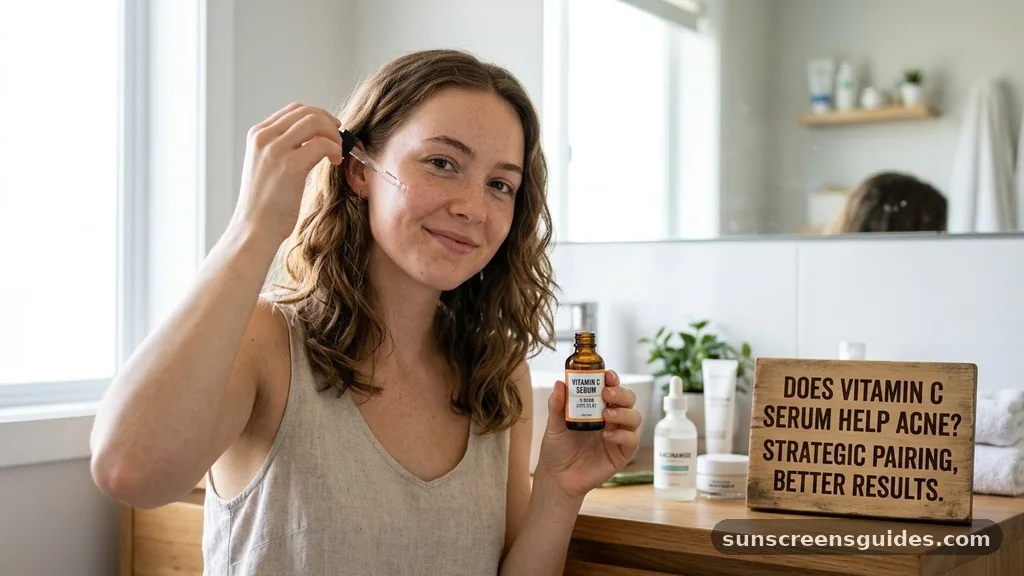
You should rarely use a vitamin C serum in isolation if your goal is managing acne. Pairing it with other evidence-based ingredients can maximize your results while minimizing the risk of irritation. Creating a synergistic routine is often more effective than relying on a single “hero” product.
| Ingredient | Primary Benefit for Acne | Interaction with Vitamin C |
|---|---|---|
| Salicylic Acid | Clears clogged pores | Use at different times of day to avoid irritation |
| Niacinamide | Regulates sebum production | Complements Vitamin C by soothing the skin |
| Ceramides | Supports barrier repair | Helps the skin tolerate the acidity of Vitamin C |
When building your regimen, consider the following best practices for application:
- Apply your vitamin C serum in the morning on clean, dry skin to maximize antioxidant protection throughout the day.
- Avoid layering it directly over high-concentration exfoliating acids to prevent severe stinging or chemical burns.
- Always follow up with a high-SPF sunscreen, as vitamin C can make the skin slightly more reactive to UV light.
- Look for water-based, oil-free formulations if your skin is prone to congestion.
- Introduce the product slowly, starting every other day, to monitor for any signs of follicular hyperkeratosis or contact dermatitis.
The Importance of pH Balance and Formulation
The efficacy of your serum is heavily dependent on the pH balance of the product. L-ascorbic acid requires a low pH (typically below 3.5) to effectively penetrate the lipid barrier of the skin. While this acidity is necessary for performance, it is also the primary reason why some people experience stinging.
If your skin barrier is already weak, applying a highly acidic serum can cause microscopic tears and inflammation, which provides an entry point for bacteria. This is why barrier repair is a critical component of any acne-fighting routine. If your skin feels tight, itchy, or constantly red, pause the use of active acids and focus on hydrating serums until the barrier is restored.
Debunking Myths About Vitamin C and Acne
There is a pervasive myth that vitamin C causes acne because it is “too heavy” or “active.” In reality, most high-quality serums are lightweight and fast-absorbing. If you notice small, white bumps after starting a serum, it is likely a sign of a reaction to an inactive ingredient like a heavy carrier oil or a fragrance, rather than the vitamin C molecule itself.
Another misconception is that you cannot use vitamin C if you have active, painful cysts. While it won’t kill the bacteria like a spot treatment, it can reduce the surrounding redness and inflammation. Just be mindful of the physical sensation; if it hurts, your skin is telling you that the current formulation or concentration is not the right fit for your specific skin type.
FAQ
Does vitamin C serum help with acne directly?
It primarily helps by reducing inflammation and fading dark spots rather than killing acne-causing bacteria directly.
Can I use vitamin C if I have oily, acne-prone skin?
Yes, provided you choose a lightweight, oil-free, and non-comedogenic formula to avoid clogging your pores further.
Why does my skin burn when I apply vitamin C?
The low pH required for efficacy can irritate a damaged skin barrier; try a lower concentration first.
Should I apply vitamin C in the morning or at night?
Morning is best, as it provides antioxidant protection against environmental stressors you encounter throughout the day.
Does vitamin C help with acne scars?
It is excellent for fading post-inflammatory hyperpigmentation and dark spots left behind after acne has finally healed.
Can I layer vitamin C with salicylic acid?
It is generally better to use them at different times, such as vitamin C in the morning and salicylic acid at night.
Will vitamin C cause me to break out?
Pure vitamin C does not cause acne, but poorly formulated serums with comedogenic oils or fragrances might.
Achieving Clearer Skin Through Consistency
Determining if does vitamin C serum help with acne depends largely on how you integrate it into your existing skincare routine. It is not a miracle cure for active breakouts, but it is an invaluable tool for preventing future oxidation and clearing the lingering marks that acne leaves behind. By focusing on maintaining a healthy moisture barrier and choosing non-comedogenic formulations, you can leverage the brightening and restorative power of this antioxidant.
Remember that skin health is a long-term commitment, and results often require consistent use over several weeks. If you are currently struggling with breakouts, start small, listen to your skin’s feedback, and don’t hesitate to adjust your routine as you move toward a clearer, more radiant complexion. We encourage you to share your experiences or questions in the comments below.



