

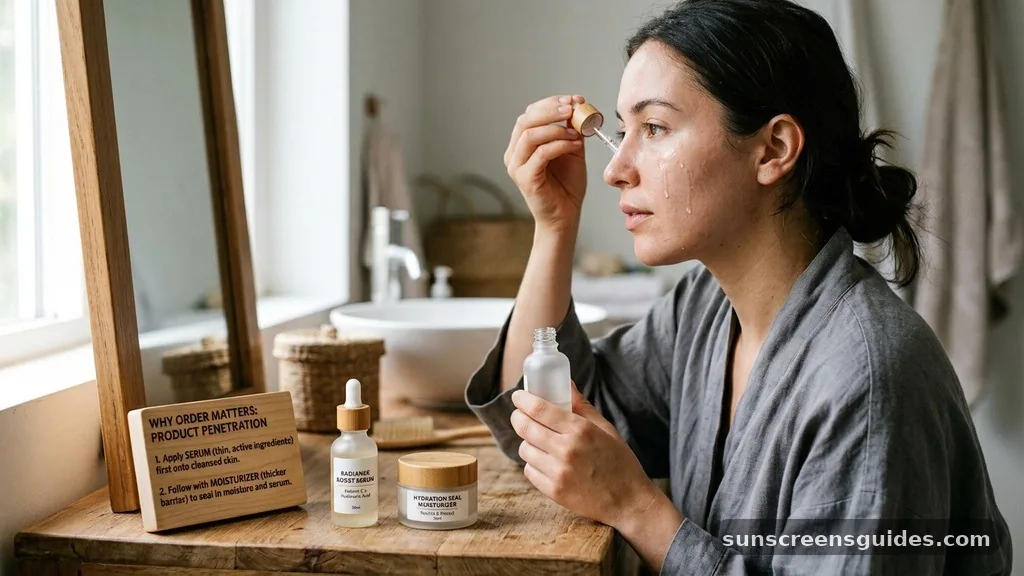
Determining whether you should apply face serum before or after moisturizer is the most common point of confusion in any daily skincare routine. Getting the order wrong can render expensive products ineffective, as the physical properties of your skincare determine how well they penetrate the skin barrier.
Generally, you want to move from the lightest, most water-dense textures to the heaviest, most occlusive creams to ensure maximum ingredient delivery. When you consider the question of face serum before or after moisturizer, the standard rule is to apply serums first to allow their potent actives to sink in before you seal everything with a cream.
Why Order Matters for Product Penetration
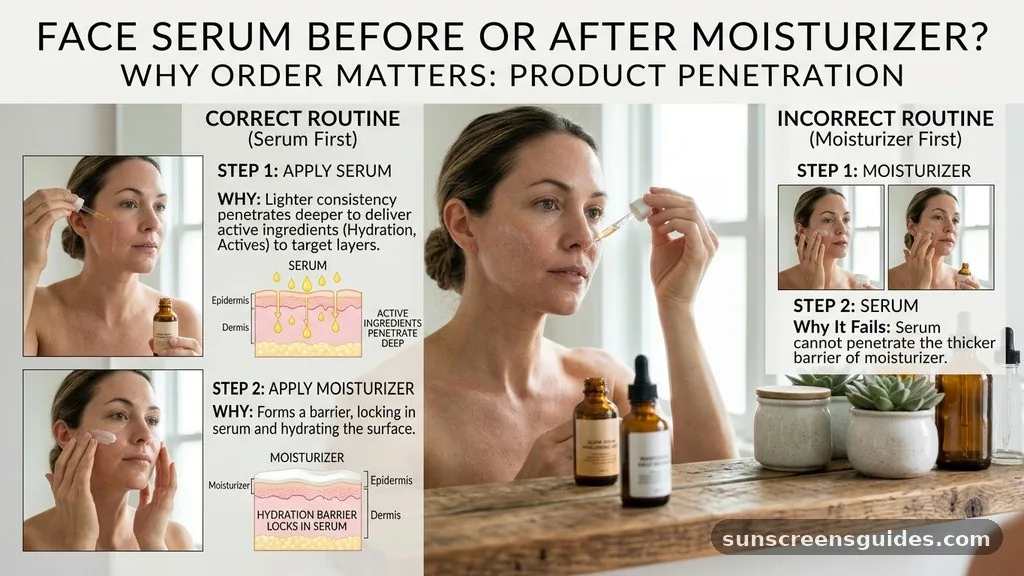
The primary reason for layering products in a specific sequence is to respect the physics of pore absorption. Your skin is designed to keep things out, so layering products strategically helps bypass this natural defense mechanism. When you apply a water-based serum first, the small molecular weight of the formula allows it to travel deep into the epidermis quickly.
If you were to apply a heavy cream first, the emollient and occlusive ingredients would create a physical barrier on the surface of your skin. This barrier prevents the finer, more targeted ingredients in your serum from ever reaching their destination, effectively wasting your product.
Layering also plays a massive role in managing transepidermal water loss. By applying a serum—especially one packed with a humectant like hyaluronic acid—you are providing the skin with a necessary hydration boost.
However, if you leave that moisture sitting on the surface without an occlusive layer, the water will simply evaporate into the air, leaving your skin feeling tighter and potentially drier than before you started. The moisturizer acts as the lid on the pot, trapping the serum’s benefits inside while providing the necessary lipids to support your skin barrier throughout the day.
Understanding the Role of Serum vs. Moisturizer
Serums and moisturizers serve entirely different functions within a healthy regimen. Serums are essentially delivery vehicles for active ingredients designed to treat specific concerns like hyperpigmentation, fine lines, or dehydration.
Because these formulas are concentrated, they are usually thinner and contain fewer fillers. Think of your serum as the treatment portion of your routine, while the moisturizer acts as the maintenance and protection phase.
Moisturizers, conversely, are formulated to be thicker and richer. They are designed to sit on top of the skin to provide a protective seal and prevent the loss of hydration. You can think of the difference in terms of density and purpose:
- Serums contain high concentrations of potent ingredients like vitamin c, retinol, or niacinamide.
- Moisturizers use heavier oils and waxes to create a protective barrier against environmental stressors.
- Layering from thin to thick ensures that the most active, expensive ingredients are not blocked by heavy waxes.
- Proper sequencing prevents pilling, which happens when products of different textures are layered incorrectly.
Common Exceptions and Specialty Products
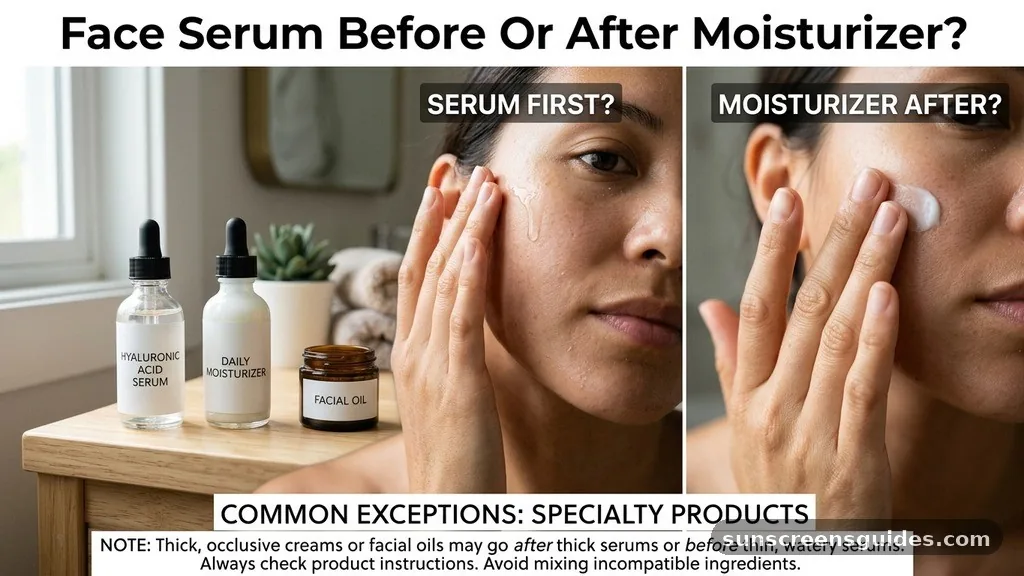
While the “serum before moisturizer” rule is the gold standard for most, certain products require a different approach. For instance, if you use a face oil, the rules shift slightly.
Face oils are generally heavier than water-based serums but lighter than thick, butter-based creams. If you have a very thin, watery serum and a heavy oil, you would apply the serum, then the moisturizer, and finally the oil as a finishing touch to lock everything in.
Another exception involves specific delivery systems or encapsulated treatments that might be designed to sit on the surface. Always check the manufacturer’s instructions if you are using high-end medical-grade skincare.
Some specialized treatments come with unique formulations that behave differently than standard over-the-counter products. When in doubt, the “thinnest to thickest” rule remains the most reliable heuristic for the average person building a daily routine.
| Product Type | Consistency | Typical Application Order |
|---|---|---|
| Water-based Serum | Thin/Fluid | First (after cleansing) |
| Light Lotion | Medium/Creamy | Second |
| Heavy Cream | Thick/Emollient | Third |
| Face Oil | Oily/Viscous | Last |
Addressing Topical Gaps in Skincare Layering
A common point of confusion involves the use of retinol or strong chemical exfoliants. Many people wonder if these should be treated like standard serums when deciding on the order of application.
Because retinol can be irritating, some dermatologists actually recommend applying a light moisturizer before the retinol to create a buffer. This “sandwich method” is a strategic deviation from the standard order, designed specifically to reduce side effects like redness or flaking while still allowing the active ingredient to work.
Another gap in knowledge relates to how damp skin affects absorption. Many enthusiasts suggest applying serums to slightly damp skin to enhance the performance of humectants like hyaluronic acid. This is technically true, as the extra water provides the humectant with more moisture to draw into the skin.
However, applying a moisturizer immediately after while the skin is still damp is also a pro-tip for sealing in that extra hydration. By understanding the chemical nature of your products, you can adjust these steps to suit your personal comfort level and skin sensitivity.
Conclusion
Mastering the sequence of your skincare is a simple adjustment that yields significant results. By consistently applying your face serum before your moisturizer, you ensure that high-performance ingredients are not blocked by the protective barrier of heavier creams. This method respects the biology of your skin, allowing for deeper absorption of actives while effectively trapping moisture to prevent dryness.
Whether you are using a potent vitamin c treatment or a hydrating niacinamide serum, the “thin-to-thick” rule will always serve as your best guide. Start paying attention to the textures of your products today, and you will notice better efficacy and a healthier, more balanced complexion over time. Feel free to reach out if you have specific questions about your current product lineup.
Is it ever okay to apply serum after moisturizer?
Generally, no. Moisturizers are too thick; they will block the serum from penetrating the skin effectively.
Does the order change at night?
No, the order remains the same: serums first for treatment, followed by moisturizer to seal the active ingredients.
Can I mix serum and moisturizer together?
You can, but it may dilute the efficacy of the active ingredients and alter their pH levels.
What if my serum is oil-based?
Oil-based serums should be applied after any water-based products but before your heaviest, thickest night cream.
How long should I wait between applications?
Wait about 30 to 60 seconds, or until the serum feels tacky but not wet, before applying moisturizer.
Does “face serum before or after moisturizer” apply to eye cream?
Eye cream is typically applied after serum but before your final heavy moisturizer, often using a lighter touch.
Will I get better results if I apply more serum?
Not necessarily; your skin has a limited absorption capacity, so a few drops are usually plenty for results.



