


Deciding what goes first serum or moisturizer is a common point of confusion that often dictates how well your products actually perform. Most dermatologists agree that the order of application is based on the consistency and the specific goals of your skincare routine. Since serums are typically lightweight and designed to penetrate deep into the epidermis, they usually take priority.
Understanding these fundamental rules prevents product pilling and ensures your active ingredients can do their job effectively. By following a logical sequence, you protect your skin barrier and allow each layer to provide its intended benefit without interference from thicker, protective creams.
The Science of Product Layering
The golden rule for layering skincare is to apply products from the thinnest to the thickest consistency. This ensures that lighter, water-based serum formulas can sink into the pores before a heavier, occlusive layer sits on top to seal everything in. If you apply a thick, creamy moisturizer first, its dense texture may block the smaller molecules of a serum from ever reaching their target.
Understanding Molecular Weight

Product performance is heavily influenced by molecular weight. Serums are formulated with smaller molecules that move past the surface layers of the skin. Moisturizers often contain larger molecules designed to sit on the surface to prevent trans-epidermal water loss. Applying the serum first honors this biological reality, allowing the hyaluronic acid or other potent treatments to hydrate the deeper layers before the moisturizer creates a protective seal.
Why Order Matters for Absorption
Effective product absorption depends on the skin’s ability to receive topical treatments without being overwhelmed by layers of oil or wax. When you apply a serum, you are essentially delivering a concentrated dose of nutrients. If you apply an oil-based moisturizer first, you create a physical barrier that prevents these nutrients from penetrating.
Managing pH Balance
Many high-performance serums, especially those containing vitamin C or exfoliating acids, require specific skin conditions to function. They are often formulated at a lower pH balance to remain stable and active. Applying a moisturizer—which usually has a more neutral pH—can disrupt this acidity, effectively neutralizing the efficacy of your treatment. By applying your serum directly to clean, dry skin, you ensure that the product operates within its optimal environment.
Creating the Perfect Sequence
To build a routine that actually works, you need to account for the texture and the function of each bottle in your cabinet. While there are rare exceptions for specialized treatments, most people benefit from a consistent, multi-step approach.
A Step-by-Step Layering Guide
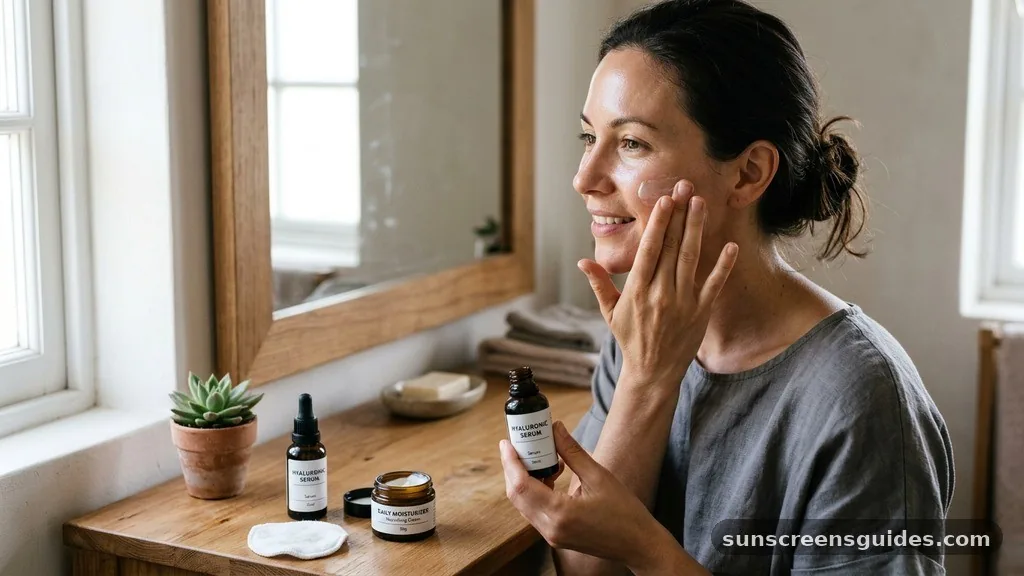
1. Cleanse your face thoroughly to remove impurities. 2. Apply a toner if you use one to balance the surface. 3. Apply your serum while the skin is slightly damp to boost absorption. 4. Allow 60 seconds for the serum to set. 5. Apply your moisturizer to lock in the hydration. 6. If using a facial oil, apply this as the final step.
| Product Category | Primary Function | Application Order |
|---|---|---|
| Cleanser | Removes debris | 1 |
| Treatment Serum | Targets concerns | 2 |
| Moisturizer | Hydrates/Protects | 3 |
| Facial Oil | Seals/Nourishes | 4 |
Addressing Topical Gaps: When to Break the Rules
You might wonder if there are times when you should reverse the standard order. Certain specialty products, such as prescription-grade retinol treatments, may require a different approach depending on your sensitivity levels.
Some dermatologists recommend applying a thin layer of moisturizer before a strong retinoid to buffer potential irritation. This technique, often called “sandwiching,” can minimize side effects without completely sacrificing the product’s benefits.
Additionally, if you are using a very thick, balm-like serum, it may actually be more effective to apply it after a lighter lotion. Always check the specific instructions provided by the manufacturer.
If a brand explicitly labels a product as an “essence” or “booster,” it usually goes on before even your lightest serum. Pay attention to how your skin feels; if you notice peeling or flaking, your layering technique might be interfering with the stability of your treatment.
The Role of Humectants and Occlusives
Understanding the chemistry of your ingredients helps you visualize why the order matters. Humectants are ingredients like glycerin or hyaluronic acid that pull water into the skin. If you apply a humectant-heavy serum without a moisturizer, the water can actually evaporate back into the air, leading to dryness.
Sealing the Moisture
This is where the moisturizer comes in. By acting as an occlusive, a moisturizer prevents the water pulled in by your serum from escaping. Think of the serum as the hydration source and the moisturizer as the lid on a container. Without the lid, your hydration efforts are wasted. This synergy is the primary reason why pairing these two steps is non-negotiable for most skin types.
Specific Ingredient Considerations
Different active ingredients have different needs. For instance, vitamin C is highly sensitive to light and air, so it should always be applied to clean skin to ensure it isn’t blocked by other residues. Similarly, retinol is a powerful active that benefits from being applied to dry skin to reduce the risk of irritation.
- Apply water-based products first to ensure deep penetration.
- Layer oils last because they can penetrate through creams but creams cannot penetrate oils.
- Wait for each layer to dry slightly before adding the next to prevent pilling.
- Use SPF in the morning as the absolute final step in your routine.
If you are using multiple serums, apply them from thinnest consistency to thickest consistency. Do not try to apply four different serums at once; your skin has a limited capacity for absorption. Choose one or two that address your most pressing concerns and allow them to dry fully before moving on to the next step of your regimen.
Refining Your Routine for Results
The key to a successful routine is consistency rather than complexity. Whether you use one serum or three, the order remains the same: treat, hydrate, and protect.
By keeping your application order logical, you maximize the efficiency of your products and protect your skin from unnecessary irritation. If you ever feel unsure about a new product, look at the viscosity—the thinner the liquid, the earlier it should be applied.
As you continue to refine your habits, remember that your skin’s needs may change with the seasons or as you age. Pay attention to how your complexion responds over several weeks. If you notice a particular combination isn’t working, don’t be afraid to adjust your sequence or swap out a product for one with a more compatible texture.
Your skin is unique, and small adjustments often lead to the best long-term results. Feel free to reach out if you have specific product combinations you are currently struggling to layer effectively.
Does serum always go before moisturizer?
Yes, because serums are thinner and contain concentrated actives that need direct access to skin cells.
What happens if I apply moisturizer before serum?
The moisturizer creates a barrier that prevents the serum’s active ingredients from penetrating the skin’s surface effectively.
Can I mix my serum and moisturizer together?
Mixing them can dilute the serum and change its pH, making the treatment less effective than applying separately.
How long should I wait between serum and moisturizer?
Wait about 60 seconds until the serum feels slightly tacky or dry before applying your thicker moisturizer layer.
Does the order change for nighttime routines?
The order remains the same, though you may use heavier creams or facial oils during your nightly routine.
Should I apply a facial oil before moisturizer?
No, apply facial oils last because they are highly occlusive and will block subsequent products from penetrating well.
What if I use multiple serums at once?
Apply them from the thinnest, most water-like consistency to the thickest, most viscous formula before using moisturizer.



