

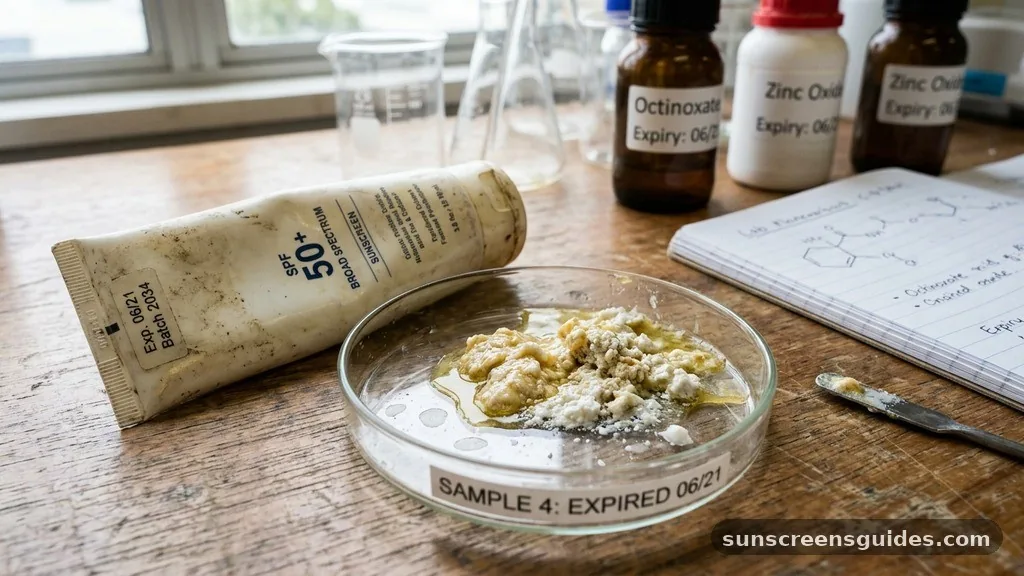
Many of us have reached into the back of a bathroom cabinet or a dusty beach bag to find a half-used bottle of lotion from seasons past. You might wonder if it’s safe to apply, especially when you realize that what happens when sunscreen expires can directly impact your health.
While that half-empty bottle seems like a convenient solution for a sunny day, the reality is that the chemistry inside that tube has likely changed. Understanding the science behind these products helps you decide whether to keep them or toss them out, ensuring you aren’t gambling with your skin’s safety during your next outdoor excursion.
Amazon Prime Big Deal Days are Oct 6–7. Join free today.
Start a free 30-day Amazon Prime trial to unlock members-only deals, free fast delivery, and Prime Video.
Get Big Deal Days Access Free
$14.99/month (plus tax) after trial. Cancel anytime. We may earn a commission if you sign up.
The Science of Chemical Degradation
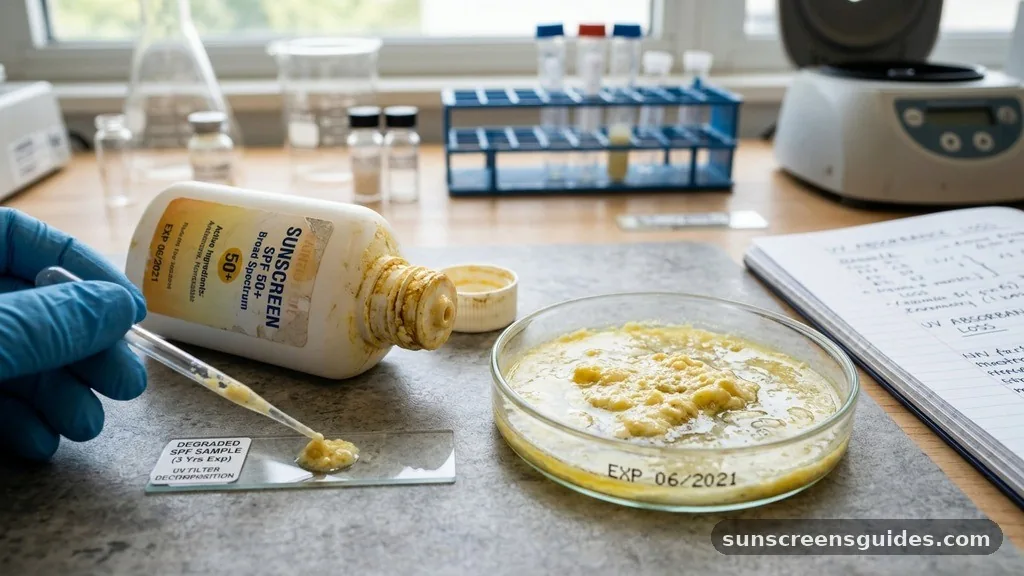
When a product reaches the end of its shelf life, it undergoes chemical degradation that fundamentally alters its performance. Sunscreens are sophisticated formulations designed to stabilize highly sensitive compounds that interact with sunlight.
Over time, these active ingredients lose their ability to perform their primary function: absorbing or reflecting ultraviolet radiation. When you expose these bottles to fluctuating environments, you accelerate the breakdown process.
The molecular structure of a UV filter is delicate. As time passes, the bonds within these molecules can break or rearrange, rendering the cream unable to create a protective barrier on your skin.
This isn't just a minor loss of strength; it represents a total failure of the product's intended purpose. If you rely on a bottle that has undergone significant sunscreen decomposition, you are essentially leaving your skin vulnerable to the very rays you are trying to block.
Understanding SPF Efficacy and Stability
The SPF efficacy listed on a bottle is only valid for as long as the formulation remains stable. Manufacturers conduct rigorous testing to ensure that their products maintain their stated protection levels under controlled conditions, but those conditions change the moment you open the seal. Once the product is exposed to air, humidity, and varying storage temperature ranges, the clock starts ticking on its stability.
The Role of Photo-stability
Photo-stability refers to the ability of a sunscreen to resist being broken down by the sun itself. While high-quality sunscreens are engineered to withstand solar energy, the chemical agents eventually reach a saturation point.
If the ingredients have already begun to degrade inside the container, they will fail even faster once applied to your skin. You are essentially using a product that has lost its internal integrity, making it incapable of offering broad-spectrum protection against both UVA and UVB rays.
Interpreting the PAO Symbol and Expiration Dates
Most people ignore the small icons on the back of their skincare products, yet these markers are critical for safety. The PAO symbol, which stands for "period after opening," usually features an open jar icon with a number like "12M" or "24M." This indicates how many months the product remains effective after you first break the seal.
Following these guidelines is essential because once oxygen enters the bottle, oxidation begins. This process can alter the consistency, smell, and color of the cream. Even if the bottle hasn't reached the printed expiration date, the time elapsed since opening is the true measure of its remaining utility.
| Indicator | Meaning | Action Required |
|---|---|---|
| Expiration Date | Manufacturer's guarantee of stability | Discard if the date has passed |
| PAO Symbol (12M) | Life span after initial opening | Mark the date of opening on the bottle |
| Visual Changes | Separation, odor, or color shift | Discard immediately regardless of date |
| Storage History | Left in hot cars or direct sun | Assume product is compromised |
Risks Associated with Expired Formulas
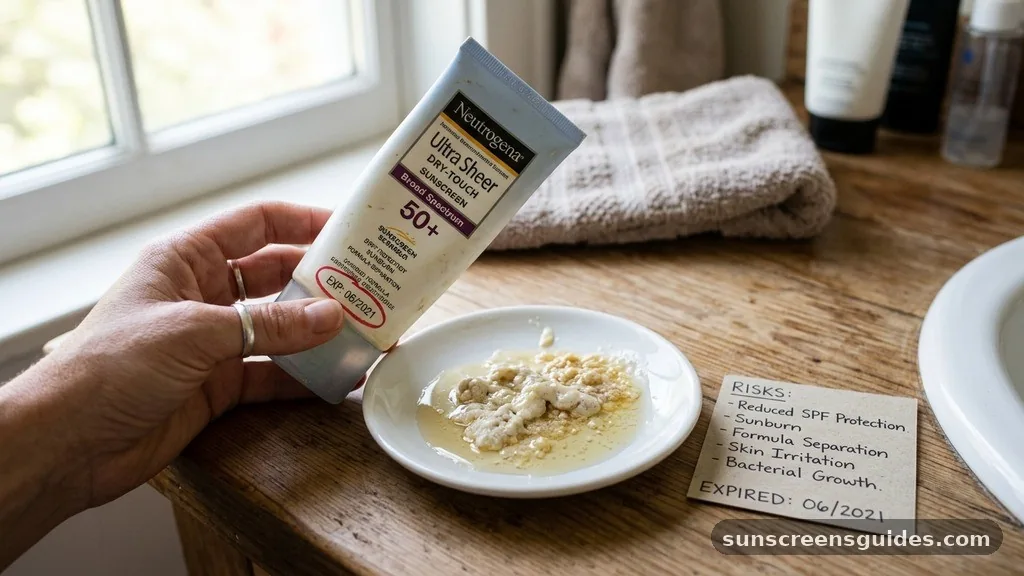
The primary concern regarding what happens when sunscreen expires is the increased sunburn risk. When the protective filters fail, the skin receives a dose of radiation far higher than what you might expect based on the label. This leads to immediate redness and long-term damage, such as premature aging and increased cellular mutation risks.
Beyond the loss of protection, expired products can also lead to skin irritation. As the chemical preservatives break down, the environment inside the bottle becomes hospitable for bacteria or mold.
You might experience contact dermatitis, rashes, or clogged pores from a formula that is no longer balanced. If you notice a change in the texture of your lotion—such as a watery consistency or a sour smell—it is a sign that the product has spoiled and should never touch your face or body.
Common Topical Gaps: Debunking Sunscreen Myths
Many consumers mistakenly believe that if a sunscreen hasn't changed appearance, it is still perfectly fine to use. This is a dangerous assumption because the most critical degradation occurs at the microscopic level where UV filter stability is compromised. You cannot see the loss of efficacy with the naked eye, which is why relying on an expiration date is the only objective way to ensure safety.
Another common misconception is that "natural" or mineral sunscreens last longer than chemical ones. While zinc oxide and titanium dioxide are inorganic minerals that don't technically "expire" in the same way carbon-based chemicals do, the carrier medium—the oils, waxes, and preservatives—definitely does. Once those supporting ingredients go rancid, the mineral particles may clump together, resulting in uneven application and massive gaps in your protection coverage.
- Always check the bottom or crimped edge of the tube for the printed expiration date.
- Store your products in a cool, dark place to extend their shelf life.
- If you cannot find an expiration date, assume the product is expired after 12 months.
- Avoid storing sunscreen in your car glove box, as heat destroys the formula.
- Use a permanent marker to write the date of opening on the container.
- Never mix old and new sunscreen, as the chemicals may react unpredictably.
- When in doubt, throw it out; the cost of a new bottle is cheaper than a medical treatment.
The Impact of Storage Temperature
Where you keep your bottle significantly dictates its longevity. FDA regulations require that sunscreens undergo specific stability testing, but these tests generally assume the product is kept at room temperature. If you store your sunscreen in a hot car, on a sunny windowsill, or inside a beach bag that sits in direct sunlight, you are accelerating the sunscreen decomposition process.
Heat acts as a catalyst for chemical reactions. It speeds up the breakdown of the emulsifiers that keep the cream smooth and the preservatives that keep it sterile.
Once the emulsion separates due to heat exposure, the active ingredients are no longer evenly distributed throughout the lotion. You might apply a dollop of cream that contains mostly oil or water, providing zero SPF protection while giving you a false sense of security.
Addressing Frequently Asked Questions
Is it still okay to use expired sunscreen?
No, you should avoid using it because the active ingredients have degraded and won't protect your skin.
Can I use sunscreen that is 4 years old?
Absolutely not; a four-year-old product is chemically unstable and likely contains harmful bacteria or mold growth.
Can I use sunscreen after 12 months of opening?
Only if the PAO symbol on your specific bottle indicates a lifespan longer than 12 months, otherwise discard.
Is sunscreen effective for 2 years?
Generally, most sunscreens have a shelf life of three years, but this assumes they remain unopened and cool.
What happens when sunscreen expires on my face?
You risk severe sunburn, skin irritation, and potential long-term damage due to the loss of UV filter stability.
Does "natural" sunscreen expire differently?
Yes, the carrier ingredients in mineral sunscreens still degrade, leading to clumping and uneven, ineffective sun protection coverage.
What is the safest way to store sunscreen?
Keep your sunscreen in a cool, dry place away from direct sunlight, such as a bathroom cabinet drawer.
Final Thoughts on Sunscreen Safety
Knowing what happens when sunscreen expires is a vital part of maintaining your skin health. While it might be tempting to save a few dollars by using that old tube, the trade-off is far too significant. Once the ingredients break down, you lose the barrier that protects you from the harmful effects of ultraviolet radiation.
By respecting expiration dates and monitoring the condition of your skincare products, you ensure that you stay protected during every sunny day. If you have any doubts about the age or quality of your sunscreen, the safest choice is always to replace it, giving your skin the reliable defense it deserves. Feel free to reach out if you have more questions about keeping your skin safe in the sun.



