

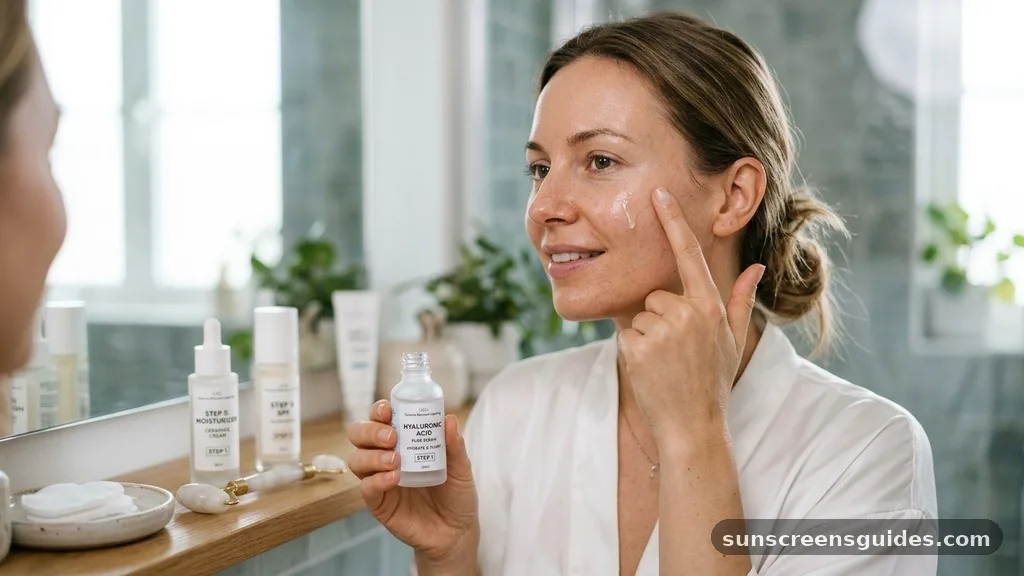
Deciding whether to apply your moisturizer or serum first often causes confusion for those building a daily regimen. Because these products serve distinct purposes, their placement in your sequence impacts how well your skin absorbs the treatment. Generally, you should apply your serum before your moisturizer to ensure the concentrated ingredients penetrate effectively.
This logical flow respects the varying textures and concentrations of modern cosmetic chemistry. By following the correct sequence, you maximize the efficiency of your active ingredients while ensuring your skin stays hydrated and protected throughout the day. Mastering this simple shift in your routine will help you see better results from your high-performance products.
The Science of Skincare Layering
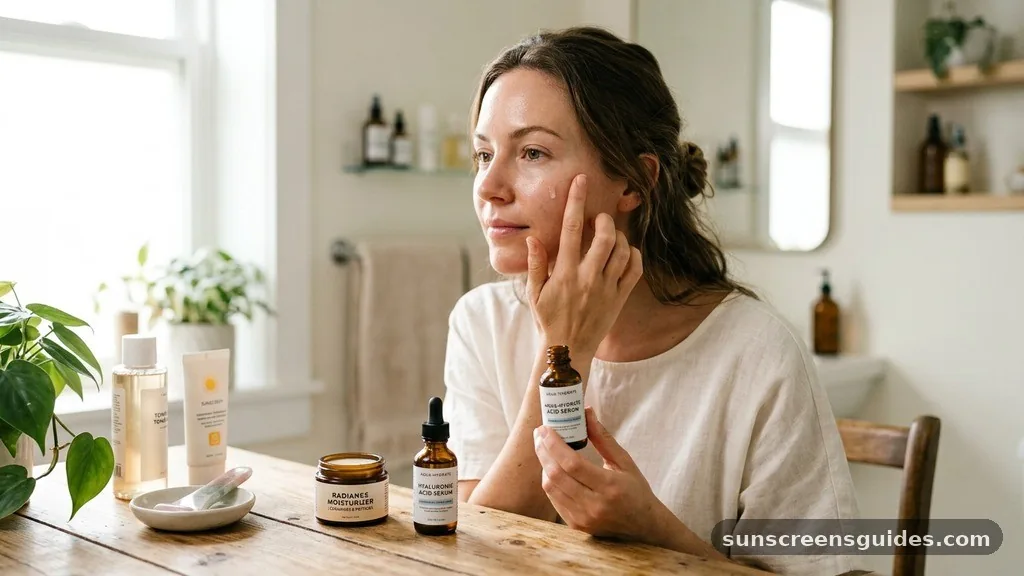
The fundamental rule for any successful regimen is applying products from the thinnest consistency to the thickest. Serums are typically lightweight, water-based formulas designed to deliver high concentrations of active ingredients directly into the deeper layers of the epidermis.
Because they have a lower molecular weight, they can pass through the top layers of the skin with ease. If you were to apply a heavy cream first, you would essentially create a barrier that blocks these potent ingredients from reaching their target destination.
Moisturizers, by contrast, are designed to sit on the surface or penetrate just enough to seal in hydration. They often contain heavier oils, waxes, or occlusives that form a protective film. If you reverse the order, you effectively negate the purpose of your serum.
Think of your serum as the treatment phase and your moisturizer as the finishing touch. Once the serum has been absorbed, the moisturizer acts as a sealant, keeping the active ingredients in and environmental pollutants out.
Understanding Molecular Weight and Absorption
Absorption rate is dictated by the chemical makeup of your products. Water-based formulas, which constitute the majority of serums, are designed for rapid uptake.
When you apply these to clean, slightly damp skin, they sink in almost instantly. This is the ideal moment to introduce your targeted treatments.
Occlusives, which are frequently found in a standard facial moisturizer, serve a different biological role. They work to prevent transepidermal water loss, a process where moisture evaporates from the skin throughout the day.
By placing the moisturizer on top of the serum, you create a dual-action system. You provide the skin with a concentrated dose of nutrients followed by an essential layer of protection.
The Role of Active Ingredients
Active ingredients like vitamin C or retinol require direct contact with the skin to function properly. When you use these in serum form, you need to ensure nothing interferes with their pathway. Retinol, for instance, is highly sensitive to the presence of other substances that might dilute its effect or cause unwanted irritation.
Humectants, such as hyaluronic acid, also play a vital role in this hierarchy. These ingredients draw moisture from the environment into the skin.
If you apply a thick, greasy layer before your hyaluronic acid, you limit the humectant’s ability to pull moisture from the air. Applying the serum first allows these ingredients to bind to your skin effectively before the moisturizer locks that hydration in place.
| Product Type | Primary Function | Consistency |
|---|---|---|
| Serum | Targeted treatment | Thin, water-based |
| Moisturizer | Barrier support | Thick, emulsion-based |
| Face Oil | Sealing | Lipid-rich |
Addressing Common Skincare Order Misconceptions
Many users wonder if they should mix their products together to save time. While this seems efficient, it can actually change the emulsion stability of your products.
Mixing a high-potency serum with a thick cream can alter the pH levels or prevent the ingredients from releasing as intended. It is almost always better to layer them individually, giving each product thirty to sixty seconds to settle.
Another common myth is that skipping moisturizer makes the serum work harder. In reality, the skin needs a balanced environment to remain healthy.
Without the final step of a moisturizer, your skin might actually dry out faster, especially if you live in a low-humidity climate. The serum provides the fuel, but the moisturizer provides the chassis that keeps everything running smoothly.
Optimizing Your Daily Regimen
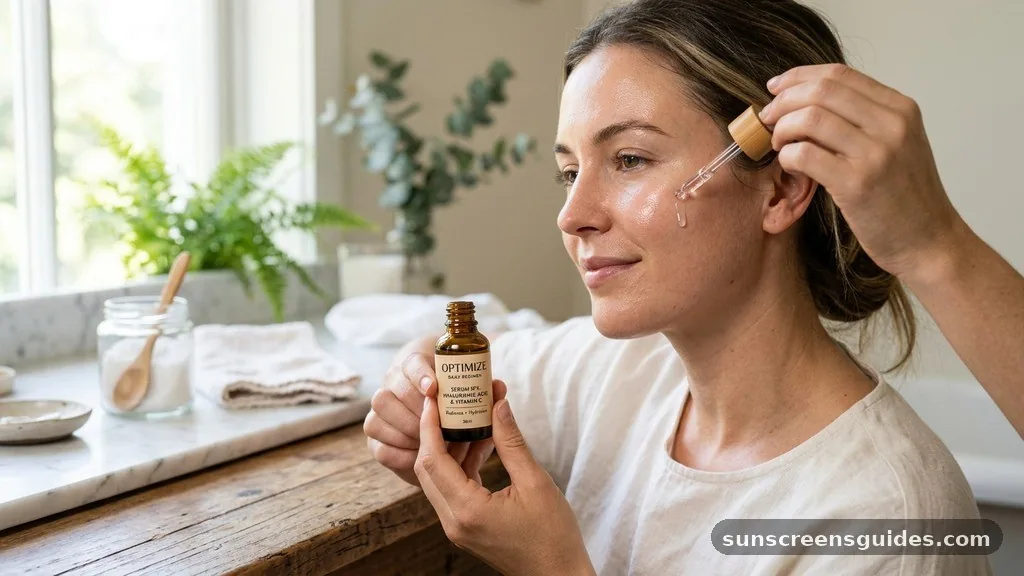
To get the most out of your routine, you should focus on the timing of your application. Applying your serum while your skin is still slightly damp after cleansing can significantly enhance penetration. Once it feels tacky to the touch, you know it is time to move on to your moisturizing step.
- Cleanse your face to remove debris and oils.
- Apply your serum while the skin is still slightly moist.
- Wait roughly one minute for the serum to absorb completely.
- Apply your facial moisturizer to lock in the nutrients.
- Finish with sunscreen during your morning routine.
Identifying Topical Gaps in Skincare Knowledge
A major gap in most advice regarding the order of application is how to handle multiple serums. When you have more than one treatment, the rule of thinnest-to-thickest still applies. Always start with the most watery consistency, such as a vitamin C serum, and move toward more viscous, gel-like treatments.
Another overlooked factor is the influence of skin type. Those with oily skin might be tempted to skip the moisturizer entirely, but this can cause the skin to overcompensate by producing more oil.
If you have an oily complexion, choose a lightweight, gel-based moisturizer rather than a heavy cream. This allows you to maintain the benefits of your serum without feeling weighed down.
How Ingredients Interact with the Skin Barrier
The skin barrier function is your body’s primary line of defense against the outside world. When this barrier is compromised, you experience sensitivity, redness, and dehydration. By using serums that support barrier health—such as those containing ceramides or niacinamide—you are actively repairing the skin.
However, applying these on top of a thick layer of occlusives prevents them from reaching the cells that need them most. The active ingredients need to integrate into the skin matrix to influence cellular turnover and collagen production. Once they have integrated, the moisturizer acts as a top-coat, protecting the barrier while it repairs itself.
FAQ: Common Questions on Skincare Layering
Does the order change if I use multiple serums?
Yes, always apply your thinnest, most watery serums first before moving to thicker, gel-like formulas.
Can I apply moisturizer before a vitamin C serum?
No, applying moisturizer first creates a barrier that prevents the active vitamin C from penetrating effectively.
Why does my skin feel sticky after applying my serum?
Stickiness often occurs if you apply too much product or if your serum has a high concentration of humectants.
Should I wait for my serum to dry completely?
You do not need to wait for it to dry, but allowing it to settle for sixty seconds is recommended.
Does retinol follow the same layering rule as other serums?
Yes, retinol should be applied after cleansing and before your moisturizer to ensure maximum efficacy and minimal dilution.
Is it ever okay to mix my serum into my moisturizer?
While convenient, it is better to layer them separately to maintain the stability and potency of your ingredients.
How do I know if my moisturizer is too heavy for my serum?
If your skin feels greasy or you experience breakouts, your moisturizer may be too occlusive for your skin type.
Achieving Consistent Results
Understanding the sequence of your products is the difference between having a shelf full of expensive liquids and having a truly effective routine. By consistently applying your serums before your moisturizer, you ensure that your skin receives the full benefits of every active ingredient you purchase. This methodical approach minimizes waste and maximizes the health of your skin barrier.
If you find that your current products are not performing as expected, re-examine your layering steps first. Small adjustments in how and when you apply these treatments can lead to significant improvements in your skin’s texture and appearance.
Start by simplifying your process, focusing on the thinnest-to-thickest rule, and watch how your skin responds over the coming weeks. If you have questions about specific combinations, feel free to share your current routine for more tailored insights.



