

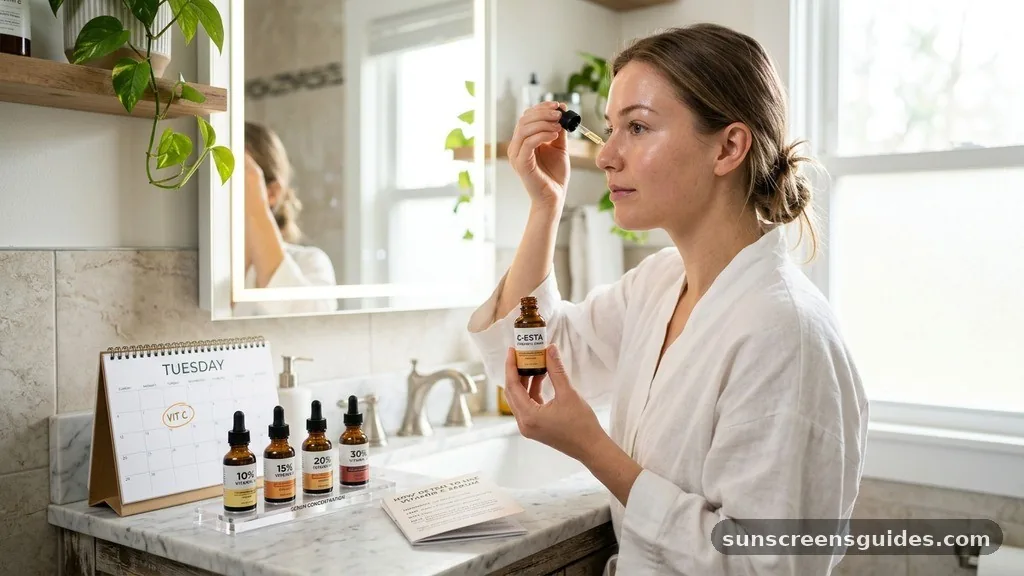
Determining how often to use vitamin C serum is essential for anyone looking to brighten their complexion or protect their skin from environmental stressors. While many enthusiasts advocate for daily application to maximize the benefits of this potent topical antioxidant, your specific skin type and product formulation play a significant role in your success.
Understanding the balance between frequency and potential sensitivity allows you to harness the power of L-ascorbic acid without compromising your delicate skin barrier. Whether you are a beginner or a seasoned skincare user, getting the timing right ensures you receive the maximum boost for collagen production and long-term skin health.
Understanding Optimal Frequency for Vitamin C
The gold standard for most dermatologists is to apply your vitamin C treatment once every 24 hours. Because it serves as a powerful topical antioxidant, it works most effectively when applied during your morning skincare routine.
This timing provides your skin with a defensive shield against free radicals, pollution, and UV radiation encountered throughout the day. While some people might be tempted to apply it twice daily, this rarely provides extra benefits and may actually lead to unnecessary redness or dryness.
For those just beginning to incorporate this active ingredient, starting slow is the smartest approach. You might find that applying it every other day allows your pores and moisture mantle to adjust to the serum concentration.
Once your skin shows no signs of irritation, you can gradually transition to a daily cadence. Consistency remains the most important factor in seeing visible improvements, such as the fading of hyperpigmentation or a more uniform skin tone.
Factors Influencing Your Usage Schedule
Several variables dictate your ideal schedule, ranging from the stability of your chosen formula to how your complexion reacts to acidic pH levels. Not all serums are created equal, and high-potency options require a more cautious approach than milder derivatives like sodium ascorbyl phosphate. If you notice persistent stinging or peeling, it is a clear signal to scale back your frequency rather than pushing through the discomfort.
The Role of Serum Concentration

High-potency formulas containing 15% to 20% L-ascorbic acid are highly effective but come with a higher risk of irritation. If your product falls into this high-concentration bracket, daily use is standard for tolerant skin, but sensitive types should exercise restraint. Beginners should look for lower concentrations—often in the 5% to 10% range—which provide sufficient epidermal absorption while minimizing the likelihood of a negative reaction.
Skin Sensitivity and Patch Testing

Before committing to a daily regimen, you must perform a patch test on a small area of your inner arm or behind your ear. This simple step reveals how your dermis interacts with the specific formula before you apply it to your entire face.
If you experience itching, burning, or breakouts, you may have a compromised barrier or a sensitivity to the delivery system. Should irritation occur, stick to a thrice-weekly application until your skin builds up a tolerance.
Strategic Layering and Product Compatibility
One of the most frequent questions regarding how often to use vitamin C serum involves its interaction with other active ingredients. Combining products incorrectly can lead to severe skin irritation or neutralize the effectiveness of your serums. You must be mindful of the pH requirements of your various products to ensure each step in your routine functions as intended.
Common Ingredient Conflicts
It is often advised to avoid applying retinol or strong exfoliating acids at the exact same time as your vitamin C, as the combination can be too harsh for many people. If you wish to use both, designate the vitamin C for the morning and keep your retinol for the evening. When using niacinamide, some older research suggested it could cause flushing when mixed with vitamin C; however, modern, stabilized formulas generally pose no issue.
| Ingredient | Compatibility with Vitamin C | Recommended Timing |
|---|---|---|
| Retinol | Low (due to potential irritation) | Use Vitamin C AM, Retinol PM |
| Niacinamide | High (in modern formulations) | Layering is generally safe |
| AHAs/BHAs | Moderate (risk of over-exfoliation) | Alternate days or separate by time |
| Broad-spectrum sunscreen | Very High (essential partner) | Apply sunscreen after Vitamin C |
Addressing Common Topical Gaps
Many users struggle with the “day or night” debate, often wondering if they are missing out by sticking to a morning-only routine. While vitamin C is technically a light-sensitive molecule, it does not cause photosensitivity in the way that retinoids do.
In fact, its ability to neutralize free radicals makes it the perfect companion to your broad-spectrum sunscreen. It boosts the protective power of your SPF, essentially acting as an insurance policy against sun damage.
Another gap in common knowledge involves the oxidation of the product itself. If your serum has turned a dark orange or brown, it has oxidized and lost its efficacy.
Using an oxidized product is not necessarily harmful, but it is effectively useless as an antioxidant. Store your bottle in a cool, dark place to extend its shelf life and ensure you are getting the full benefits of the active ingredients with every drop.
Essential Tips for Successful Application
* Cleanse your face thoroughly before application to ensure the skin is free of debris.
* Apply the serum to dry skin to reduce the risk of stinging or potential irritation.
* Allow the formula to absorb fully for at least 60 seconds before moving to your next step.
* Always follow with a moisturizer to lock in hydration and support the barrier.
* Never skip your sunscreen, as vitamin C does not replace the need for SPF protection.
* Check the bottle’s expiration date, as potency degrades significantly after opening.
* Observe your skin daily; if it feels tight or uncomfortable, reduce your frequency immediately.
Addressing Frequently Asked Questions
Are you supposed to use vitamin C serum every day?
Yes, most dermatologists recommend once-daily application, typically in the morning, to provide optimal antioxidant protection throughout the day.
What should you not mix with vitamin C?
Avoid combining it with high-strength AHAs, BHAs, or retinol in the same application to prevent severe skin irritation.
What are the mistakes while using vitamin C serum?
Common errors include using oxidized product, skipping sunscreen, or applying it on damp skin, which increases potential stinging.
Can I leave vitamin C serum on my face overnight?
Yes, you can use it at night, but it is most effective in the morning for environmental protection.
Does vitamin C cause photosensitivity?
No, vitamin C does not make your skin sensitive to the sun; it actually boosts the efficacy of sunscreen.
How do I know if my vitamin C is expired?
If the liquid has turned a dark amber or brown color, the ingredient has oxidized and lost its potency.
Should I apply moisturizer before or after vitamin C?
Always apply vitamin C first on clean, dry skin, then follow with moisturizer to seal in the active benefits.
Conclusion
Integrating this powerhouse ingredient into your life is a journey of finding what works for your unique complexion. Once you determine how often to use vitamin C serum effectively—typically once every morning—you will likely notice a brighter, more resilient appearance over time. Remember to prioritize consistency, choose a stable formula, and always pair your efforts with reliable sun protection.
By respecting your skin’s tolerance levels and avoiding harsh ingredient clashes, you can safely enjoy the long-term rewards of increased radiance. If you have been hesitant to start, begin with a lower concentration and watch how your skin transforms with this simple, evidence-backed addition to your daily habits. Feel free to observe your progress and adjust your routine as your skin’s needs evolve.



