

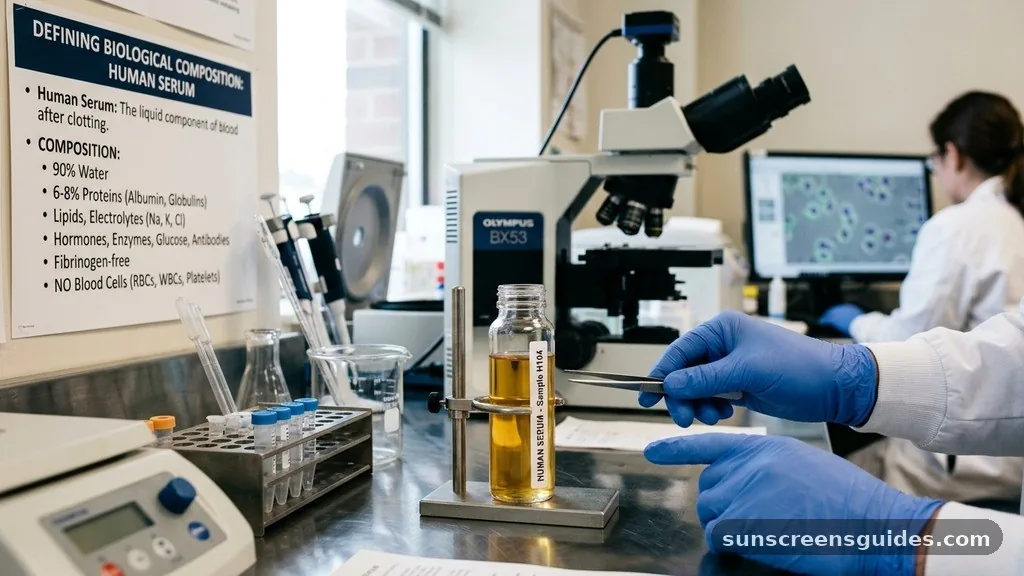
When you look at a vial of blood drawn during a routine checkup, it might just seem like a red liquid, but beneath the surface lies a complex mixture of proteins and electrolytes. Understanding what is human serum requires separating this fluid from the cellular components of blood to reveal the clear, amber-colored liquid that serves as a cornerstone of medical science.
By allowing the blood to clot and removing the solid mass, scientists isolate a substance rich in biological information. This fluid is essential for everything from detecting viral infections to growing specialized cells in a laboratory setting, making it one of the most vital tools in modern diagnostics.
Defining the Biological Composition of Human Serum

At its most basic level, human serum is the liquid portion of blood remaining after the coagulation process has occurred. When blood is collected from a venous blood sample and allowed to sit, the natural clotting mechanism activates, trapping cells and specific proteins like fibrinogen within a dense mesh.
Once this clot forms, the remaining liquid—the supernatant—is what we identify as serum. This fluid lacks the clotting factors found in blood plasma, which makes it a unique medium for testing because it won’t spontaneously gel or interfere with sensitive analytical instruments.
The chemical makeup of this fluid is incredibly dense, containing a wide array of vital solutes. Key components include:
- Human serum albumin, which is the most abundant protein and helps maintain osmotic pressure.
- Immunoglobulins, the antibodies your immune system produces to fight off pathogens.
- Electrolytes such as sodium, potassium, and calcium that keep your cellular metabolism balanced.
- Hormones, enzymes, and metabolic waste products that act as markers for overall health.
Because it contains such a broad spectrum of dissolved molecules, it provides a comprehensive snapshot of an individual’s physiological state at the moment of collection. Clinicians rely on this stability to measure everything from cholesterol levels to liver enzyme activity, ensuring that the results they see in the lab accurately reflect what is happening inside the patient’s body.
The Technical Process of Serum Separation
To obtain high-quality serum, laboratories must perform a precise sequence of steps involving centrifugation. After a sample is drawn, it is usually placed in a tube designed to accelerate the clotting process, often containing specialized gels or clot activators.
The sample must stand for a specific duration—typically 30 to 60 minutes—to ensure that the fibrin mesh fully develops and traps all the necessary cellular elements. Once clotting is complete, the technician spins the tube in a centrifuge at high speeds.
This process forces the solid clot and the remaining blood cells to the bottom of the tube, leaving a distinct layer of clear liquid at the top. This clean separation is crucial for laboratory analysis because any remaining cellular debris could contaminate the results of an assay. The quality of the final product depends entirely on how well this separation is managed; if the process is rushed or if the wrong tube type is used, the results can be skewed by hemolysis or incomplete clotting.
| Feature | Blood Plasma | Human Serum |
|---|---|---|
| Clotting Factors | Present (e.g., Fibrinogen) | Absent |
| Preparation | Requires anticoagulants | Requires natural clotting |
| Primary Use | Coagulation studies | Clinical chemistry/Immunoassays |
Clinical Diagnostics and Therapeutic Applications

The role of this fluid in clinical diagnostics cannot be overstated, as it serves as the primary medium for the vast majority of blood tests performed in hospitals today. When a doctor orders a metabolic panel or a screening for infectious diseases, they are almost certainly looking for specific proteins or biomarkers residing within the serum. Through techniques like electrophoresis, technicians can separate these proteins by size and electrical charge, helping to identify conditions like multiple myeloma or chronic inflammation.
Beyond testing, the material itself is valuable in therapeutic settings. Human serum albumin, for instance, is purified and used in clinical practice to treat patients suffering from severe burns, shock, or liver disease. By restoring blood volume and helping to transport essential hormones and drugs throughout the body, these serum-derived products save lives in emergency rooms every day. The ability to fractionate these proteins out of the liquid represents a high-level achievement in blood fractionation technology, turning a simple biological byproduct into a potent pharmaceutical resource.
Biomedical Research and Cell Culture Media
In the world of biomedical research, this liquid is often used as a growth supplement for cells grown in vitro. Because it is rich in growth factors, hormones, and attachment proteins, it provides an ideal environment for cells to thrive outside the human body.
Scientists utilize it in cell culture media to ensure that their experimental cell lines behave as closely as possible to how they would in a living organism. Without the support provided by these complex biological ingredients, many sensitive cell types would struggle to divide or maintain their original characteristics.
Addressing Common Gaps in Knowledge
Many people wonder about the safety and sourcing of these biological materials. A frequent question is whether the serum used in research is always human-derived. In reality, while human serum is the gold standard for specific human-cell studies, laboratories often use fetal bovine serum (FBS) because it is more readily available and highly standardized for general cell culture. Another common gap involves the potential for contamination. Researchers must be extremely careful because human-derived materials can carry pathogens. Consequently, all serum intended for research or clinical use undergoes rigorous screening and processing, such as heat inactivation or filtration, to ensure that it is free of infectious agents while retaining its essential biological activity. This level of oversight ensures that the data produced in the lab remains reliable and safe for the researchers handling the samples.
Conclusion
The study of this vital biological fluid reveals much about the complexity of the human body. By isolating it through careful centrifugation and understanding its role in everything from diagnostic testing to therapeutic intervention, medical professionals gain a clearer window into systemic health.
Whether it is being used to identify a subtle chemical imbalance in a patient or to support the growth of cells in a research environment, the material serves as an indispensable tool in modern medicine. If you are interested in how these diagnostic processes affect your own healthcare, speaking with a laboratory professional or your primary care provider about the specific tests being run on your samples can provide valuable insight into your personal health journey.



