

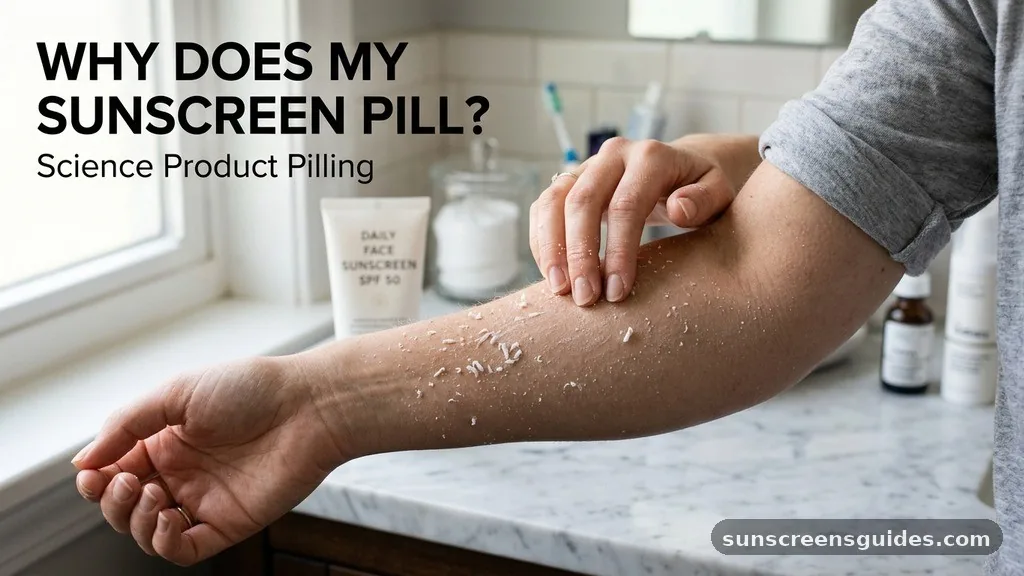
Dealing with the frustration of finding tiny, rubbery beads of product across your face while getting ready is a common skincare hurdle. When you notice that my sunscreen pill is a recurring issue, it usually stems from the way your layers interact rather than a defect in the product itself.
Understanding the chemistry behind your products helps you adjust your routine for a smooth, protected finish. By learning how to time your application and match your product bases, you can easily stop those annoying clumps from forming.
The Science of Product Pilling
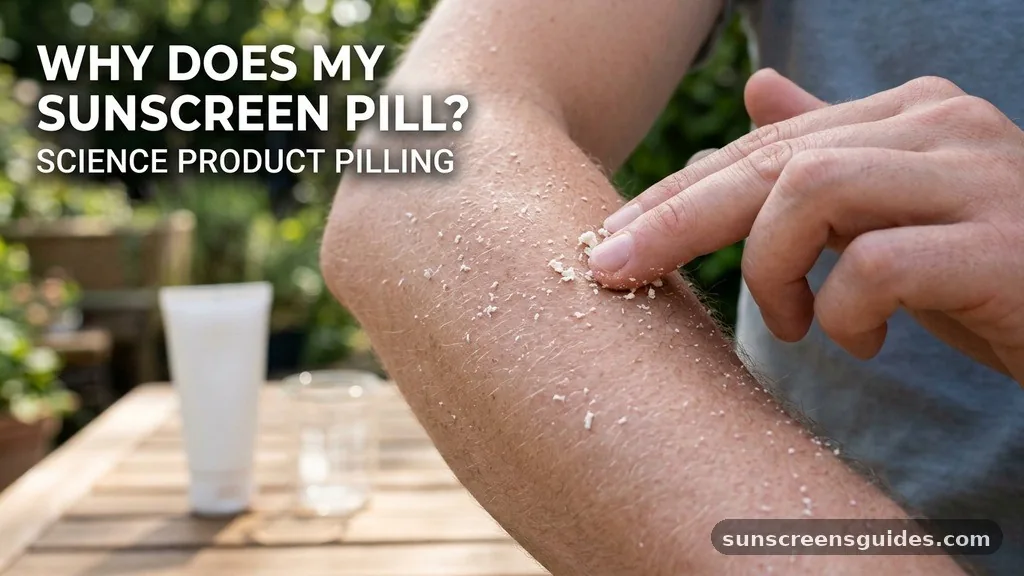
Pilling occurs when topical products fail to absorb into the skin, instead forming small, unsightly clumps on the surface. This happens because the active ingredients and binders in your skincare aren’t playing nice with one another.
When you apply a second layer before the first has settled, you essentially create a physical friction that rolls the unabsorbed product into beads. This is particularly common when you mix water-based and oil-based formulations that lack emulsion stability.
Think of your skin as a surface that can only hold a specific amount of product at once. If you apply a heavy cream, a serum, and then a sunscreen, the final layer often sits on top of a saturated barrier.
Because the film-forming agents in SPF are designed to stay on the surface to protect you, they can easily pick up the residue of your previous products. This creates the balling effect that leaves your complexion looking uneven.
Identifying Incompatible Ingredients
The most frequent culprit behind a pilling sunscreen is polymer incompatibility. If you use a silicone-based primer or moisturizer beneath a sunscreen that uses different thickening agents, the two may resist binding to your skin. Silicone creates a smooth, slippery shield, but if that shield hasn’t dried, the sunscreen layer slides over it like a wet cloth on a polished table.
Common Incompatibility Patterns
* Water-based serums mixed with heavy, oil-rich occlusives.
* High-molecular-weight hyaluronic acid layered under thick SPF.
* Excessive use of mineral powders directly onto damp moisturizer.
* Mixing silicones with non-silicone-compatible polymers.
When you notice that my sunscreen pill happens consistently with a specific combination, try swapping one product for another. You might find that switching to a lighter, gel-textured facial moisturizer prevents the slide that leads to pilling. Checking the ingredient list for common silicones like dimethicone can help you ensure your layers are chemically consistent.
The Role of Skincare Layering and Absorption
Mastering your skincare layering routine is the single most effective way to prevent texture issues. Many people rush through their morning routine, applying products in quick succession without allowing for adequate skin absorption time. If your moisturizer is still tacky to the touch, you are virtually guaranteed to experience pilling when you swipe your sunscreen over it.
You should aim to wait at least 60 seconds between each step of your routine. This window allows the humectants in your moisturizer to penetrate the epidermis and the water content to evaporate. If you are in a rush, a quick pat with a clean tissue can remove excess product that hasn’t absorbed, creating a much better canvas for your sun protection.
Distinguishing Between Physical and Chemical Filters
The type of SPF you choose significantly impacts the likelihood of pilling. A physical sunscreen contains minerals like zinc oxide or titanium dioxide, which are essentially powders suspended in a liquid base. Because these particles sit on top of the skin, they are inherently more prone to pilling if the surface below is uneven or too slippery.
In contrast, a chemical sunscreen absorbs into the top layers of the skin, making it generally more compatible with makeup and skincare layers. However, chemical filters often require specific occlusives to maintain stability, which can sometimes interact poorly with heavy silicone primers.
| Sunscreen Type | Pilling Risk | Best Application Method |
|---|---|---|
| Physical (Mineral) | Higher | Press into skin; do not rub or drag. |
| Chemical | Lower | Apply in thin, even layers; wait to dry. |
Addressing Topical Gaps and Skin Prep
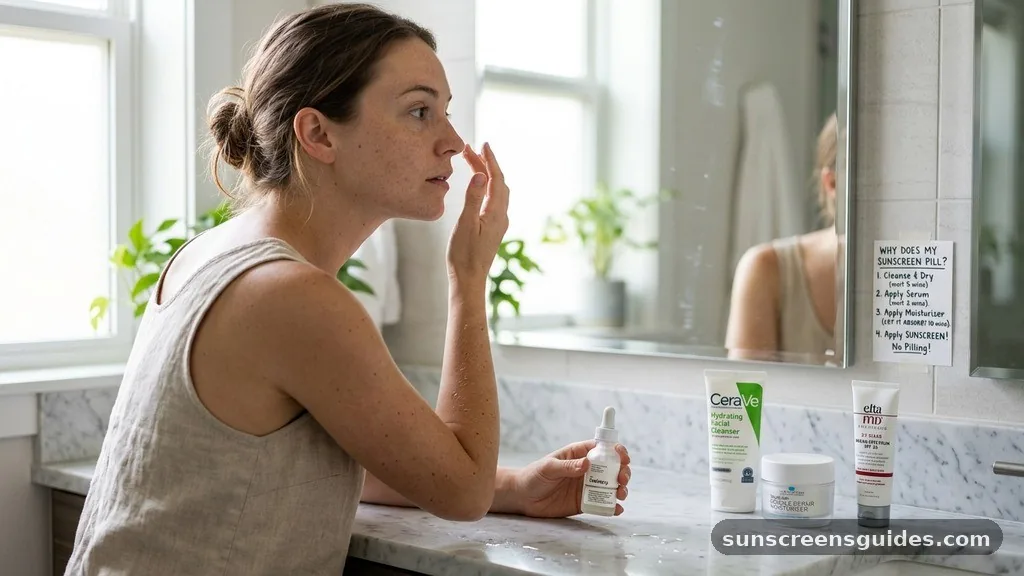
A frequently overlooked factor is the state of your skin barrier integrity. If your skin is dehydrated or contains a buildup of dead cells, products will have a difficult time adhering properly. Regular exfoliation helps remove the rough texture that traps product beads, creating a smooth surface that holds onto SPF more effectively.
If you find that my sunscreen pill persists even after changing your products, consider if you are applying too much product at once. It is often better to apply two thin layers of sunscreen, waiting a minute in between, rather than one thick glob. This method ensures that the film-forming agents distribute evenly without overloading the skin’s capacity to absorb.
Troubleshooting Your Daily Routine
If you’ve optimized your timing and product compatibility but still face issues, look at your application technique. Rubbing your sunscreen in circular, vigorous motions is a common mistake that encourages pilling.
Instead, try a patting or “stippling” motion with your fingertips. By pressing the product into the skin, you minimize the friction that causes the polymers to clump together.
Also, consider the state of your skin before you start. If you are washing your face with very hot water, it can cause your pores to remain slightly dilated and your skin to stay damp longer, which interferes with the setting of your sunscreen. Using lukewarm water and finishing with a light tap of a toner can help prepare your face for a more uniform application.
When Sunscreen Pills, Does It Still Work?
A common worry is whether a pilling product loses its protective efficacy. While some of the SPF is physically removed when the beads flake off, it doesn’t mean your entire protection is gone.
However, a patchy application means you aren’t getting the full SPF rating listed on the bottle. If you see significant pilling, you should ideally wash the area and reapply, or at least use a makeup sponge to smooth the remaining product back into the skin to ensure even coverage.
FAQ
Why does my sunscreen pill when I apply makeup?
Makeup often contains pigments and waxes that react with the polymers in your sunscreen, causing them to ball up.
Does pilling mean my sunscreen isn’t working?
Pilling creates gaps in your protective layer, meaning you aren’t receiving the full, uniform coverage you require for safety.
How can I stop my sunscreen from pilling?
Wait at least one minute between your moisturizer and sunscreen, and use a patting motion instead of rubbing vigorously.
Is pilling more common with mineral or chemical sunscreens?
Mineral sunscreens are generally more prone to pilling because the physical particles sit on top of the skin surface.
Should I exfoliate if my sunscreen keeps pilling?
Yes, gentle exfoliation removes dead skin cells that create an uneven surface, allowing your skincare to apply more smoothly.
Can the order of my skincare products cause pilling?
Applying products from thinnest consistency to thickest is essential to prevent heavy layers from blocking lighter, hydrating ones.
Will a primer stop my sunscreen from pilling?
A primer can help, but ensure it is compatible with your sunscreen; using two silicone-heavy products can actually increase pilling.
Maintaining Long-Term Results
Addressing why my sunscreen pill happens requires a shift in how you view your skincare routine. By focusing on ingredient compatibility, proper absorption time, and gentle application, you can eliminate this issue entirely. Consistency is key when testing new combinations; give your skin a few days to adjust to a new layering order before deciding if it works for you.
Remember that a smooth application is the foundation of effective sun protection. If you continue to struggle, try stripping your routine back to the basics and adding products one by one to identify which specific item is causing the interference. Your skin will thank you for the simplified, more effective approach to daily protection.



