

Effectively removing sunscreen from your skin is just as vital as applying it in the first place. Many modern sun protection products are formulated to be water-resistant, which means they are specifically designed to cling to the skin even when you sweat or swim.
If you aren’t using the right technique to break down these stubborn, hydrophobic filters at the end of the day, you might end up with residual product that leads to clogged pores or breakouts. Taking a few extra minutes to learn how to remove sunscreen properly will keep your skin clear, healthy, and ready for your next morning application.
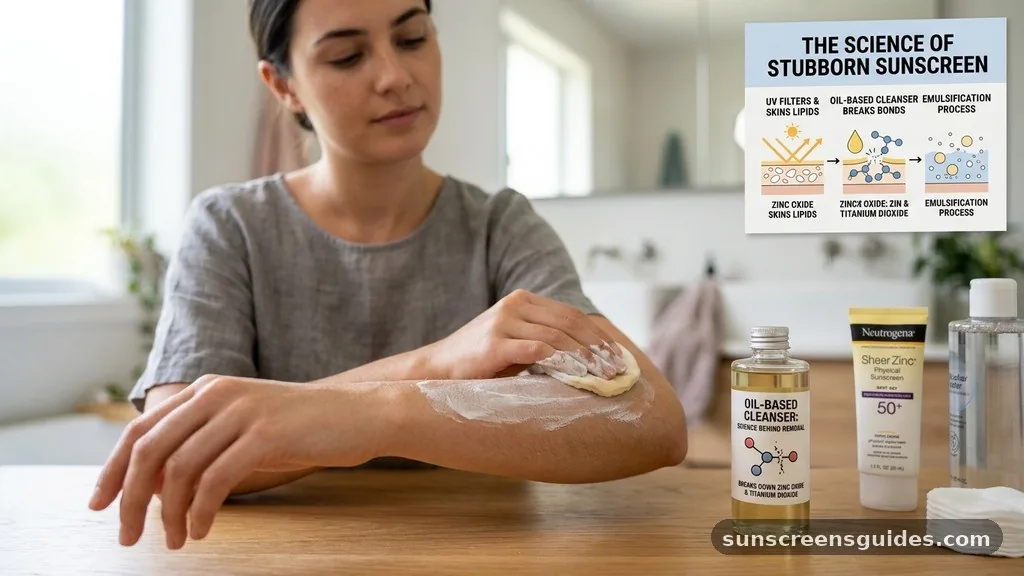
The Science Behind Stubborn Sunscreen
Sunscreen is designed to be persistent. If it washed off easily with just a splash of water, it wouldn’t offer much protection during a long day at the beach or a sweaty workout. These products rely on specific ingredients that resist moisture, which makes them difficult to remove with standard, water-based face washes alone.
Understanding what you are washing off is the first step toward effective removal. Mineral sunscreen formulations typically use active ingredients like zinc oxide or titanium dioxide. These sit on top of the skin and create a physical barrier. While they are great for sensitive skin, they can be remarkably tenacious.
On the other hand, chemical sunscreen formulas work by absorbing UV rays and converting them into heat. These chemicals are often oil-soluble, meaning they bind closely to the natural sebum your skin produces throughout the day.
Why Double Cleansing Is Your Best Defense
Double cleansing is widely considered the gold standard for removing sunscreen and daily grime. This two-step process ensures that you aren’t just pushing dirt and remnants around your face. By using an oil-based cleanser first, you effectively dissolve the oil-soluble components of your sun protection.
The chemistry here relies on the principle that “like dissolves like.” Since sunscreen filters are often oil-based, an oil cleanser acts as a magnet to pull these ingredients away from your pores.
Once you have broken down the initial layer of product, you follow up with a water-based cleanser to remove the remaining residue and any sweat or debris. This method is especially important for those prone to comedogenic reactions, as it prevents the buildup of product that can trigger acne.
Choosing the Right Removal Products
Not all cleansers are created equal. Depending on your skin type and the specific product you use, you might prefer different textures or formulations. Here is how common options stack up for removing stubborn SPF.
| Cleanser Type | Mechanism | Best For |
|---|---|---|
| Cleansing Balm/Oil | Dissolves oil-based filters | Heavy-duty/water-resistant SPF |
| Micellar Water | Uses micelles to trap debris | Quick removal/sensitive skin |
| Gel/Foam Cleanser | Uses surfactants to lift dirt | Second-step cleansing |
If you wear heavy-duty, water-resistant formulas, a cleansing balm is usually the most effective choice. These solid fats melt into an oil when rubbed between your hands, providing excellent grip on sunscreen filters. Micellar water is a great, gentle alternative for those who don’t want to use a heavy oil, though it may require a few extra cotton pads to ensure everything is removed.
How to Remove Sunscreen Step-by-Step

Follow these steps to ensure you leave no residue behind. Consistency is key to maintaining a healthy skin barrier.
- Start with dry hands and a dry face to ensure the oil cleanser attaches directly to the sunscreen.
- Massage the cleanser into your skin for at least 60 seconds, paying extra attention to the hairline and jawline.
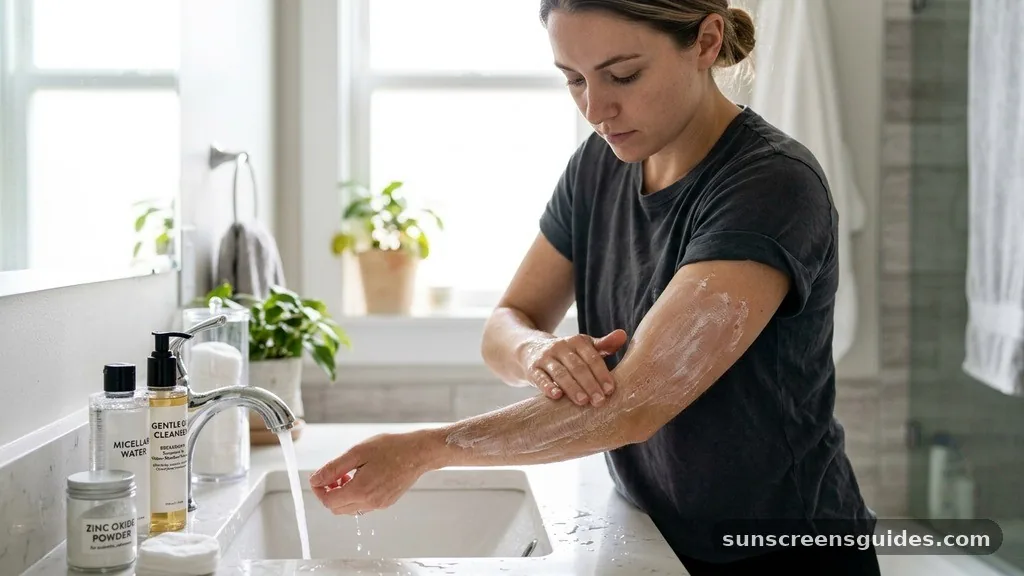
- Add a small amount of warm water to your face to trigger emulsification, where the oil turns into a milky consistency.
- Rinse thoroughly with lukewarm water.
- Apply your water-based cleanser to remove any final traces of the oil and dirt.
- Pat your skin dry with a clean towel.
Addressing Common Topical Gaps
People often wonder if they can skip the double cleanse if they only used a light SPF. While you might get away with it occasionally, skipping the proper removal process can lead to long-term issues.
Can You Remove Sunscreen Without Specialized Cleansers?
Many people ask if standard soap or just water is sufficient. Plain water will not break the bond of a water-resistant formula because the product is specifically designed to be hydrophobic. Using harsh bar soaps can strip your skin of its natural moisture, leading to irritation. If you don’t have an oil-based cleanser, you can use common household oils like jojoba or squalane to break down the sunscreen before washing with your regular face wash.
How to Handle Sunscreen in Hair
Sunscreen often migrates into the hairline, which can cause scalp buildup. If you notice a greasy or white residue near your roots, use a clarifying shampoo once a week. You can also use a soft-bristled scalp brush while shampooing to help physically dislodge the mineral particles trapped near the hair follicles.
The Role of Gentle Exfoliation
If you feel that your skin still feels “coated” after cleansing, you might benefit from gentle exfoliation. Using a washcloth or a mild chemical exfoliant once or twice a week can help remove stubborn mineral particles that might have settled into your pores. Avoid over-scrubbing, as this can damage your skin barrier and lead to increased sensitivity.
The Importance of Emulsification
Emulsification is the secret weapon in your cleansing routine. When you apply your oil-based cleanser and then add water, the product changes texture. This process allows the cleanser to transition from an oil that grabs the sunscreen into a rinseable liquid that flows away with water.
If you skip the water step or rinse too quickly, you may leave a film of oil and sunscreen on your skin. Always take the time to massage the water into your skin until the cleanser looks milky before you rinse it away.
Managing Sensitive and Oily Skin Types
Different skin types react differently to the removal process. Those with oily skin often fear that adding an oil-based cleanser will lead to more breakouts, but the opposite is usually true. Because oil dissolves oil, using a proper cleansing oil can actually help clear out your pores more effectively than a harsh, drying soap.
If you have sensitive skin, look for fragrance-free oils and avoid aggressive scrubbing. Focus on the gentle movement of your fingertips to lift the sunscreen without creating friction-induced irritation.
Conclusion
Removing sunscreen is an essential habit that protects your skin from buildup and keeps your pores clear. By utilizing an oil-based cleanser to break down stubborn filters and following up with a standard wash, you ensure your skin remains balanced and healthy. Remember that even if your sunscreen feels like it has worn off throughout the day, the chemical or mineral components often remain on the surface.
Taking the time to perform a thorough cleanse every evening will help you avoid issues like clogged pores or irritation. If you have any specific concerns about your skincare routine or product choices, consult with a dermatologist to find a regimen that works best for your unique needs.
How do I know if I removed all the sunscreen?
Your skin should feel soft and clean, not greasy or “coated,” after drying your face completely.
Is it necessary to double cleanse every single night?
Yes, if you wear water-resistant sunscreen, double cleansing is the safest way to ensure deep pore removal.
Can I use coconut oil to remove my sunscreen?
While it dissolves SPF, coconut oil is highly comedogenic and may cause breakouts for acne-prone skin types.
Should I scrub my face hard to remove mineral sunscreen?
No, scrubbing damages your skin barrier; use a gentle oil cleanser to lift the product instead.
Does micellar water work for heavy-duty sunscreens?
It works, but you may need more product and physical wiping compared to an oil-based cleanser.
Why does my face feel tight after removing sunscreen?
Tightness suggests your cleanser is too harsh or stripping; switch to a gentler, oil-based formula instead.
Can I leave sunscreen on overnight?
It is best to wash it off to prevent clogged pores and allow your skin to breathe.



