

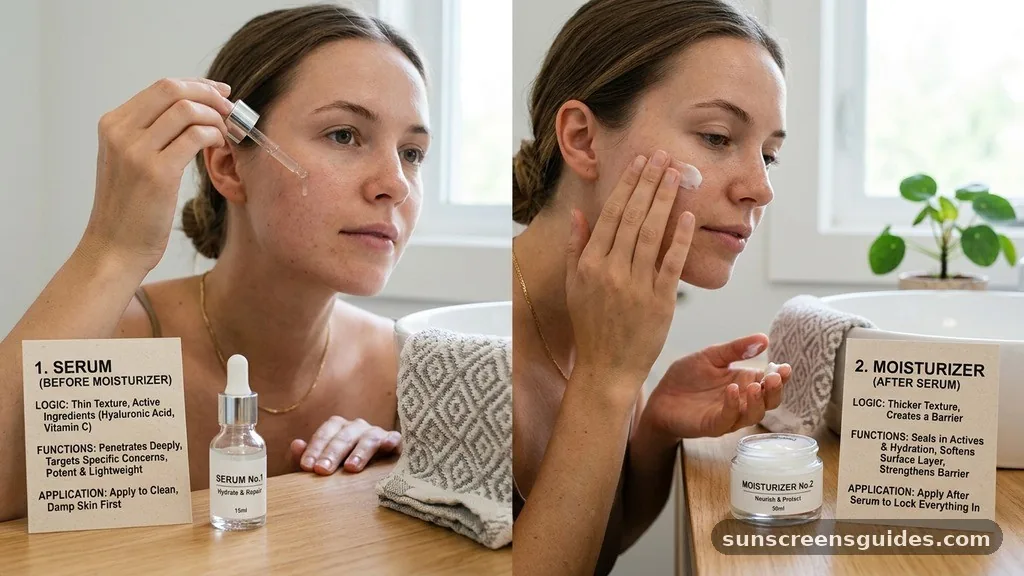
Deciding whether to apply serum before or after moisturizer often creates confusion during a morning or evening routine. Knowing the correct sequence is essential because it determines how effectively your skin absorbs the concentrated ingredients in your products. Generally, you should apply your serum first, as these products are designed to deliver targeted benefits deep into the surface layers of the skin.
Once the serum has dried, layering a moisturizer on top acts as a protective seal to lock in those benefits. Understanding the nuances of serum before or after moisturizer application will help you get the most out of your expensive skincare investments and achieve better results.
The Logic Behind Skincare Layering
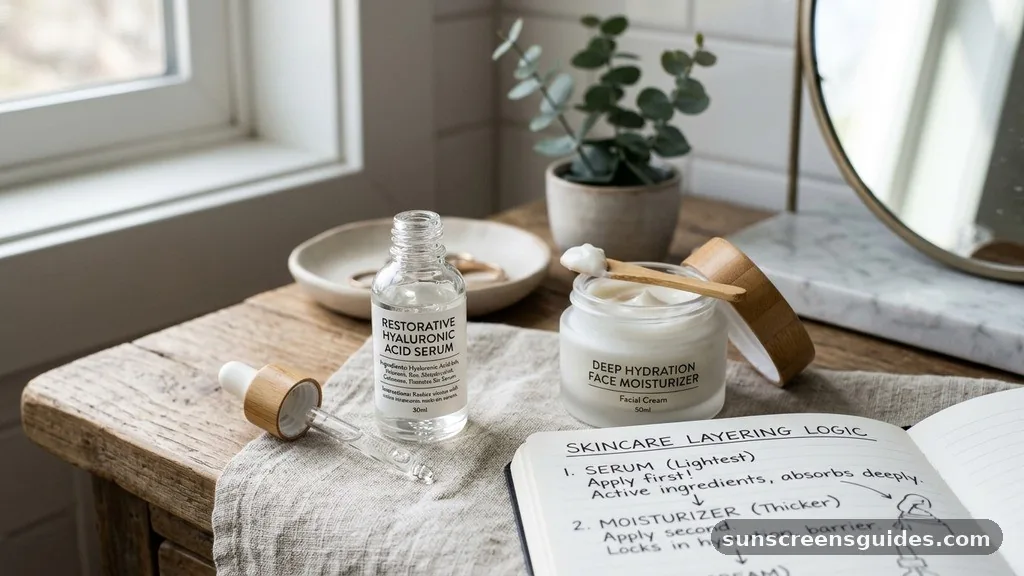
The golden rule of skincare layering relies on the consistency and molecular weight of your products. You should always work from the thinnest, most lightweight formulas to the thickest, most emollient creams.
Serums usually feature a lower molecular weight, allowing them to penetrate the skin barrier more efficiently than heavy creams or balms. By applying these concentrated active ingredients first, you ensure they reach the target areas without a thick layer of oil or wax blocking their path.
If you were to apply a heavy cream first, the serum would struggle to pass through the occlusive barrier you just created. This mismatch leads to poor product performance and wasted money.
Think of your skin like a sponge; it needs the water-based, lightweight liquids to hydrate first, followed by the heavier creams to prevent evaporation. This simple, logical progression is the foundation of effective dermatological care.
Why Order Matters for Active Ingredients
The order of application significantly impacts the absorption rate of your favorite treatments. Ingredients like vitamin C, niacinamide, and retinol are highly potent and require direct contact with clean skin to function optimally. When you place these products directly onto a cleansed face, they can work their magic without interference.
The Role of Humectants and Occlusives
Your skincare products generally fall into two categories: humectants and occlusives. Humectants, such as hyaluronic acid, work by drawing moisture from the environment into the skin. If you apply a humectant serum, you need to follow it with a moisturizer that contains occlusives. Occlusives create a physical barrier that prevents transepidermal water loss, effectively trapping the hydration provided by your serum inside your skin.
- Serums: Lightweight, high concentration of actives, small molecular size.
- Moisturizers: Emollient, heavier texture, designed to seal and protect.
- The Rule: Always move from liquid-like textures to creamier, denser textures.
- Exceptions: Specialized treatments or prescription ointments may require specific doctor-directed instructions.
Addressing Common Misconceptions
Many people worry that using a serum before or after moisturizer might lead to pore clogging or irritation. However, the order of application is rarely the cause of acne or congestion; the ingredients themselves are the primary culprits.
If you have oily skin, you might be tempted to skip the moisturizer entirely, but this can actually backfire. When the skin is dehydrated, it compensates by producing more oil, which can lead to breakouts.
A common myth suggests that serums are too strong for direct skin contact and need a buffer. While it is true that some people have sensitive skin, the solution is to choose a gentler formula rather than changing the order of application. If a product causes irritation, layering it on top of a moisturizer often just dilutes the effect, rendering the expensive serum useless.
| Product Type | Typical Texture | Order of Application |
|---|---|---|
| Cleanser | Gel/Foam/Oil | First |
| Toner | Watery | Second |
| Serum | Lightweight/Viscous | Third |
| Moisturizer | Cream/Lotion | Fourth |
| Face Oil | Oily | Last |
Handling Specialized Skincare Products
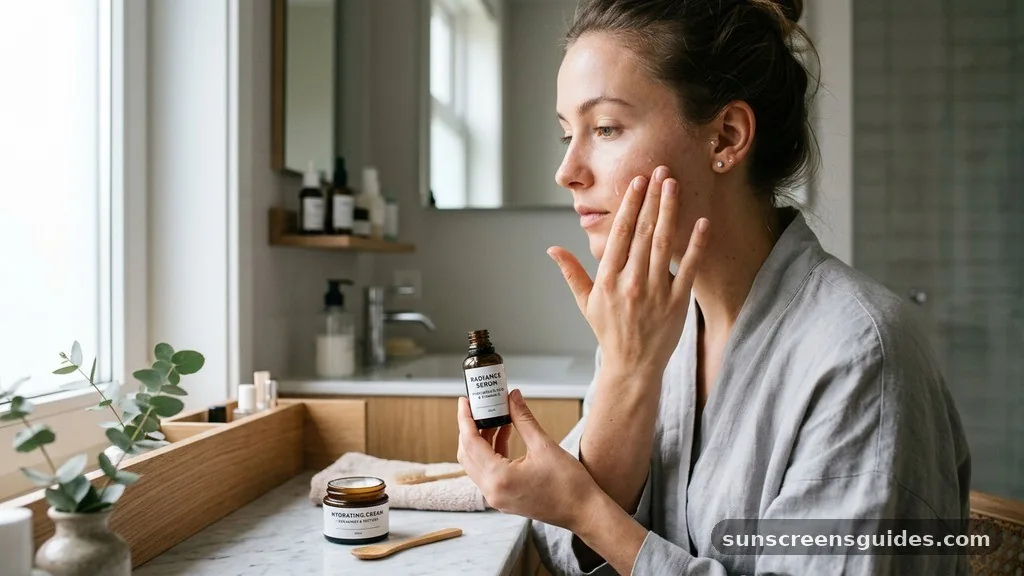
Some products don’t fit perfectly into the standard serum-before-moisturizer routine. For instance, if you use a face oil, you should almost always apply it after your moisturizer.
Oils have a very large molecular structure and act as heavy occlusives. If you put an oil on before a water-based serum, the serum will simply slide off the surface of the skin.
You should also consider your specific skin goals. If you are targeting hyperpigmentation with a brightening serum, that serum needs to be the closest thing to your skin. If you are using a prescription treatment for acne, consult your dermatologist about whether to apply it before or after your moisturizer, as some clinical products are designed to be buffered to prevent excessive peeling or redness.
Filling the Gaps: What About Sunscreen?
A frequently missed step in this discussion is where sunscreen fits into the mix. Sunscreen is an occlusive product that sits on the top layer of the skin to protect it from ultraviolet rays. Therefore, it should always be the final step in your morning routine.
Whether you use a serum or a moisturizer, they should be fully absorbed before you apply your SPF. If you apply sunscreen before your serum, you are essentially creating a shield that prevents the serum from penetrating the skin at all.
Another gap involves the timing between steps. You don’t necessarily need to wait ten minutes between applying a serum and a moisturizer, but you should wait until the serum feels tacky or has mostly dried.
If you rub your moisturizer on while the serum is still soaking wet, you might end up pilling, where the products clump together and roll off your face. Give the serum about thirty to sixty seconds to settle into your pores before you reach for your cream.
Adjusting for Day and Night Cycles
Your morning and evening routines can look quite different, even if the general rule of serum before or after moisturizer remains the same. In the morning, you might prefer a lighter, antioxidant-rich serum like vitamin C to protect against environmental damage. At night, you might focus on recovery, using serums with peptides or chemical exfoliants.
Regardless of the time of day, the goal remains consistent: hydrate, treat, and seal. If you are using multiple serums, apply them from thinnest to thickest.
If you have two water-based serums, it doesn’t matter much which one goes first, but if one is slightly oilier or thicker, put that one second. Keep your routine simple; you don’t need five different serums to have healthy skin.
FAQ
Do I need a serum if I use a moisturizer?
While not strictly required, serums provide concentrated active ingredients that moisturizers alone cannot offer your skin.
Can I mix my serum into my moisturizer?
Mixing is generally discouraged because it can alter the absorption rate and effectiveness of the active ingredients.
What happens if I apply moisturizer before serum?
You risk blocking the serum’s penetration, making the expensive active ingredients much less effective on your skin.
Does face oil replace moisturizer?
Oils are occlusives and do not provide hydration, so they should usually be used alongside a moisturizer.
How long should I wait between steps?
Waiting thirty to sixty seconds for each product to absorb is sufficient to prevent pilling or smearing.
Can I use multiple serums at once?
Yes, apply them from thinnest to thickest consistency to ensure each one penetrates the skin barrier properly.
Is it better to use serum at night?
Both day and night usage are beneficial, but nighttime allows for longer absorption of restorative, active ingredients.
Understanding the correct order of skincare is a simple adjustment that yields significant long-term benefits. By following the principle of applying your lightest, most potent serums first and sealing them with a nourishing moisturizer, you create the ideal environment for your skin to thrive. You don’t need a complicated ten-step routine to see improvements; consistency and correct layering are far more important.
If you’ve been doing it differently, try switching the order for a few weeks and observe how your skin responds to the increased efficacy of your products. Take the time to listen to your skin’s unique needs, and feel free to reach out if you have more questions about building your routine.



