

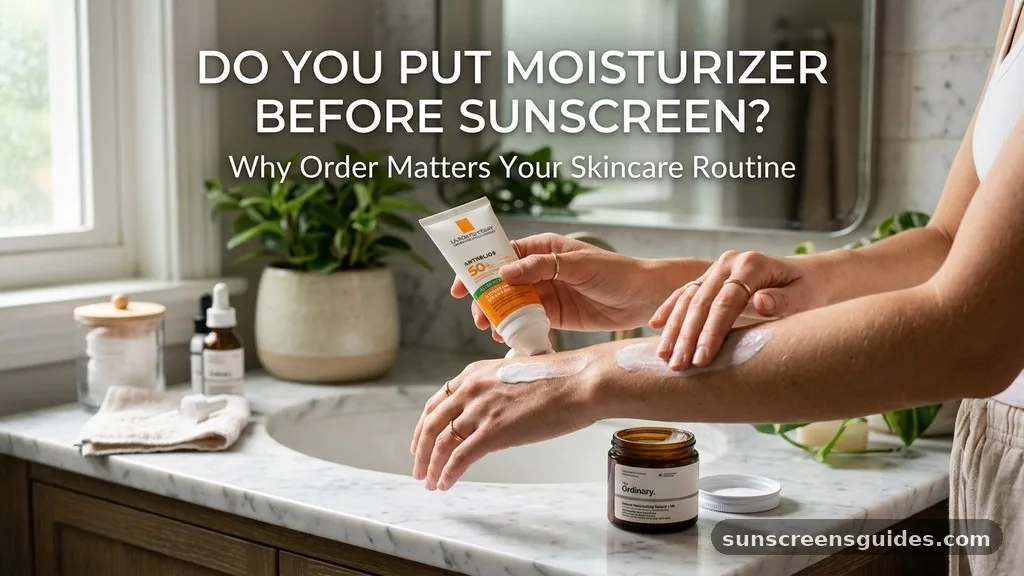
Determining the correct sequence for your morning routine often leads to questions about if you should put moisturizer on before sunscreen. Getting this order right is essential for maintaining a healthy skin barrier and ensuring your products perform as intended. Most experts agree that applying your hydrating products first allows them to penetrate effectively before you lock everything in with a layer of sun protection.
By following a logical sequence, you ensure that your skincare layering doesn’t result in pilling, streaks, or reduced protection. This simple habit keeps your complexion hydrated while providing the shield necessary to combat UV damage throughout the day.
Why Order Matters in Your Skincare Routine
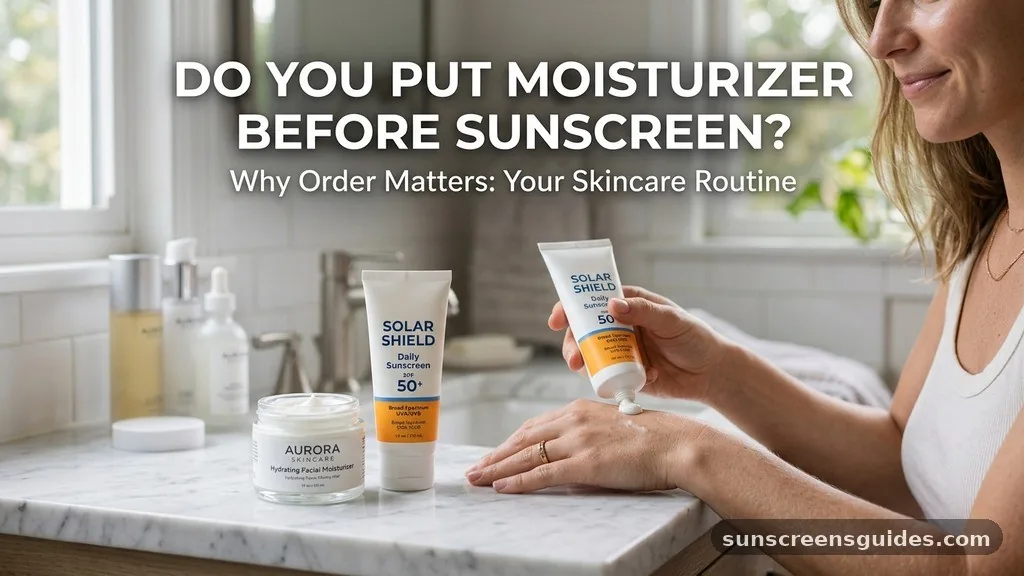
The primary reason you should prioritize applying moisturizer before your SPF is to facilitate optimal product absorption. Your moisturizer is designed to deliver hydration and active ingredients directly into the surface layers of the skin.
If you apply sunscreen first, the oils and silicones often found in SPF formulations can create a barrier that prevents these beneficial ingredients from reaching their target. By letting your moisturizer settle first, you allow your skin to drink up the nutrients, while your sunscreen acts as the final protective seal.
Layering your products incorrectly can also disrupt the formulation of your sunscreen. Sunscreen works best when it forms a uniform, unbroken film over your skin. If you mix it with heavy creams or apply it underneath products that alter its chemical composition, you risk compromising its SPF efficacy.
Experts recommend allowing each layer to dry for at least one to two minutes. This waiting period helps prevent the products from mixing in a way that might cause them to clump or “pill” on your face.
The Science of Skin Barrier and Hydration
Your skin barrier serves as the first line of defense against environmental stressors, pollutants, and bacteria. Maintaining this barrier requires a balance of humectants—which pull water into the skin—and occlusive ingredients—which trap that moisture inside.
Moisturizers are specifically formulated to support this balance. When you apply a moisturizer, you are effectively prepping the canvas of your skin to be supple and resilient before exposing it to the elements.
If you skip moisturizer, your skin might produce excess oil to compensate for dryness, which can negatively affect how your sunscreen sits on your face. For those with oily skin, this creates a greasy sheen that feels heavy and uncomfortable.
Using a non-comedogenic moisturizer that absorbs quickly ensures that your skin remains hydrated without feeling bogged down. Think of your moisturizer as the foundation of your health, and your sunscreen as the armor that protects that health from long-term UV damage.
Dermatological Best Practices for Sun Protection
When considering the question of if you should put moisturizer on before sunscreen, dermatologists generally point to the texture of your products. The general rule of thumb is to apply products from the thinnest consistency to the thickest.
Most serums go on first, followed by your moisturizer, and finally your sunscreen. This ensures that the lighter, water-based formulas don’t get blocked by the thicker, cream-based ones.
The following table compares the typical roles of each product to help you visualize why the order matters:
| Product Category | Primary Function | Optimal Application Order |
|---|---|---|
| Serum | Targeted treatment | 1st |
| Moisturizer | Hydration and barrier support | 2nd |
| Sunscreen | UV protection | 3rd |
Following this sequence helps maintain the stability of your active ingredients. If you use products containing Vitamin C or retinol, they need direct contact with clean, dry skin to work optimally.
Adding moisturizer after these treatments, but before sunscreen, keeps your routine organized and effective. Never rush the process; giving each layer a moment to set is a hallmark of professional skincare habits.
Chemical Filters vs. Mineral Sunscreens
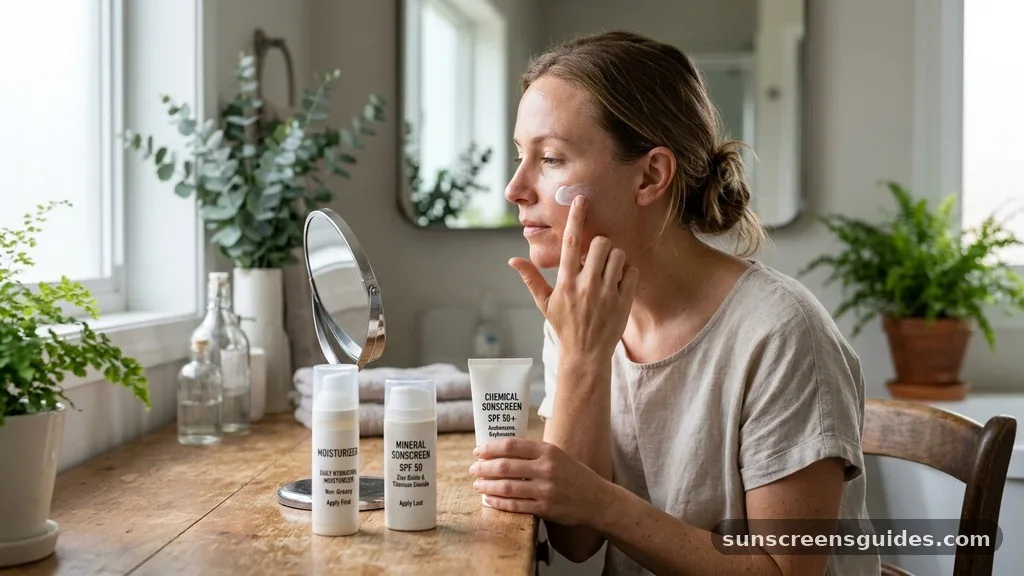
The type of SPF you choose can slightly influence how it interacts with your moisturizer. Chemical filters work by absorbing UV rays and converting them into heat. Because these formulas need to penetrate the upper layers of the skin to be effective, some argue they should go on first. However, modern cosmetic chemistry has advanced to the point where this is rarely an issue; applying your moisturizer first is still widely recommended to ensure skin health.
Physical mineral sunscreen, containing ingredients like zinc oxide or titanium dioxide, works differently by sitting on top of the skin to reflect UV light. These products are inherently designed to create a protective barrier.
Applying them over a moisturizer is ideal because it creates a smooth, even surface for the minerals to sit upon. If you find that your mineral sunscreen leaves a white cast, applying it over a well-absorbed moisturizer can actually help it spread more evenly, reducing the appearance of streaks.
Addressing Common Topical Gaps
Many users wonder if they can mix their moisturizer and sunscreen together to save time. This is a common mistake that can significantly lower your protection levels.
When you blend products, you are diluting the SPF concentration and potentially disrupting the emulsion—the stable mixture of oil and water that keeps your sunscreen effective. Always apply them as distinct, separate layers to ensure you are getting the full SPF rating listed on the bottle.
Another frequent concern involves transepidermal water loss. This is the process where water evaporates from the skin, leading to dehydration. While sunscreen provides a physical shield, it is not always a substitute for a dedicated moisturizer.
If you have very dry skin, relying solely on your SPF for hydration will likely leave your skin feeling tight or flaky by midday. A lightweight, hydrating moisturizer applied first ensures that your skin remains plump throughout the day, regardless of the drying effects of some sunscreens.
- Cleanse your face thoroughly to remove overnight oils.
- Apply any targeted serums or spot treatments.
- Allow serums to absorb for one minute.
- Apply a pea-sized amount of moisturizer to your face and neck.
- Wait for the moisturizer to feel dry to the touch.
- Apply your chosen broad-spectrum SPF liberally.
- Let the sunscreen set before applying makeup.
Common Mistakes to Avoid
One of the biggest errors people make is applying sunscreen to damp skin. If your moisturizer hasn’t fully set, the sunscreen can slide around, creating gaps in your coverage.
You might think you are covered, but you could be leaving patches of skin exposed to harmful rays. Always perform the “touch test”—if your skin feels tacky or wet, wait another minute or two before reaching for the SPF.
Another mistake is using too little product. Because you are layering, you might be tempted to use less of each to avoid a heavy feeling. This is counterproductive.
Use enough moisturizer to feel comfortable, and use enough sunscreen to cover your entire face, ears, and neck. If you struggle with heavy textures, look for gel-based moisturizers that provide deep hydration without the weight of heavy creams.
Integrating Makeup into the Routine
If you wear makeup, the question of when to apply your sunscreen becomes even more critical. Your sunscreen should always be the last step of your skincare routine, serving as the bridge between your moisturizer and your foundation.
Using a makeup primer isn’t strictly necessary if your sunscreen has a smooth, non-greasy finish. Many people find that a good mineral sunscreen acts as a natural primer, providing a velvety base for makeup application.
If you need to reapply sunscreen throughout the day, you don’t need to wash off your makeup. Powder-based sunscreens or setting sprays with SPF are excellent tools for maintaining protection without disturbing your look.
These options fit seamlessly into a busy schedule and ensure that you are protected even when you aren’t at home. Remember that consistent protection is the most important factor in long-term skin health.
Conclusion
Establishing a reliable sequence is the key to maximizing the benefits of your daily products. When you ask if you should put moisturizer on before sunscreen, the answer is a clear yes.
This order supports your skin barrier, promotes better absorption, and ensures that your sun protection remains undisturbed and effective. By giving your moisturizer time to sink in before applying your SPF, you create a perfect base that keeps your skin hydrated and safe from UV damage.
Consistency is your greatest ally in maintaining a healthy complexion. Take the extra minute each morning to let your products settle, and your skin will show the results in the long run.
If you found this breakdown helpful, consider sharing it with someone looking to simplify their morning regimen. Feel free to reach out with any other questions about your personal routine or product choices.
FAQ Section
Yes, always apply moisturizer first to allow it to hydrate the skin before sealing with SPF protection.
How long should I wait between moisturizer and sunscreen?
Wait at least one to two minutes until the moisturizer is fully absorbed and dry to the touch.
Can I mix moisturizer and sunscreen together?
No, mixing them dilutes the SPF, which compromises its ability to protect your skin from harmful UV rays.
Does applying moisturizer before sunscreen cause pilling?
It can if the moisturizer is too thick or if you don’t wait for it to dry before applying sunscreen.
Should I use a separate moisturizer if my sunscreen is hydrating?
If your sunscreen is sufficiently hydrating for your skin type, you may skip a separate moisturizer in summer.
Does sunscreen prevent moisturizer from working?
Sunscreen does not stop moisturizer from working, but applying it first ensures your skin receives full hydration benefits.
Is it okay to put sunscreen on bare skin?
It is safe, but using a moisturizer first provides better comfort and prevents potential dryness throughout the day.



