


Many skincare enthusiasts wonder if can vitamin c serum cause dry skin after noticing tightness or flakiness following their morning application. While this potent antioxidant is celebrated for brightening and anti-aging benefits, it is not always a perfect match for every complexion. Understanding why your skin reacts this way involves looking at product formulations, ingredient concentrations, and your unique skin barrier health.
If you have been struggling with a parched feeling after your glow-boosting routine, you are certainly not alone. This article examines the science behind these reactions, how to troubleshoot your current routine, and how to safely incorporate vitamin C without sacrificing your skin’s hydration levels.
Understanding the Acidic Nature of Vitamin C

The primary reason why so many people ask if can vitamin c serum cause dry skin stems from the chemical nature of the most popular form of the ingredient: L-ascorbic acid. To remain effective and stable, L-ascorbic acid requires a very low pH level, typically below 3.5.
This acidic environment allows the molecule to penetrate the skin barrier effectively, but it can also disrupt the delicate surface mantle of your face. When the pH of your skin is shifted significantly, it can lead to a sensation of tightness or dehydration.
Because of this acidity, L-ascorbic acid acts almost like a mild form of chemical exfoliation. While this helps remove dead skin cells to reveal a brighter complexion, regular use can be too much for those with already compromised or naturally dry skin.
Think of it as a double-edged sword; you get the radiance, but you might also get the irritation if your skin is not prepared for such a low-pH treatment. If you experience persistent tightness, it is a sign that your skin’s natural acidic mantle is struggling to recover between applications.
The Role of Concentration and Formulation
The concentration percentage of the vitamin C in your serum plays a massive role in how your skin responds. Many brands push the idea that higher is better, often marketing 20% or 25% concentrations as the gold standard for potency.
However, for many users, these high percentages are the exact culprit behind increased skin sensitivity and dryness. A product with a 15% or 20% concentration of L-ascorbic acid may simply be too aggressive for someone with a thin or reactive lipid barrier.
It is helpful to compare different forms of vitamin C to see which might be more tolerable for your specific needs. Not all serums are created equal, and switching to a different derivative can often solve the issue of dryness.
| Ingredient Type | Common Benefit | Potential for Dryness |
|---|---|---|
| L-ascorbic acid | Maximum potency/brightening | High |
| Sodium Ascorbyl Phosphate | Gentler/acne-friendly | Low |
| Magnesium Ascorbyl Phosphate | Hydrating/stable | Very Low |
| Tetrahexyldecyl Ascorbate | Oil-soluble/deep penetration | Minimal |
When you choose a serum with stabilized vitamin C derivatives, you often avoid the extreme pH issues associated with pure L-ascorbic acid. These derivatives are often oil-soluble or have a pH closer to that of human skin, making them far less likely to cause that dreaded dry, tight feeling.
Addressing Compromised Skin Barriers
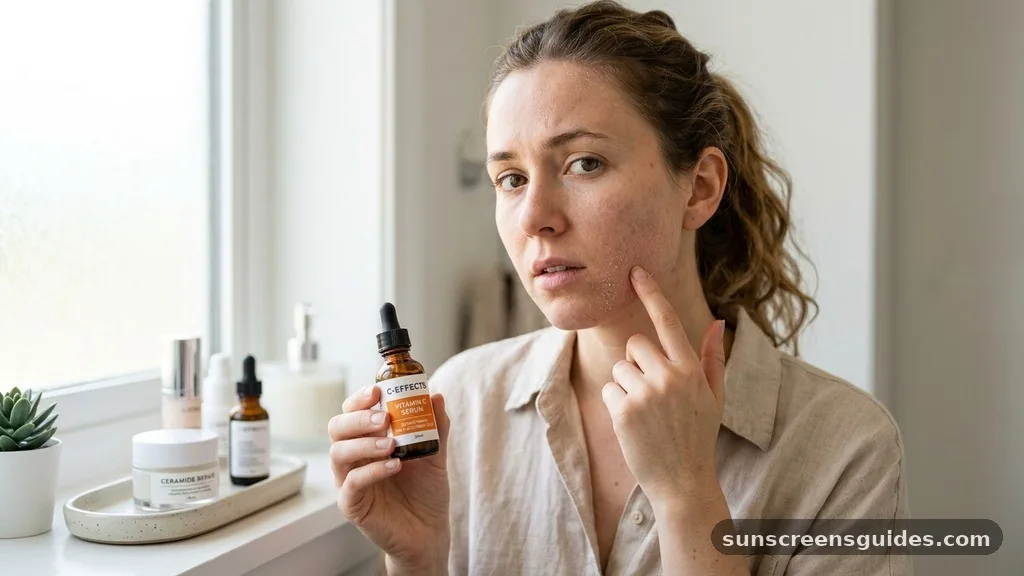
If you find that your skin feels tight or develops patches after using a serum, your lipid barrier may already be struggling. When this barrier is damaged, it cannot hold onto moisture effectively, a phenomenon known as transepidermal water loss.
Adding an acidic serum to a compromised barrier is akin to pouring salt on a minor wound; it increases erythema, redness, and that uncomfortable dry texture. The goal should be to prioritize barrier repair before pushing for aggressive brightening results.
Symptoms of a damaged barrier
- Persistent stinging upon application of products
- Redness or blotchiness that does not fade quickly
- A rough or sandpaper-like texture on the cheeks
- Increased sensitivity to other products that were previously tolerated
- Dullness even after using brightening agents
To fix this, you must pause the use of the vitamin C serum. Focus instead on ceramides, fatty acids, and cholesterol-rich creams that mimic the skin’s natural structure. Once your skin feels supple and quiet, you can slowly reintroduce the serum, perhaps by buffering it with a moisturizer or using it every other day.
Strategic Application and Troubleshooting
You do not necessarily have to abandon your serum just because it causes slight dryness. There are several ways to modify your application technique to mitigate dermatological side effects.
One of the most effective methods is “buffering.” By applying a lightweight, hydrating serum—ideally one containing hyaluronic acid—before your vitamin C, you create a buffer zone that slows down the absorption rate and reduces the potential for irritation.
Another essential practice is patch testing. Before slathering a new, high-potency serum all over your face, apply a small amount to your inner arm or behind your ear for a few consecutive days.
This allows you to monitor for delayed reactions like peeling or inflammation. If you notice that your skin reacts poorly after 48 hours, you know the formula is likely too strong for your current skin state.
Furthermore, ensure you are letting the serum dry completely before applying your next layer. Trapping an acidic product under heavy occlusives can sometimes lead to localized irritation.
If you still struggle with dryness, consider only using your vitamin C serum in the morning and ensuring your evening routine is packed with heavy-duty hydrators and restorative ingredients. If you follow these steps and still deal with excessive peeling, it is time to switch to a gentler, oil-soluble form of vitamin C.
Frequently Asked Questions
Can vitamin C serum cause dry skin even if it is labeled for sensitive skin?
Yes, even gentle formulas can cause dryness if your skin barrier is compromised or if you over-apply products.
How do I know if my dry skin is from vitamin C or something else?
If the dryness only appears after using the serum and fades when you stop, the serum is likely responsible.
Should I stop using vitamin C if my skin feels tight?
It is best to pause use until your skin feels comfortable, then slowly reintroduce it at a lower frequency.
Can I mix vitamin C with my daily moisturizer to reduce dryness?
Yes, mixing or layering over moisturizer can reduce the intensity of the acid and prevent potential skin irritation.
How long does it take for skin to adjust to a new vitamin C serum?
Most skin types need two to four weeks of consistent, low-frequency use to build tolerance to active ingredients.
Does higher concentration vitamin C work better for everyone?
No, higher concentrations are often more irritating and do not always provide better results for sensitive skin types.
Is it normal to have mild tingling when applying vitamin C?
A very slight, fleeting tingle is common, but burning, stinging, or lasting redness indicates the product is irritating.
Closing Thoughts on Maintaining Skin Balance
Achieving a bright, even complexion should not come at the cost of your skin’s health and comfort. If you have been wondering whether can vitamin c serum cause dry skin, the answer is a definitive yes, particularly when the formulation is too harsh or your barrier is already fragile. By paying attention to the specific type of vitamin C you use, monitoring your concentration levels, and prioritizing intense hydration, you can safely enjoy the benefits of this powerful antioxidant.
Remember that skincare is highly individual; what works for one person may not work for another. If you continue to struggle, do not hesitate to consult a dermatologist who can help you identify the best ingredients for your unique profile. Start slow, listen to your skin’s cues, and keep your routine balanced.



